
Best Electric Adjustable Beds for Seniors in Australia: Safety and Comfort Criteria
27 February 2026 · Nathan Kerrins · Updated 24 October 2026
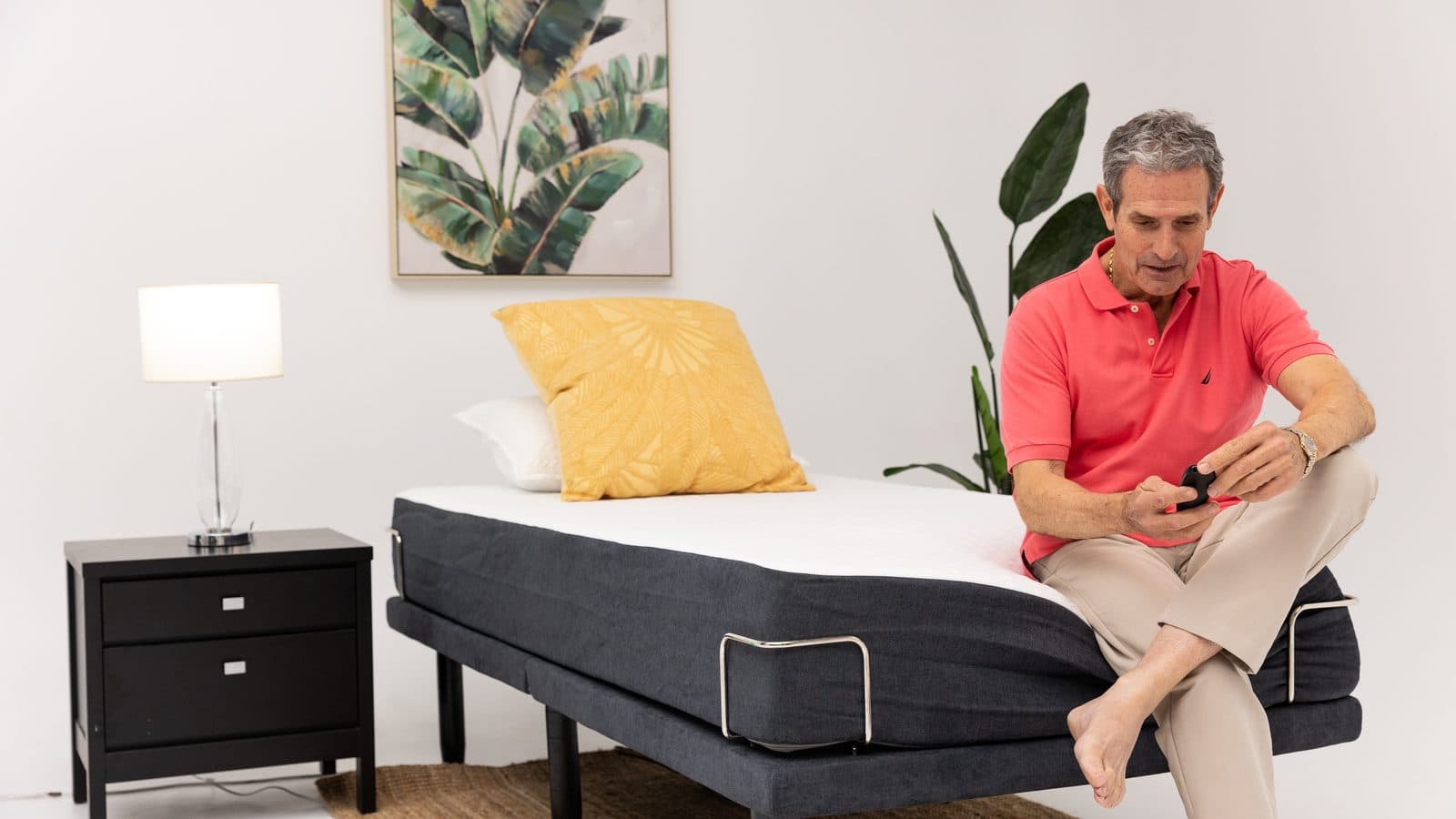
For seniors, the features worth prioritising are ease of getting in and out of bed, simple one-touch controls, a weight rating that suits everyone who'll use the bed, and a reliable warranty and support network. Sophie's adjustable beds and the higher-care HiLo model are examples that meet these criteria. Always check current specs before buying.
If you're choosing a bed for yourself, a partner or a parent, you've probably noticed that "best adjustable bed for seniors" lists tend to rank products rather than explain what makes a bed suit an older body. This guide works the other way round. It sets out the safety and comfort criteria that matter, explains how to check each one, and leaves the verdict with you, your family and, where relevant, your occupational therapist.
A note on who's writing this: Sleep Sophie sells electric adjustable beds and HiLo beds, so we're not neutral. That's why we've kept this page to criteria you can check against any bed from any supplier. Where we use a Sophie bed as an example, the figures come from our own published product specifications, and we say so. We don't run product-testing labs, and we don't rank other brands.
This page is one of four seniors guides on the site, and each answers a different question. This one covers safety and comfort criteria for choosing a bed. If you're after a feature-by-feature walk-through, a step-by-step buying process, or help setting a bed up at home, the related reading section near the end points you to the right one.
Key facts at a glance
These are the facts this guide relies on. Each has a source, so you can check it yourself.
| Fact | Detail | Source |
|---|---|---|
| Falls in older Australians | One in 4 people aged 65 and over have at least 1 fall per year; falls are the number one cause of accidental injury in older Australians | healthdirect, "Older people and falls" (reviewed September 2025) |
| Sophie Adjustable Bed weight rating | 320kg per bed | Sleep Sophie product specifications |
| Sophie HiLo weight rating | 250kg | Sleep Sophie product specifications |
| Standard bed height | Floor-to-base height adjusts from 47.5cm to 65cm, set at installation; powered whole-bed height is a HiLo feature | Sleep Sophie product specifications |
| HiLo sizes | Long Single (92cm x 203cm) and King Single (107cm x 203cm) | Sleep Sophie product specifications |
| Night-time and power features | Under-bed lighting and battery backup on the Adjustable Bed and HiLo; USB ports on all beds; app control on the Adjustable Bed only | Sleep Sophie product specifications |
| Mattress | Four-layer Australian-made mattress with an RMIT-tested Hygroflex® top layer, included with every bed | RMIT Hygroflex testing |
| Warranty | 5-year comprehensive warranty as standard on adjustable beds and HiLo beds, extendable to 10 years | Sleep Sophie warranties |
| Registrations | Registered NDIS provider (provider number 4050070896); ARTG 326115 covers the massage function of Sophie beds and chairs | NDIS provider register; ARTG entry 326115 |
| Seeing a bed before you buy | Free, obligation-free in-home demonstration of 30–60 minutes; there's no showroom | Sleep Sophie contact page |
What matters most for a senior choosing an adjustable bed?
Five things matter more than anything else on the spec sheet: how easy the bed is to get in and out of, how simple the controls are, whether the weight rating suits everyone who'll use it, what the mattress does, and what support you'll get over the years you own it. Everything else is a nice extra.
That order is deliberate. A bed a senior can't get out of comfortably and steadily at 3am isn't the right bed, however many features it has. A remote that needs reading glasses and three button presses to reach a sitting position will end up in a drawer. And a bed that works perfectly for five years and then has nobody to call when a motor needs replacing is a poor buy at any price.
Here's how the five criteria break down, and what each one protects against.
- Getting in and out. The height of the bed, and whether the head section can raise you towards sitting, shape every transfer you make. This is the criterion most closely tied to night-time safety.
- Controls. A clear wireless remote with one-touch memory positions means the person in the bed can change position without help and without fumbling.
- Weight rating. The rating has to cover the person or people in the bed, the mattress, and any weight a carer adds when they lean on the bed to help.
- Mattress. On an adjustable bed, the mattress has to bend with the base for years without damage, and it has to be easy to move on.
- Warranty and support. A clear warranty term, and a local team who'll answer the phone, matter more as you get older, not less.
Notice what isn't on that list: the number of massage settings, the colour of the remote, or whether the bed has an app. Those can be pleasant, but none of them should decide the purchase for an older buyer. If a salesperson leads with them, steer the conversation back to the five above.
It also helps to be honest about who the bed is really for. Some seniors are fit and independent, and simply want to sit up to read or watch television without a stack of pillows. Others are managing reduced balance, a recent operation or a partner who needs help at night. The criteria are the same for both groups; what changes is how much weight each one carries. For an independent sleeper, controls and comfort lead. Where a carer is involved, getting in and out and the height of the bed become the deciding factors, and that's when a HiLo is worth a look.
How important is ease of getting in and out of bed?
For many seniors it's the most important criterion, because getting in and out of bed is one of the moments when balance is tested every day and every night. A bed at the right height, with a head section that can bring you up towards sitting before you swing your legs round, can make that transfer steadier and less effortful.
The wider context is worth knowing. According to healthdirect, one in 4 people aged 65 and over have at least 1 fall per year, and falls are the number one cause of accidental injury in older Australians. healthdirect lists weaker muscles, poorer balance, slower reaction times and hazards around the home among the factors involved. A bed can't prevent a fall, and no supplier should tell you it can. What the right bed can do is make the everyday movement of getting up and lying down easier to do slowly and deliberately, which is exactly what healthdirect recommends.
Start with bed height
A bed that's too low makes you push up from a deep squat. A bed that's too high leaves your feet dangling, so you slide rather than stand. The simple check is to sit on the edge of the mattress: your feet should rest flat on the floor, and standing up shouldn't need a lurch forward. Everyone's legs are different, so there's no single right number. Ask your occupational therapist to confirm the right height for you, and measure your current bed so you have something to compare against.
On a standard Sophie adjustable bed, the floor-to-base height can be set anywhere from 47.5cm to 65cm when the bed is installed. That's a fixed height once it's set, chosen to suit the person using the bed and the mattress on top. Our installers set it in your bedroom, so you can sit on the edge and check before they leave. Our guide to the best bed height for seniors covers the measuring in more detail.
If the right height changes during the day, for example low for getting into bed but higher for a carer to help with dressing, a fixed-height bed won't cover both. That's the job of a HiLo bed, which raises and lowers the whole bed electrically. We cover it in its own section below.
Let the bed do the sitting up
Getting out of a flat bed usually means rolling to one side and pushing up on one arm, which asks a lot of shoulders, wrists and core muscles. On an adjustable bed, you can raise the head section first, so you're already close to sitting before you swing your legs over the side. Many people find that more comfortable, and it turns a twist-and-push into a shorter, more controlled movement.
The same works in reverse at bedtime: sit on the edge, lie back against a raised head section, lift your legs onto the bed, then lower the head section to flat or to your sleeping position. It's worth practising both routines during a demonstration, with someone beside you, before deciding a bed is right.
Stand up slowly
healthdirect advises standing up slowly after you've been lying down or sitting, to avoid posture-related dizziness. A raised head section helps you build that pause into your routine: sit up with the remote, stay seated on the edge for a moment, then stand. Keep a stable piece of furniture, not a wheeled one, within reach. If you already use a walking frame or stick, park it where you can reach it from the sitting position before you stand.
If dizziness on standing is new or getting worse, mention it to your GP. It can have causes a bed has nothing to do with, including some medications.
What weight rating and size do you actually need?
Choose a weight rating that covers everyone who'll be on the bed at once, plus the mattress, plus any weight a carer adds by leaning or kneeling on it. Then choose the smallest size that comfortably fits the sleeper or sleepers and still leaves a clear path around the bed.
Weight rating: check the figure for the exact model
Weight ratings differ from product to product, so don't accept a blanket figure for a whole range. As an example, the Sophie Adjustable Bed is rated to 320kg per bed, and the Sophie HiLo is rated to 250kg. Those are two different products with two different ratings, and both are published figures you can check on the product pages.
When you work out what you need, add up:
- the weight of each person who sleeps in the bed;
- the mattress and bedding;
- any weight a carer puts on the bed while helping, such as a knee on the mattress during a transfer; and
- a sensible margin, so the bed isn't working at its limit every night.
For couples, check whether the rating applies to the whole bed or to each side. On split beds, each side is effectively its own base. Ask the supplier directly and get the answer in writing if the rating is close to what you need.
Size: fit the person and the room
Seniors who sleep alone often find a Long Single or King Single gives them plenty of room while leaving more floor space to move around the bed safely. Couples who want to adjust their sides independently usually look at split sizes, where each person has their own base and their own remote. Here are the Sophie sizes, all 203cm long except the Double:
| Size | Dimensions | Who it tends to suit |
|---|---|---|
| Long Single | 92cm x 203cm | One sleeper; smaller rooms; also a HiLo size |
| King Single | 107cm x 203cm | One sleeper wanting more width; also a HiLo size |
| Double | 137cm x 187cm | Roomy for one, cosy for two |
| Queen | 154cm x 203cm | Couples who adjust together |
| Split Queen | 2 x (77cm x 203cm) | Couples who want individual remotes |
| King | 184cm x 203cm | Couples wanting maximum space |
| Split King | 2 x (92cm x 203cm) | Couples with individual remotes and extra room |
| Split Cali King | 2 x (107cm x 203cm) | Extra width with individual remotes |
Source: Sleep Sophie product specifications. The HiLo comes in Long Single and King Single only.
Before you settle on a size, measure the room with the bed's footprint marked out on the floor. You want a clear walking path on the side you get out from, space for a walking frame if one is used, and room for a carer to stand beside the bed if that's ever likely. A bigger bed that squeezes the path to the door isn't a safer choice. Our bed size guide goes through room measuring step by step.
One more point for couples: if one partner has very different needs, such as one who likes the head raised to read and one who sleeps flat, a split size means neither has to compromise. Each side moves on its own remote.
Which smart features are genuinely useful (and which are just marketing)?
For seniors, the features that earn their place are a simple remote with one-touch memory positions, under-bed lighting for night-time trips, and battery backup so the bed can still move in a power outage. USB ports are a small convenience. App control and massage are pleasant extras, not reasons to buy.
It's easy to be dazzled by a long feature list. The test for each feature is simple: will it be used most nights, by the person in the bed, without help? If yes, it's useful. If it needs a smartphone, a manual or a grandchild, treat it as a bonus.
The remote: the feature you'll use every day
Every Sophie bed is electric, with the head and foot sections moved by motors and controlled from a wireless remote with one-touch memory positions. For an older user, the remote matters more than almost anything else on the bed, because it's the part they'll touch every day.
When you're comparing remotes, check:
- whether the buttons are large enough and clearly marked for the person who'll use them, with or without glasses;
- whether a favourite position, such as sitting up to read, can be reached with a single press rather than by holding a button;
- whether there's a one-touch way back to flat;
- whether the remote is easy to find in the dark and easy to keep within reach; and
- on split beds, whether each side has its own remote, so one partner doesn't move the other by mistake.
The only way to know if a remote suits someone is to put it in their hands. Ask them to reach a sitting position, go back to flat and raise their legs, without coaching. If they can do that on the first or second try, the remote passes.
Under-bed lighting
Under-bed lighting casts a low glow on the floor beside the bed, so you can see where you're putting your feet on a night-time trip to the bathroom without switching on a bright overhead light. healthdirect's falls guidance recommends turning lights on when you walk around and leaving hallway lights on at night; under-bed lighting is one practical way to have light at floor level right where your first step lands.
Under-bed lighting is included on the Sophie Adjustable Bed and the Sophie HiLo. It doesn't replace a hallway night light or a switch you can reach from bed, but it helps with the first few steps, which is often where people feel least steady.
Battery backup
An electric bed runs on mains power. Battery backup means the bed can still be moved during a power outage, so nobody is left stuck with their legs raised or the head section up until the power comes back. For a senior who lives alone, or who relies on the head section to sit up before getting out of bed, that's a practical reassurance rather than a gimmick.
Battery backup is included on the Sophie Adjustable Bed and the Sophie HiLo. Ask any supplier how their backup works, how to check it, and who to call if it needs attention. The answers should come from the product's own documentation, not from a general rule of thumb.
USB ports and app control
USB ports let you charge a phone or tablet at the bedside without a tangle of adaptors, which also means one fewer cord trailing across the floor. All Sophie beds have them.
App control lets you move the bed from a smartphone. It's available on the Sophie Adjustable Bed only, not the HiLo. For many seniors the physical remote will always be easier, and that's fine: the app is an option, not a requirement.
Massage
The Sophie Adjustable Bed includes whole-body vibration therapy, a massage function. The massage function of Sophie beds and chairs is registered on the Australian Register of Therapeutic Goods as ARTG 326115. Some people enjoy it as part of winding down in the evening. It's a comfort feature, and we'd never suggest it should be the reason a senior chooses one bed over another.
Features to question
Be wary of any feature described with a precise-sounding number or test procedure that the supplier can't show you in writing. If a claim can't be traced to the product's own documentation, ask for the source. A reputable supplier will either show you or tell you plainly that the claim doesn't apply. The same goes for safety badges and certifications: ask which registrations apply to the specific model in front of you, and ask to see them, rather than relying on a general statement about "meeting standards".
What does the mattress need to do?
On an adjustable bed, the mattress has to do three jobs: bend with the base every night without damage, support you comfortably in every position, and let you move and change position without a struggle. That rules out a traditional inner-spring mattress, and it makes foam construction worth looking at closely.
Don't bring your old inner-spring mattress
It's tempting to reuse the mattress you already have, especially to save money. Don't. A single bend can permanently ruin a traditional inner-spring mattress. The springs and wires inside are built to lie flat, and once they've been bent by an adjustable base they may not return flat again. So if you're budgeting, budget for a mattress that's designed to flex. Our article on whether adjustable beds ruin mattresses explains which mattress types work and which don't.
What's in the Sophie mattress
Every Sophie adjustable bed and HiLo bed comes with a four-layer mattress made right here in Australia. From the sleeping surface down, the layers are:
- Hygroflex® — a soft comfort layer that combines memory-foam-style body contouring with latex-style bounce-back and support;
- NextGen™ — a soft comfort layer for pressure redistribution and moisture wicking;
- Premium Comfort — a medium transition layer; and
- Active Comfort — a firm base layer for support.
The Hygroflex top layer was independently tested by RMIT University's School of Engineering against four different memory foams. Compared with traditional memory foam, it:
- conforms to the body up to 67% better;
- dissipates heat up to 27% faster;
- reduces pressure on the body up to 32% better; and
- takes less than half the force to roll over or change position.
That last figure is the one we'd point seniors to. Memory foam is known for the "sinking" feeling that makes turning over or shuffling to the edge of the bed harder work. A top layer that takes less than half the force to roll over on, compared with traditional memory foam, can make those small movements through the night and first thing in the morning feel easier. You can read how the testing was done on our RMIT Hygroflex testing page.
Hygroflex also holds a steady hardness across temperatures, whereas memory foam changes firmness with room and body temperature. For someone who feels the cold in winter or warms up easily in summer, that means the bed feels much the same from season to season.
What to check on any mattress
- Is it designed for an adjustable base? Ask directly. If the answer is vague, move on.
- Is it included? Some beds are sold as a base only, so the price you compare should include a suitable mattress.
- How easy is it to move on? Try rolling over and shuffling to the edge during a demonstration.
- Does it stay in place? Sit on the edge with the head section raised and check the mattress doesn't slide.
- Where is it made? If a supplier says "Australian made", check whether that claim covers the mattress, the base, or both.
What warranty and support should you expect?
Ask for the exact warranty term in writing, what it covers, and who does the repair. Sophie adjustable beds and HiLo beds carry a 5-year comprehensive warranty as standard, extendable to 10 years. Just as important is a local team who'll answer the phone and come to your home if something needs attention.
A warranty is only as good as the process behind it. For an older buyer, especially one who lives alone, the practical questions matter more than the headline number:
- What does "comprehensive" include? Motors, remote, electronics and frame should all be clearly listed. If anything is excluded, you want to know before you buy.
- Who comes out? Ask whether repairs are done in your home by the supplier's own team or a contractor, and roughly how that's arranged.
- Who do you call? A local phone number with real people behind it is worth more to a senior than an online form.
- What paperwork do you need to keep? Keep the invoice and any warranty documents together, and ask the supplier exactly what they'll need if you ever make a claim.
- How long is the extension, and what's covered? If there's an option to extend, check that the extended cover is the same as the standard cover.
Sleep Sophie is Australian owned, and our support team is based here. Our own team delivers and installs beds free of charge, anywhere in Australia, which means the people who set your bed up are the same people you can call later. The full terms are on our warranties page, and our guide to adjustable bed warranties explains what to look for in any supplier's terms.
Your rights under the Australian Consumer Law apply on top of any warranty, whoever you buy from. A supplier's warranty adds to those rights; it can't take them away.
Why installation matters for seniors
An electric bed is heavy and has cables, so installation isn't a job to leave to a family member on a weekend. A good installation includes setting the bed at the right height, routing the power cable so it doesn't cross a walking path, checking that the remote is paired and within reach, and showing the person who'll use the bed how every function works. healthdirect's falls guidance specifically mentions keeping walkways clear and securing electrical cords, so it's worth watching where the cable goes before the installer leaves.
Is a HiLo bed worth considering for higher-care needs?
A HiLo is worth considering when someone needs help getting in and out of bed, or when a carer is helping with daily care at the bedside. It adds powered whole-bed height, so the bed can be lowered for easier transfers and raised to a comfortable working height for a carer. A standard adjustable bed suits most people who don't need that extra range.
What a HiLo adds
Every Sophie bed has electric head and foot adjustment. The HiLo adds a third movement: the whole bed raises and lowers at the touch of a button. That solves a problem a fixed-height bed can't. The right height for getting into bed is often lower than a comfortable height for someone helping with dressing, washing or repositioning. With a HiLo, the bed can be lowered for the transfer and raised again for care, so nobody has to compromise.
For carers, that height matters. Bending over a low bed, again and again through the day, is hard work on the back. Raising the bed to a working height means the carer can stand more upright while they help. Our guides on HiLo beds for carers and reducing carer back strain cover this in detail.
HiLo facts to compare
- Sizes: Long Single (92cm x 203cm) and King Single (107cm x 203cm).
- Weight rating: 250kg. That's lower than the 320kg rating on the standard Sophie Adjustable Bed, so check it against the sleeper and any carer assistance.
- Features: head and foot adjustment, under-bed lighting, battery backup and USB ports. App control isn't available on the HiLo.
- Mattress: the same four-layer Australian-made mattress with a Hygroflex® top layer is included.
- Look: the HiLo is a medical-grade bed designed to look like bedroom furniture rather than hospital equipment.
- Warranty: 5-year comprehensive warranty as standard, extendable to 10 years.
Standard adjustable bed or HiLo: a quick way to decide
| Question | If the answer is yes |
|---|---|
| Does anyone help the sleeper get in or out of bed? | Consider a HiLo, so the bed can be lowered for transfers |
| Does a carer help with dressing, washing or repositioning at the bedside? | Consider a HiLo, so the bed can be raised to a working height |
| Is the right bed height different at different times of day? | Consider a HiLo; a standard bed's height is fixed at installation |
| Do two people want to share the bed in a Queen, King or split size? | A standard adjustable bed, since the HiLo comes in single sizes only |
| Is the sleeper independent, and wants to sit up, raise their legs or read in bed? | A standard adjustable bed usually covers this |
| Would app control be used? | A standard adjustable bed; the HiLo doesn't have it |
Source: Sleep Sophie product specifications.
If you're weighing a HiLo against a hired hospital bed, our comparison of a HiLo bed and a hospital bed sets out the differences side by side. Where needs are complex, an occupational therapist's assessment is a sensible starting point. See our guide to an occupational therapy assessment for an adjustable bed for how that works.
Which positions do seniors find most comfortable?
Most of the value of an adjustable bed comes from a handful of positions: sitting up, legs raised, a gently reclined position with the knees and upper back lifted, and flat. Some of these can help with specific everyday discomforts, but only as positioning and comfort, never as treatment.
- Sitting up. Raising the head section lets you read, watch television, eat breakfast or have a cup of tea in bed without a pile of pillows that slide out of place. It's also the first step in getting out of bed, as covered above.
- Snoring. Raise your head to help to alleviate snoring. Some couples use this setting when one partner's snoring is keeping the other awake.
- Swelling. Lift your legs above your heart to help ease swelling. Some people use this position in the evening after a day on their feet.
- Lower back. Sleeping in the zero-gravity position can help to alleviate lower back discomfort — it supports the body with the knees and upper back slightly raised rather than lying flat.
- Reflux. A raised head section is one of the positions some people find more comfortable for snoring or reflux (not a replacement for professional medical advice).
These are positions, not cures. If you have a diagnosed condition, or symptoms that are new or changing, talk to your GP or physiotherapist about which positions suit you, and follow their advice over anything you read here. A good in-home demonstration will let you try each of these positions on the bed itself, so you know how they feel before you decide anything.
How should the bedroom be set up around the bed?
The bed is one part of a safer bedroom. The floor around it, the light and the route to the bathroom matter just as much. healthdirect's falls guidance points to trip hazards, poor lighting and cluttered walkways as common factors, so it's worth walking the route from bed to bathroom before the new bed arrives.
- Clear the walking path. Keep the side of the bed you get out from free of rugs that curl or slide, shoes, magazines and bags.
- Route the cables. Ask the installer to run the bed's power cable along the wall rather than across the floor. Use the bed's USB ports so phone chargers don't trail across the path.
- Light the way. Use the bed's under-bed lighting for the first steps, and add night lights in the hallway and bathroom.
- Keep essentials in reach. Glasses, water, the phone and the remote should all be reachable from a sitting position, so there's no stretching or twisting from bed.
- Plan for a walking aid. If a walking frame or stick is used, decide where it lives at night so it can be reached from the edge of the bed.
- Check footwear. healthdirect recommends well-fitting shoes. At night, that means slippers with a back and a non-slip sole, left beside the bed.
If you're unsure whether the bedroom is set up well, ask your GP about an occupational therapist home assessment. Depending on your circumstances, one may be available through My Aged Care, the NDIS or DVA.
What if the bed is also for recovery after surgery?
Many seniors start looking at adjustable beds ahead of a planned operation, such as a hip or knee replacement. If that's you, the criteria above still apply, but the first rule is different: follow your surgeon's, physiotherapist's or occupational therapist's instructions. Their advice about positions, bed height and getting in and out of bed overrides anything in this guide.
healthdirect's information on hip replacement notes that rehabilitation typically involves physiotherapy and occupational therapy, and that recovery timeframes vary from person to person. Your surgeon will advise on yours. Some people find an adjustable bed makes sitting up and getting out of bed more comfortable during that period, but the bed doesn't change how quickly anyone recovers.
Our recovery guides go further. The adjustable beds after surgery guide walks through each stage of coming home, and our guide to an adjustable bed after hip surgery covers the questions hip patients ask most. If you'll only need extra support for a short time, the hospital bed hire funding guide explains who pays for hire.
Can a senior get help paying for an adjustable bed?
Possibly, depending on circumstances. Medicare doesn't fund beds, but the NDIS, DVA, the Support at Home program and state equipment schemes can fund one where an assessed need is shown, usually with an occupational therapist's recommendation. None of them approves every application, so check eligibility early.
Here's a short guide to the main pathways. Each has its own rules, and the funding body always makes the decision.
- Medicare. The Medicare Benefits Schedule covers medical services such as consultations and procedures, not home equipment. Our guide does Medicare cover adjustable beds? explains where to look instead.
- NDIS. An adjustable bed can be funded as assistive technology where it's reasonable and necessary for a participant's disability needs, usually with an OT's recommendation. See can the NDIS fund an adjustable bed? and our NDIS page.
- DVA. The Rehabilitation Appliances Program can fund an adjustable electric bed for eligible veterans with an assessed clinical need, prescribed by a health professional. Our guide to DVA support for beds and lift recliners explains the steps, and the DVA RAP guidelines for adjustable electric beds set out the rules.
- Support at Home. For older Australians in the Support at Home program, the Assistive Technology and Home Modifications (AT-HM) scheme can fund equipment based on assessed need. The high tier for assistive technology is up to $15,000, and higher amounts can be approved with evidence, such as a quote and a prescription from a health professional. See our Support at Home funding guide and Support at Home page.
- State equipment schemes. Programs such as EnableNSW, Victoria's Aids and Equipment Program and Queensland's MASS can fund beds for eligible residents, with criteria that vary by state.
Sleep Sophie is a registered NDIS provider (provider number 4050070896), and we're used to working with OTs, plan managers and families through these processes. We can't promise any funding outcome, because that decision belongs to the funding body. What we can do is provide the product information your OT or plan manager needs.
If you're paying privately, we offer interest-free payment options through Humm, Brighte and Payright — no-deposit options available to approved purchasers, with a choice of repayment terms. Our adjustable bed financing guide explains how that works.
How can you compare options before buying?
Compare beds against the criteria, not against each other's marketing. Try the bed with the person who'll sleep in it, in the room where it'll go, and ask each supplier the same questions in writing. A free in-home demonstration is the most realistic way to do that.
How to choose a good adjustable bed for a senior in Australia
Whichever supplier you're considering, these are the questions that separate a bed that suits an older sleeper from one that doesn't:
- Height: What's the floor-to-base height, and can it be set for this person? If the right height changes during the day, is powered whole-bed height available?
- Controls: Can the person reach sitting, flat and legs-raised with one press each, without help?
- Weight rating: What's the rating for this exact model, and does it cover the sleeper, the mattress and any carer assistance?
- Mattress: Is a mattress designed for an adjustable base included? What's it made of, and where is it made?
- Night-time features: Is there under-bed lighting? What happens in a power outage?
- Warranty: How long, what's covered, and who does the repair?
- Support: Who delivers and installs the bed, and is there a local phone number for help afterwards?
- Registrations: Which registrations apply to this specific model, and can you see them?
- Funding: If funding is involved, is the supplier registered for the scheme, and will they provide what your OT needs?
Write the answers down for each bed you look at. Put side by side, the gaps usually become obvious. Our buying guide on features to look for in an adjustable bed covers the broader feature list, and are adjustable beds worth it? helps with the value question.
What to expect on price
As general Australian market context, Queen and King adjustable beds sell for between $5,000 and $24,000. Single adjustable beds sell for between $3,000 and $13,000. Where a bed sits within that range depends on things like whether a mattress is included, the length of the warranty, powered height and after-sales support. Always compare the full package rather than the base alone.
For current pricing on our own range, see the product pages for our electric adjustable beds and HiLo adjustable beds, which are always up to date.
Try it at home, not in a showroom
We don't have a showroom. Instead, our team brings the bed to your home, sets it up, and gives a full demonstration, and you can use it for 30–60 minutes while we're there to make sure it's right for you. It's free and there's no obligation to buy.
For seniors, testing at home has real advantages over a store. You're trying the bed in your own bedroom, at the height it would actually be set, next to your own bedside table and on your own floor. You can practise getting in and out on the side you'd really use. A family member or carer can be there, and so can your OT if you'd like them to be. And nobody has to travel.
During the demonstration, work through the criteria in this guide:
- sit on the edge and check your feet are flat on the floor;
- use the remote yourself to sit up, go flat and raise your legs;
- practise getting in and out with the head section raised;
- roll over and shuffle to the edge to feel how the mattress moves;
- ask to see the under-bed lighting in a darkened room; and
- ask every warranty and support question you have.
Our guide on how to try an adjustable bed before you buy has a fuller checklist. Sleep Sophie is rated 4.8 on ProductReview.com.au, and you'll meet the same local team at your demonstration who'd deliver and support your bed.
Related reading: our other seniors guides
We've written four guides for seniors, and each answers a different question. If this page has answered "what should I look for?", these can help with what comes next.
- Adjustable bed for seniors guide — a feature-by-feature look at positioning, remotes, mattress compatibility and maintenance.
- Adjustable bed guide for seniors in Australia — a step-by-step buying process, from assessing needs to measuring the room and budgeting.
- Adjustable bed for elderly Australians — practical help with bed placement, setting up the controls and caring for the bed at home.
What's the next step?
Choosing a bed for a senior comes down to a handful of checks: getting in and out, the remote, the weight rating, the mattress, and the warranty and support behind it. If a bed passes all five for the person who'll sleep in it, it's a strong candidate, whoever makes it. If someone needs help with transfers or daily care at the bedside, add powered height to the list and look at a HiLo.
When you're ready to see how a Sophie bed measures up against those criteria, call 1300 975 337 (1300 9 SLEEP) or book a free in-home demonstration. We'll bring an electric adjustable bed or a HiLo bed to your home, set it at the right height, and let the person who'll use it try every function before anyone decides anything.
This information is general in nature and not a replacement for professional medical advice. Talk to your GP, physiotherapist or occupational therapist about your situation.
Compare the Sophie range with a real person
No call centres, no scripts — tell us what you need and we’ll give you straight answers on fit, delivery and funding.
1300 975 337 (1300 9 SLEEP) · Australian-based team · Explore the Sophie adjustable bed range
Rated 4.8 from 227 reviews on ProductReview.com.au · Free in-home demonstration · Interest-free options via Humm, Brighte & Payright for approved purchasers
Using NDIS or Support at Home funding?
Sleep Sophie is a registered NDIS provider (4050070896), and Sophie adjustable beds and lift recliners are ARTG-registered Class 1 medical devices (ARTG 326115). Beds can be funded through NDIS assistive-technology budgets where an occupational therapist recommends them; the Support at Home program has its own equipment pathway. We prepare quotes suitable for plan approval — see how NDIS funding works or Support at Home, or call and we’ll walk you through it.
Ask us about this bed
Free delivery and installation, Australia-wide — tell us what you’re after and we’ll get back to you with straight answers.