
Best Adjustable Beds for Hip Surgery Recovery
24 October 2026 · Nathan Kerrins
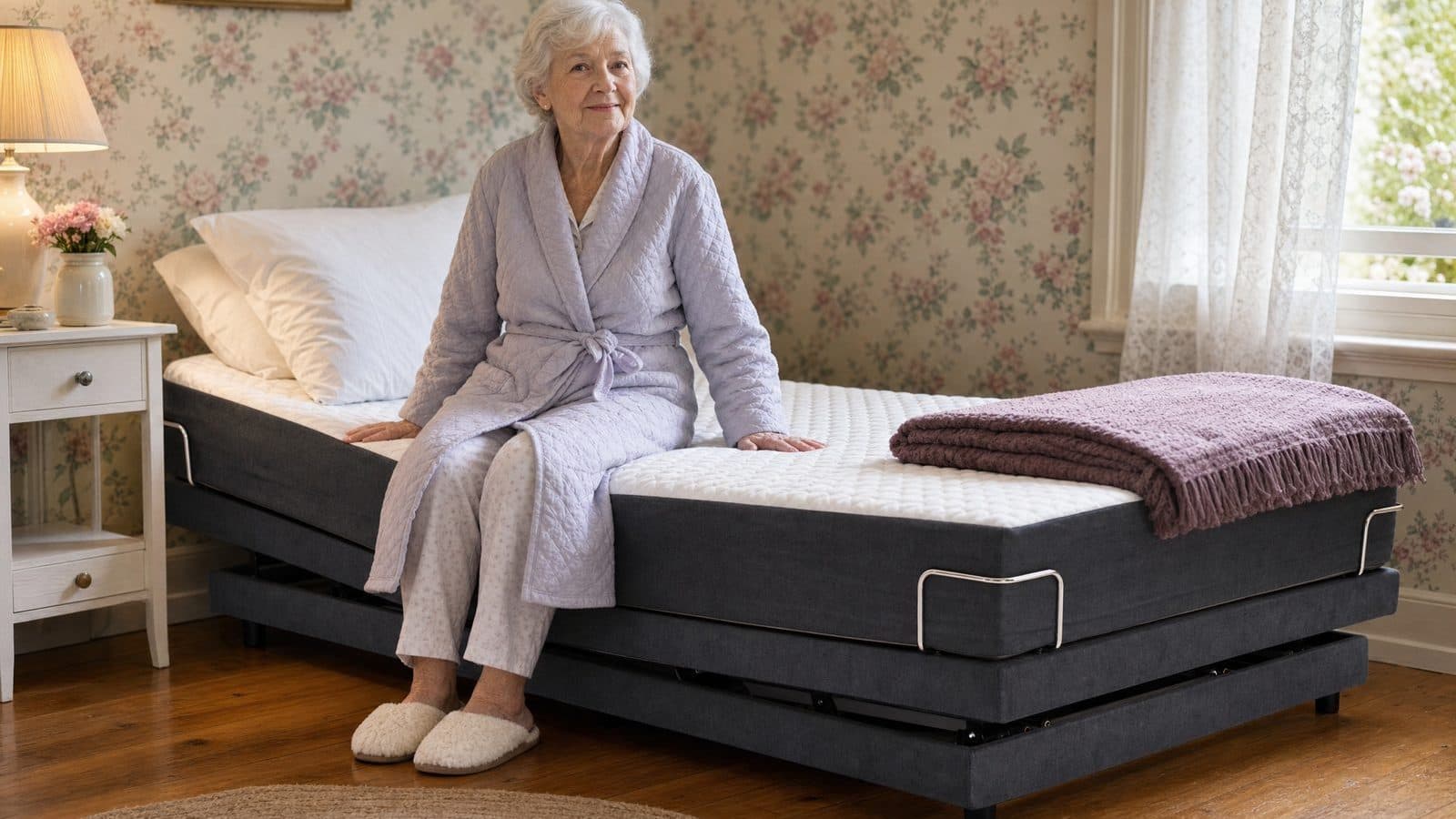
After hip surgery, your surgeon or physio will usually give specific positioning precautions to protect the joint while it heals. A bed that lets you raise your head and shoulders can make it easier to sit up without twisting or bending at the hip. Always follow your surgeon's, physio's or OT's instructions — a bed doesn't replace that advice.
If you're researching beds ahead of a hip replacement or other hip surgery, you've probably noticed the advice online varies a lot — partly because recovery precautions genuinely differ by procedure, surgeon and individual. This guide sticks to what's generally true about bed features and positioning, and points you back to your surgical team for anything specific to your own hip.
What does your surgeon usually advise after hip surgery?
healthdirect's hip replacement overview says your surgeon and physiotherapist will advise you on how to take care of your new hip and how to avoid hip dislocation, and that your health team will usually encourage you to get up and walk with a walking support soon after surgery. What that advice covers — how you bend, sit, and get in and out of bed — varies by surgical approach and by surgeon, so there's no single "correct" set of rules that applies to everyone. Discharge planning typically continues that guidance once you're back in your own bedroom — see healthdirect's going home from hospital page for what that handover usually covers.
None of that detail is something we can responsibly rewrite as general advice, because it's specific to your procedure. What we can say is that a bed's features either make it easier or harder to follow whatever precautions you've actually been given — which is really what the rest of this guide is about.
Why does bed height and positioning matter after hip surgery?
Two things tend to matter most in the first weeks after hip surgery: how easily you can change position without twisting at the hip, and how easily you can get from lying to sitting to standing. Both come up repeatedly in physiotherapist-guided pre- and post-surgery care — the Australian Physiotherapy Association's guidance on pre- and post-surgery care talks about preparing your home and your movement patterns before and after an operation, precisely because the environment you recover in affects how easy those movements are.
A bed that only offers one flat position asks a lot of someone recovering from hip surgery — every shift in position has to happen through the hip itself, using arms and core strength to push up against gravity. A bed that can raise the head and shoulders changes the angle you're working from, which some people find makes it easier to get upright without needing to twist or lever through the operated hip. That's a comfort and positioning observation, not a claim about the surgical outcome — how it applies to you depends entirely on your own precautions and progress, so check with your surgeon or physio before relying on it.
What features make getting in and out of bed easier?
Leaving the medical side to your surgical team, there are a handful of physical features worth understanding before you buy or hire a bed for this kind of recovery:
- Head and shoulder elevation. Raising the head section changes your starting angle for sitting up, which some people find easier on a healing hip than pushing up from fully flat.
- A firm, supportive mattress. A mattress that doesn't sink deeply under you gives more stable purchase for pushing up to sit, compared with a very soft surface that your body settles into.
- Remote within easy reach. If reaching for a bedside remote means twisting or leaning past a comfortable range, it's working against the very precautions you're trying to follow — keep it somewhere you can reach without straining.
- A stable, predictable base. A bed that doesn't rock or shift when you push against it to reposition matters more than most people expect in the first few weeks.
The inner-spring mattress point matters here too: a single bend can permanently ruin a traditional inner-spring mattress on an adjustable base, so if you're adding an adjustable head section to an existing bed, check the mattress is actually rated for flexing — mattresses designed for adjustable bases, like Sophie's four-layer foam mattress, are built to flex with the base.
None of these features change what your surgeon has told you to do or avoid. They can make it physically easier to do the things you're already allowed to do.
Can raising your legs help with swelling after hip surgery?
healthdirect lists swelling and stiffness among the things that can happen after a hip replacement. Lift your legs above your heart to help ease swelling — a general comfort measure, not something specific to the surgical site itself. It's about general leg swelling, not healing at the hip, and it isn't a substitute for whatever swelling-management advice your surgical team has given you (compression stockings, movement schedules, or medication, for instance). This information is general in nature — talk to your surgeon or physio about swelling specific to your own recovery before changing anything.
Is a HiLo bed useful for hip-surgery recovery, and for whom?
A HiLo bed raises and lowers the entire base — not just the head and foot sections — which is a different feature from the head-elevation options covered above. For someone with reduced hip mobility, having the whole bed set to a comfortable transfer height can make the sit-to-stand movement easier to manage, and it can also make things easier for anyone helping with transfers, such as a carer or family member. That's a positioning and transfer-ease feature, not a clinical aid, and it doesn't manage the surgical outcome itself.
It tends to suit people with a broader mobility need beyond a single recovery period — someone who already uses aids to get in and out of bed, or who has a carer assisting regularly — more than someone with a short, otherwise uncomplicated recovery who mainly needs somewhere comfortable to rest for a few weeks. The Sophie HiLo bed carries a 250kg weight rating, compared with 320kg on the standard Sophie adjustable bed, so it's worth checking which model actually suits your situation before deciding. If you're weighing a short-term hire against buying outright for a defined recovery window, our guide to hospital bed hire and funding covers that decision in more detail.
| Feature | What it does | Best suited to | Source |
|---|---|---|---|
| Head/shoulder elevation | Raises the upper body angle for sitting up | Anyone wanting an easier starting angle to sit up, within their surgeon's precautions | Sleep Sophie product specifications; healthdirect.gov.au |
| Leg elevation | Lifts legs above heart height | General swelling comfort — not a surgical-site-specific claim | Sleep Sophie positioning guidance |
| Whole-bed height (HiLo) | Raises/lowers the entire base for transfer height | Reduced mobility, regular carer assistance | Sleep Sophie product specifications |
| Weight rating — standard adjustable bed | 320kg | — | Sleep Sophie product specifications |
| Weight rating — HiLo | 250kg | — | Sleep Sophie product specifications |
| Market pricing (Queen/King) | $5,000–$24,000 general Australian market range | Budgeting context only — see the product page for current pricing | General Australian market range |
What should you avoid doing in bed after hip surgery?
This is exactly the territory where we'd rather point you to your surgical team than guess. The specific movements to avoid — how far to bend the hip, which way to turn, whether particular leg positions are off-limits — depend on the surgical approach used and your surgeon's own protocol, and they genuinely differ from one procedure to the next. Repeating a generic list here risks giving you advice that doesn't match what you were actually told in hospital, which is worse than saying nothing.
In general terms, the aids you're sent home with are there to be used — healthdirect's going-home-from-hospital guidance says to make sure you know how to use any aids, such as crutches, before you leave. For exactly what applies to you, your discharge paperwork and your surgeon or physio are the reference — not this article.
When should you talk to your surgeon before changing your setup?
Before you buy, hire or reconfigure a bed for hip-surgery recovery, it's worth a quick check with your surgeon, physio or occupational therapist — particularly if you're still in the early weeks, if you've had complications, or if you're combining hip recovery with another condition that affects mobility. They can tell you whether a specific bed height, mattress firmness or positioning habit works with your precautions, in a way general content never can. The Australian Physiotherapy Association's pre- and post-surgery guidance says that chest pain, calf pain or shortness of breath after surgery means calling your doctor or going to emergency. If an OT is involved in your care, they're often the best person to assess your home setup directly, including whether NDIS or DVA funding applies where there's an assessed long-term need — short recovery periods are more commonly covered by hospital equipment loan services instead.
Once you know what your surgeon's precautions actually allow, a free in-home demonstration is a practical way to check whether a particular bed's height, firmness and controls genuinely suit your recovery. Book a free in-home demonstration and our team will bring the bed to you, show you every position, and answer questions against your own bedroom and your own routine — with no obligation and no cost.
Choosing a bed around your recovery, not around us
If you're comparing options rather than settling on one straight away, judge any bed against the criteria that actually matter for hip-surgery recovery: does it let you adjust head position without you having to twist through the hip, is the mattress firm enough to give stable support for pushing up to sit, is the remote genuinely within reach from a lying position, and — if transfers are a factor — does it offer a working height that suits whoever is helping you. Sophie's electric adjustable bed and HiLo range are built around those criteria, but they're one example of what to look for, not the only way to meet it; the same checklist applies whatever bed you're weighing up. The four-layer mattress included with every Sophie bed is Australian made, using Dunlop® foams, and every Sophie bed is electric with the head and foot sections controlled by a wireless remote — features worth checking against whatever else you're considering. You can browse the range on our electric adjustable beds and HiLo adjustable beds pages, or read more on choosing a bed for post-surgery recovery generally, how long people typically use one after surgery, and HiLo beds from a carer's perspective.
If cost is part of the decision, Sleep Sophie offers interest-free payment options through Humm, Brighte and Payright, with no-deposit options available to approved purchasers and a choice of repayment terms. And whatever you decide, a free in-home demonstration lets you check the fit before committing — call 1300 975 337 (1300 9 SLEEP) to arrange one.
This information is general in nature and not a replacement for professional medical advice. Talk to your GP, physiotherapist or occupational therapist about your situation.
Compare the Sophie range with a real person
No call centres, no scripts — tell us what you need and we’ll give you straight answers on fit, delivery and funding.
1300 975 337 (1300 9 SLEEP) · Australian-based team · Explore the Sophie adjustable bed range
Rated 4.8 from 227 reviews on ProductReview.com.au · Free in-home demonstration · Interest-free options via Humm, Brighte & Payright for approved purchasers
Using NDIS or Support at Home funding?
Sleep Sophie is a registered NDIS provider (4050070896), and Sophie adjustable beds and lift recliners are ARTG-registered Class 1 medical devices (ARTG 326115). Beds can be funded through NDIS assistive-technology budgets where an occupational therapist recommends them; the Support at Home program has its own equipment pathway. We prepare quotes suitable for plan approval — see how NDIS funding works or Support at Home, or call and we’ll walk you through it.
Ask us about this bed
Free delivery and installation, Australia-wide — tell us what you’re after and we’ll get back to you with straight answers.