
Hi-Lo Bed vs Hospital Bed at Home: What's the Real Difference?
24 July 2026 · Nathan Kerrins · Updated 10 October 2026
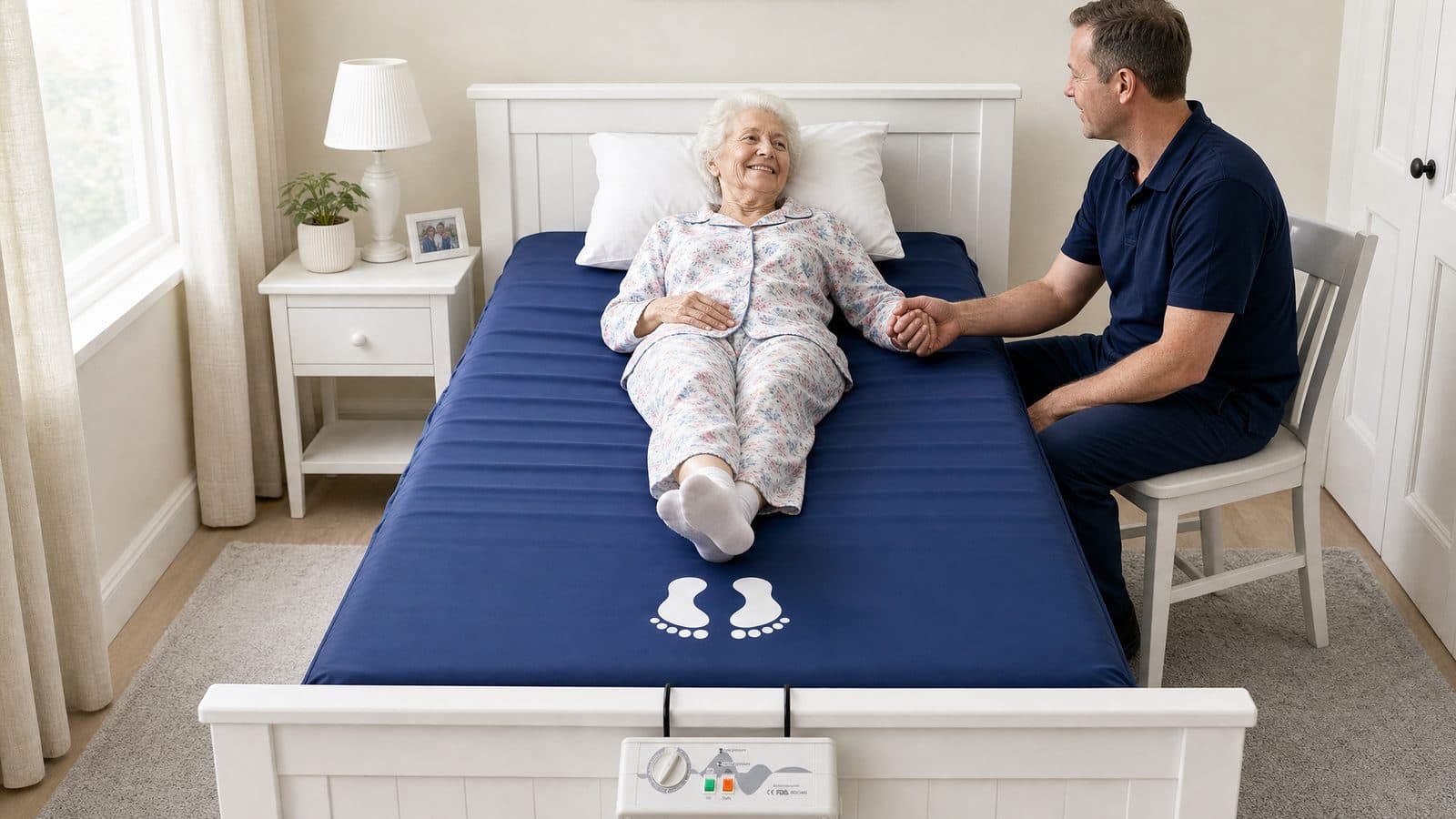
Both raise, lower and position — the real differences are the mattress, the look and the ownership model. Hired hospital beds are built to be cleaned and re-issued between users, so they usually come with a clinical-style mattress and ward styling; a Sophie HiLo is bought outright, includes a four-layer Australian-made mattress, and is designed to look like bedroom furniture.
This comparison usually arrives at a hard moment: someone is coming home from hospital, or care needs have stepped up, and a discharge planner or occupational therapist has said the words "you'll need a proper bed". The two candidates are a hospital bed — usually hired — or a hi-lo adjustable bed you own.
Functionally, they're closer than most people expect. The differences that end up mattering live elsewhere: in the mattress, the looks, the ownership model, and how each one makes a bedroom feel. Here's the honest comparison — including the situations where the hospital bed is the right call. For the fuller picture on what to weigh up beyond this one comparison, our practical buying guide covers the whole decision.
Disclosure first: this is the Sleep Sophie site. We sell the Sophie HiLo adjustable bed and we don't hire hospital beds, so you know where we stand — we'll still tell you plainly when hire is the better fit.
Where they're the same
Both categories deliver the two movements that define care-capable beds:
- Whole-bed height adjustment — raise to a carer's working height, lower for safer transfers and reduced fall height.
- Powered positioning — head and foot sections that raise and lower for sitting up, leg elevation and pressure-relieving positions.
If you've read our explainer on what a hi-lo bed is, you'll recognise these as the hi-lo's defining features — they're the hospital bed's defining features too. For the core of most home care, the functional overlap is large.
Where they genuinely differ
| Hired hospital bed | Sophie HiLo adjustable bed | |
|---|---|---|
| Mattress | Typically a basic clinical foam mattress | Four-layer Australian-made mattress included, Hygroflex® top layer |
| Looks | Ward styling — steel, castors, clinical presence | Designed as bedroom furniture |
| Ownership | Hired — ongoing cost, returned later | Yours — one purchase, 5-year comprehensive warranty as standard |
| Set-up | Varies by hire company | Delivered, assembled and demonstrated free by our own team, Australia-wide |
| Weight rating | Varies by model — check the hire spec | 250 kg |
| Extras | Clinical accessories per hire agreement | USB ports, battery backup, under-bed lighting; accessories on request |
The mattress row deserves emphasis. A bed you sleep in every night is only as comfortable as its mattress, and hired clinical foam is built for turnover, not for years of good sleep. The HiLo ships with the same four-layer Australian-made mattress as every Sophie bed — that's usually the single biggest lived difference between the two options. It's also worth remembering that a single bend can permanently ruin a traditional inner-spring mattress, which is one reason care-capable beds are built around foam layers rather than springs.
When a hospital bed is genuinely the right call
Being honest about our own category's limits:
- Short, defined recovery windows. Six weeks of post-surgical care with a clear end date is what hire exists for — don't buy furniture for a temporary problem.
- Clinical functions your care team specifies. If an OT or nurse prescribes features beyond height and positioning — specialised tilt functions, particular clinical configurations, weight ratings above 250 kg — follow your care team's advice. The clinical need decides, not the category.
- Funded hire arrangements. Some care packages and hospital-in-the-home programs supply a hired bed as standard, and state, territory or care-package schemes can fund hire directly — our guide to hospital bed hire funding in Australia walks through the options. If it's covered and it meets the need, use it — you can always revisit ownership later.
When the hi-lo earns it
The hi-lo case is the long game: care needs that are ongoing or progressive, a person who'll live in this bed for years, and a household that wants the bedroom to stay a bedroom. It's hospital-bed function for recovery and care at home — without the room looking like a ward — plus a mattress chosen for sleeping, not just for cleaning. For carers, the day-to-day experience is the same back-saving working height; our guide to hi-lo beds for carers goes deeper there. And where pressure care is in the picture, an alternating pressure air mattress lays over the top, same as it would on a hospital bed. The HiLo comes in Long Single (92cm x 203cm) and King Single (107cm x 203cm). See our bed size guide if the room itself is part of the decision.
The funding picture
Both paths can be funded. Hospital-bed hire is often arranged through care programs directly, as above. Buying a hi-lo runs through the same channels as any assistive technology: NDIS AT funding with an OT recommendation, or the Support at Home AT-HM scheme for older Australians, where the AT-HM high tier is $15,390 with a clinical assessment, and higher amounts can be approved where assessed needs require it. Neither pathway is guaranteed — funding depends on assessed need and approval, so treat these as what may be available rather than a promise. Sleep Sophie is a registered NDIS provider (provider number 4050070896), and our free in-home demonstration means the actual bed can be assessed in your actual bedroom — 30–60 minutes, obligation-free — before anyone commits.
How does this compare to a standard adjustable bed?
If you're weighing up a hi-lo against hospital-bed hire, it's worth asking one more question: does the situation call for a hi-lo at all, or would a standard Sophie adjustable bed do the job? The hi-lo's defining extra is whole-bed height adjustment for carers and transfers — if no one needs to work at a raised height or manage transfers from a lowered bed, that feature may be more than the situation calls for. Our guides on electric vs manual adjustable beds and full-electric vs semi-electric beds cover that decision in more depth, and either is a reasonable next read if hospital-style height adjustment isn't actually part of the brief.
Talking this through before a hospital discharge? Call 1300 975 337 (1300 9 SLEEP) or send us an enquiry — tell us the timeline and the care picture, and we'll give you a straight answer on hire vs the HiLo, even when the answer isn't us.
This information is general in nature and not a replacement for professional medical advice. Talk to your GP, physiotherapist or occupational therapist about your situation.
Compare the Sophie range with a real person
No call centres, no scripts — tell us what you need and we’ll give you straight answers on fit, delivery and funding.
1300 975 337 (1300 9 SLEEP) · Australian-based team · Explore the Sophie HiLo adjustable beds
Rated 4.8 from 227 reviews on ProductReview.com.au · Free in-home demonstration · Interest-free options via Humm, Brighte & Payright for approved purchasers
Using NDIS or Support at Home funding?
Sleep Sophie is a registered NDIS provider (4050070896), and Sophie adjustable beds and lift recliners are ARTG-registered Class 1 medical devices (ARTG 326115). Beds can be funded through NDIS assistive-technology budgets where an occupational therapist recommends them; the Support at Home program has its own equipment pathway. We prepare quotes suitable for plan approval — see how NDIS funding works or Support at Home, or call and we’ll walk you through it.
Ask us about this bed
Free delivery and installation, Australia-wide — tell us what you’re after and we’ll get back to you with straight answers.