
Hi-Lo Adjustable Beds for Carers: Protecting Your Back While You Help
24 July 2026 · Nathan Kerrins
Ask anyone who has cared for a partner or parent at home what surprised them most, and the honest answers are physical: the lifting, the leaning, the dozens of times a day you bend over a bed that was bought for sleeping, not for caring. Backs give out quietly, and when a carer's back goes, care at home is suddenly on the clock.
This guide looks at the one piece of equipment built specifically around that problem — the hi-lo adjustable bed — from the carer's side of the mattress. As always, it's general information: your occupational therapist is the right person to match equipment to your household's actual needs.
Disclosure first: this is the Sleep Sophie site. We sell the Sophie HiLo adjustable bed, and much of what follows comes from years of delivering them into homes exactly like the one described above.
The problem: everything happens bent over
A standard bed sits at a height chosen for getting in and out — which is well below a standing adult's comfortable working height. So every care task inherits a bend:
- Helping someone dress or wash
- Repositioning them for comfort or pressure care
- Supporting wound care or continence care
- Changing sheets — with or without someone in the bed
- The countless small assists: adjusting pillows, reaching dropped glasses, settling someone back down at 2am
Each bend is trivial. Dozens a day, every day, for months or years, is how carers end up needing care themselves. Occupational health has understood this forever — it's why hospital beds height-adjust, and why nurses would never accept working at domestic bed height.
What a hi-lo changes, task by task
A hi-lo adjustable bed raises and lowers the entire platform electrically. In practice:
- Care tasks: raise the bed to your working height and bending work becomes standing work. Dressing, washing and repositioning happen with a straight back, which also means steadier hands and more control.
- Transfers: lower the bed so feet reach the floor properly, raise the head end so the bed does the sitting-up, and a two-person struggle often becomes a one-person assist — or independence.
- Overnight: a bed lowered right down reduces the height of any fall for someone unsteady at night. Under-bed lighting on the Sophie HiLo helps here too — a soft glow for night-time trips instead of fumbling for the main light.
- Linen changes: the job carers quietly dread, done at bench height instead of on your knees.
The height control sits on the same simple wireless remote as the positioning — big, clear buttons that either of you can use.
The carer's full toolkit
Height is the headline, but the rest of the bed carries load too. Powered head and foot positioning means every position change the person can make themselves — sitting up to read, lifting legs for swelling — is one you don't do manually. If pressure care is part of the routine, the alternating air mattress lays over the bed and cycles pressure automatically, reducing overnight turning; our pressure-care guide for carers covers that whole subject. And battery backup means the bed still moves in a blackout — not a small thing when someone can't sit up without it.
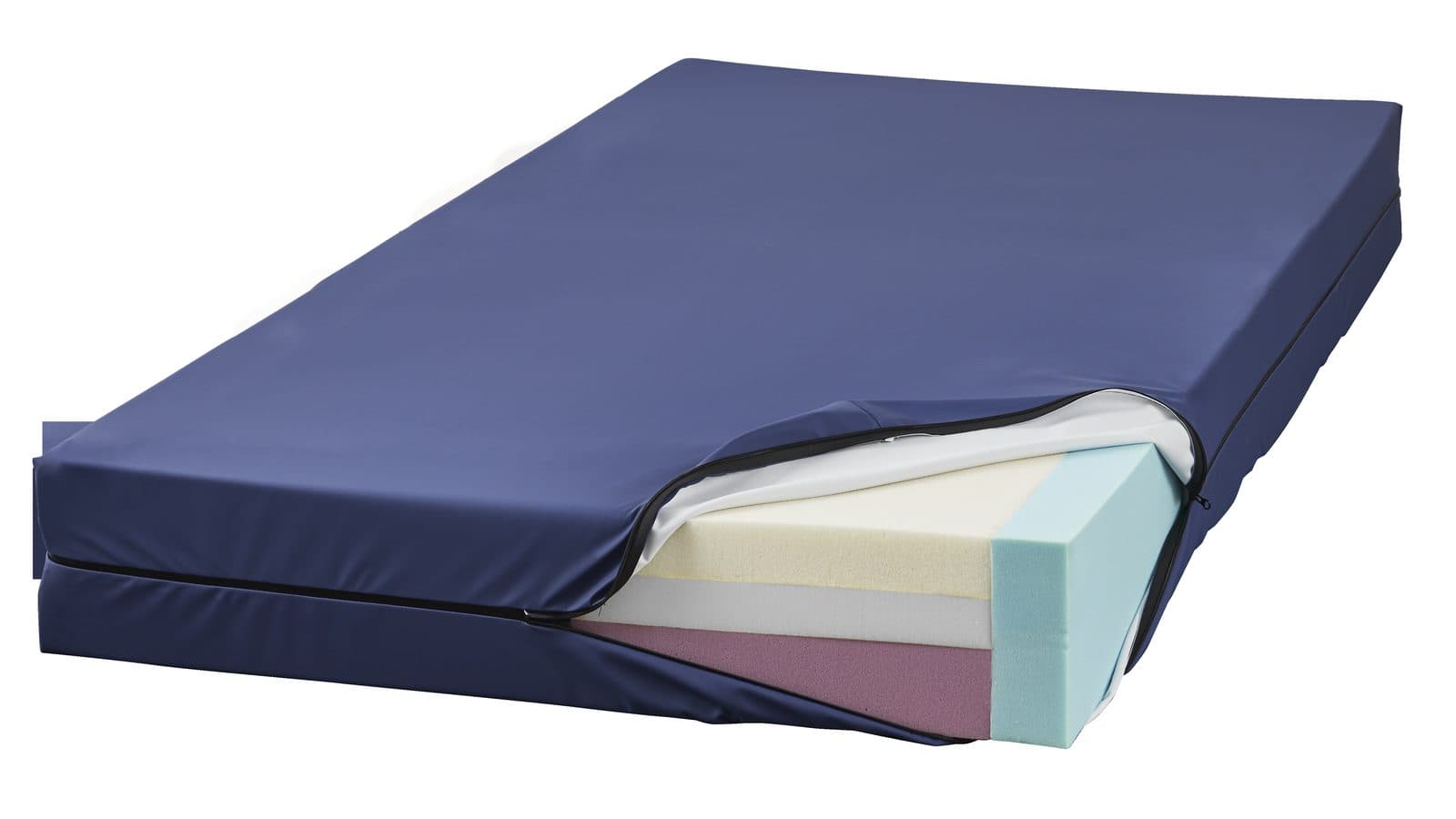
The person being cared for gives up nothing for any of this: the Sophie HiLo is a full adjustable bed with the same four-layer Australian-made mattress as our standard range, rated to 250 kg, with a 5-year comprehensive warranty as standard.
Getting it funded — and naming the real reason
Here's the part carers consistently undersell: your safety is a legitimate part of the clinical case. When an occupational therapist assesses for equipment, carer sustainability — whether the current arrangement is physically survivable for the person providing it — is a factor they genuinely weigh. Say it plainly: "I can't keep bending like this" belongs in the OT assessment, not swallowed.
The funding channels are the usual ones: NDIS assistive technology where the person you care for is a participant, or the Support at Home AT-HM scheme for older Australians. Sleep Sophie is a registered NDIS provider (4050070896); we prepare the quotes and paperwork, and our free in-home demonstration sets the bed up in your home for 30–60 minutes — you, the person you care for, and ideally the OT, all seeing it work before anything is decided. Obligation-free.
Frequently asked questions
How does a hi-lo bed actually help a carer?
It brings the person you're helping up to your standing working height, so dressing, washing, repositioning and linen changes stop happening bent over. Lowered, it makes transfers safer and reduces the height of any fall — the two ends of the range cover the two halves of the job.
Can carer strain justify equipment funding?
Yes — carer safety and sustainability are legitimate parts of the clinical case an occupational therapist weighs. If your back is a reason care at home might not keep working, say so plainly in the assessment.
Does the person being cared for lose anything with a hi-lo?
No — a hi-lo is a full adjustable bed. The Sophie HiLo has the same powered head and foot positioning with one-touch presets and includes the same four-layer Australian-made mattress as our standard beds. Height is an addition, not a trade-off.
What if pressure care is part of the picture too?
The HiLo pairs with the Sophie alternating air mattress, which lays over the bed to cycle pressure off the skin automatically. Together they cover positioning and pressure management — and reduce how much overnight repositioning falls on you.
If your back has started keeping score, call 1300 975 337 (1300 9 SLEEP) or send us an enquiry. Tell us what a normal day of caring looks like — we'll tell you honestly what a hi-lo would and wouldn't change.
This article is general information, not medical advice. For guidance on your situation, talk to your GP or occupational therapist.
Wondering if an adjustable bed would suit your situation?
Our sleep experts talk with Australians in similar situations every day. No pressure, no jargon — just honest answers about what may help you rest more comfortably.
1300 975 337 (1300 9 SLEEP) · Australian-based team · Explore the Sophie HiLo adjustable beds
Rated 4.8 from 227 reviews on ProductReview.com.au · Free in-home demonstration · Interest-free options via Humm, Brighte & Payright for approved purchasers
Using NDIS or Support at Home funding?
Sleep Sophie is a registered NDIS provider (4050070896), and Sophie adjustable beds and lift recliners are ARTG-registered Class 1 medical devices (ARTG 326115). Beds can be funded through NDIS assistive-technology budgets where an occupational therapist recommends them; the Support at Home program has its own equipment pathway. We prepare quotes suitable for plan approval — see how NDIS funding works or Support at Home, or call and we’ll walk you through it.
Ask us about this bed
Free delivery and installation, Australia-wide — tell us what you’re after and we’ll get back to you with straight answers.