
Can the NDIS Fund an Adjustable Bed? An Honest Guide to How It Works
24 July 2026 · Nathan Kerrins · Updated 3 October 2026
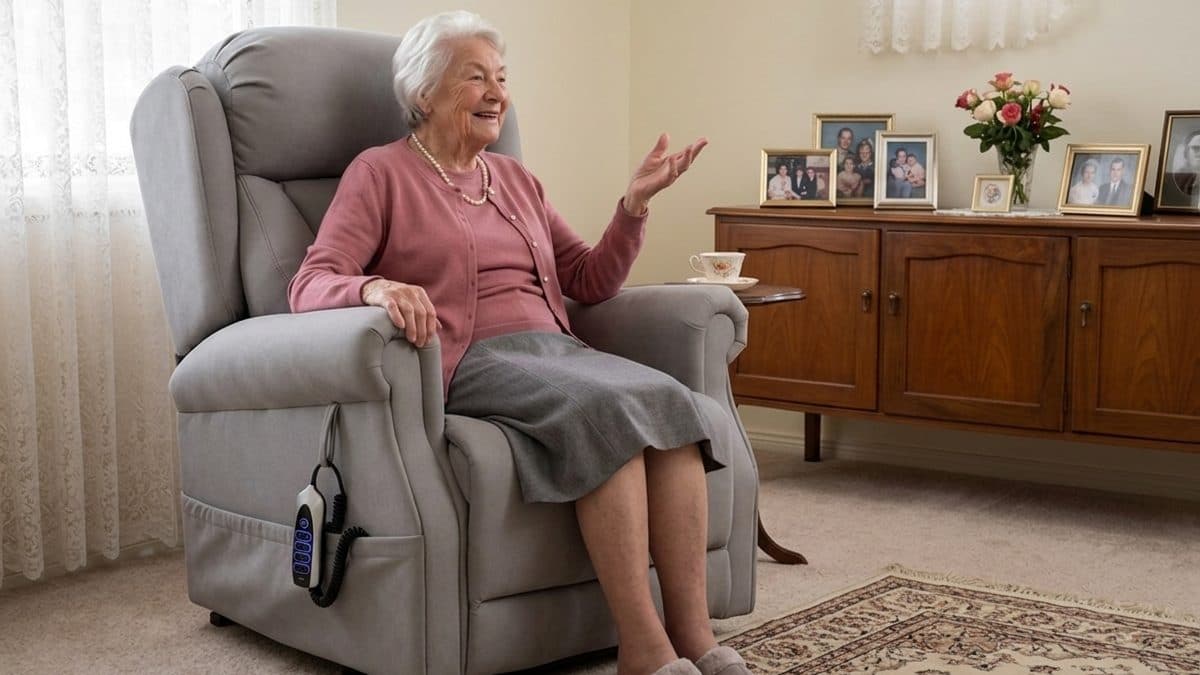
Yes, an adjustable bed can be funded as NDIS assistive technology where it's reasonable and necessary for your disability needs and an occupational therapist recommends it — it isn't automatic. Outside the NDIS, a bed may also be funded through DVA, Support at Home or a state equipment scheme for eligible veterans, older Australians or people with other disability needs.
If you or someone you care for is an NDIS participant and getting in and out of bed, changing position, or sleeping comfortably has become hard work, this is one of the most common questions we hear: can my plan actually pay for an adjustable bed? And if the NDIS isn't your situation — you're a veteran, an older Australian, or covered by a state scheme instead — the good news is the NDIS isn't the only door.
Disclosure first: this is the Sleep Sophie site. We sell the Sophie adjustable bed range and we're a registered NDIS provider, so we see this process from the supplier side every week. The steps below hold whichever brand of bed you end up choosing.
The short answer
Adjustable beds sit in a category the NDIS calls assistive technology (AT) — equipment that helps you do things your disability otherwise makes difficult. Beds with powered positioning are well-established assistive technology for people who need help with transfers, positioning in bed, or pressure management.
The NDIS will fund an adjustable bed when it is reasonable and necessary for your situation. In plain English, that generally means:
- The bed relates to your disability, not just general comfort — for example, it makes your transfers safer, lets you reposition independently, or supports pressure care.
- It connects to the goals in your plan — staying independent at home is the classic one.
- An allied health professional — almost always an occupational therapist (OT) — has put that reasoning in writing.
No supplier can promise your plan will cover a bed, and you should be wary of anyone who does. What a good supplier can do is give your OT and plan manager exactly what they need to make the case properly.
Where a bed sits in your plan
Assistive technology is funded through the capital budget of an NDIS plan, and the process scales with the cost of the item. The NDIS lists adjustable beds as mid-cost assistive technology ($1,500–$15,000), which is why it expects written evidence — an OT's advice explaining why this equipment, for this person — and a quote from a supplier before it approves anything.
The table below summarises the funding landscape as it stands, with the source for each fact so you can check it yourself or hand it to your OT or plan manager.
| Scheme | What it can fund | Source |
|---|---|---|
| NDIS assistive technology | Beds and other AT where reasonable and necessary, tied to disability needs and plan goals | ndis.gov.au |
| NDIS AT cost tiers | Low-cost (under $1,500), mid-cost ($1,500–$15,000), high-cost (over $15,000) — evidence requirements increase with tier | ndis.gov.au |
| DVA Rehabilitation Appliances Program | Can fund an adjustable electric bed for eligible veterans with an assessed clinical need | dva.gov.au |
| Support at Home (AT-HM) | Funds assessed equipment for eligible older Australians: up to $500, $2,000 or $15,000 depending on tier (higher AT amounts can be approved with evidence) | myagedcare.gov.au |
| State equipment schemes | EnableNSW, Victoria's Aids and Equipment Program, Queensland's MASS and equivalents in SA, WA, Tas, ACT and NT | state health department program pages |
The exact dollar thresholds and evidence rules are updated by the NDIA from time to time, so treat your OT and plan manager as the source of truth on the current process — or call us and we'll tell you what we're seeing on the ground right now.
The pathway, step by step
- Talk to your occupational therapist. Describe what's hard: getting out of bed, sitting up, reflux at night, swelling, pressure areas, a partner or carer straining to help you. If you don't have an OT, your support coordinator, plan manager or GP can point you to one. We've written a separate guide to what the OT assessment involves.
- The OT recommends the equipment in writing. A good recommendation names the type of equipment, links it to your disability and plan goals, and covers why lower-cost alternatives don't do the job.
- Get a quote. This is where we come in — we prepare a formal quote and the product information your OT or plan manager needs, usually within a couple of business days. If your OT wants specifications or a conversation first, we talk with them directly.
- Funding is arranged according to how your plan is managed. Self-managed: you purchase and claim per your plan rules. Plan-managed: your plan manager pays our invoice. Agency-managed: the purchase goes through a registered provider — which Sleep Sophie is. We've worked with all three.
- Delivery, installation and demonstration — free. Our own team delivers and sets up the bed anywhere in Australia, shows you (and anyone who helps care for you) every function, and takes the packaging away.
Which Sophie products can be funded?
All of them, in the right circumstances — the question is always what your needs justify:
- Sophie adjustable beds — powered head and foot positioning for independent repositioning and safer transfers, and positions some people find more comfortable for reflux (not a replacement for professional medical advice). Rated to 320kg, with a four-layer Australian-made mattress included.
- Sophie HiLo adjustable beds — everything above plus whole-bed height adjustment, the feature OTs recommend for carer access and harder transfers. We've covered what a hi-lo bed is separately.
- Sophie Embrace lift recliners — four-motor chairs that help you stand safely from sitting.
- Sophie alternating air mattresses — ARTG-registered pressure-care systems, usually recommended as part of a clinician-led pressure care plan.
Sleep Sophie is a registered NDIS provider (4050070896), and Sophie adjustable beds and lift recliners are ARTG-registered Class 1 medical devices (ARTG 326115).
What if the NDIS isn't the right fit — what other funding exists?
The NDIS is built around disability, so plenty of people asking this question don't fit its eligibility criteria at all — and plenty of NDIS participants also want a backup plan if their application doesn't land. Either way, the NDIS is not the only funding pathway.
- Veterans: DVA's Rehabilitation Appliances Program can fund an adjustable electric bed for eligible veterans with an assessed clinical need. It sits entirely outside the NDIS and runs on its own eligibility and assessment process.
- Older Australians: Support at Home's AT-HM scheme funds assessed equipment needs, including beds, for people accessing aged care support. We've covered this pathway in detail in our guide to what Medicare and aged-care schemes actually cover.
- State-based support: depending on where you live, state equipment schemes such as EnableNSW, Victoria's Aids and Equipment Program or Queensland's MASS may fund assistive technology through the public health system, separate from both the NDIS and Commonwealth aged-care programs.
None of these schemes guarantee an outcome any more than the NDIS does — each has its own assessment, its own evidence requirements and its own budget. If one door doesn't open, it's worth checking whether another applies to your circumstances before ruling out funded support altogether.
Is renting an option while you wait on a decision?
Funding decisions — NDIS or otherwise — can take weeks, and sometimes longer if a plan review is needed. If your need is urgent, short-term hire can bridge that gap while your OT recommendation, quote and application work through the system. We've weighed up the full rent-versus-buy decision for adjustable beds in a separate guide, including when hire genuinely makes more sense than buying.
If hire is on the table, our guide to hospital bed hire and funding covers how that works, what to expect from a hired hospital-style bed, and how it compares with buying outright once your funding situation is clearer. There's no wrong order to do this in — some families hire first and buy once funding is confirmed, others buy outright and skip hire altogether. What matters is matching the option to how urgent your need is and how confident you are in the funding outcome.
What the NDIS won't do — the honest part
- It won't fund comfort alone. "I'd sleep better" isn't enough; the bed must address a disability-related need. If that's not your situation, self-funding with our interest-free payment options may be the simpler path.
- Nothing is pre-approved. The NDIS doesn't keep a list of approved beds, and no retailer's product is "guaranteed NDIS funded". Decisions are made plan by plan.
- The paperwork order matters. Buying first and seeking funding afterwards rarely ends well for agency-managed plans in particular. Get the OT recommendation and quote lined up first.
How Sleep Sophie helps
We've supported NDIS participants through this process across self-, plan- and agency-managed plans. Practically, that means: quotes and product documentation prepared for plan approval, direct conversations with your OT when they want specifications, and a free in-home demonstration — our team brings the bed to your home, sets it up, and you interact with it for 30–60 minutes while we're there, so everyone (you, your carer, your OT if they'd like to attend) can confirm it's fit for purpose before any funding is committed. It's obligation-free and costs nothing.
If you're on aged-care funding instead of the NDIS, the equivalent pathway runs through the Support at Home program — different scheme, same idea.
Want a straight answer about your situation? Call 1300 975 337 (1300 9 SLEEP) or send us an enquiry — we'll tell you honestly whether the NDIS pathway fits, what other schemes might, and what to line up first.
This information is general in nature and not a replacement for professional medical advice. Talk to your GP, physiotherapist or occupational therapist about your situation.
Compare the Sophie range with a real person
No call centres, no scripts — tell us what you need and we’ll give you straight answers on fit, delivery and funding.
1300 975 337 (1300 9 SLEEP) · Australian-based team · Explore the Sophie adjustable bed range
Rated 4.8 from 227 reviews on ProductReview.com.au · Free in-home demonstration · Interest-free options via Humm, Brighte & Payright for approved purchasers
Using NDIS or Support at Home funding?
Sleep Sophie is a registered NDIS provider (4050070896), and Sophie adjustable beds and lift recliners are ARTG-registered Class 1 medical devices (ARTG 326115). Beds can be funded through NDIS assistive-technology budgets where an occupational therapist recommends them; the Support at Home program has its own equipment pathway. We prepare quotes suitable for plan approval — see how NDIS funding works or Support at Home, or call and we’ll walk you through it.
Ask us about this bed
Free delivery and installation, Australia-wide — tell us what you’re after and we’ll get back to you with straight answers.