
Who Pays for Hospital Bed Hire in Australia?
3 October 2026 · Nathan Kerrins
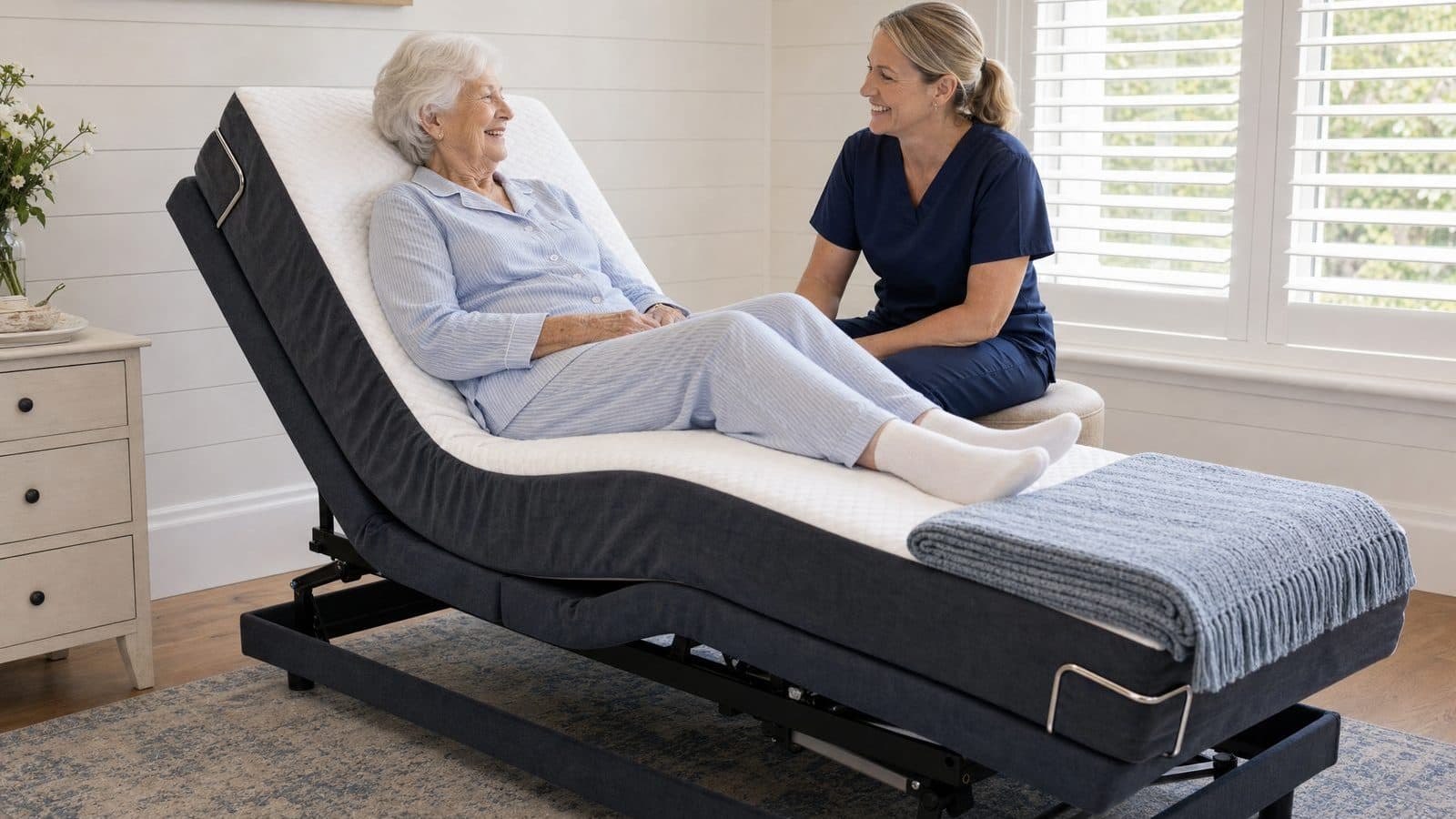
Most people pay for hospital bed hire themselves, at roughly $65–$140 a week from an Australian equipment-hire provider. Some or all of the cost may instead be covered through the NDIS, DVA's Rehabilitation Appliances Program, Support at Home, or a state equipment scheme, if an occupational therapist or clinician assesses the bed as necessary and the scheme approves it.
If you've just been handed a discharge plan, or a GP has said "you'll need a hospital-style bed at home", the funding question usually lands second — right after "how do I even get one delivered by Friday". The honest answer is that there's no single system that pays for everyone. It's a patchwork: self-funded hire for most people, several Commonwealth schemes for specific groups, and a different state scheme depending on where you live. This guide walks through who actually pays, in the order it's worth checking.
Who typically pays for hospital bed hire?
For most households, the default is paying the weekly hire fee out of pocket. Hospital-style beds designed for clinical settings are widely available from Australian equipment-hire providers, typically in the roughly $65–$140 per week range depending on the model, the region and how long you need it. That's the starting assumption to work from — funding schemes can reduce or remove that cost, but only where an assessed need and eligibility criteria line up, and never automatically.
Before assuming you'll be paying full price, it's worth a few phone calls. A hospital discharge planner, your GP, or an occupational therapist can usually tell you within a conversation whether you're likely to qualify for one of the pathways below — and if a transition-care or post-acute program is already involved in your care, a loan bed may already be built into that arrangement at no extra cost.
Can NDIS pay for hospital bed hire?
Potentially, yes. The NDIS recognises equipment hire — not just purchase — as a legitimate assistive technology option, particularly where a participant's needs may change over time and buying outright isn't the right fit yet. This isn't automatic: it generally requires an occupational therapist's assessment connecting the bed to your plan goals, and the NDIS itself decides what's "reasonable and necessary" for your situation. Start with your OT or support coordinator, and read the NDIS's own explanation of how assistive technology funding works before you assume either a yes or a no.
Can DVA pay for hospital bed hire for veterans?
For eligible veterans, DVA's Rehabilitation Appliances Program (RAP) can fund an adjustable electric bed where a health professional has assessed a clinical need connected to your entitlement — see DVA's national guidelines for adjustable electric beds. DVA can also fund a broader range of aids, equipment and home modifications for clients with an assessed clinical health care need, detailed on its aids and equipment page. As with the NDIS, the pathway runs through a health professional's assessment rather than a straight application, and we've covered veteran-specific funding for both beds and lift recliners in more depth in our DVA funding guide.
Does aged care (Support at Home) help pay?
It can, for eligible older Australians. The Support at Home program's assistive technology and home modifications scheme (AT-HM) gives eligible participants upfront funding for equipment, including beds, based on an assessed need — full detail is on the My Aged Care AT-HM page. If you're already receiving a Support at Home package, this is usually the fastest place to ask, since your existing aged-care assessor already has the context to guide you.
What does each state's equipment scheme cover?
Every state and territory runs its own equipment scheme, and none of them work quite the same way. Some fund a subsidised purchase, some run a loan pool, and Tasmania charges a one-off loan fee rather than a weekly hire rate. Nearly all require a referral from a GP, OT or other authorised health professional, and every one is means- or eligibility-tested — none of them guarantee a bed just because you ask. Treat every link below as "may help", never "will pay".
| State/territory | Scheme | What it covers | Official link |
|---|---|---|---|
| NSW | EnableNSW Equipment Allocation Program | Loans or funds beds and mattresses for eligible NSW residents, usually with an income-based co-payment | enable.health.nsw.gov.au |
| Victoria | Victorian Aids and Equipment Program (SWEP) | Subsidised beds and other assistive technology for eligible Victorians with a permanent or long-term disability, or who are frail-aged | health.vic.gov.au |
| Queensland | Medical Aids Subsidy Scheme (MASS) | Subsidised loan or private-ownership equipment for eligible Queenslanders with a permanent, stabilised condition, following clinician assessment | health.qld.gov.au |
| South Australia | Equipment Program | Funds or arranges equipment, including hospital beds, for eligible South Australians not otherwise covered by Commonwealth options, via OT/clinician assessment | equipmentprogram.sa.gov.au |
| Western Australia | Community Aids and Equipment Program (CAEP) | Funds equipment and home modifications for eligible WA residents with a long-term health, disability or age-related need, referred by a GP or specialist | wa.gov.au |
| Tasmania | TasEquip | State-wide equipment loan scheme, accessed only via referral from an authorised prescriber; a loan fee (around $50) applies rather than weekly hire | health.tas.gov.au |
| ACT | ACT Equipment Scheme (ACTES) | Can fully fund hospital beds for eligible ACT residents with a long-term illness or disability | canberrahealthservices.act.gov.au |
| Northern Territory | Territory Equipment Program (TEP) | Provides equipment and aids to eligible NT residents with a functional impairment, applied for by an approved health professional | nt.gov.au |
Notice the pattern: a referral or clinician assessment shows up in every single row. If you haven't yet had an OT, GP or hospital discharge team look at your situation, that's the step that unlocks every state scheme on this list — worth doing before you ring around hire companies.
How do I find out what I'm eligible for?
Start with whichever assessment is already closest to you. If you're an NDIS participant, ask your planner or support coordinator. If you're a veteran, your DVA case manager is the first call. If you're receiving aged care, your Support at Home assessor can tell you about AT-HM on the spot. And if none of those apply, your state's scheme is usually reached through a GP referral, a hospital discharge team, or a community health OT — each pathway above sets out its own referral process, so working from the official link is more reliable than a general search.
It's also worth asking each scheme directly whether it prefers hire or purchase for your situation, since some (like the NSW and Victorian programs above) run as loan pools rather than cash grants, and won't fund a private hire invoice after the fact. Getting the order of operations right — assessment first, then hire or purchase — saves a lot of back-and-forth.
Hire now, or is buying the better move?
Funding aside, hire and buying answer different timelines. A hospital-style hire bed makes sense for a short, defined recovery window with a clear end date — you're not committing to furniture for a temporary need. Note that most state schemes are designed for long-term or permanent needs, so for a short recovery window, self-funded hire, or equipment arranged through a hospital or transition-care program, is the more common route. If the need looks ongoing or permanent instead, the weekly hire cost keeps running with nothing to show for it at the end, and it's worth comparing that running total against buying outright. We've laid out that comparison properly, including where finance fits in, in our pillar guide on renting vs buying an adjustable bed in Australia.
If Medicare is part of your thinking, it's worth knowing upfront that it doesn't fund adjustable or hospital beds at all — we've covered exactly what Medicare does and doesn't cover, and where the funding actually sits instead, in does Medicare cover adjustable beds in Australia? And if you decide buying makes more sense than ongoing hire, our guide to NDIS funding for an adjustable bed walks through that pathway for purchase specifically. Sleep Sophie offers interest-free payment options through Humm, Brighte and Payright, with no-deposit options available to approved purchasers and a choice of repayment terms — see our electric adjustable beds page — for anyone paying privately.
A few more funding and hire questions
A few related questions come up often enough that they're worth a straight answer, even if they're not the main event here. Some private health extras policies contribute toward equipment hire under "health aids" or similar categories — check your own policy schedule, since providers vary widely. If your assessed need changes partway through a hire period, tell whichever scheme or assessor is involved — equipment needs are commonly reviewed and adjusted rather than locked in for the full hire term. And ask the scheme before hiring privately, as most don't reimburse hire arranged outside their process. For the full picture on hire pricing itself, see what adjustable bed rental costs in Australia and can you rent an adjustable bed in Australia?
None of the schemes above promise funding, and eligibility, waiting times and available equipment change from year to year — always confirm current details directly with the scheme before you plan around it.
Compare the Sophie range with a real person
No call centres, no scripts — tell us what you need and we’ll give you straight answers on fit, delivery and funding.
1300 975 337 (1300 9 SLEEP) · Australian-based team · Explore the Sophie adjustable bed range
Rated 4.8 from 227 reviews on ProductReview.com.au · Free in-home demonstration · Interest-free options via Humm, Brighte & Payright for approved purchasers
Using NDIS or Support at Home funding?
Sleep Sophie is a registered NDIS provider (4050070896), and Sophie adjustable beds and lift recliners are ARTG-registered Class 1 medical devices (ARTG 326115). Beds can be funded through NDIS assistive-technology budgets where an occupational therapist recommends them; the Support at Home program has its own equipment pathway. We prepare quotes suitable for plan approval — see how NDIS funding works or Support at Home, or call and we’ll walk you through it.
Ask us about this bed
Free delivery and installation, Australia-wide — tell us what you’re after and we’ll get back to you with straight answers.