
Does Medicare Cover Adjustable Beds in Australia?
3 October 2026 · Nathan Kerrins
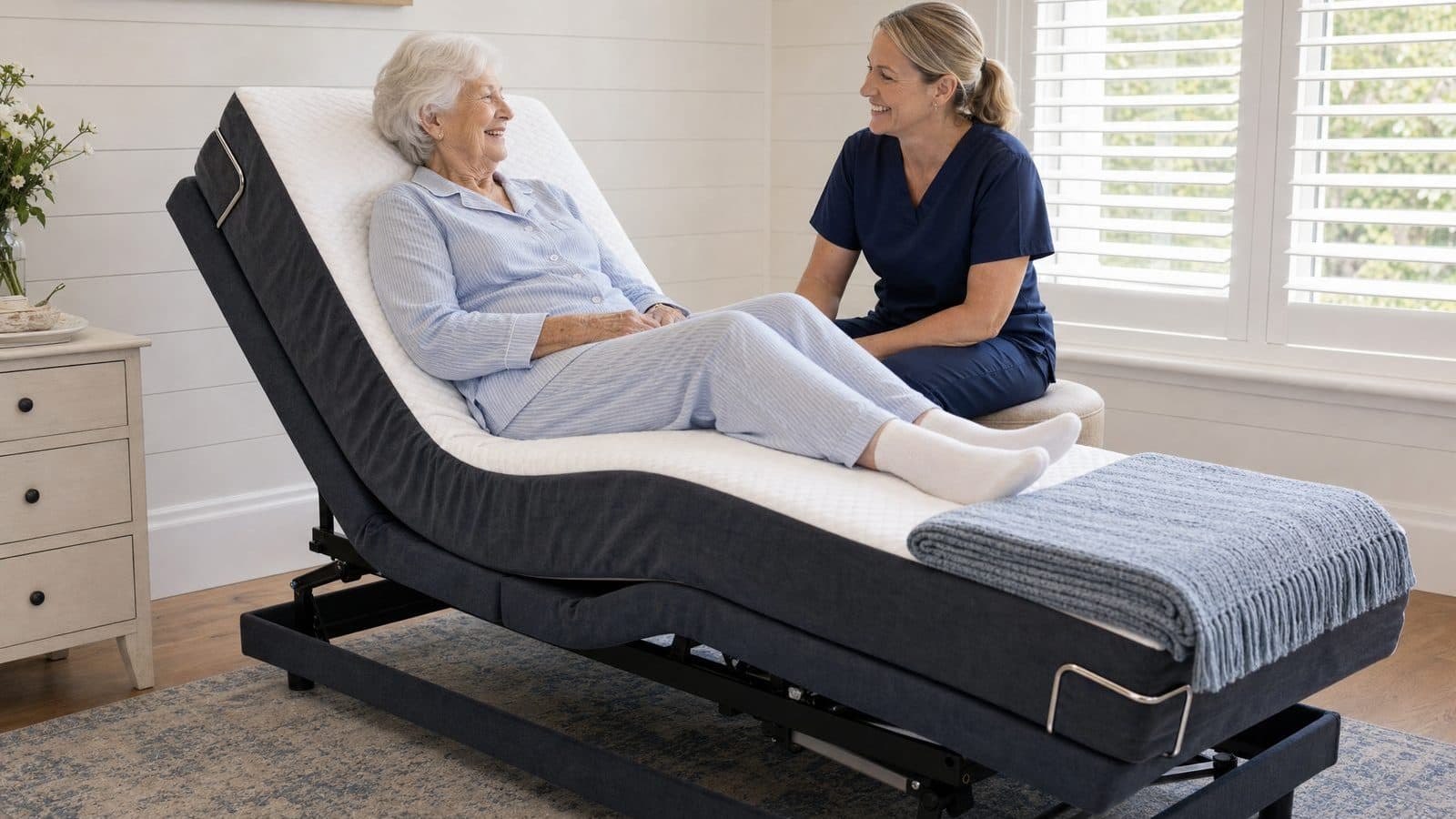
No, Medicare doesn't fund beds — the Medicare Benefits Schedule covers medical services like consultations and procedures, not home equipment. Funding for an adjustable or hospital-style bed can instead come from the NDIS, DVA, the Support at Home program, a state equipment scheme, or private health extras cover — each with its own eligibility rules and no guarantee of approval.
If you've landed here after a Google search that turned up American forums and Medicare.gov pages, that's worth clearing up first: Australian Medicare and US Medicare are entirely different systems, run by different governments, with different rules. Most of what you'll find written about "Medicare and adjustable beds" online is American, and it doesn't apply here. This guide covers only the Australian scheme, and the actual pathways that can help fund a bed if you need one.
It's an easy mix-up to make. The word "Medicare" means two very different things depending on which country's search results you land on, and the two systems don't share rules, eligibility or even a funding philosophy. If a page you're reading mentions "Medicare Advantage", "Medicare Part B" or American dollar figures, you're on the wrong Medicare for this question — bookmark this page instead and come back to it when you're ready to look at the Australian pathways properly.
Does Medicare pay for an adjustable bed?
No. Medicare — the Australian scheme funded through the Medicare Benefits Schedule (MBS) — doesn't fund equipment of any kind, adjustable beds included. It's built to subsidise the cost of seeing a doctor or specialist, having a test done, or undergoing a procedure. A bed, however clinically necessary it might feel, sits outside that scope entirely. This trips a lot of people up, because Medicare is the first word that comes to mind for anything health-related in Australia — but for home equipment, it simply isn't the right door to knock on.
What does Medicare actually cover?
Medicare's job is to subsidise medical services: GP and specialist consultations, diagnostic tests, and eligible procedures, according to the Department of Health's own explanation of what Medicare covers. Home medical equipment and aids — beds, hearing aids, home nursing and similar items — fall outside that list. Some of those things may instead be covered under a private health insurance extras (general treatment) policy, subject to that policy's own limits, which is a different system again with different rules. Knowing this distinction early saves a lot of wasted phone calls to Medicare about a bed it was never designed to fund.
Can NDIS fund an adjustable bed instead?
For NDIS participants, yes, potentially. The NDIS's assistive technology guidance confirms that an adjustable bed can be funded as assistive technology where it's assessed as reasonable and necessary for a participant's disability needs. That's not automatic — it usually follows an occupational therapist's assessment connecting the bed to your plan goals, and the NDIS makes the final call. We've written a longer explainer on how the NDIS funding pathway for adjustable beds actually works, step by step, if this is the door you're looking at.
Can DVA fund a bed for veterans?
For eligible veterans, DVA is a genuine pathway. Its Rehabilitation Appliances Program (RAP) national guidelines for adjustable electric beds set out how RAP can fund an adjustable bed for a veteran with an assessed clinical need, prescribed by a qualified health professional. As with every scheme on this page, the assessment and prescription come first — a veteran doesn't order a bed and claim it back, DVA arranges supply once the clinical need is established.
Does the Support at Home program help?
For older Australians receiving in-home aged care, yes, through a specific stream. The Assistive Technology and Home Modifications (AT-HM) scheme, part of the Support at Home program, gives eligible older Australians upfront funding for equipment and home modifications based on an assessed need. It's a separate funding stream from your day-to-day Support at Home service budget, which matters because it means you're not saving up service dollars for months to afford a bed. We've gone deeper on the AT-HM pathway, including the funding tiers and the window you have to use it, in our Support at Home funding guide for adjustable beds.
What about state equipment schemes?
Every state runs its own aids-and-equipment program, and eligibility, criteria and co-payments differ between them, so check the one for where you live rather than assuming national rules apply. Three examples:
- New South Wales: EnableNSW's Equipment Allocation Program funds or loans beds and mattresses to eligible NSW residents who are Medicare-enrolled and meet the health-need criteria; a means-tested co-payment may apply.
- Victoria: the Victorian Aids and Equipment Program, administered via SWEP, provides subsidised assistive technology, including beds, to eligible Victorians.
- Queensland: the Medical Aids Subsidy Scheme (MASS) funds medical aids and equipment for eligible Queenslanders with a permanent, stabilised condition or disability.
If you're in another state or territory, your local health department will run an equivalent program — an OT, hospital discharge planner or your GP is usually the fastest way to find the right one for your postcode.
Will private health insurance extras cover it?
Possibly, but only if your specific policy includes it. Items like home medical equipment aren't covered by Medicare but may sit under a private health extras (general treatment) policy, subject to that policy's own annual limits. Coverage varies significantly between insurers and even between tiers of the same insurer, so the only reliable answer is to check your own policy documents or call your fund directly before assuming a benefit exists.
How do you find the right pathway for your situation?
With six different systems on this page, the honest starting point isn't a website — it's a conversation with whoever already knows your situation clinically. If you're under 65 and living with disability, that's usually your NDIS support coordinator or an occupational therapist who can assess whether a bed connects to your plan goals. If you're a veteran, your GP or DVA case coordinator can confirm whether RAP applies to your entitlement. If you're an older Australian already receiving aged care services, your Support at Home provider or assessor is the right first call for AT-HM funding. And if none of those apply, your state's aids-and-equipment program — or a hospital discharge planner, if you're coming home after a stay — can point you to the right state-based door. None of these conversations cost anything to start, and getting the assessment right the first time avoids weeks of chasing the wrong scheme.
Key facts at a glance
| Scheme | What it can fund | Who it's for |
|---|---|---|
| Medicare (MBS) | Medical services only — not beds or equipment | All Medicare card holders — but not for home equipment |
| NDIS | Adjustable beds as assistive technology, if reasonable and necessary | NDIS participants, usually with an OT assessment |
| DVA (RAP) | Adjustable electric beds with an assessed clinical need | Eligible veterans, prescribed by a health professional |
| Support at Home (AT-HM) | Upfront equipment funding based on assessed need | Eligible older Australians in the Support at Home program |
| State equipment schemes | Beds and mattresses, criteria vary by state | Eligible residents of that state, e.g. EnableNSW, VIC Aids and Equipment, QLD MASS |
| Private health extras | Equipment benefits if your specific policy includes them | Policyholders — check your own policy limits |
Sources: health.gov.au, ndis.gov.au, dva.gov.au, myagedcare.gov.au, enable.health.nsw.gov.au, health.vic.gov.au, health.qld.gov.au. Checked September 2026. No approval is guaranteed under any scheme — eligibility, assessment and funding decisions vary by program and individual circumstances.
If funding falls through: renting vs buying
Not everyone will land funding, and that's a real possibility worth planning for rather than a failure. Assessments take time, some situations genuinely fall outside every scheme's criteria, and applications can be knocked back on eligibility grounds that have nothing to do with how much someone needs a bed. If none of the schemes above apply to your situation, or the timeline doesn't suit, the practical choice becomes renting a hospital-style bed designed for clinical settings for a short, defined period, or buying an adjustable bed outright. Renting tends to make more sense for a clearly time-limited recovery; buying tends to make more sense once a need looks ongoing, since a rented bed is a hospital-style bed and not a piece of furniture chosen for comfort. We've laid out that decision properly, including when each option genuinely makes more sense, in our rent vs buy guide for adjustable beds. If hire is the direction you're leaning, our hospital bed hire and funding guide covers how hire pricing and funding interact, and our adjustable bed financing guide covers the buying side in more detail.
Where Sleep Sophie fits in
Sleep Sophie is a registered NDIS provider (provider number 4050070896), which means we can supply the paperwork and product detail an occupational therapist or support coordinator needs when a bed is part of someone's NDIS plan — but registration doesn't guarantee the NDIS will fund any particular bed; that call sits with your plan and your assessor. For anyone buying outright, whether funding didn't come through or simply wasn't the right fit, interest-free payment options are available through Humm, Brighte and Payright for approved purchasers, with a choice of repayment terms. You can see the full range of Sleep Sophie electric adjustable beds and get exact pricing there, or book a free in-home demonstration so you can see and try a bed before deciding anything.
Compare the Sophie range with a real person
No call centres, no scripts — tell us what you need and we’ll give you straight answers on fit, delivery and funding.
1300 975 337 (1300 9 SLEEP) · Australian-based team · Explore the Sophie adjustable bed range
Rated 4.8 from 227 reviews on ProductReview.com.au · Free in-home demonstration · Interest-free options via Humm, Brighte & Payright for approved purchasers
Using NDIS or Support at Home funding?
Sleep Sophie is a registered NDIS provider (4050070896), and Sophie adjustable beds and lift recliners are ARTG-registered Class 1 medical devices (ARTG 326115). Beds can be funded through NDIS assistive-technology budgets where an occupational therapist recommends them; the Support at Home program has its own equipment pathway. We prepare quotes suitable for plan approval — see how NDIS funding works or Support at Home, or call and we’ll walk you through it.
Ask us about this bed
Free delivery and installation, Australia-wide — tell us what you’re after and we’ll get back to you with straight answers.