
Electric vs Manual Adjustable Beds: Pros and Cons
10 October 2026 · Nathan Kerrins
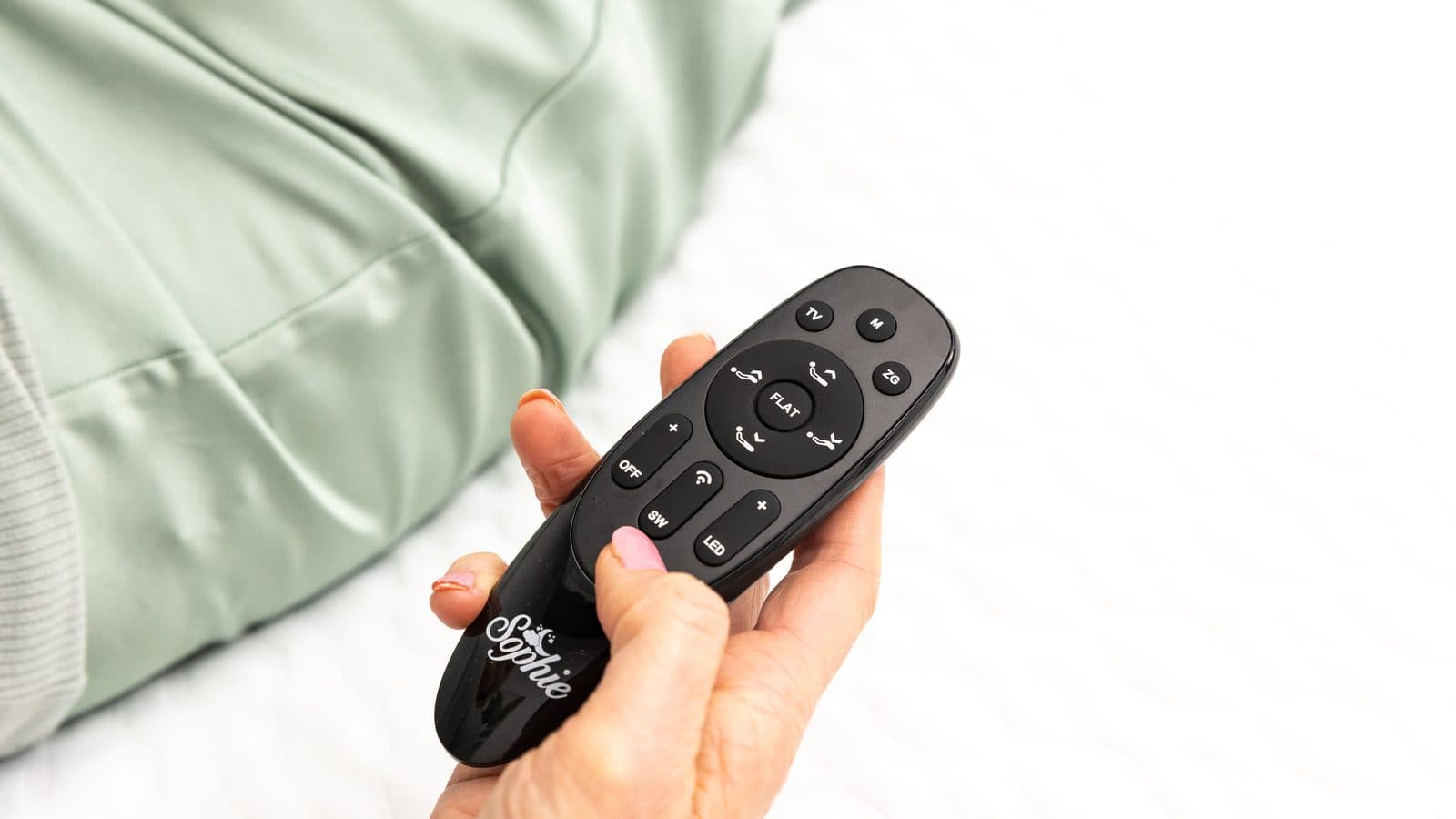
An electric adjustable bed uses motors and a remote to raise, lower and position the head and foot sections at the touch of a button. A manual bed uses hand cranks instead, which means no batteries or motors to service but more physical effort — and usually no independent positioning for someone lying in it.
It's a simpler question than most people expect once you strip away the jargon, but it gets confused with two other comparisons — full-electric vs semi-electric, and whole-bed height (the hi-lo feature) — that are asking something different. This guide keeps electric-vs-manual to itself, so you can weigh it up cleanly before moving on to those other decisions.
Disclosure first: every Sleep Sophie bed is electric (head and foot are motorised by remote), so we don't sell manual beds. That's exactly why we've tried to write this one straight — including where a manual bed is the more sensible choice.
What's the difference between an electric and a manual adjustable bed?
The split comes down to how the bed moves. An electric adjustable bed has motors built into the base, controlled by a wireless remote, that raise and lower the head and foot sections on their own. A manual adjustable bed has hand cranks instead — usually one for the backrest, one for the knee section, and sometimes one for overall height — that someone turns by hand to move the bed into position.
Both categories exist because they solve different problems. Motorised controls reduce the physical effort a carer or the person in the bed has to put in; hand cranks remove any dependence on batteries or a power point. Neither is "better" in the abstract — it depends on who's using the bed and how.
| Electric adjustable bed | Manual adjustable bed | Source | |
|---|---|---|---|
| How it moves | Motorised base, wireless remote control | Hand crank(s) for backrest, knee section and sometimes height | Harmony Home Medical Supply |
| Can the occupant reposition themselves? | Yes, independently, at the press of a button | Usually no — someone else generally needs to turn the crank | Schröder Health |
| Power needed? | Mains power; some models add battery backup so the bed can still be lowered in an outage (Sophie beds include it) | None — works with no power supply at all | Harmony Home Medical Supply |
| Physical effort, day to day | None — one-touch control | Cranking effort every time the position changes | Schröder Health |
| Whole-bed height adjustment | Not included on a standard electric bed — that's a separate HiLo feature | Some manual beds include a height crank | content-rules.md; Sophie HiLo comparison |
| Sleep Sophie range | Electric: independent head and foot motors, wireless remote, one-touch presets including Zero Gravity; powered whole-bed height on the HiLo only | Not part of the Sophie range | content-rules.md |
The two external sources in that table are overseas medical-equipment suppliers (one in the US, one in Turkey) that don't sell in Australia. We cite them only for their neutral description of how each bed type works, not as a recommendation.
How does an electric adjustable bed actually work?
Each motorised section — head and foot — has its own motor, so the two move independently: head up for reading while the foot stays flat, or foot up on its own for a moment's relief, whatever suits. A wireless remote sends the command, and most ranges also build in one-touch preset positions, so you don't have to hold a button down while a section slowly reaches where you want it.
Sleep Sophie beds use premium Okin motors, one of the most recognised names in the adjustable bed industry, built for years of daily repeated movement. The remote also drives the Zero Gravity preset — a single button that moves both sections to a pre-set relaxed position instead of you adjusting head and foot separately by feel. Because the base is motorised anyway, an electric platform can also carry extras a hand-cranked frame simply has nowhere to put — Sophie beds include battery backup as standard, so a brief power interruption doesn't leave you stuck mid-position, plus USB ports and under-bed lighting built into the base.
What can you still get with a manual bed — and what can't you?
A manual adjustable bed still gives you an adjustable backrest and knee section — you just move them by hand crank rather than by remote. That's genuinely useful in specific situations: no power point required, nothing to charge, no motor that can eventually wear out, and a lower up-front cost in many cases.
What you generally give up is independence for the person lying in the bed. Cranking a backrest up while you're lying on it is awkward at best; in practice, most manual beds are adjusted by whoever is caring for the person in them, not by that person themselves. If getting in and out of bed or repositioning without help matters to you, that's the trade-off to weigh most heavily — not price or styling.
Who tends to prefer manual vs electric?
There's no strict rule here, but the pattern is fairly consistent. People who value independent movement — being able to sit up, lie back or find a comfortable reading position without waiting for someone else — tend to prefer electric. So do people sharing a room, since either partner can adjust their side without getting out of bed. People weighing up short-term or budget-constrained equipment, or anyone in a setting where reliable power access is genuinely uncertain, are more likely to consider manual.
It's also worth being clear about who these beds are for generally. Adjustable beds — electric or manual — are one of the fastest-growing bedding categories in Australia, and buyers span every age group, not just people with a diagnosed medical need. Plenty of people simply want a more comfortable way to read, watch TV or fall asleep.
Does "electric" mean the whole bed height adjusts, or just the head and foot?
Just the head and foot, on a standard electric adjustable bed. That's an important distinction, because it's easy to assume "electric" covers everything the bed can do. On the Sophie standard range, the base height is fixed at installation (between 47.5cm and 65cm, floor to base) and isn't something you adjust afterwards.
Whole-bed height adjustment — raising or lowering the entire bed, not just the head and foot sections — is a different feature altogether, found on the Sophie HiLo range. It's a common point of confusion, so if working height for a carer, or a lower bed for safer transfers, is what you actually need, that's a HiLo question rather than an electric-vs-manual one. We've also written separately about the closely related full-electric vs semi-electric distinction, which is about how many motorised sections a bed has, not about electric vs manual at all.
Which is easier to live with day to day?
For most households, electric wins on day-to-day convenience simply because adjustment becomes effortless — you press a button instead of reaching for a crank, and that difference compounds every single night. The trade-offs are the ones already covered above: an electric bed needs power, has motors that can eventually need servicing, and generally costs more up front than an equivalent manual bed.
That servicing question is worth a straight answer rather than a shrug. Sophie adjustable beds carry a 5-year comprehensive warranty as standard, extendable to 10 years, which covers the motors and moving parts that a manual bed simply doesn't have to worry about because it doesn't have them. Weigh that ongoing cover against the manual bed's lower purchase price and no-motors-to-fail simplicity — there's a real trade-off either way, not a wrong answer.
If you're still working out whether you need a fully electric bed at all, our guide to who actually needs a full-electric adjustable bed walks through that decision in more depth. And if cost is the sticking point rather than the mechanism itself, Sleep Sophie offers interest-free payment options through Humm, Brighte and Payright, with no-deposit options available to approved purchasers and a choice of repayment terms — see our adjustable bed financing guide for how that works.
Choosing between them, honestly
If independence and one-touch comfort matter more to you than up-front price, an electric adjustable bed is the more practical long-term choice — that's the case for most people researching this. If you need a bed that works with zero reliance on power, or the budget genuinely doesn't stretch to a motorised base, a manual bed remains a legitimate option; just go in clear-eyed about the physical effort it asks of whoever operates the cranks.
Our broader guide to features to look for in an adjustable bed covers the rest of the decision — motor quality, safety certifications, mattress compatibility and more — once you've settled the electric-vs-manual question for yourself.
Want to see the difference in person before you decide anything? Call 1300 975 337 (1300 9 SLEEP) or book a free in-home demonstration — our team brings a Sophie electric adjustable bed to your home, shows you every function, and answers the manual-vs-electric question against your own bedroom, your own routine and your own budget.
Compare the Sophie range with a real person
No call centres, no scripts — tell us what you need and we’ll give you straight answers on fit, delivery and funding.
1300 975 337 (1300 9 SLEEP) · Australian-based team · Explore the Sophie adjustable bed range
Rated 4.8 from 227 reviews on ProductReview.com.au · Free in-home demonstration · Interest-free options via Humm, Brighte & Payright for approved purchasers
Using NDIS or Support at Home funding?
Sleep Sophie is a registered NDIS provider (4050070896), and Sophie adjustable beds and lift recliners are ARTG-registered Class 1 medical devices (ARTG 326115). Beds can be funded through NDIS assistive-technology budgets where an occupational therapist recommends them; the Support at Home program has its own equipment pathway. We prepare quotes suitable for plan approval — see how NDIS funding works or Support at Home, or call and we’ll walk you through it.
Ask us about this bed
Free delivery and installation, Australia-wide — tell us what you’re after and we’ll get back to you with straight answers.