
What Is a Hi-Lo Adjustable Bed — and Who Actually Needs One?
24 July 2026 · Nathan Kerrins
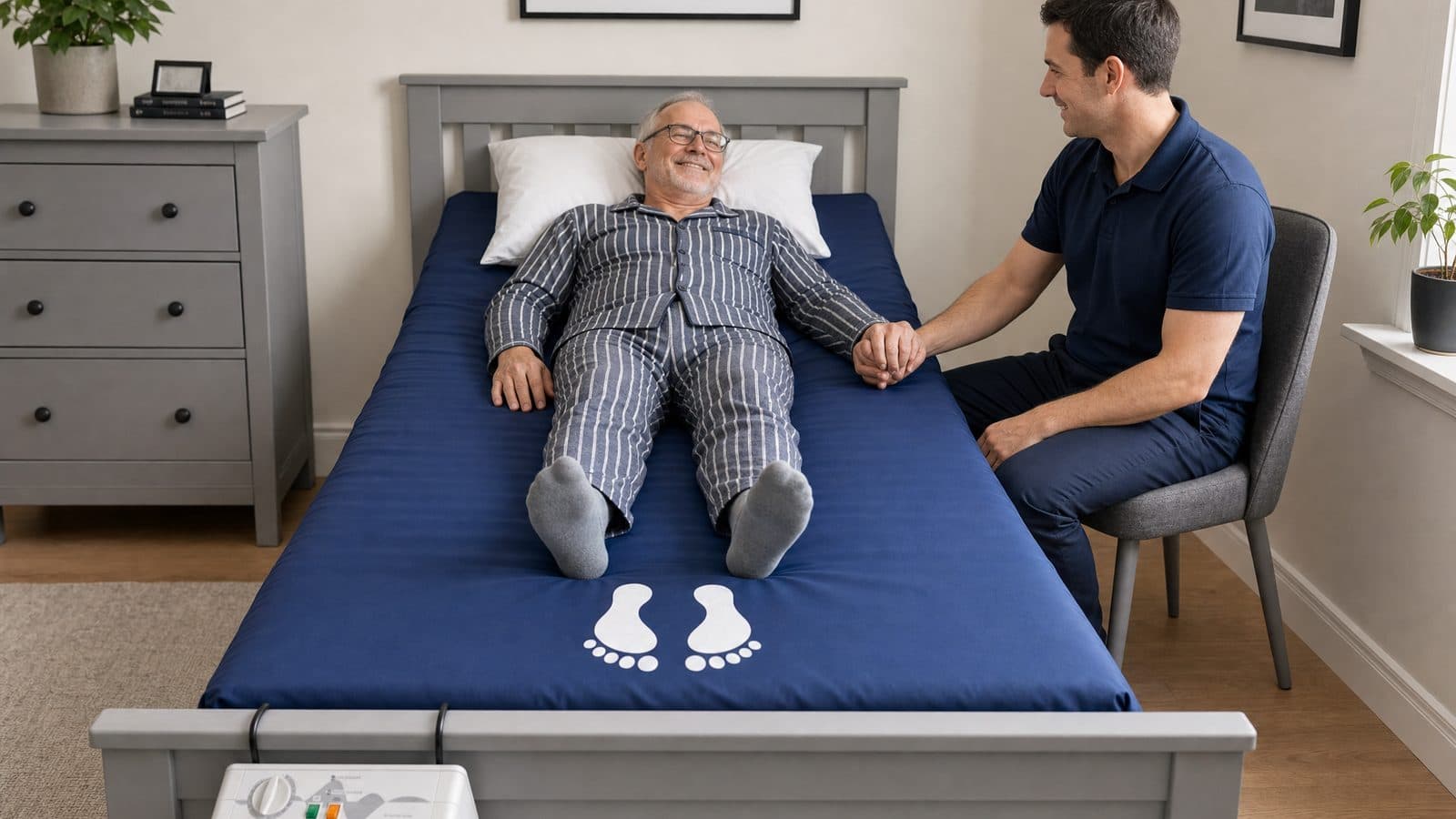
Most people know what an electric adjustable bed does: the head and feet raise and lower, so you can sit up to read, lift your legs, or find the position that finally lets you sleep. A hi-lo adjustable bed does all of that — and adds one more movement that changes everything for care at home: the entire bed platform travels up and down.
That single extra axis is the difference between furniture and genuine care equipment. This guide explains what the height adjustment actually does day to day, who genuinely needs it, and — just as honestly — who doesn't.
Disclosure first: this is the Sleep Sophie site. We sell the Sophie HiLo adjustable bed alongside our standard adjustable range, so we have no reason to upsell you to a hi-lo you don't need — both are ours.
The two kinds of adjustment, explained
- Positioning (head and foot) — what every adjustable bed does. Raise the head for reading, reflux or easier breathing; raise the legs for swelling and circulation; combinations like zero-gravity for pressure relief and comfort.
- Height (the hi-lo part) — the whole platform rises and falls electrically. Raised, the bed comes up to a standing carer's working height. Lowered, it shortens the distance for getting in and out — and reduces the height of any fall.
Both run from the same wireless remote with big, clear buttons. Anyone can operate it — the person in the bed, or the person helping them.
What height adjustment changes in practice
For the person in the bed
Transfers are where beds win or lose. Lowering the bed lets feet reach the floor properly before standing; pairing that with a raised head end means the bed does most of the work of sitting you up first. For anyone moving between a wheelchair and bed, matching the bed's height to the chair makes the transfer flatter and safer. And for people who are unsteady overnight, a bed lowered right down means any fall is from a much smaller height — a simple, physical safety measure that works while you sleep.
For the carer
Care tasks at normal bed height — dressing, washing, wound-care support, repositioning, changing sheets around someone — all happen bent over. Raise the bed to working height and bending work becomes standing work. Carers' backs are the quiet casualty of home care; this is the feature that protects them. We've written a dedicated guide on hi-lo beds from the carer's side.
Who actually needs one — and who doesn't
Honest rule of thumb, the same one we use on the phone:
- If nobody helps you in bed and transfers are comfortable, a standard Sophie adjustable bed is usually the right choice — you get all the positioning without paying for height travel you won't use.
- If a carer helps you in bed, transfers are becoming unsafe, or you're coming home from hospital with higher care needs, the hi-lo earns its place every single day. This is also the category occupational therapists most often specify for falls management and carer access.
- If pressure care is part of the picture, the hi-lo pairs with the alternating air mattress — between them covering the two clinical essentials of care at home: positioning and pressure management.
The Sophie HiLo, specifically
What you get in our version of the category:
- Whole-bed electric height adjustment plus full head and foot positioning with one-touch presets — zero-gravity, anti-snore, TV and flat.
- A four-layer Australian-made mattress included, topped with RMIT-tested Hygroflex® — the same mattress as every Sophie bed, not a clinical foam slab.
- Bedroom furniture looks. No ward styling — it's designed to disappear into a home. (How it compares with hiring a hospital bed is a question big enough that we've answered it separately: hi-lo bed vs hospital bed.)
- Practical details: 250 kg weight rating, USB ports, battery backup so the bed still moves in a blackout, and under-bed lighting for safer night-time trips. Sizes: HiLo Long Single and HiLo King Single.
- 5-year comprehensive warranty as standard, and free delivery, assembly and demonstration by our own team, anywhere in Australia.
Funding a hi-lo bed
Hi-lo beds are well-established assistive technology. NDIS participants typically fund one through the AT pathway with an OT recommendation covering transfers, care access or falls management; older Australians use the Support at Home AT-HM scheme. Sleep Sophie is a registered NDIS provider (4050070896) — we prepare the quotes and paperwork, talk specs with your OT directly, and our free in-home demonstration puts the actual bed in your home for 30–60 minutes, obligation-free, so everyone can see it working before any funding is committed.
Frequently asked questions
What's the difference between a hi-lo bed and a standard adjustable bed?
Both give you electric head and foot positioning. The hi-lo adds whole-bed height adjustment — the entire platform raises and lowers. If nobody helps you in bed and transfers are comfortable, a standard adjustable bed is usually the right choice. If a carer helps you, or getting in and out is becoming unsafe, the hi-lo earns its place every day.
Is a hi-lo bed the same as a hospital bed?
Functionally it covers the same core ground — height adjustment and positioning for care. The difference is that the Sophie HiLo is designed as bedroom furniture: it comes with a four-layer Australian-made mattress and styling that belongs in a home, not a ward.
Can the NDIS fund a hi-lo adjustable bed?
Yes — hi-lo beds are well-established NDIS assistive technology, typically supported by an occupational therapist's recommendation for transfers, care access or falls management. Sleep Sophie is a registered NDIS provider and prepares the quote and supporting information your plan manager or OT needs.
Who operates the height adjustment?
Anyone — it's on the same simple wireless remote as the position controls, with big, clear buttons. Many families set a comfortable everyday height and use the range mainly for care tasks and transfers.
Wondering which side of the line you're on? Call 1300 975 337 (1300 9 SLEEP) or send us an enquiry — describe your mornings and we'll tell you straight whether you need the hi-lo or the standard bed.
Compare the Sophie range with a real person
No call centres, no scripts — tell us what you need and we’ll give you straight answers on fit, delivery and funding.
1300 975 337 (1300 9 SLEEP) · Australian-based team · Explore the Sophie HiLo adjustable beds
Rated 4.8 from 227 reviews on ProductReview.com.au · Free in-home demonstration · Interest-free options via Humm, Brighte & Payright for approved purchasers
Using NDIS or Support at Home funding?
Sleep Sophie is a registered NDIS provider (4050070896), and Sophie adjustable beds and lift recliners are ARTG-registered Class 1 medical devices (ARTG 326115). Beds can be funded through NDIS assistive-technology budgets where an occupational therapist recommends them; the Support at Home program has its own equipment pathway. We prepare quotes suitable for plan approval — see how NDIS funding works or Support at Home, or call and we’ll walk you through it.
Ask us about this bed
Free delivery and installation, Australia-wide — tell us what you’re after and we’ll get back to you with straight answers.