
Pressure Care at Home: A Practical Guide for Family Carers
24 July 2026 · Nathan Kerrins
Nobody hands you a manual when someone you love starts spending most of their day in bed. Pressure care — protecting skin from the damage that sustained lying and sitting can cause — quietly becomes part of your job as a carer, usually explained in a rushed hospital discharge conversation, if at all.
This guide covers the practical side in plain English: what pressure care involves day to day, the equipment that genuinely helps, and the moments to stop and call in the professionals. It's general information, not a care plan — the routines for your person should come from their nurse, occupational therapist or GP, and this article is meant to help you work with them, not around them.
Disclosure first: this is the Sleep Sophie site. We sell pressure-care and positioning equipment, including the Sophie alternating air mattress and HiLo adjustable beds, so we see what home carers deal with every week — that experience, not medical authority, is what this guide offers.
Why pressure care matters
Skin and the tissue under it need blood flow. Lie or sit on one spot long enough and body weight squeezes that tissue between bone and surface, restricting the flow — over bony points like heels, hips, the tailbone and shoulders. Given enough sustained pressure, skin breaks down. Pressure injuries are painful, slow to heal, and far easier to prevent than to treat — which is why care teams take them so seriously, and why the routine below exists.
The routine your care team will build
Every proper pressure-care plan is individual, but they're assembled from the same building blocks:
- Repositioning on a schedule. Regular changes of position are the foundation of pressure care — how often depends on risk, skin condition and the surface, so get the schedule from the nurse or OT rather than guessing.
- Skin checks. A daily look at the pressure points — heels, hips, tailbone, shoulders, ears — ideally at a consistent time like washing or dressing, watching for the warning signs listed below.
- Keeping skin dry and cared for. Moisture from perspiration or continence issues makes skin more vulnerable; your team will advise on cleansing and barrier products.
- Eating and drinking well. Skin resilience depends on nutrition and hydration — another reason the plan is a team effort with the GP.
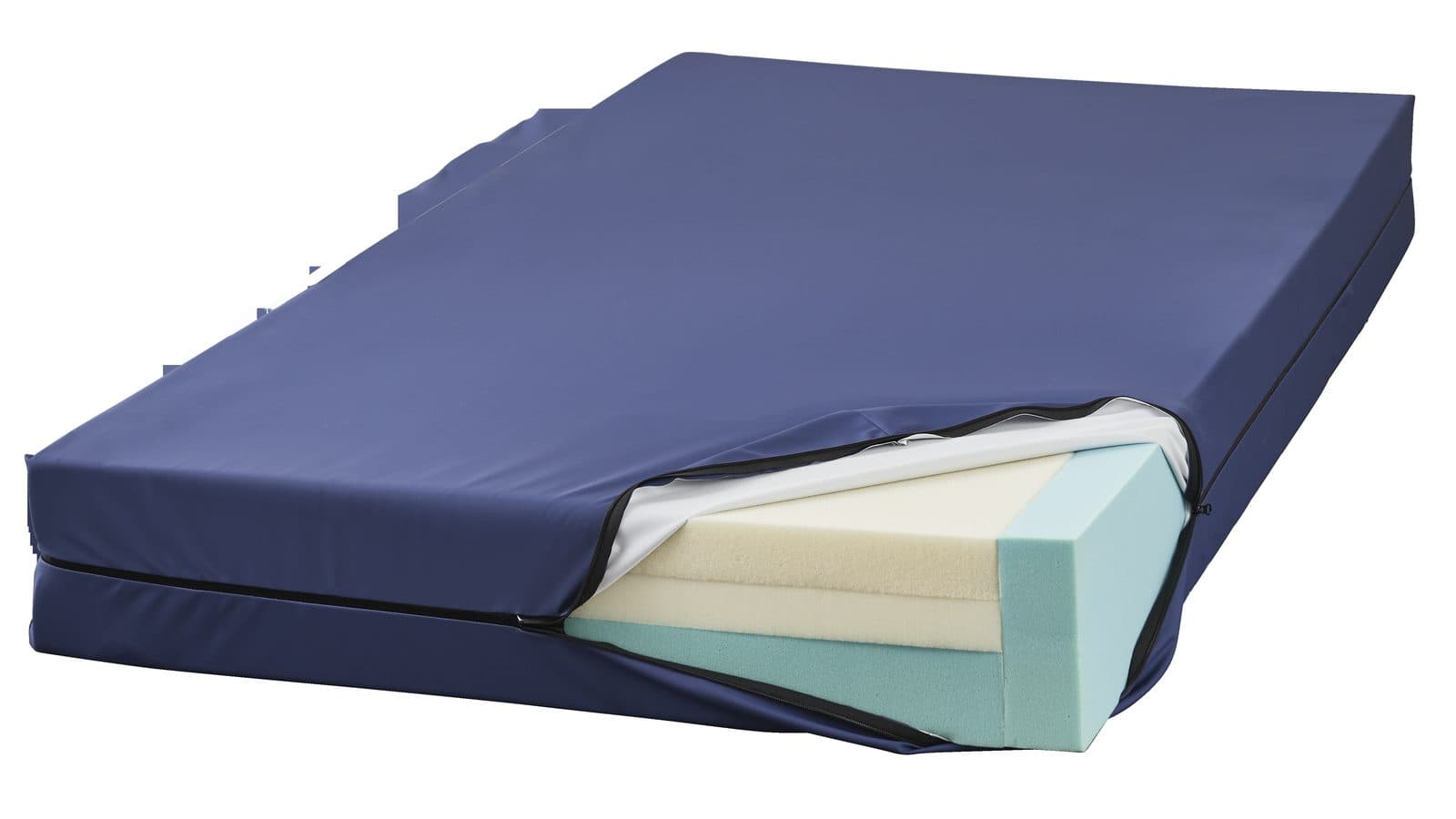
- The right surface. The mattress or cushion under the person, matched to their assessed risk — which is where equipment enters the picture.
The equipment that helps — and what each piece does
- An alternating pressure air mattress cycles air through cells so no part of the body carries pressure for long — mechanical repositioning that works all night. Clinicians usually specify one when someone can't reposition themselves reliably. Our plain-English explainer on how alternating pressure mattresses work covers it fully, and alternating vs static surfaces explains when a simpler overlay is genuinely enough.
- A hi-lo adjustable bed raises the whole bed to your working height for care tasks — dressing, washing, repositioning, linen changes — then lowers for safe transfers. It protects the part of the system nobody assesses: your back. See what a hi-lo bed is.
- Powered head and foot positioning lets the person shift posture themselves at the touch of a button — every position change they can make independently is one you don't have to do manually.
None of this replaces the routine. The equipment reduces the load — on skin, and on you — while the repositioning schedule, skin checks and clinical advice still stand.
When to call the GP or nurse
Make contact promptly if you notice any of these at a pressure point:
- Redness that doesn't fade after the pressure is removed
- Skin that feels warmer, cooler, firmer or boggier than the area around it
- Pain or tenderness over a bony point, even with the skin unbroken
- Any broken skin, blistering or discolouration
Early advice is always better — a phone call about redness today beats a wound consult next month. If the person's mobility has recently declined and no one has done a pressure-care assessment, ask the GP or care provider for one.
Look after the carer too
Pressure care fails when the carer burns out, and bending over a low bed dozens of times a day is how backs get wrecked. Say the strain out loud in any OT assessment — carer sustainability is a legitimate part of the clinical case for equipment, not an admission of weakness. And if the overnight turning schedule is breaking your sleep, that belongs in the conversation with the care team as well: it's exactly the load the right equipment is meant to share.
Getting the equipment funded
Funding follows the person being cared for. NDIS participants pursue equipment through the assistive technology pathway; older Australians on Support at Home use the AT-HM equipment scheme. Sleep Sophie is a registered NDIS provider (4050070896) — we prepare quotes and paperwork for both schemes, talk directly with OTs, and our free in-home demonstration lets you and the person you care for try equipment at home for 30–60 minutes, obligation-free, before any decision.
Frequently asked questions
How often should someone be repositioned in bed?
There's no universal number — the right schedule depends on the person's risk, skin condition and the surface they're lying on, which is why it should come from their nurse or occupational therapist. What matters is having an agreed routine and sticking to it, day and night.
What are the warning signs of pressure damage?
Redness that doesn't fade after pressure is removed, skin that feels warmer, cooler, firmer or boggier than the surrounding area, pain or tenderness over bony points, or any broken skin. Any of these deserves prompt advice from a nurse or GP — early is always better.
Does an alternating air mattress replace repositioning?
No. It reduces how much of the load any one spot carries and can reduce how often overnight turns are needed, but the repositioning routine, skin checks and the rest of the care plan still stand. Follow the schedule your health team sets with the equipment in place.
Can carers get equipment funded?
Funding follows the person being cared for: NDIS assistive technology if they're a participant, or the Support at Home AT-HM scheme for older Australians. Carer strain is a legitimate part of the clinical case — say it plainly in the assessment.
Carrying this alone? Don't. Call 1300 975 337 (1300 9 SLEEP) or send us an enquiry — we'll talk through the equipment side honestly, and point you back to the clinical team for everything that's theirs.
Information on this page is general in nature and is not a replacement for professional medical advice. Talk to your GP, occupational therapist or treating clinician about what suits your situation.
This article is general information, not medical advice. For guidance on your situation, talk to your GP or occupational therapist.
Wondering if an adjustable bed would suit your situation?
Our sleep experts talk with Australians in similar situations every day. No pressure, no jargon — just honest answers about what may help you rest more comfortably.
1300 975 337 (1300 9 SLEEP) · Australian-based team · Explore the Sophie alternating air mattresses
Rated 4.8 from 227 reviews on ProductReview.com.au · Free in-home demonstration · Interest-free options via Humm, Brighte & Payright for approved purchasers
Using NDIS or Support at Home funding?
Sleep Sophie is a registered NDIS provider (4050070896), and Sophie adjustable beds and lift recliners are ARTG-registered Class 1 medical devices (ARTG 326115). Beds can be funded through NDIS assistive-technology budgets where an occupational therapist recommends them; the Support at Home program has its own equipment pathway. We prepare quotes suitable for plan approval — see how NDIS funding works or Support at Home, or call and we’ll walk you through it.
Ask us about this bed
Free delivery and installation, Australia-wide — tell us what you’re after and we’ll get back to you with straight answers.