
Are There Free Adjustable Beds for Seniors in Australia?
24 September 2026 · Nathan Kerrins
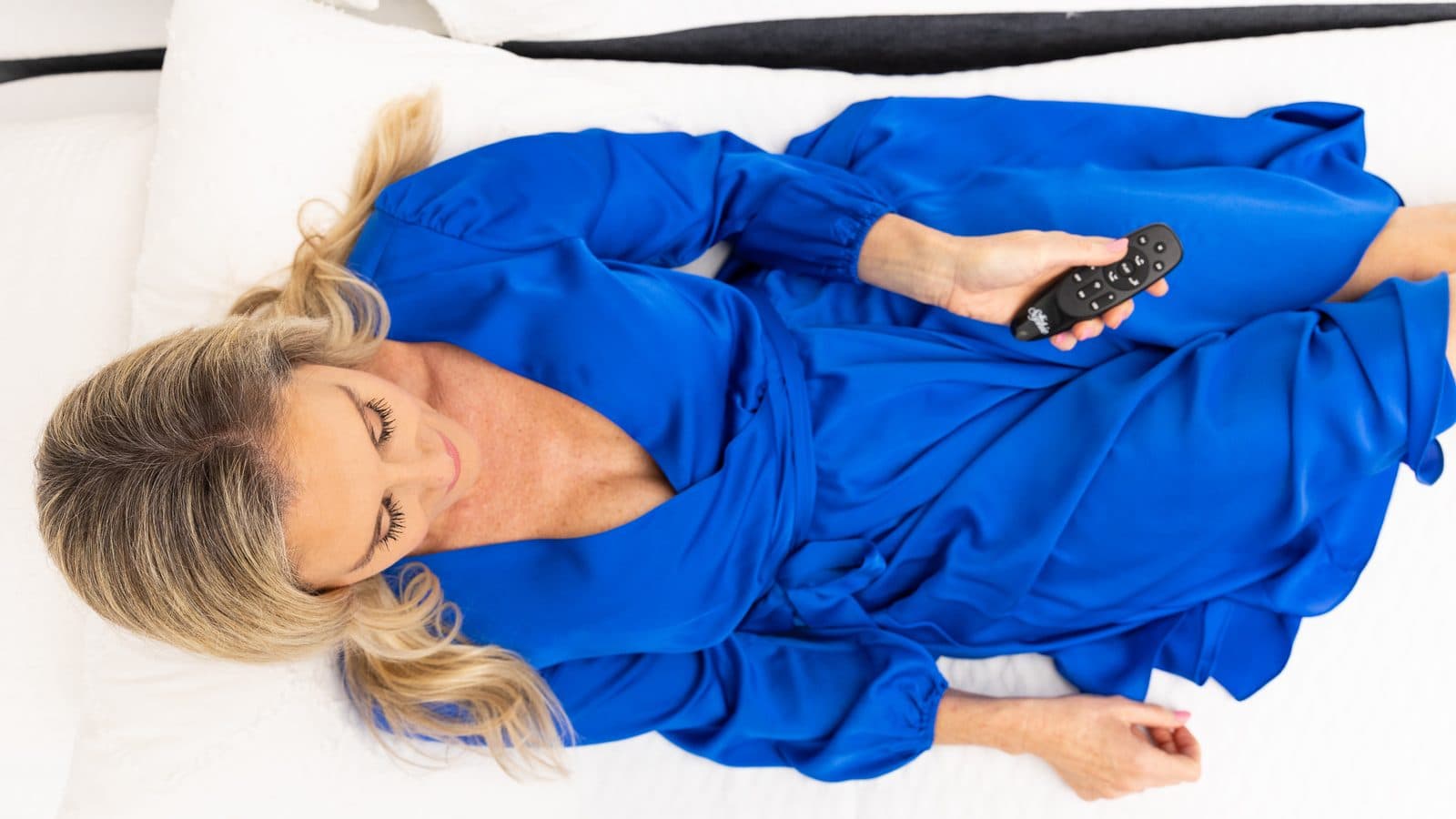
There is no Australian scheme that gives adjustable beds away free to older people. What exists instead is a set of funding pathways — aged-care, NDIS, DVA and state equipment programs — where the cost of a bed may be met in part or in full when an assessment supports it. So the honest answer to “free adjustable beds for seniors” is: not free, but potentially funded, and which pathway applies depends on age, circumstances and an assessment rather than on shopping around.
This guide sets out what the pathways actually are, who assesses each one, and how to tell a genuine funded-equipment route from an offer that is really something else.
Why “free” is usually the wrong word
Almost nobody searching this is expecting charity. They are asking a reasonable question in the words that come to hand: is there a way I do not have to pay for this myself?
Often there is. But the mechanism is not a giveaway, it is funding attached to an assessed need — which means a professional has to look at the situation and write down why the equipment is required. That distinction matters practically, because it changes what you do next. You do not start by looking for a free bed. You start by getting assessed.
The four pathways
| Pathway | Broadly who it is for | Who assesses |
|---|---|---|
| Aged care (Support at Home) | Older Australians receiving aged-care support at home | An aged-care assessment, with an occupational therapist for equipment |
| NDIS | Participants with a disability, generally where entry happened before 65 | An occupational therapist, feeding into your plan |
| DVA | Eligible veterans and some dependants | A DVA-recognised health provider, often an OT |
| State and territory schemes | Varies by state; usually aids and equipment programs | Varies; typically an OT referral |
Two things are true of every row. An occupational therapist is almost always involved, and no supplier decides the outcome. We cannot tell you what any of these will fund in your case, and neither can any other bed company — that sits with the assessor and the programme.
The age question, briefly
The line that surprises people most often is the one between the NDIS and aged care. Broadly, the NDIS is for people who entered the scheme before 65; from 65 the aged-care system is generally the pathway, now through Support at Home. People already in the NDIS before turning 65 can usually stay.
That is the shape of it rather than the fine print, and the fine print is where individual cases get decided. If you are near that boundary, the useful call is to My Aged Care or the NDIS directly rather than to a retailer.
How the process actually runs
- Get assessed. For aged care that starts with My Aged Care; for the NDIS it runs through your plan; for DVA, through a recognised provider. The assessment is the part that determines everything downstream.
- An occupational therapist looks at the situation. Not just the person, but the room, the existing bed, how transfers happen, and who else is involved. The OT writes the recommendation.
- The supplier prepares a quote. This is where we come in. A written quote suitable for plan or programme approval, itemising the bed, the mattress, delivery and installation, so the OT and the funding body have something they can actually work from.
- The funding body decides. Not the supplier and not the OT — they recommend, the programme decides.
- If approved, the equipment is supplied. Ours is delivered and installed anywhere in Australia by our own team, free, including setting the bed height.
The step people skip is the first one, usually because they have started by shopping. Shopping first is not wasted — knowing what you want helps the OT — but the assessment is what unlocks the funding, and starting it early is the single best thing you can do for the timeline.
How to tell a real pathway from an offer that isn't
“Free bed” advertising exists, and some of it is fine while some of it is not what it appears. A few checks:
- Is a funding body named, or just implied? A genuine route names the programme. Vague references to “government funding available” without naming which are worth a question.
- Is an assessment part of it? Every legitimate equipment pathway in Australia involves an assessment. An offer that skips straight to delivery is not running through one of these programmes.
- Is anyone guaranteeing approval? Nobody can. A supplier promising a funding outcome is promising something they do not control.
- Is “free” attached to a condition? A free bed bundled with a contract, a subscription, a finance agreement or a mandatory extra is not free; it is a price structure. Ask for the total cost over the full term in writing.
- Is it actually a discount? “Free” is sometimes marketing for “included in the package”. That may be perfectly good value — it just is not the same as funded.
If none of the pathways apply
Plenty of people do not qualify for any of them and are paying themselves. Worth knowing in that case:
Adjustable beds in the Australian market run roughly from $5,000 to $24,000 for a queen or king, and from about $3,000 for a single, which is a wide band covering very different products. Interest-free payment options are available through Humm, Brighte and Payright, with no-deposit options for approved purchasers and a choice of repayment terms.
It is also worth separating the bed from the urgency. If the need is short-term — recovery from a procedure, for instance — hire is a real option through equipment hire services, and it is a different conversation from buying.
Where to start
If you are over 65, start with My Aged Care. If you are an NDIS participant, start with your plan and your OT. If you are a veteran, start with DVA. In all three cases the assessment comes before the bed.
When you get to the quote stage, we can help with that part. Sleep Sophie is a registered NDIS provider (4050070896), and Sophie adjustable beds and lift recliner chairs are ARTG-registered Class 1 medical devices (ARTG 326115). We prepare written quotes suitable for plan approval and work with your occupational therapist on what their assessment needs.
See our guides to NDIS funding for an adjustable bed, DVA funding, and Support at Home. Or call 1300 9 SLEEP (1300 975 337) Monday to Friday, 9am–5pm AEST.
Common questions
Can seniors get a free adjustable bed in Australia?
Not as a giveaway. No Australian scheme hands out adjustable beds free. There are funding pathways — aged care through Support at Home, the NDIS, DVA, and state equipment programs — where the cost may be met in part or in full when an assessment supports it. The route is funding attached to an assessed need, not a free-bed programme.
Which funding pathway applies at my age?
Broadly, the NDIS is for people who entered the scheme before 65, and from 65 the aged-care system is generally the pathway, now through Support at Home. People already in the NDIS before turning 65 can usually stay. That is the shape rather than the fine print — if you are near that boundary, call My Aged Care or the NDIS directly.
Do I need an occupational therapist?
In practice, almost always. Every one of these pathways runs on an assessment, and for equipment that assessment usually comes from an occupational therapist who looks at the person, the room, the existing bed and how transfers happen, then writes the recommendation.
Can a bed supplier guarantee my funding will be approved?
No. The funding body decides, not the supplier and not the OT — they recommend. Anyone promising a funding outcome is promising something they do not control. What a supplier can do is prepare a written quote suitable for plan or programme approval.
How do I spot a “free bed” offer that isn't what it says?
Check whether a funding body is actually named rather than implied, whether an assessment is part of it, and whether “free” is attached to a contract, subscription, finance agreement or mandatory extra. A bed bundled into a term agreement is a price structure rather than free — ask for the total cost over the full term in writing.
Information on this page is general in nature and is not a replacement for professional medical advice. Talk to your GP, occupational therapist or treating clinician about what suits your situation.
Compare the Sophie range with a real person
No call centres, no scripts — tell us what you need and we’ll give you straight answers on fit, delivery and funding.
1300 975 337 (1300 9 SLEEP) · Australian-based team · Explore the Sophie adjustable bed range
Rated 4.8 from 227 reviews on ProductReview.com.au · Free in-home demonstration · Interest-free options via Humm, Brighte & Payright for approved purchasers
Using NDIS or Support at Home funding?
Sleep Sophie is a registered NDIS provider (4050070896), and Sophie adjustable beds and lift recliners are ARTG-registered Class 1 medical devices (ARTG 326115). Beds can be funded through NDIS assistive-technology budgets where an occupational therapist recommends them; the Support at Home program has its own equipment pathway. We prepare quotes suitable for plan approval — see how NDIS funding works or Support at Home, or call and we’ll walk you through it.
Ask us about this bed
Free delivery and installation, Australia-wide — tell us what you’re after and we’ll get back to you with straight answers.