
Common Mistakes When Buying an Adjustable Bed
17 October 2026 · Nathan Kerrins
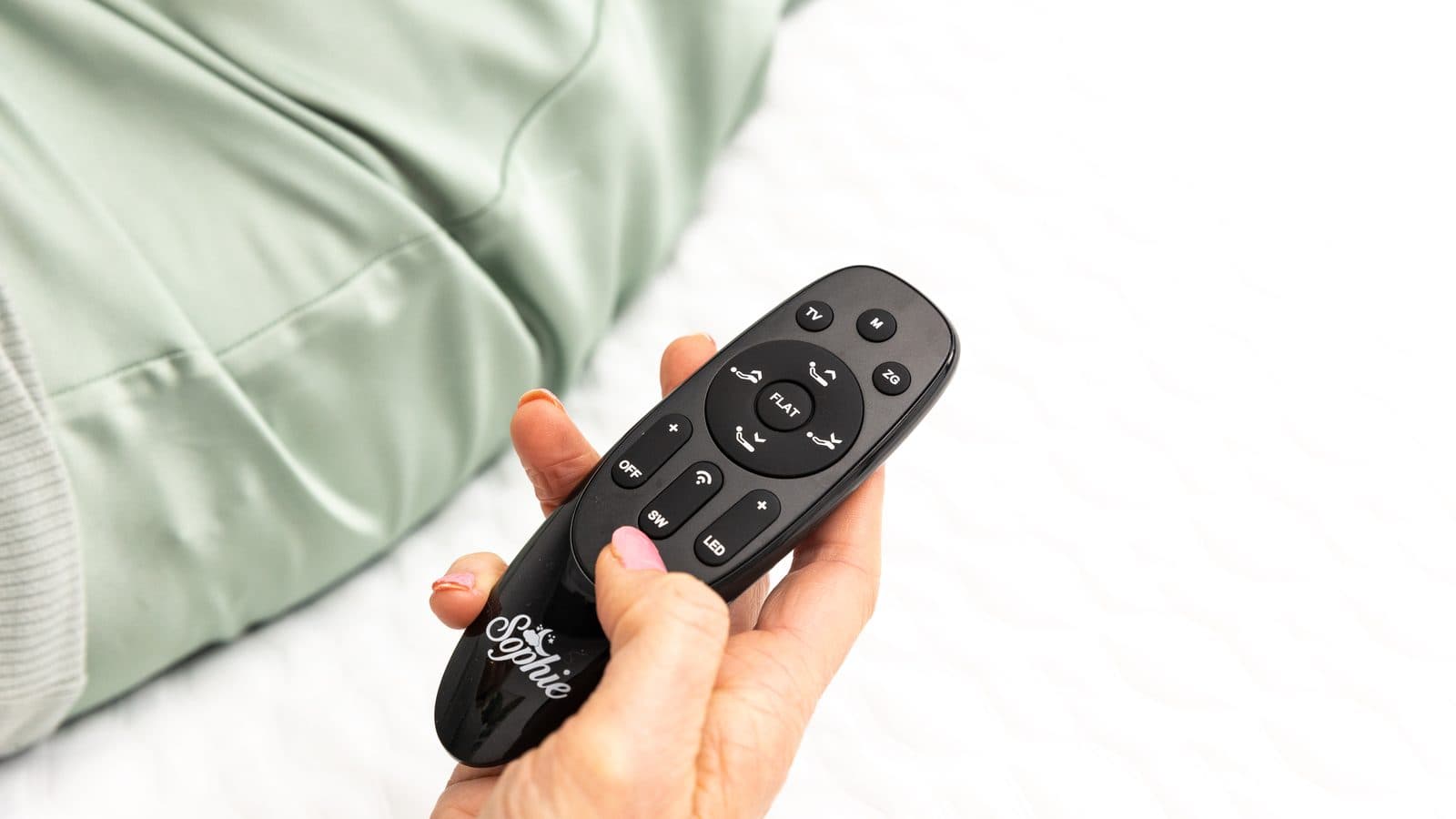
The most common mistakes are keeping an old inner-spring mattress (a single bend can permanently ruin one), skipping the weight-rating check, ignoring warranty terms, guessing on room clearance, and buying without seeing the bed move first. Each is easy to avoid by checking mattress compatibility, specs and demo options before you pay.
None of these mistakes are about being careless — they're about not knowing what to check, because an adjustable bed isn't bought the way a standard bed frame is. The base moves, the motors have specifications, and the mattress has to be built for flexing rather than sitting flat. Below are the six mistakes that come up most often, and the practical fix for each.
| Mistake | Why it matters | Fix |
|---|---|---|
| Keeping an old inner-spring mattress | A single bend can permanently ruin a traditional inner-spring mattress | Move to foam, latex or a hybrid built for flexing |
| Skipping the weight-rating check | Ratings differ by product, not by brand as a whole | Check the exact figure for the exact model |
| Ignoring warranty terms | Cover length and what's included varies widely | Confirm frame and motor cover before comparing price |
| Guessing on room clearance | Head-lift and walk-around space are easy to underestimate | Measure the room and the raised bed height first |
| Buying without seeing it move | Photos and specs don't show how a bed actually feels | Book a free in-home demonstration |
| Chasing the lowest price alone | The cheapest option can mean weaker motors or thinner cover | Compare like-for-like specs, not just the sticker price |
Why keeping your old mattress is such a costly mistake
One of the most costly mistakes is assuming any mattress will work on an adjustable base. A single bend can permanently ruin a traditional inner-spring mattress — the internal coil structure isn't designed to flex, and once it's forced into a bent position, the damage is done. It doesn't take repeated use or months of wear; one fold in the wrong place is enough.
The fix is straightforward: pair an adjustable base with a mattress built to flex, such as foam, latex or a hybrid designed for adjustable use. If you're not sure whether your current mattress qualifies, our guide on whether you can use any mattress on an adjustable bed walks through what to look for before you commit to a base. Getting this one decision right before delivery day saves the cost and disappointment of replacing a mattress within weeks.
This mistake tends to show up in two ways. Some buyers keep a mattress they already own without checking it at all, assuming a bed base is a bed base. Others buy a new base and a new mattress at the same time but pick the mattress on comfort feel alone, without asking whether it's rated for flexing. Either way, the fix is the same: confirm compatibility before the base and mattress meet in your bedroom, not after.
Why skipping the weight-rating check is risky
Weight ratings aren't a single number across a whole range — they're specific to the product. Sleep Sophie's adjustable bed is rated to 320kg, while the HiLo adjustable bed and the Embrace lift recliner chair are each rated to 250kg. Assuming one figure applies to every model in a lineup is how buyers end up with a bed that isn't actually rated for their situation.
The fix is to ask for the exact rating of the exact model you're considering, not a general brand claim, and to check it against the combined weight of everyone who'll use the bed — not just one person. This matters most for couples sharing a base, where combined weight is what counts, not each person's individual figure.
It's also worth checking whether the figure quoted is for the base alone, or for the base plus mattress plus occupant, since retailers don't always specify which. A rating that looks generous can be less useful than it seems if it's measuring the wrong thing. When in doubt, ask the retailer directly what the number covers before you rely on it.
Why ignoring warranty terms costs more later
An adjustable bed has moving parts — motors, wiring, a control box — that a standard bed frame doesn't. Skipping the warranty question because the bed "looks solid" is a common mistake, because motor issues don't usually show up in the first few weeks — they tend to appear months or years into ownership, which is exactly when the warranty terms matter.
Sleep Sophie's adjustable beds and HiLo beds carry a 5-year comprehensive warranty as standard, extendable to 10 years. The fix, whichever brand you're comparing, is to read what's actually covered — frame, motor, remote, labour — rather than assuming "warranty included" means comprehensive cover. A shorter or narrower warranty can turn a lower purchase price into a more expensive bed over time.
Ask specifically who pays for a technician callout if a motor fails in year three, and whether labour is included or billed separately from parts. Those details rarely appear in marketing copy but matter far more than the headline warranty length once something actually needs fixing. A comprehensive warranty is worth asking to see in writing, not just hearing quoted verbally.
Why guessing on room clearance backfires
Adjustable beds need more than the mattress footprint. The head section lifts, so there needs to be clearance behind the headboard wall or bedhead; the foot section can also rise; and most people underestimate how much walking space they need around a raised bed for making it or changing sheets.
The fix is to measure before you order: the flat footprint using our bed size guide (a Queen is 154cm × 203cm, a King 184cm × 203cm, and a Long Single — the standard 92cm × 203cm single — is a common choice for solo sleepers or split configurations), plus extra clearance front and back for the sections to move freely. Getting this wrong is one of the most avoidable mistakes on this list, because the numbers are knowable in advance — it just takes five minutes with a tape measure before delivery day rather than a surprise on it.
Doorways and hallways matter too, not just the bedroom itself. An adjustable base is typically delivered as one or two solid sections rather than something that folds flat, so it's worth checking doorway widths and any tight turns along the delivery path before the truck arrives, not discovering the problem with the base half-carried through your front door.
Why buying without seeing the bed move is a mistake
Specs and photos can tell you what a bed does; they can't tell you how it feels to lie in a Zero Gravity position, how quiet or fast the motor is, or whether the remote is genuinely easy to use. Buying sight-unseen based on a product page alone is a mistake plenty of buyers only recognise after the bed is already in their bedroom.
The fix is to see it in person before you decide. Sleep Sophie offers a free in-home demonstration — our team brings the bed to your home, sets it up, and lets you test the positions and the remote for yourself, obligation-free. For a closer look at what that involves, see how to try an adjustable bed before you buy, or how to test one in store if you're visiting a retailer.
Why chasing the lowest price alone can be a false economy
The final common mistake is comparing adjustable beds on price alone, without checking what that price actually includes. A lower sticker price can mean a lighter-duty motor, a shorter warranty, or fewer preset positions — none of which show up until the bed has been in use for a while.
The fix is to compare like-for-like: weight rating, warranty length, motor brand and included features, not just the number on the tag. If cost is the main barrier rather than the bed itself, Sleep Sophie offers interest-free payment options through Humm, Brighte and Payright, with no-deposit options available to approved purchasers and a choice of repayment terms — see our financing guide for details. Spreading the cost is often a more useful lever than choosing the cheapest bed on the market.
It's also worth separating price from value deliberately, rather than letting the lowest number on the page set your expectations. Two beds priced within a few hundred dollars of each other can differ meaningfully in motor quality, warranty depth and the number of preset positions — differences that matter far more once the bed is in daily use than they do on a spec sheet during the research phase.
Getting it right the first time
Every mistake above comes down to the same underlying issue: treating an adjustable bed like a standard bed frame purchase, when it's really a small system of mattress, base, motor and warranty that all need to fit together. Check mattress compatibility, confirm the exact weight rating, read the warranty properly, measure the room, and see the bed move before you commit — and the rest of the decision gets much easier.
Our broader guide on whether adjustable beds are worth it covers the wider decision if you're still weighing up whether one suits your household at all.
Want to avoid every mistake on this list in one visit? Call 1300 975 337 (1300 9 SLEEP) or book a free in-home demonstration — our team brings a Sophie electric adjustable bed to your home, checks it against your room and your mattress, and answers every question before you decide.
Compare the Sophie range with a real person
No call centres, no scripts — tell us what you need and we’ll give you straight answers on fit, delivery and funding.
1300 975 337 (1300 9 SLEEP) · Australian-based team · Explore the Sophie adjustable bed range
Rated 4.8 from 227 reviews on ProductReview.com.au · Free in-home demonstration · Interest-free options via Humm, Brighte & Payright for approved purchasers
Using NDIS or Support at Home funding?
Sleep Sophie is a registered NDIS provider (4050070896), and Sophie adjustable beds and lift recliners are ARTG-registered Class 1 medical devices (ARTG 326115). Beds can be funded through NDIS assistive-technology budgets where an occupational therapist recommends them; the Support at Home program has its own equipment pathway. We prepare quotes suitable for plan approval — see how NDIS funding works or Support at Home, or call and we’ll walk you through it.
Ask us about this bed
Free delivery and installation, Australia-wide — tell us what you’re after and we’ll get back to you with straight answers.