
What Is Whole Body Vibration Therapy?
8 January 2026 · Nathan Kerrins · Updated 22 September 2026
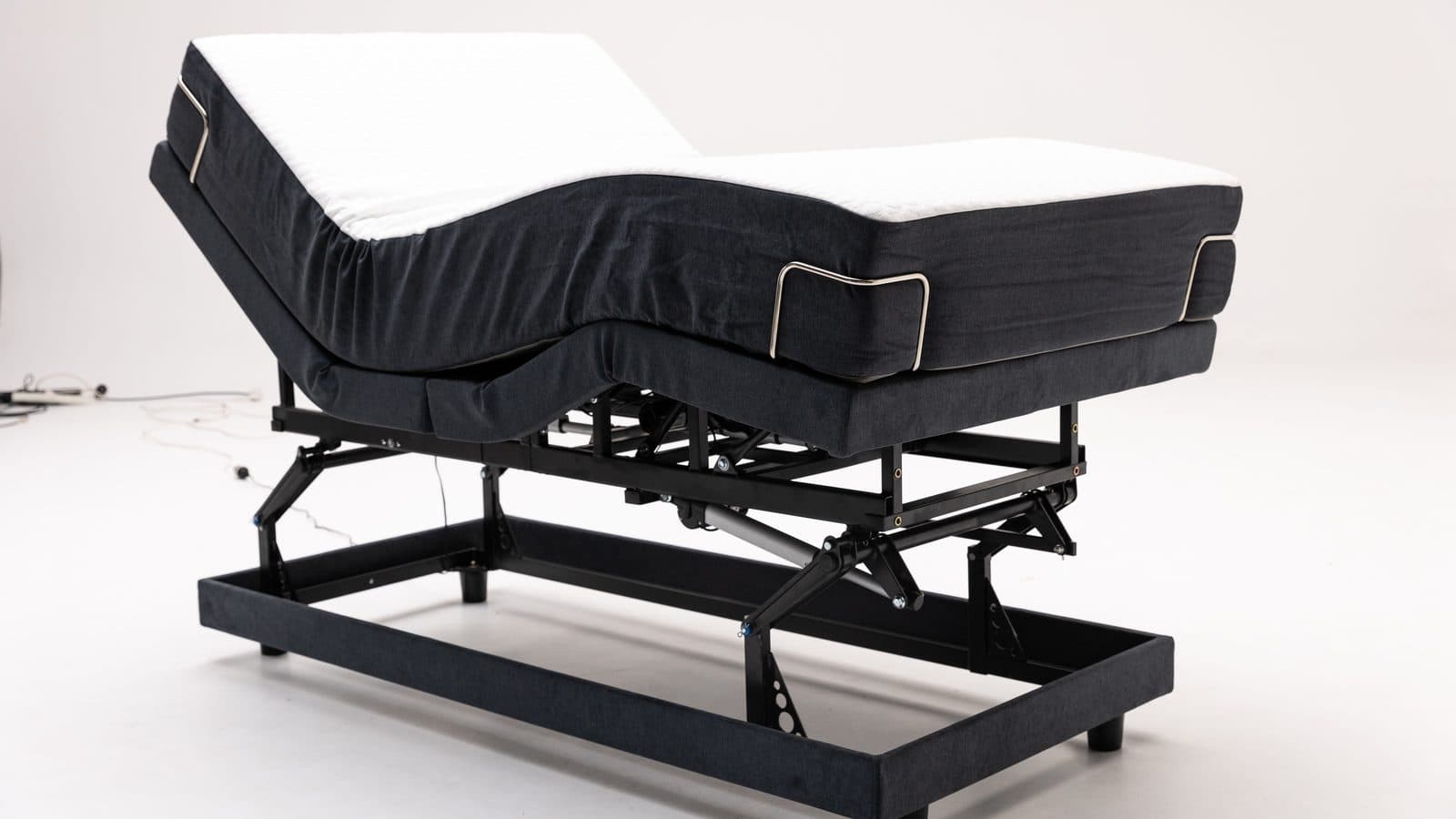
“Whole body vibration therapy” describes standing on a vibrating platform. You step onto a plate, the plate vibrates at a set frequency, and your body weight is loaded through your feet while it does. Almost all of the published research using that phrase studies that device, in that posture. It is not what a vibrating bed does, and the two get confused constantly — usually by pages selling one while quoting research about the other.
This guide explains what the term covers, which devices it does and does not describe, and how to tell whether a claim you are reading applies to the product in front of you. It deliberately does not summarise what the research concluded, for reasons set out below.
What the term means
A whole-body vibration platform is a plate roughly the size of a bathroom scale, sometimes with a handrail, that vibrates when switched on. You stand on it. The plate moves through a small, fast oscillation — either side to side around a central pivot, or straight up and down — and because you are standing, your whole body weight rests on the moving surface.
That last detail is the one that matters, and it is the one that gets lost. The device is defined by the posture as much as by the motor. Standing on a moving plate is a mechanically different situation from lying on a mattress that is vibrating underneath you: different load, different contact area, different amount of your own weight involved, different everything.
The equipment is sold for exercise and fitness use, and it turns up in gyms, physiotherapy practices and home fitness setups. Sleep Sophie does not sell one, and this page is not trying to sell you one.
Three devices, one name
Three quite different products get marketed under some version of “whole body vibration”. Separating them makes almost every confusing claim in this category easier to read.
| Standing platform | Vibrating bed | Vibrating pad or topper | |
|---|---|---|---|
| What it is | A plate you stand on | A bed base with a motor inside it | A pad laid on a mattress |
| Your posture | Standing | Lying down | Lying down |
| Where your weight goes | Through your feet, into the plate | Spread across the mattress | Spread across the mattress |
| Sold as | Exercise equipment | A comfort feature on a bed | A comfort accessory |
| What the research studies | This one | Not this one | Not this one |
| Does Sleep Sophie sell it? | No | Yes — built into every bed | No |
Read that bottom-but-one row again, because it is the whole point of this page. When a product description says “studies show whole body vibration…”, the studies are almost certainly about the first column. If the thing being sold is in the second or third column, the sentence has quietly changed the subject.
What the research actually studies — and why we will not summarise it
There is a substantial body of published work on whole-body vibration. It involves standing platforms, and it measures what happens to people standing on them. That is a description of what the literature is about, not a claim about what it found.
We are not going to tell you what those studies concluded, and we want to be straight about why.
The first reason is that we are a bed retailer. We are not qualified to weigh up a body of research, and a summary written by someone selling an adjacent product is not a summary you should trust. Companies do it constantly, which is exactly why it is worth being suspicious of.
The second reason is that it would not help you even if we did it well. Findings about people standing on a plate do not transfer to a person lying on a mattress. The posture is different, the load is different, and the contact between body and device is different. Carrying a conclusion across that gap is not evidence; it is a substitution, and it is the single most common move in vibration marketing.
If you want to know what the research says, that is a conversation for your GP, physiotherapist or occupational therapist — someone who can read it properly and who knows your situation. We would rather point you there than paraphrase it badly.
Why hertz figures do not transfer to a bed
Product pages love a frequency figure. You will see specific hertz bands quoted, often with a particular benefit attached to each band, presented as though picking the right number were the skill involved.
Frequency is a platform parameter. It is meaningful for a standing plate because the plate is a piece of exercise equipment with a calibrated output, and because the research that generated those numbers was measuring people standing on plates at those settings. Lift the number out of that context and put it on a bed page, and it is decoration.
We publish no hertz figure for the Sophie bed. What you actually control is a set of intensity settings, chosen by how they feel, and quoting a precise frequency would imply a precision the feature does not claim to have. If you find a bed page that does quote one, particularly with benefits attached to specific bands, it is worth asking where that number came from.
What the word “therapy” is doing in that phrase
“Whole body vibration therapy” is the phrase people search for, so it is the phrase this page uses. It is worth noticing that the word “therapy” in it is doing marketing work rather than describing a regulated category. Anyone can put it in a product name.
What is regulated in Australia is the claim. If a device is presented as doing something therapeutic — treating, preventing or alleviating a condition — it generally belongs on the Australian Register of Therapeutic Goods, and the wording of what it may be said to do is recorded against that entry. The register is public and searchable, and an entry number is a thing a seller can hand you.
That is the practical test, and it cuts through a lot. A page can call its product a therapy freely. A page cannot attach a therapeutic claim to it and stay silent about where the permission for that claim comes from. When we quote the ARTG wording for the massage function further down, we quote it exactly and we give the number, because the whole value of a register entry is that you can go and check it.
What a vibrating bed does instead
A vibrating bed has a motor built into the base. Switch it on and the base vibrates; you feel it through the mattress, at an intensity you choose, from the same remote that raises the head and foot sections. It is a comfort and relaxation setting, used lying down, usually while winding down for sleep.
On the Sophie range there is one therapeutic claim attached to that feature, and it is the one on the register rather than one we wrote. Sophie adjustable beds and lift recliner chairs are ARTG-registered Class 1 medical devices (ARTG 326115), and the intended purpose recorded there for the massage function is that it “provides a massaging therapeutic effect and may assist in the reduction of aches and pains and improve sleep quality.” That sentence is the ceiling. We do not add to it.
For how the feature actually works day to day — noise, shared beds, intensity settings, what to ask before you buy — see our guide to vibrating beds and what they actually do, or the overview of vibrating beds in Australia.
How to read a vibration claim
This is the practical part. Five questions will get you through almost any page in this category.
- Which device is the claim about? Standing platform, bed, or pad. If the page is vague about this, that vagueness is doing work.
- Does the evidence cited match the device being sold? A bed page citing platform research has changed the subject mid-sentence. Look for the switch.
- Is a specific condition named? Claims about treating a named condition are regulated in Australia. A retailer making one should be able to point to the registration that permits it.
- Where did the numbers come from? Hertz bands, session lengths and percentage improvements should have a source. “Studies show” is not a source.
- Will they put it in writing? Ask for the claim on the invoice or the quote. This question resolves more uncertainty than any amount of reading, and the reaction to it tells you most of what you need to know.
What the substitution looks like in practice
Picture a product page for a vibrating mattress pad. Paragraph one describes the pad. Paragraph two says that whole body vibration has been studied extensively and is used in physiotherapy and sports settings. Paragraph three returns to the pad and its intensity settings.
Nothing in that sequence is a false statement. Whole-body vibration has been studied. Platforms are used in those settings. But the research paragraph is about a standing platform, it sits between two paragraphs about a pad, and the reader is left carrying the credibility of the first across to the second. No claim was ever made about the pad, so there is nothing to disprove — which is precisely what makes the construction so common.
Once you have seen the shape of it, you will notice it everywhere in this category. The tell is a research paragraph that never names the device it is describing.
None of this is specific to vibration, and none of it requires you to become an expert. It just requires noticing when a page is describing one product and quoting evidence about another.
Safety, and who should check first
Vibration is not suitable for everyone, and this applies to platforms and beds alike. If any of the following describes you, talk to your GP or treating clinician before using a vibrating device of any kind:
- You are pregnant.
- You have an implanted medical device such as a pacemaker.
- You are recovering from surgery, a fracture or a recent injury.
- You have been diagnosed with osteoporosis or another bone-density condition.
- You have been advised to limit physical activity for any reason.
We are not going to publish a protocol — session lengths, intensity schedules or how often to use it — because that is clinical advice and it is not ours to give. A retailer handing out dosing instructions is a retailer exceeding what it knows. The general principle with a bed is simply to start at the lowest setting and stop when it stops being pleasant.
What we sell, and what we don't
Sleep Sophie sells electric adjustable beds, HiLo adjustable beds, lift recliner chairs and alternating air mattresses. Vibration is built into the bed bases and included on every model rather than sold as an upgrade.
We do not sell standing vibration platforms, vibration pads, or any accessory that slides under a mattress. If you are after a platform, you want a fitness retailer, not us — and you should ask them the five questions above.
If what you actually want is a bed with a vibration setting, we bring one to your home and set it up so you can spend 30 to 60 minutes with it before deciding anything. It is obligation-free and there is no cost. Call 1300 9 SLEEP (1300 975 337) Monday to Friday, 9am–5pm AEST, or read the Sophie adjustable bed range.
Common questions
What is whole body vibration therapy?
It describes standing on a vibrating platform — a plate roughly the size of a bathroom scale that oscillates when switched on, so your body weight is loaded through your feet while it moves. The equipment is sold for exercise and fitness use. The posture is part of the definition, which is why the phrase does not describe a bed.
Is a vibrating bed the same as whole body vibration therapy?
No. A vibrating bed has a motor inside the bed base and you use it lying down, with your weight spread across the mattress. A vibration platform is a separate machine you stand on. They differ in posture, in load, and in how your body contacts the device, so research about one does not carry across to the other.
Does whole body vibration therapy work?
We are not going to answer that, and we would be wary of a bed retailer who did. We are not qualified to weigh up a body of research, and the research in question is about standing platforms rather than anything we sell. That is a question for your GP, physiotherapist or occupational therapist, who can read it properly and knows your situation.
What frequency is used in whole body vibration therapy?
Frequency is a parameter of standing platforms, which have a calibrated output. We publish no hertz figure for the Sophie bed, because what you control there is a set of intensity settings chosen by feel. If you see a bed page quoting specific hertz bands with benefits attached to each one, those numbers came from platform research and it is worth asking where.
Is whole body vibration safe?
It is not suitable for everyone. Talk to your GP or treating clinician first if you are pregnant, have an implanted medical device such as a pacemaker, are recovering from surgery or a fracture, have been diagnosed with osteoporosis, or have been advised to limit physical activity. We do not publish session lengths or intensity schedules, because that is clinical advice rather than something a retailer should hand out.
Does Sleep Sophie sell a vibration platform or a vibration pad?
No. We sell electric adjustable beds, HiLo adjustable beds, lift recliner chairs and alternating air mattresses. Vibration is built into the bed bases and included on every model. We do not sell standing platforms, vibration pads, or any accessory that slides under a mattress — for a platform you want a fitness retailer rather than us.
Can the NDIS fund whole body vibration therapy?
We can't tell you what any individual plan will fund — that is decided through your plan, not by a retailer. What we can say is that Sleep Sophie is a registered NDIS provider (4050070896) and that adjustable beds can be funded through assistive-technology budgets where an occupational therapist recommends one. That pathway is about the bed. We make no claim that vibration is a fundable therapy, and we would not present it as one.
Information on this page is general in nature and is not a replacement for professional medical advice. Talk to your GP, occupational therapist or treating clinician about what suits your situation.
Sleep better, every night
If being able to change position would help, see how the Sophie adjustable range works — or just call for a chat.
1300 975 337 (1300 9 SLEEP) · Australian-based team · Explore the Sophie adjustable bed range
Rated 4.8 from 227 reviews on ProductReview.com.au · Free in-home demonstration · Interest-free options via Humm, Brighte & Payright for approved purchasers