
Memory Foam vs Gel Topper: Which Actually Stays Cooler?
24 September 2026 · Nathan Kerrins
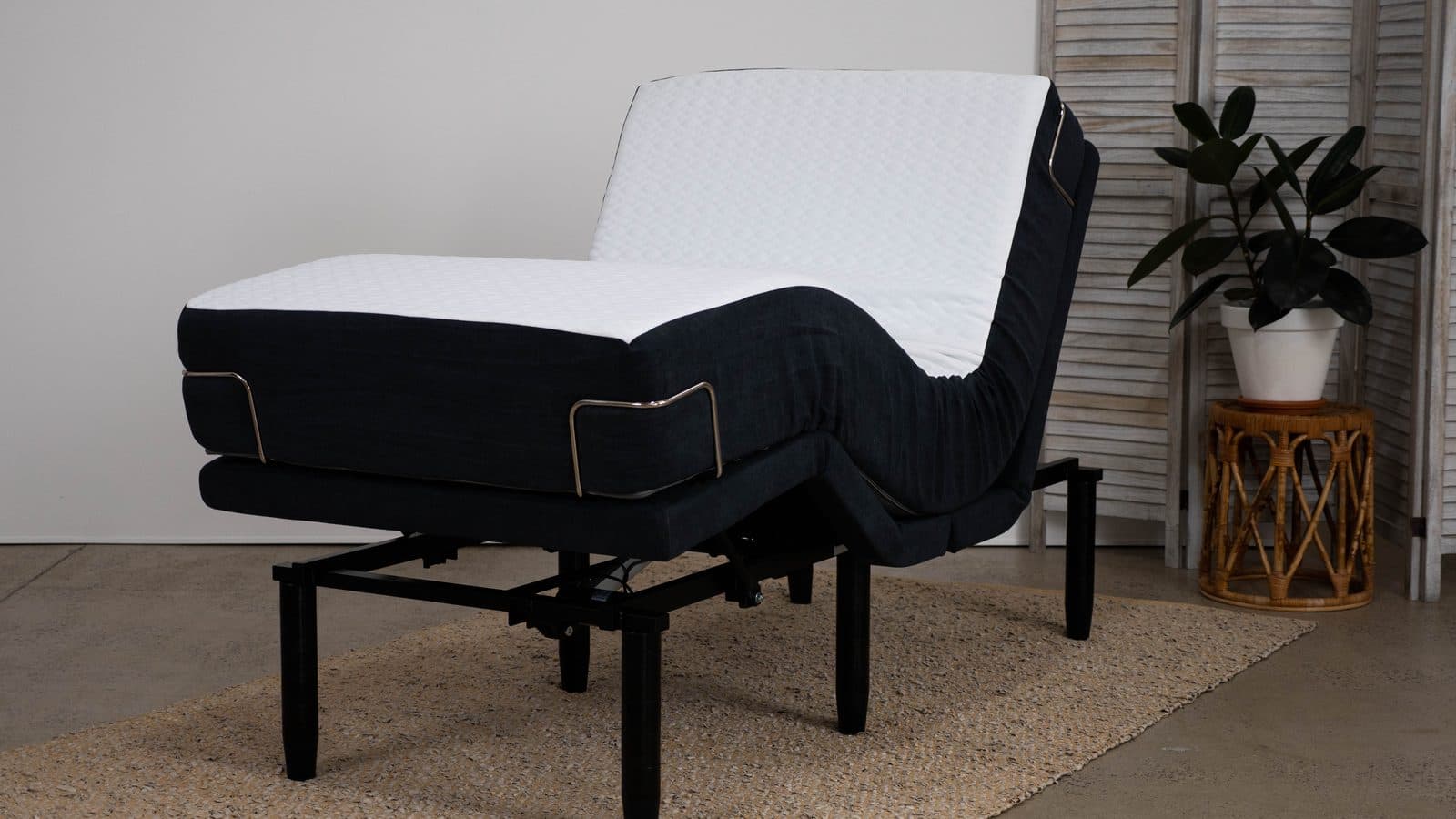
A gel-infused topper generally runs cooler than a plain memory foam one, but the difference is smaller and shorter-lived than the marketing suggests. Gel adds thermal mass, so it absorbs heat for a while and then stops — usually well before morning. The variables that make a bigger difference over a whole night are the foam's structure and how much air can move through it, which is a question about the foam itself rather than what has been mixed into it.
This is one of the most-asked questions in bedding and one of the worst-served, because most of the pages answering it are selling one of the two options. We do not sell toppers at all, which at least makes this a question we have no reason to shade either way.
Why memory foam sleeps warm
Memory foam works by softening where your body warms it. That is the whole mechanism — it is temperature-sensitive by design, and the contouring people buy it for is the foam responding to your body heat.
Two consequences follow, and both of them are about heat.
The first is restricted airflow. Traditional memory foam has a relatively closed cell structure, and the closer you conform to it the less open surface there is for air to move through. You end up in a pocket of foam that fits you closely and breathes poorly.
The second is poor heat dissipation. Heat that goes into the foam does not leave it quickly, so it accumulates through the night rather than shedding. This is why people often report being fine at bedtime and too warm at two in the morning.
There is a related effect that is less discussed: because the foam softens with heat, its firmness changes as the night goes on and as room temperature changes. A memory foam layer is not quite the same surface in July as it is in January.
What gel infusion actually does
Gel is added to foam in two main ways — as beads mixed through it, or as a layer swirled into the top. Either way, the mechanism is the same: gel has more thermal mass than foam, so it takes longer to warm up.
That is genuinely useful, and it is why a gel topper feels cooler when you first lie down. It is also why the advantage fades. Absorbing heat is not the same as removing it. Once the gel has reached your body temperature it has nowhere to put the heat it has taken on, and you are back to how well the foam around it breathes.
So the fair answer to “which stays cooler” is: gel is cooler to lie down on and cooler for the first part of the night, and the two converge after that. If you sleep hot at 3am rather than at bedtime, gel infusion on its own is unlikely to be the fix.
Four things that matter more than gel
| Variable | Why it matters | What to look for |
|---|---|---|
| Cell structure | Open-cell foam lets air move through it; closed-cell does not | Open-cell construction, stated plainly |
| Thickness | A thick topper surrounds more of you, so less skin is exposed to room air | Thinner is cooler, all else equal |
| The cover | A dense quilted cover can undo a breathable foam underneath it | A thin, breathable cover |
| What is under it | A topper on a sealed waterproof protector traps heat regardless of the foam | Check the layer below, not just the topper |
The last one catches people out constantly. A perfectly breathable topper laid over a plastic-backed mattress protector will sleep warm, and no amount of gel will change that.
When a topper is the right answer — and when it isn't
A topper is a good solution to a specific problem: a mattress that is slightly too firm, or one that has a few years left in it but has lost some comfort at the surface. It is cheap relative to a mattress, it is easy to try, and it is easy to remove.
It is a poor solution to a different problem: a mattress that sleeps hot. Adding a layer of foam on top of something that already traps heat rarely makes it cooler, and often makes it warmer, because you have put more insulation between yourself and everything below. If heat is the complaint, the layer causing it is usually underneath the topper you are about to buy.
It is also worth knowing that a topper is one more thing to manage — it shifts, it needs its own sheet arrangement, and on an adjustable bed it has to bend with the mattress every time the bed moves.
What we do instead
We do not sell toppers. We build the comfort layer into the mattress, because a layer designed as part of the mattress does not have the problems a layer added on top of one does.
Every Sophie mattress is a four-layer Australian-made foam mattress. The top layer is Hygroflex®, a high-resilience comfort foam that fuses qualities of memory foam and latex — memory-foam-style contouring with latex-style bounce-back. It was developed specifically to address memory foam's two weaknesses described above: restricted airflow and poor heat dissipation. It also holds a steady hardness across all temperatures, so it does not soften as the room or your body warms it.
Those properties have been measured. RMIT University's School of Engineering independently tested Hygroflex against four different memory foams and found it dissipates heat up to 27% faster than traditional memory foam. The same testing found it conforms to the body up to 67% better, reduces pressure on the body up to 32% better, and takes less than half the force to roll over.
Those are maximums from controlled testing against traditional memory foam, not a promise about your bedroom. But they are measured numbers from an independent engineering school, which is more than most foam in this category can offer.
So which should you buy?
- If your mattress is too firm and otherwise fine — a topper is a sensible, low-cost fix. Choose open-cell over gel-infused if you have to pick one, and take the thinner option.
- If you lie down hot — gel will help with that first hour.
- If you wake up hot in the middle of the night — look at the mattress and the protector underneath before buying anything to put on top. That is where the heat is being held.
- If the mattress is near the end of its life — a topper is postponing a decision rather than solving anything, and you will likely spend the money twice.
If you want to feel the difference rather than read about it, we bring the bed and mattress to your home and set it up. The demonstration is free and obligation-free, and you spend 30 to 60 minutes on it. Call 1300 9 SLEEP (1300 975 337) Monday to Friday, 9am–5pm AEST, or see the Sophie adjustable bed range.
Common questions
Does a gel topper actually sleep cooler than memory foam?
At first, yes. Gel has more thermal mass than foam, so it takes longer to warm up and feels cooler when you lie down. The effect fades once the gel reaches your body temperature, because absorbing heat is not the same as removing it. Over a whole night the two largely converge.
Why does memory foam sleep warm?
Two reasons. Its relatively closed cell structure restricts airflow, and the closer you conform to it the less open surface there is for air to move. And it dissipates heat slowly, so heat builds up through the night rather than shedding. It is also temperature-sensitive by design — softening where your body warms it is the mechanism that produces the contouring.
Will a topper fix a mattress that sleeps hot?
Usually not, and it often makes it warmer. Adding foam puts more insulation between you and everything below. If you wake hot in the middle of the night, the heat is generally being held by the mattress or a plastic-backed protector underneath, and that is the layer to look at.
Does Sleep Sophie sell mattress toppers?
No. We build the comfort layer into the mattress instead. Every Sophie mattress is a four-layer Australian-made foam mattress topped with Hygroflex®, a high-resilience foam developed to address memory foam's restricted airflow and slow heat dissipation.
How much cooler is Hygroflex than memory foam?
RMIT University's School of Engineering tested Hygroflex against four different memory foams and found it dissipates heat up to 27% faster than traditional memory foam. That is a maximum from controlled testing against traditional memory foam rather than a promise about a particular bedroom.
Sleep better, every night
If being able to change position would help, see how the Sophie adjustable range works — or just call for a chat.
1300 975 337 (1300 9 SLEEP) · Australian-based team · Explore the Sophie adjustable bed range
Rated 4.8 from 227 reviews on ProductReview.com.au · Free in-home demonstration · Interest-free options via Humm, Brighte & Payright for approved purchasers
Ask us about this bed
Free delivery and installation, Australia-wide — tell us what you’re after and we’ll get back to you with straight answers.