
Hi Lo Adjustable Beds in Melbourne
What is a HiLo bed?
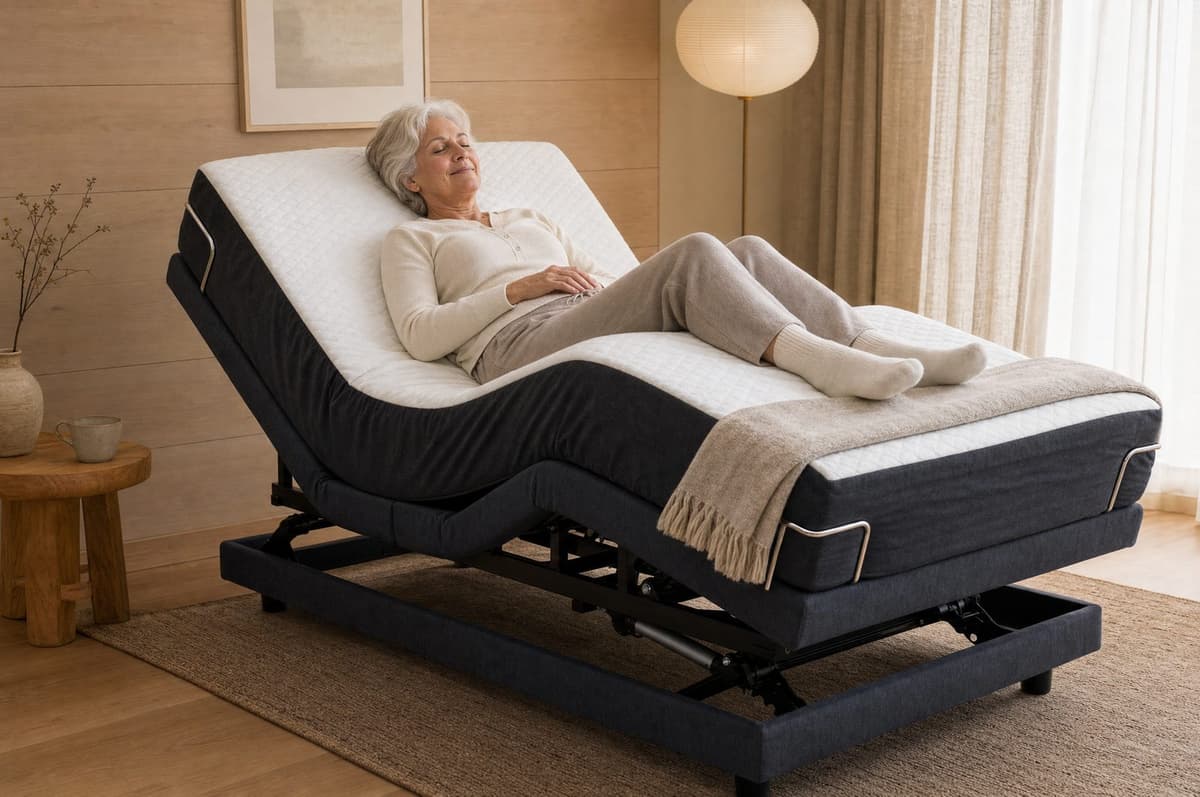
A HiLo (or high–low) bed is an electric adjustable bed that does something ordinary adjustable beds cannot: the entire sleeping platform travels vertically. At the top of its range it puts the person at a comfortable working height for a carer or nurse; at the bottom it sits low for safe transfers and a much shorter distance to the floor if a fall happens. The Sophie HiLo Adjustable Bed combines that whole-bed lift with full head and foot adjustment, wireless remote presets, and — unusually for this category — the styling of genuine bedroom furniture rather than hospital equipment.
Height adjustment vs head/foot adjustment — the difference that matters for carers
It is easy to conflate the two, and plenty of Melbourne retailers quietly do. Head and foot adjustment changes the sleeper's posture: sitting up to read, elevating swollen legs, easing reflux or snoring. Height adjustment changes the bed's relationship to the people and equipment around it: the carer's spine, the wheelchair seat, the standing transfer. If an occupational therapist has recommended a "height-adjustable" or "hi-lo" bed, a standard adjustable base — however good — does not meet that recommendation. Ask any retailer directly: does the whole bed go up and down, or just the ends?
Who benefits from a HiLo adjustable bed?
People with limited mobility or high falls risk
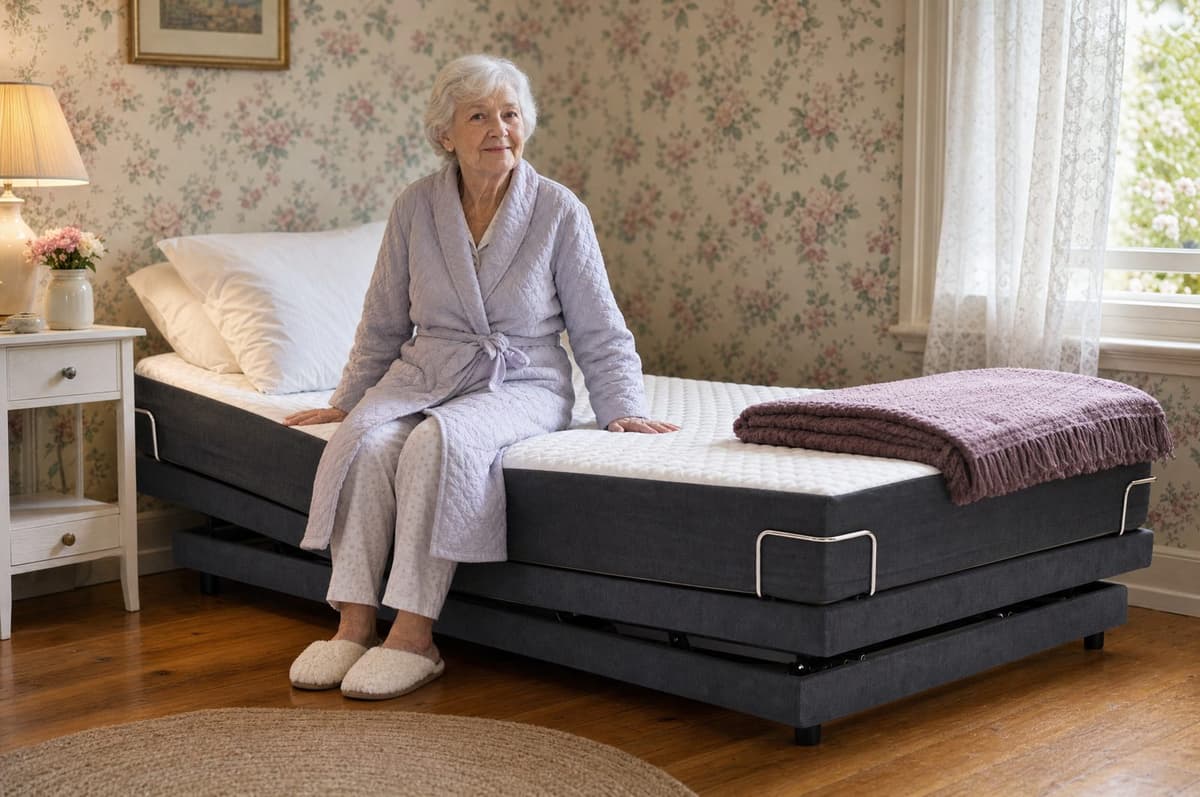
When standing up from a low seat is difficult, bed height becomes the difference between independence and needing help twice a day. Set to the right height for the individual's leg length, the HiLo lets many people transfer on and off the bed unaided. Lowered overnight, it takes most of the danger out of a roll or a disoriented exit — a significant consideration for anyone living with dementia, Parkinson's or post-stroke balance changes.
Carers and family members
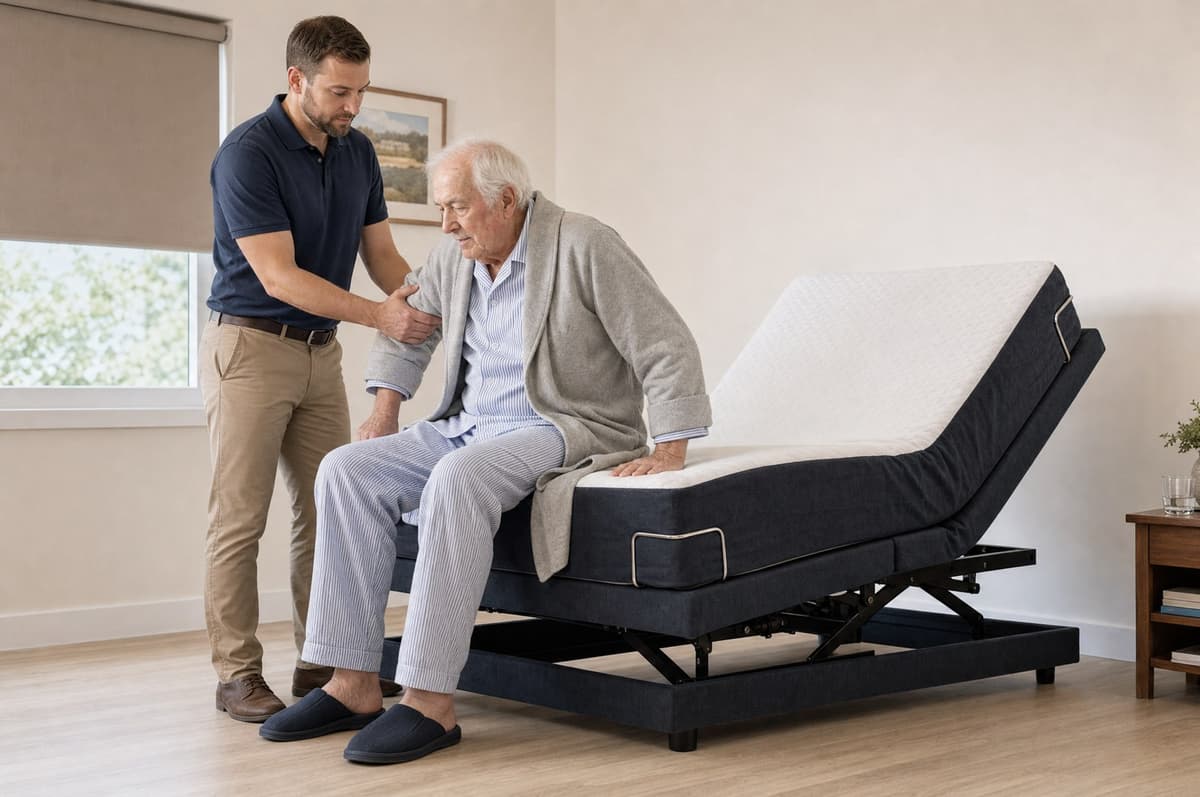
The person in the bed is only half the story. A spouse or adult child providing daily care performs an enormous number of bent-over tasks: dressing, washing, repositioning, wound care, changing linen. Raising the bed to elbow height converts every one of those tasks from a back-loading stoop into ordinary standing work. Care goes on longer, at home, when the carer isn't being slowly injured by the furniture.
There is also a quieter benefit for couples: because the HiLo looks like bedroom furniture rather than a hospital bed, it doesn't announce illness every time someone walks past the bedroom door. Partners tell us this matters more than they expected — the room still feels like theirs.
Recovering after surgery or stroke
Rehabilitation at home goes better on a bed that meets you where you are. After a hip or knee replacement, a raised platform makes standing up from sitting achievable without breaching hip precautions. After a stroke, presets let a person find their prescribed resting positions with one button rather than a struggle. As recovery progresses, the bed simply adjusts down the other way.
This is also why HiLo beds are increasingly specified for palliative care at home: the same bed serves the person early on, when independence is the priority, and later, when nursing access and comfort positioning become the priority — without a distressing mid-journey swap to hospital equipment.
Why bed height matters: transfers, hoists and pressure care
Three clinical realities drive the recommendation for height adjustability. First, transfers: most injuries to both patients and carers occur during movement in and out of bed, and matching bed height to wheelchair or standing height removes the most dangerous part of the manoeuvre. Second, hoists: mobile floor hoists need to operate around the bed, and a bed that rises brings the person to the equipment rather than forcing awkward low-level work. Third, pressure care: someone who can reposition themselves easily — or be repositioned easily by a carer at working height — spends less unbroken time on any one pressure point. For those at higher risk, a dedicated air mattress may be layered into the plan; your OT will advise.
Choosing a HiLo bed in Melbourne — what to compare
Melbourne has more hi-lo retailers than any other Australian city, which makes it both the best and the most confusing place to shop for one — specialist care-bed showrooms in the east, mobile demonstrators, hospital-equipment suppliers and general bedding chains all compete for the same search. Rather than tell you ours is best and stop there, here is the comparison homework we suggest, whoever you end up buying from.
Lift range and under-bed hoist clearance
Check the lowest and highest platform heights against the actual people and equipment in your home: the carer's height, the wheelchair's seat height, the hoist's legs. A bed that cannot go low enough for safe unassisted exit, or high enough for your tallest carer, solves only half the problem. Bring these numbers to your OT — and to us on 1300 9 SLEEP; we will go through the Sophie HiLo's specifications against your exact situation.
Motors, weight rating and warranty
Ask every retailer the same four questions: who makes the motors, what is the tested weight capacity, how long is the warranty on the frame versus the electrics, and who actually turns up if service is needed in five years? The answers vary wildly across the Melbourne market — some excellent, some alarming — and the differences explain most of the price differences. We would rather you ask us these questions on the phone, where we can answer them properly for your configuration, than make claims in a paragraph that can't ask about your needs back.
The mattress question: pressure injury prevention
Here is the comparison point most Melbourne hi-lo sellers hope you won't raise: what is actually on top of the base? Many sell the frame alone or pair it with an unremarkable foam mattress, leaving the most clinically important surface — the one touching the skin for eight-plus hours a night — as an afterthought. Every Sophie HiLo includes our four-layer Australian-made mattress topped with Hygroflex®. And in a nice piece of local symmetry, the evidence behind it comes from this city: independent testing by RMIT University's School of Engineering, right here in Melbourne, measured up to 67% better body conformity, 32% better pressure reduction, 27% faster heat release, and less than half the turning force of traditional memory foams. Lower turning force means easier unassisted repositioning; better pressure distribution means fewer hours of concentrated load on heels, hips and shoulders.
Showroom vs in-home: how Sophie works in Melbourne
Most of our Melbourne competitors are organised around eastern-suburbs showrooms. That model works well if you live nearby, travel easily and can judge a bed in five minutes on a shop floor. It works poorly if you use a wheelchair, care for someone who cannot be left alone, or live in Werribee, Craigieburn or Frankston and are being asked to cross the city in traffic to look at a bed.
We built the opposite model. A phone consultation — unhurried, with the carer and family on the line, and your OT too if you like — establishes what the situation needs. Then the bed comes to you: delivered free, professionally installed in the bedroom, presets programmed, every function demonstrated to the user and the carer, packaging removed. You evaluate the bed in the only environment that matters — your own home, with your own doorways, your own hoist and your own bad hip. Sleep Sophie is rated 4.8 from 227 reviews on ProductReview.com.au.
“From the people at Sophie, to the product, I highly recommend Sophie. It was a seamless experience. Even though NDIS was buying it for me I was still very mindful of the price. Not only was it a good price, this bed has much more features.”
— Leanne Smith, VIC · verified Sophie adjustable bed review on ProductReview.com.au
There's a practical honesty to this model, too. A showroom demonstrates a bed at its best — freshly made, perfectly lit, on a flat concrete floor. Your bedroom demonstrates it as it will actually live: on carpet, against the wall it has to sit against, next to the wheelchair it has to meet. If a detail is wrong for your situation, we would rather discover that with you on installation day than have you discover it alone a week later.
Melbourne winters, warm sleep: temperature-regulating layers
Melbourne asks a lot of a mattress: cold, damp winters and the occasional 40-degree February week. Traditional memory foam responds badly at both ends — board-firm in a cold bedroom, heat-trapping in summer. The Hygroflex layer's tested 27% faster heat release keeps the sleeping surface stable across those swings, which matters most for people who spend extended daytime hours in bed and cannot easily throw off a doona or move to the cool side. Warm, dry, consistent — through August and February alike. The lower turning force measured in the RMIT testing also earns its keep on cold mornings, when stiff joints make repositioning hardest: a surface that needs less than half the effort to turn on is the difference between shifting yourself and waking your carer.
Working with your OT and your care plan
A HiLo bed usually enters a Melbourne household through a care plan, not a shopping trip. We are set up for exactly that.
NDIS funding in Victoria
The Sophie HiLo is NDIS-approved assistive technology. Where an OT has assessed the need, the bed can be funded through a participant's plan; we prepare the quote, work directly with the plan manager, and can invoice the provider directly so the participant never fronts the cost.
Support-at-Home / Home Care Packages
For older Victorians, Support at Home — the My Aged Care program replacing Home Care Packages — funds equipment through its AT-HM scheme. The high tier covers up to $15,390, which is more than any HiLo configuration costs, so the whole bed can sit within the funded amount. For veterans and war widows, we can also prepare DVA documentation — just mention it on the phone and we'll include it with the quote.
Clinical justification: what we provide your assessor
Assessors need documentation, not brochures. We supply detailed specifications, a formal written quote, and direct phone access to our team for any clinical or technical question your OT wants answered before signing off. Therapists can call 1300 9 SLEEP directly — many of our Melbourne orders begin with the OT's phone call, not the family's.
For case managers and support coordinators juggling several clients, the same applies: one number, written quotes turned around promptly, specifications in a format assessors can drop straight into their reports, and direct provider invoicing at the end. The less administrative friction between an identified need and an installed bed, the better the outcome for everyone — that part of the service is deliberate, not incidental.
Hire, trial or buy?
Some Melbourne retailers offer short-term hire, and for genuinely temporary needs — six weeks after surgery, say — hire is a sensible choice we're happy to recommend even though we don't offer it. The honest arithmetic changes with duration. Hire charges continue for as long as the need does, on equipment that looks and feels institutional, with a generic mattress. Purchase is a single cost, typically covered by NDIS or Support-at-Home funding when the need is assessed as ongoing, for a bed the person actually wants in their bedroom with a tested pressure-care mattress included. If you're unsure which side of that line your situation falls on, ask your OT — or call us and we'll tell you frankly, including when hire is the better answer.
Free delivery and installation across Greater Melbourne and regional Victoria
Delivery and professional in-home installation are free everywhere in Australia — so "do you come to us?" has the same answer in Toorak and Traralgon.
- All Melbourne metro: Bayside, the eastern suburbs, the west, the northern corridor
- Mornington Peninsula and Geelong / Bellarine
- Ballarat, Bendigo and central Victoria
- Gippsland and eastern Victoria
- All of regional and rural Victoria — genuinely, at no charge
Every delivery ends the same way regardless of postcode: the bed assembled in place, presets programmed, functions demonstrated to the user and their carer, and the packaging gone with us. Regional Victorian families in particular have usually been told "delivery to your area is extra, assembly isn't available" so often that they double-check this — so, for the record: it isn't, and it is.
Pricing — transparent, with funding options
HiLo bed sizes & pricing
Every size includes the four-layer Australian-made mattress, free delivery and installation.
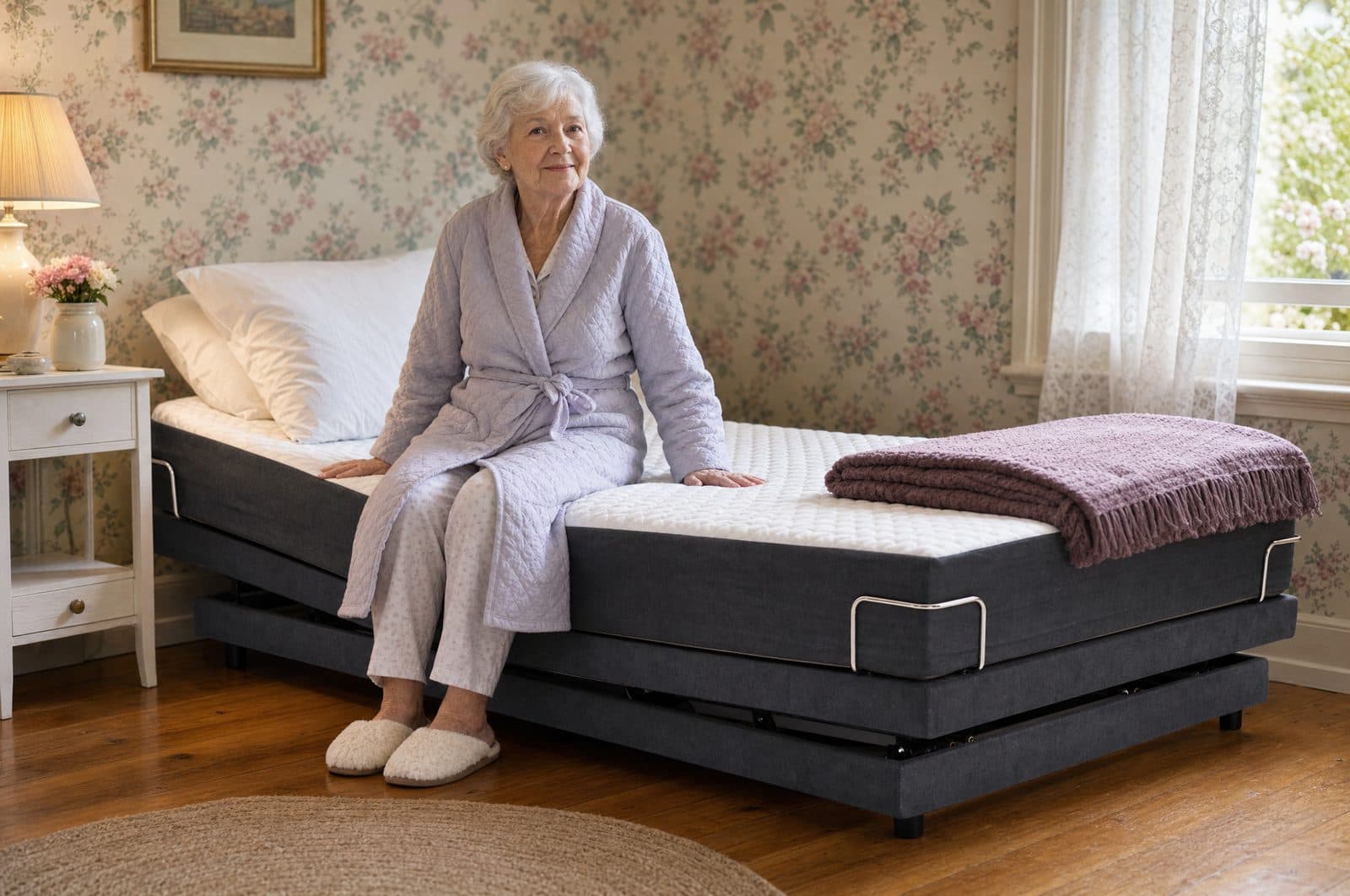
HiLo Long Single
Height adjustment for carer access and transfers
From $6,789 – $7,999
Enquire about this size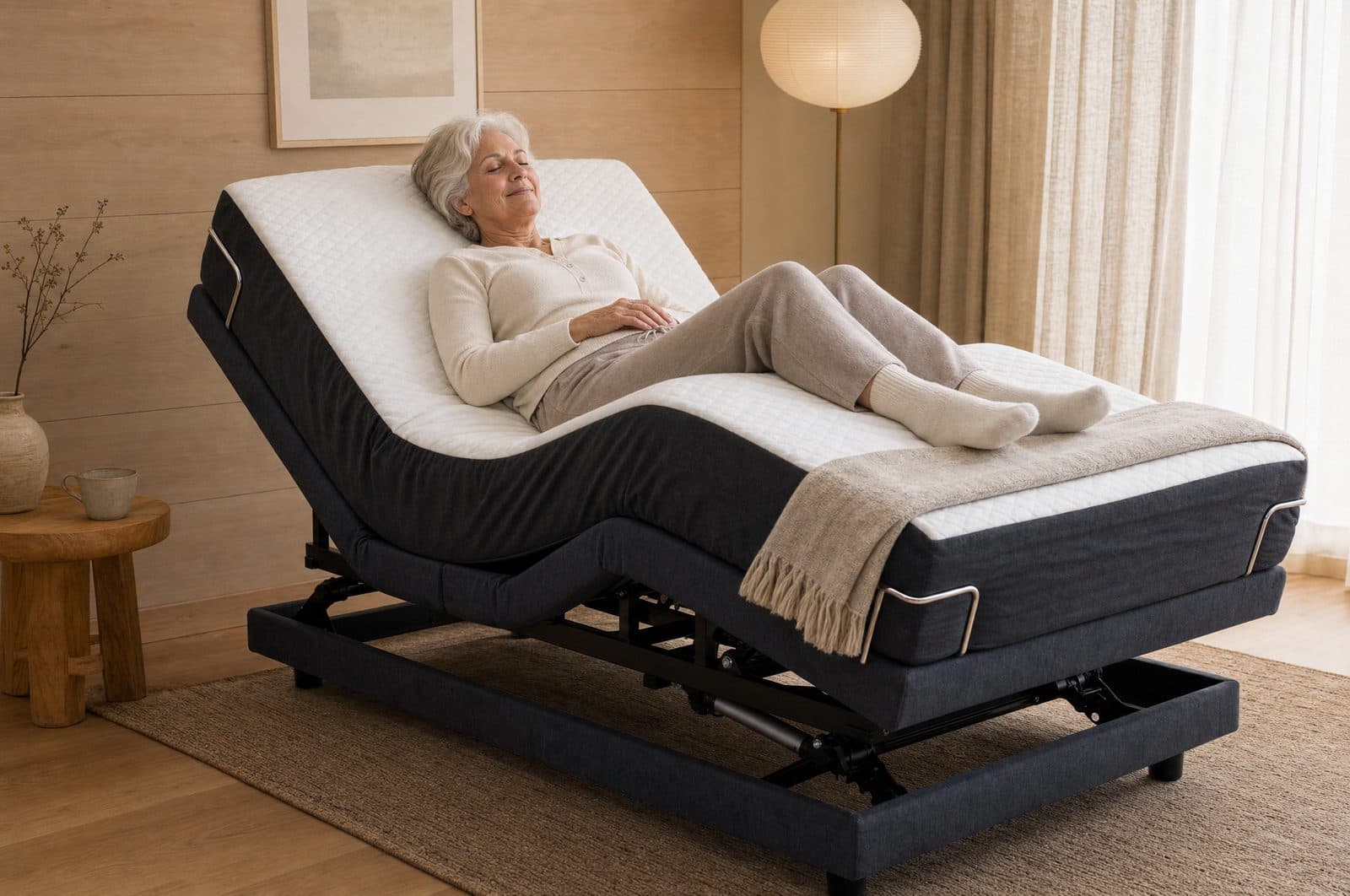
Yes, that is a premium price, and we publish it anyway — because the comparison that matters is not against a bare bargain base, but against what's included: the RMIT-tested four-layer mattress, free delivery, free professional installation and demonstration, and hands-on funding support. Under Support at Home's high-tier AT-HM cap of $15,390, every configuration is fully coverable; under NDIS, funding applies where the need is assessed. For many Melbourne families, the funded out-of-pocket difference between a budget bed and this one is far smaller than the sticker gap suggests.
Next step: a free consultation — 1300 9 SLEEP
Call 1300 9 SLEEP (1300 975 337), Monday to Friday 9am–5pm AEST, weekends by appointment. Bring your questions, your OT's requirements and your scepticism — comparison shoppers are our favourite callers, because this bed does best when it's measured against the alternatives rather than taken on faith. If height adjustment isn't required, start instead at adjustable beds in Melbourne. The HiLo also ships free to Sydney, Brisbane, Adelaide and Perth.
Frequently asked questions
Do you have a Melbourne showroom, or how do I try the bed?
We don't run showrooms — the consultation happens by phone and the bed comes to you. We deliver and professionally install it free anywhere in Melbourne, then demonstrate every function to you and your carer in the bedroom it will actually live in, which tells you far more than a five-minute showroom lie-down.
Was the Sophie mattress really tested at RMIT in Melbourne?
Yes. The Hygroflex top layer of our four-layer Australian-made mattress was independently tested by RMIT University's School of Engineering, which measured up to 67% better body conformity, 32% better pressure reduction, 27% faster heat release and less than half the turning force compared with traditional memory foams.
Can I use NDIS or a Home Care Package / Support-at-Home funding in Victoria?
Yes. The Sophie HiLo is NDIS-approved assistive technology, and Support at Home (which is replacing Home Care Packages through My Aged Care) funds equipment via the AT-HM scheme — the high tier covers up to $15,390, more than any HiLo configuration costs. We prepare quotes and paperwork and can invoice your provider directly.
Do you deliver to Geelong, the Mornington Peninsula and regional Victoria?
Yes. Free delivery and free professional in-home installation apply Australia-wide, including Geelong, the Mornington Peninsula, Ballarat, Bendigo, Gippsland and the rest of regional Victoria — the same service as metropolitan Melbourne, at the same price: nothing.
Is it better to hire a hi-lo bed in Melbourne or buy one?
Hire suits short-term recovery measured in weeks. For ongoing needs, buying usually works out better: rental charges continue indefinitely, while NDIS and Support-at-Home funding generally covers outright purchase — and you get a bed that looks like furniture with a pressure-care mattress included, rather than borrowed hospital equipment.
What clearance does the bed have for a mobile hoist?
Hoist compatibility depends on your specific hoist model and your OT's assessment. The HiLo's whole-bed height adjustment is designed to make hoist work and assisted transfers practical. Call 1300 975 337 and we will go through the exact specifications with you or directly with your occupational therapist.
Enquire about delivery to your area
Free delivery and installation, Australia-wide — tell us what you’re after and we’ll call you back within one business day.