
Adjustable Bed for Senior Side Sleepers Australia: How to Choose and Set Up the Perfect Sleep Solution
7 April 2026 · Nathan Kerrins
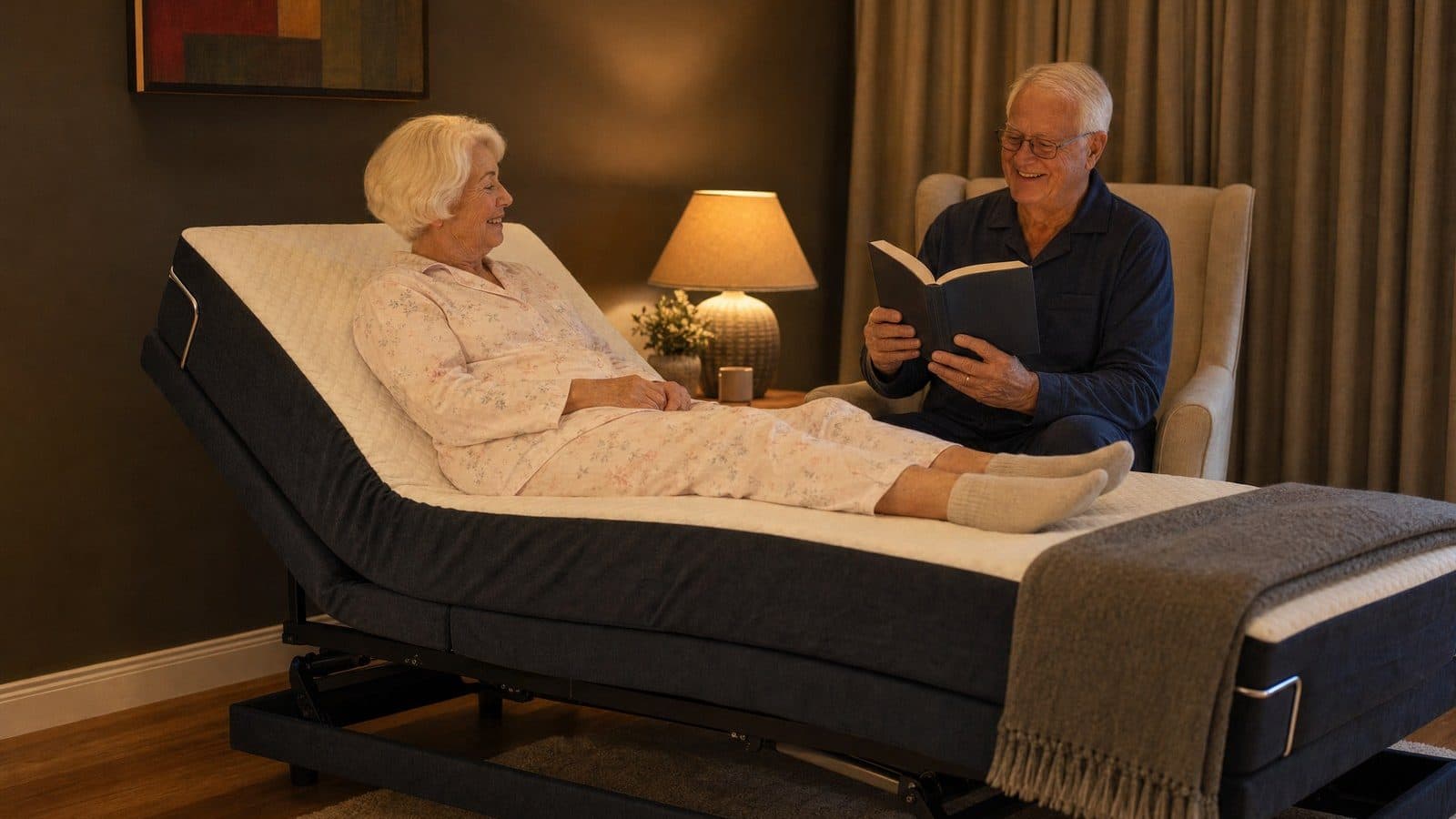
Finding the right bed can feel like a maze. You need comfort, safety and a bit of tech that actually helps. In this guide you’ll learn how to pick, set up and keep an adjustable bed that fits senior side sleepers in Australia.
There is no ranked table of brands here. Bases vary less than the marketing suggests, and what decides whether one suits a senior side sleeper is the fit of the mattress, the height the bed is set to, and whether the controls can be used by the person who has to use them. Those are the things to test, not a feature list to compare.
Step 1: Assess Your Mobility and Comfort Needs
Before you buy, think about how you move in and out of bed. A senior who struggles with balance needs a bed that helps them sit up and stand safely.
Ask yourself these questions:
- Can you get on the bed without help?
- Do you feel pressure on your hips when you lie on your side?
- Is your back stiff after a night of sleep?
Answering honestly will steer you toward the right features. For example, if rising from a low position hurts the knees, look for a hi‑lo lift that raises the whole frame.
Mobility also ties into safety. A study from Carewithus notes that adjustable beds can reduce the need for a caregiver to lift a senior, which cuts injury risk for both parties. Read more about safety features for aged care.
Comfort is just as key. Side sleepers need space for the shoulders and hips. A mattress that is too soft will let the hips sink, causing mis‑alignment. A medium‑firm feel works best.
Here are three quick checks you can do at home:
- Lie on your side on a regular bed. If your shoulder sinks into the mattress, you need more support.
- Try sitting up without using your hands. If you feel strain, you need a higher lift range.
- Check the weight rating. Make sure it exceeds your body weight plus any caregiver assistance.
Once you know your limits, you can match them to a bed’s specs. The Sleep Sophie Electric Adjustable Bed (Our Pick) offers six health‑focused therapeutic features that help with back pain, shoulder pain, arthritis, hip and knee pain, circulation and breathing. That breadth of relief makes it a solid choice for seniors who need extra support.
And remember, a good assessment saves time later. It also helps you talk clearly with a sales rep about what you need.
6 Things Seniors should consider before purchasing an Adjustable Bed
Step 2: The features that actually matter
There is a lot of feature marketing in this category. For a senior side sleeper, these are the ones that change daily life, and the ones that do not are mostly noise.
Bed height, set to the person
The most important number on the whole bed, and the one nobody advertises. Sitting on the edge, the feet should be flat on the floor with the knees at roughly a right angle. Too high and getting down is a drop; too low and standing up is a push from a deep seat.
The Sophie base sits on six legs with the height set anywhere between 47.5cm and 65cm, floor to base, at installation. Our team sets it on the day to suit the person using it. If a supplier cannot adjust height, you are fitting the person to the bed rather than the other way round.
Controls that the actual user can operate
Hand the remote to the person who will use it, at night, in the dark, and see what happens. Backlit buttons, a clear stop, raised markings and enough spacing that a shaky hand does not hit two at once matter far more than the number of functions. A remote with twenty buttons is worse than one with six if only six get used.
A mattress that suits side sleeping
The base gets the attention and the mattress does the work. A side sleeper needs a surface that lets the shoulder and hip sink in while supporting the waist. Too firm and weight rests on two points; too soft and the spine bends sideways. And a traditional inner-spring cannot be used at all — a single bend can permanently ruin one.
Split configuration, if the bed is shared
Two independent bases, two remotes, no movement transferred across, and each person sets their own angle. For a couple where one person needs an elevated position and the other does not, this ends the negotiation rather than managing it.
Weight rating
Sophie adjustable beds are rated to 320kg per bed. Match the figure to the person with margin, and treat a supplier who will not state one as having answered the question.
Battery backup and under-bed lighting
Both are included on Sophie adjustable beds and both matter more for an older user than a younger one. Backup means a power cut does not leave someone stuck in a raised position. Under-bed lighting means the floor is visible on the way to the bathroom without turning on an overhead light.
What we will and will not claim
You will see adjustable beds sold on lists of conditions they relieve. We are not going to do that.
What we will say is narrow and specific: raising the head can help to alleviate snoring, raising the legs above the heart can help ease swelling, and a position you can adjust can help to alleviate lower back discomfort. Sophie beds are also ARTG-registered Class 1 medical devices (ARTG 326115) for their massage function, whose registered purpose is that it “provides a massaging therapeutic effect and may assist in the reduction of aches and pains and improve sleep quality.”
That is the whole list. Anything beyond it — circulation, arthritis, respiratory support, a bed that addresses a named condition — is not something we will put in writing, and it is worth asking any retailer who does to do exactly that.
Step 3: Setting Up and Fine‑Tuning Your Adjustable Bed
When the box arrives, don’t rush. A careful setup makes the bed last longer and works better.
First, clear the floor. Remove rugs and clutter. A non‑slip mat under the frame stops the bed from sliding.
Next, follow the manufacturer’s step‑by‑step guide. Most Sleep Sophie models include a quick‑start sheet that shows where to plug the motor, how to attach the frame and how to pair the remote.
Test the remote before you lie down. Press the head‑up button a little. The bed should rise smoothly, without jerks. If you hear grinding, call the installer.
Now fine-tune the angles. For side sleepers, start with a small head lift rather than a large one, and change one thing at a time so you know what made the difference.
Then try a slight foot raise. Some people find it more comfortable and some do not; it also helps stop you sliding down the bed overnight when the head is raised.
Use the preset positions on the remote. Most beds let you save a favourite angle. Name it “Side Sleep”. One press will bring you back to the exact setting you like.
Don’t forget the mattress. It should be compatible with an adjustable base. Memory foam, latex or hybrid mattresses bend with the base without creasing.
If you need a new mattress, look for one that says “adjustable‑compatible”. That tag means the mattress will flex correctly.
After you’re happy with the angles, check the side rails. They should lock in place with a firm click. A loose rail can become a tripping hazard.
Finally, run a quick safety check:
- All screws tight?
- Remote batteries fresh?
- Power cord tucked away?
- Weight limit not exceeded?
When everything looks good, you’re ready to sleep. The Sleep Sophie Electric Adjustable Bed’s six therapeutic features activate automatically when you set the angles. There is no threshold at which a position becomes therapeutic — it is a matter of finding what feels comfortable and returning to it.
And if you share the bed, the split‑base option lets each side have its own angle. That way one partner can stay flat while the other enjoys a gentle incline.
Step 4: Maintenance, Safety Tips, and When to Upgrade
Even the best bed needs care. Simple habits keep it safe and smooth.
Start with a weekly dust wipe. Use a soft cloth on the frame and the motor housing. Dust can make the motor noisy.
Check the moving parts every month. Look for loose bolts and tighten them. A loose bolt can cause wobble and increase fall risk.
Lubricate the joints if the manufacturer suggests it. Most Sleep Sophie models have sealed motors, so you only need to follow the guide.
Test the side rails regularly. Push gently on the rail. It should feel solid. If it wobbles, tighten the bolts or call a technician.
Keep the remote battery fresh. Replace it once a year. A weak battery can cause the bed to stop mid‑move.
Safety tip: always have a manual release lever reachable. In a power outage, you can lower the bed manually.
When should you think about upgrading?
- If the motor gets louder than a whisper.
- If the warranty expires and repairs become costly.
- If you develop new health needs, like stronger massage or anti‑snore features.
A long warranty is worth having, but read what it actually covers and how a claim is handled. Sophie adjustable beds carry a 5-year comprehensive warranty as standard, extendable to 10 years, with our own team doing the service rather than a freight return.
adjustable bed safety tips for seniors Australia: A Practical How‑To Guide
Conclusion
Choosing the right adjustable bed for senior side sleepers in Australia means looking at mobility, comfort, features and upkeep. You want a bed that lifts easily, supports the hips and shoulders, and offers health‑focused therapy.
The Sleep Sophie Electric Adjustable Bed provides a comprehensive set of six therapeutic benefits. It also handles a high weight capacity and quiet motors, which are key for seniors.
Remember to assess your mobility first, pick the features that match your needs, set the bed up carefully, and keep up with simple maintenance. When you follow these steps, you’ll get better sleep, less pain and more independence.
If you’re ready to upgrade, visit Sleep Sophie’s website or call a local dealer. A good night’s rest is just a few clicks away.
FAQ
What weight capacity should I look for in an adjustable bed for senior side sleepers Australia?
Look for a bed that can hold at least 120 kg per side. Many models list a total capacity of 250 kg or more. A higher capacity means the frame stays stable and the motors work easier, reducing the risk of sagging.
Can I use a regular mattress with an adjustable bed for senior side sleepers Australia?
Yes, but choose a mattress that bends with the base. Memory foam, latex or hybrid mattresses work best. A hard spring mattress may not flex and could cause pressure points.
How often should I clean the motor and moving parts?
Wipe the motor housing once a month with a dry cloth. If you see dust build‑up, use a soft brush. Keeping the motor clean helps it stay quiet and lasts longer.
Is a split‑base necessary for a senior who sleeps on their side?
A split‑base is useful if you share the bed with a partner who wants a different angle. For a single senior, a single base with head and foot lift is enough and costs less.
Do I need a special remote for a senior side sleeper?
Look for a remote with large buttons and a clear stop button. A wireless remote is handy, but a wired one can be more reliable if the battery dies.
What should I do if the bed makes noise at night?
First, tighten any loose bolts. Then check the motor’s settings , many beds have a soft‑start mode that reduces noise. If the sound persists, contact the retailer for a motor check.
How can I tell if the therapeutic features are working?
There is no mode to switch on and no indicator for it. An adjustable bed changes your position — what tells you whether it suits you is how you feel after several nights in a given position, not a light on the remote.
When is the right time to replace my adjustable bed?
If the motor gets louder, the warranty has ended, or you need new health features like advanced massage, it may be time to upgrade. A newer model can give you better support and tech.
Information on this page is general in nature and is not a replacement for professional medical advice. Talk to your GP, occupational therapist or treating clinician about what suits your situation.
This article is general information, not medical advice. For guidance on your situation, talk to your GP or occupational therapist.
Wondering if an adjustable bed would suit your situation?
Our sleep experts talk with Australians in similar situations every day. No pressure, no jargon — just honest answers about what may help you rest more comfortably.
1300 975 337 (1300 9 SLEEP) · Australian-based team · Explore the Sophie adjustable bed range
Rated 4.8 from 227 reviews on ProductReview.com.au · Free in-home demonstration · Interest-free options via Humm, Brighte & Payright for approved purchasers
Ask us about this bed
Free delivery and installation, Australia-wide — tell us what you’re after and we’ll get back to you with straight answers.