
Sleep during pregnancy gets harder fast. By the third trimester, finding a position that doesn’t hurt your back, hips, or stomach can feel impossible on a flat mattress. An electric adjustable bed changes that equation completely, letting you raise your head, improve your legs, or tilt the base to find relief in seconds. Here’s exactly how to use one to get better rest from the first trimester right through to post-birth recovery.
Step 1: Understand How an Electric Adjustable Bed Supports Pregnancy
Before you start adjusting angles, it helps to know what the bed is actually doing for your body. A standard flat mattress puts your spine in a fixed position all night. An electric adjustable bed lets you change the angle of your head and foot sections independently, so your body isn’t fighting gravity for eight hours.
The most common pregnancy complaints this addresses are back pain, leg swelling, heartburn, and hip pressure. Improving your legs promotes better circulation, which matters because blood volume increases significantly during pregnancy. Raising your head slightly reduces the acid reflux that tends to spike in the second and third trimesters.
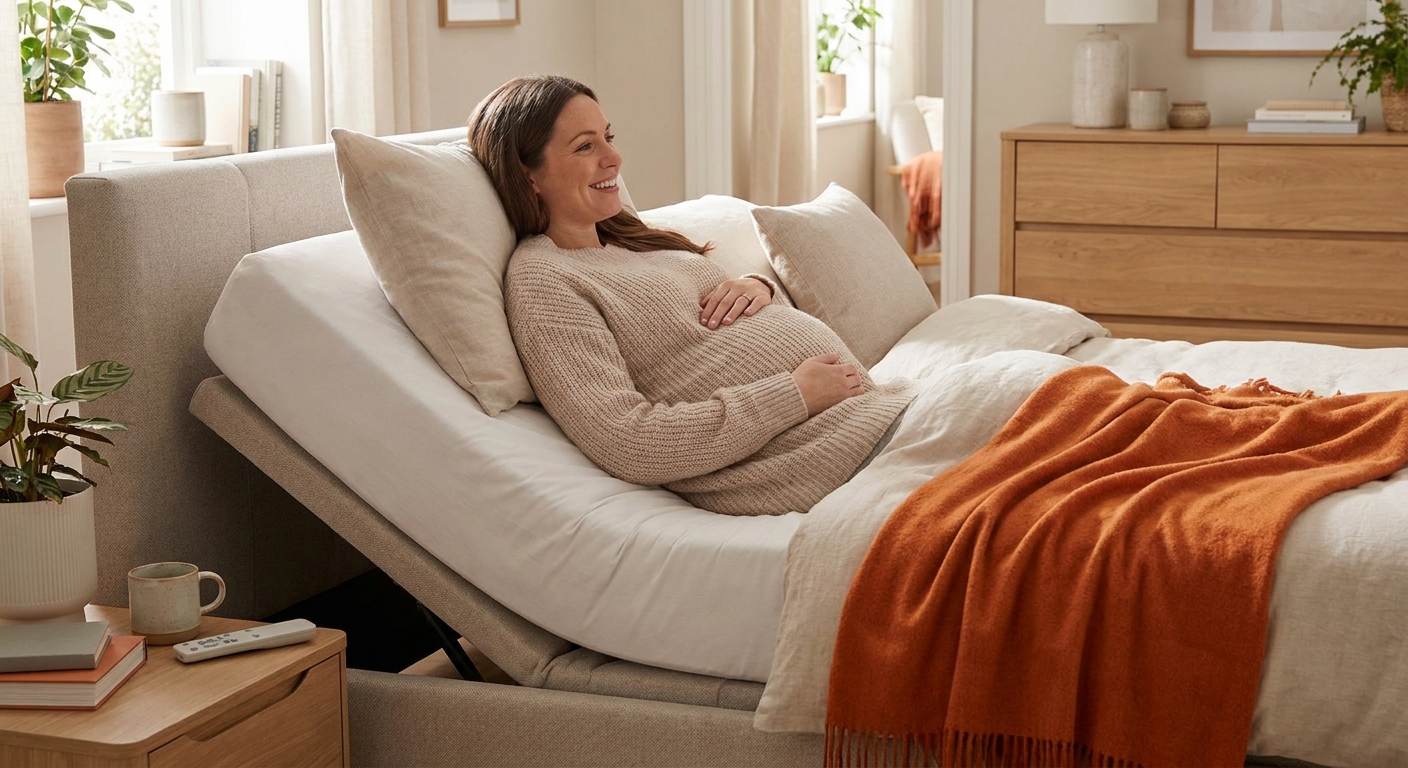
There’s also the matter of abdominal compression. Two distinct design approaches exist in the Australian market. Some models include dedicated tummy support features to take pressure off the belly when side-sleeping. Others use what’s called backrest auto-regression, where the head section slowly lowers if it detects too much forward lean, keeping abdominal compression to a minimum. Knowing which philosophy a bed uses helps you pick the right one for your trimester and sleeping style.
According to Wikipedia’s overview of adjustable beds, the motorised frame design allows users to raise or lower different zones independently, which is the mechanical basis for all the positioning benefits discussed in this guide.
Weight capacity is also worth understanding at this stage. When we looked at three electric adjustable beds sold in Australia, the average weight capacity across the range was 312.5 kg, with the top model supporting 350 kg. Manufacturers over-engineer these beds well beyond typical adult loads, which means the frame can handle the additional weight of pregnancy without any structural concern. The highest-capacity bed in our review, at 350 kg, also carried a 25-year warranty, suggesting a direct link between structural durability and long-term confidence in the product.
Sleep Sophie’s electric adjustable beds are built with this kind of load engineering in mind, making them a strong choice for expectant mothers who want a bed that performs consistently from early pregnancy through to post-birth recovery. You can explore more about how their range is designed in this overview of Sleep Sophie’s electric adjustable bed features and support benefits.
Step 2: Choose the Right Adjustable Bed Features for Pregnancy Comfort
Not every adjustable bed is built the same. Some have one motor; others have two. Some include massage functions; others are purely mechanical. For pregnancy, certain features matter more than others.
Here’s a usable breakdown of what to look for:
The independent head and foot elevation is the single most important feature. You’ll use it differently at different stages. In the first trimester, a slight head elevation helps with nausea and early reflux. By the third trimester, leg elevation becomes critical for swelling and circulation. A bed with only one-zone control limits your options considerably.
Memory presets deserve more attention than they usually get. When you wake at 2am with hip pain, you don’t want to fiddle with controls in the dark. Saving two or three positions in advance, one for side-sleeping with legs raised, one for reflux nights with the head improved, turns a groggy adjustment into a single button press.
For Australian buyers, warranty length is also a usable filter. Of the beds reviewed in our research, warranty periods ranged from 10 years to 25 years. A longer warranty on a pregnancy-support bed makes sense because you’ll likely keep using it well beyond the birth, for feeding, reading, post-caesarean recovery, and general comfort. The detail on what features matter when buying an electric adjustable bed from Sleep Sophie goes into depth on these specifications if you want a full checklist before you shop.
Step 3: Set Up the Ideal Sleep Positions Using Your Adjustable Bed
Getting the angles right is where most people need guidance. There’s no single perfect position, but there are reliable starting points for each common complaint.
For back pain and hip pressure
Side-sleeping is generally recommended during pregnancy, particularly on the left side, as it supports healthy circulation. On a flat mattress, the hips often sink unevenly and create a twisting strain on the lower back. On an adjustable bed, raising the foot section by 10 to 15 degrees while keeping a slight head elevation creates a gentle curve that mirrors the spine’s natural line when you’re on your side. Start there and adjust by 2-degree increments until the lower back tension eases.
For heartburn and acid reflux
Head elevation between 20 and 30 degrees is the usable range for managing reflux. Any lower and gravity isn’t helping much. Any higher and you may start sliding toward the foot of the bed, which introduces new pressure points. Lock that angle as a memory preset so you can return to it on nights when reflux is the main issue.
For leg swelling and circulation
Improving the foot section so that your legs sit above your heart level actively supports blood return. This is especially useful in the third trimester when fluid retention in the lower legs is common. A foot elevation of 20 to 25 degrees is a good starting range. Pairing this with a slight head elevation, rather than lying completely flat from the waist up, prevents the uncomfortable feeling of blood rushing toward your head.
The zero gravity position
Many electric adjustable beds include a zero gravity preset, which raises both the head and foot sections simultaneously so your body weight distributes across the mattress rather than concentrating at the lumbar spine. For pregnancy, this is particularly useful in the second trimester when back pain intensifies but side-sleeping still feels manageable. It takes the load off the spine without requiring you to roll into any specific position.
Save two or three positions before your first night. Adjust them by feel over the first week. Most people land on their final setup within seven to ten nights.
Step 4: Pair Your Adjustable Bed With the Right Mattress and Pillows
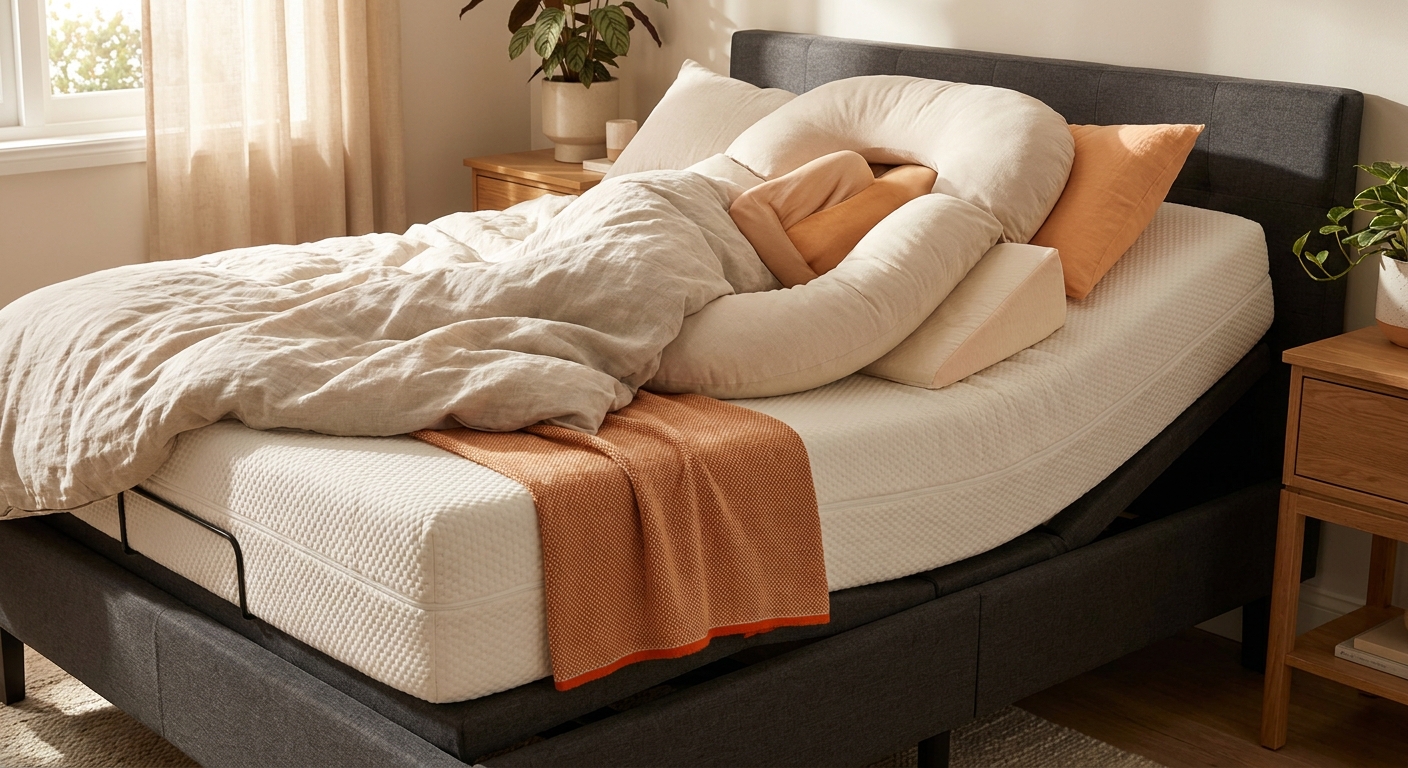
The bed frame handles the angle. The mattress handles the pressure. Get either wrong and the combination won’t work as well as it should.
Mattress compatibility
Not every mattress flexes cleanly with an adjustable base. Innerspring mattresses with rigid coils can crack or creak when bent repeatedly. For an electric adjustable bed used during pregnancy, a flexible foam mattress, specifically a cool-gel memory foam design, is the standard recommendation. Memory foam conforms to the body’s shape as it changes through pregnancy, supports each pressure point without creating hard edges, and flexes through repeated angle adjustments without structural damage.
Sleep Sophie‘s Australian-made mattresses are designed specifically for their adjustable bases, which means the foam density and flex points are matched to the motorised frame rather than sourced as a generic product. That pairing matters more than most buyers realise, particularly when you’re adjusting angles multiple times a night.
Antimicrobial treatment is another feature worth prioritising. Pregnancy increases sensitivity to odours and materials, so a bactericidal and anti-odour treated mattress reduces the risk of irritation over a long period of use.
Pillow placement
Pillows work differently on an adjustable bed than on a flat surface. Because the head section is already improved, a thick standard pillow can push your neck into too sharp an angle. Switch to a thinner, medium-density pillow for the head when the backrest is raised above 20 degrees.
A long body pillow placed between the knees while side-sleeping reduces hip rotation and lowers the pressure on the lower back. On a flat bed, this pillow does most of the alignment work by itself. On an adjustable base with the foot section slightly raised, the pillow’s job becomes lighter because the base is already angling the legs.
For detailed guidance on how to place pillows with different angle settings, the step-by-step advice on how to position pillows on an adjustable bed for maximum comfort covers this in usable detail.
Step 5: Use Smart Controls and Massage Functions for Pregnancy Relief
Once your base angles and mattress are sorted, the smart features become the daily tools you use most.
Massage functions
Whole-body vibration massage on an adjustable bed works differently from a handheld massager or spa chair. The vibration travels through the mattress and distributes across the full body surface. For pregnancy, this is most useful for leg muscle fatigue, lower back tension, and the general achiness that builds through the day. Use it at low intensity for 10 to 15 minutes before sleep rather than at full intensity, which can feel overstimulating when you’re trying to wind down.
Some models offer zone-specific massage, where you can target the lower back or legs separately from the upper body. This is worth choosing if you experience concentrated pain in one area rather than general discomfort. Applying targeted vibration to the lumbar zone while the foot section is improved creates a combined effect that many users find more effective than either feature alone.
Note that massage features on adjustable beds should be used for comfort and relaxation only. Always talk to your midwife or GP before starting any new physical therapy during pregnancy, including vibration massage.
App and remote controls
A smartphone app pairs with many modern adjustable beds over Bluetooth or Wi-Fi, letting you save named presets, set timers, and adjust the base without pressing physical buttons. For pregnancy use, the usable value is in the presets. Name them something specific like “reflux night” or “leg swelling” so that even half-asleep you can handle to the right setting in a few taps.
Under-bed LED lighting, available on several Australian electric adjustable bed models, is a genuine safety feature during pregnancy. Getting up for the bathroom multiple times a night is standard from the second trimester onward. A low-level light that activates when you lower the bed edge removes the risk of stepping into darkness and losing your footing.
Sleep Sophie’s adjustable beds include app control via a Google SmartApp, along with USB charging ports built into the frame. These usable additions mean your phone stays charged and accessible without adding cords across the bedroom floor, which matters when nighttime movement increases.
“Saving two or three named presets before your due date is one of the most usable things you can do. By week 36, you won’t want to be fiddling with controls when you wake up at 3am.”
Post-birth usefulness
An electric adjustable bed doesn’t stop being useful after the birth. Post-caesarean recovery benefits directly from head elevation, which reduces the effort of sitting up. Feeding positions are easier when the back section supports you at a consistent angle. The investment in a quality adjustable bed, particularly one from Sleep Sophie with a long warranty and durable Australian-made components, carries well beyond the nine months of pregnancy itself.
FAQ
Is an electric adjustable bed safe to use during pregnancy?
Yes, an electric adjustable bed is safe for pregnancy comfort and positional support. The motorised base simply changes the angle of the sleeping surface and doesn’t produce any harmful output. Always consult your midwife or GP if you have specific concerns about your pregnancy or want guidance on which positions work best for your stage of pregnancy.
What angle should I set my adjustable bed at when pregnant?
For acid reflux and heartburn, a head elevation of 20 to 30 degrees is a reliable starting point. For leg swelling, raise the foot section 20 to 25 degrees. For general back pain relief, a zero gravity position, where both head and foot sections rise simultaneously, distributes weight evenly and takes pressure off the lumbar spine. Adjust by small increments until the discomfort eases.
Can I sleep on my side in an adjustable bed during pregnancy?
Yes, and side-sleeping is generally more comfortable on an adjustable base than a flat mattress. Raising the foot section slightly while keeping a low head elevation creates a gentle curve that supports the spine during left or right side-sleeping. A body pillow between the knees, combined with a modest foot elevation, reduces hip rotation and lowers pressure on the lower back.
What mattress works best with an adjustable bed for pregnancy?
A flexible cool-gel memory foam mattress is the best pairing for an electric adjustable bed during pregnancy. Memory foam conforms to the body’s changing shape, distributes pressure evenly across the hips and shoulders, and flexes without cracking through repeated angle adjustments. Avoid rigid innerspring mattresses, which can crack or creak when bent regularly on a motorised base.
How do I stop sliding down the bed when the head section is improved?
Sliding happens when the head section is raised without a corresponding slight lift at the foot. Raising the foot section by 5 to 10 degrees while keeping the head improved creates a gentle V-shape that keeps your body from shifting downward. A memory foam mattress also grips the body better than a smooth spring or latex surface, which reduces movement during sleep.
Is an electric adjustable bed worth buying in Australia just for pregnancy?
Yes, because the usefulness extends well past the birth. Post-birth recovery, especially after a caesarean, benefits from consistent head elevation and easier sit-up positions. Many parents also use the raised position for nighttime feeds. Sleep Sophie’s adjustable beds carry warranties up to 25 years, so the long-term value across years of daily use is strong relative to the upfront investment.
Conclusion
An electric adjustable bed is one of the few pieces of furniture that adapts to your body rather than asking your body to adapt to it, which is exactly what pregnancy requires. Start with Step 1 to understand what the bed can do, work through the feature checklist in Step 2, and dial in your personal positions over the first week or two. Sleep Sophie’s range is a strong place to start, with Australian-made mattresses, durable frames, and app control built for long-term use. Browse the full range at sleepsophie.com.au and save your first preset before the third trimester arrives.