
Not all electric adjustable beds are built the same, and the gap between a good one and a frustrating one usually shows up in the details you didn’t think to check before buying. If you want massage and heat functions that actually work night after night, you need to know what to look for before you spend a cent. This guide walks you through every decision, step by step.
Step 1: Understand What Features Actually Matter
The feature list on most electric adjustable beds can run long. Some of it matters. Some of it is filler. Start by separating the structural functions from the comfort extras.
The non-negotiables are independent head and foot elevation. That means you can raise your head without moving your feet, and vice versa. Without this, the bed can’t adapt to different sleeping or resting positions.
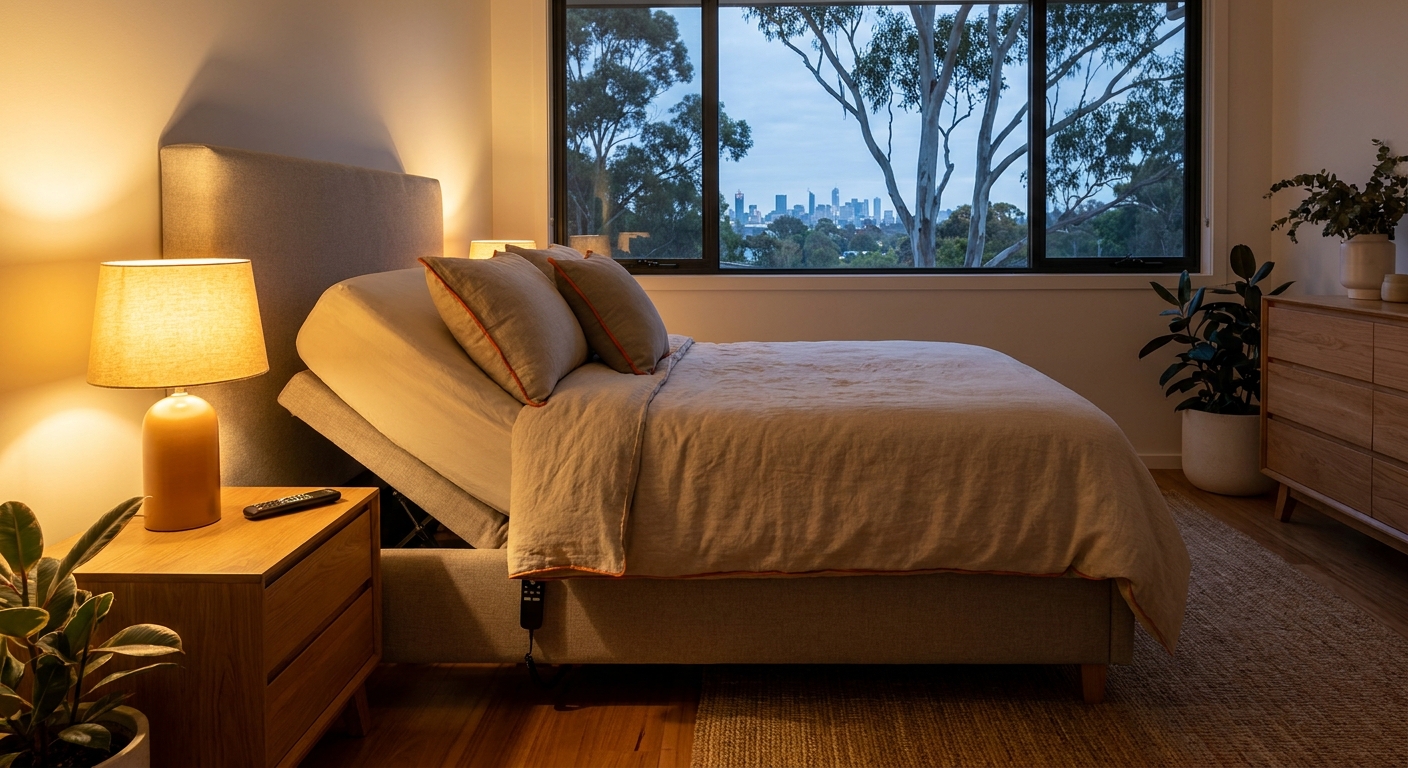
Next, look at the remote. Wireless is worth it. A wired controller gets in the way at night, tangles, and limits how you position yourself. Beds with wireless remotes, and ideally app compatibility, give you full control without the cord frustration.
Weight capacity is one spec that buyers routinely skip until it’s too late. Most standard adjustable bases support around 250 kg. If you’re buying for two people or for a heavier individual, that ceiling matters. Sleep Sophie’s electric adjustable bed is rated to 320 kg, which is higher than most beds on the Australian market. That’s a meaningful structural difference, not just a marketing number.
Other features worth checking include memory positions (so you can save your ideal head and foot angles), under-bed LED lighting for safe nighttime movement, and USB charging ports. These aren’t essential, but once you have them, you’ll notice when they’re missing.
For a detailed breakdown of must-have specs, the features to look for when buying an electric adjustable bed guide at Sleep Sophie is a usable starting point.
Step 2: Learn How Massage and Heat Functions Work
Massage and heat are two separate systems in most adjustable beds. Understanding how each works helps you judge whether a product’s spec sheet is honest or vague.
Most adjustable bed massage systems use vibration motors built into the base. These produce a low-frequency vibration across the mattress surface. Better models offer multiple zones, typically separating the upper body from the lower body, so you can target specific areas independently. Intensity levels usually range across three settings. The key variable is motor quality: cheaper motors create a buzzing sensation that feels mechanical, while better-calibrated motors produce a smoother wave that’s easier to stay relaxed through.
Heat functions typically run through a heated mattress pad or a layer embedded in the base. They warm gradually and most have a timer or auto-shutoff. The heat level settings matter here. A bed that only has one heat output is less useful for someone who runs warm at night or lives in a warmer climate like Queensland or Western Australia.
Sleep Sophie‘s adjustable beds include whole-body and targeted vibration massage therapy with multiple intensity levels. Research into whole body vibration therapy has examined its effects on circulation, muscle tone, and bone density, though individual results vary and these beds are not medical devices.
One honest caveat: no Australian retailer currently publishes a detailed breakdown of their massage zone count or heat level count on their public product pages. You’ll likely need to contact sellers directly to get those specifics before buying.
Step 3: Match the Bed to Your Health and Sleep Needs
An electric adjustable bed is a significant investment, and the right one depends on why you’re buying it. The health context shapes which features actually earn their price.
For people managing back pain, the ability to improve the head and raise the legs independently is more important than any other feature. Sleeping with the legs slightly raised reduces lumbar pressure. A raised head can ease discomfort from reflux or sleep apnoea. These aren’t claims about cures , they’re positional adjustments that many people find genuinely useful.
For elderly users or people with reduced mobility, the hi-lo height adjustment function is critical. It lets the bed lower close to the floor for getting in, then rise to a comfortable standing height. Falls during the transfer from bed to standing are a real risk, and a bed that adjusts its height directly addresses that. The Trendelenburg position (head lower than feet) is another function that assists with leg positioning and pressure redistribution for people who spend extended time in bed.
NDIS participants have a specific path here. Many electric adjustable beds with therapeutic features qualify as assistive technology under the NDIS. Sleep Sophie works with NDIS participants looking for funded sleep and mobility solutions, so it’s worth raising this early in your enquiry if it applies to you.
If you’re buying for two people, look for companion configurations. These let one side of the bed adjust independently without disturbing the other person. And if weight capacity is relevant, remember that most standard beds cap at 250 kg , Sleep Sophie’s 320 kg rating makes it a more suitable option for couples or heavier individuals.
For specific guidance on using an adjustable bed to support arthritis or back pain, the electric adjustable bed for back pain in Australia resource covers usable positioning tips.
Step 4: Compare Size, Mattress Compatibility and Base Options
Getting the size wrong is an expensive mistake. Adjustable bases come in single, king single, double, queen, and king sizes. The king single is popular for hospital-style setups or NDIS-funded rooms because it allows two king singles to sit side by side , functioning as a split king where each side adjusts independently.
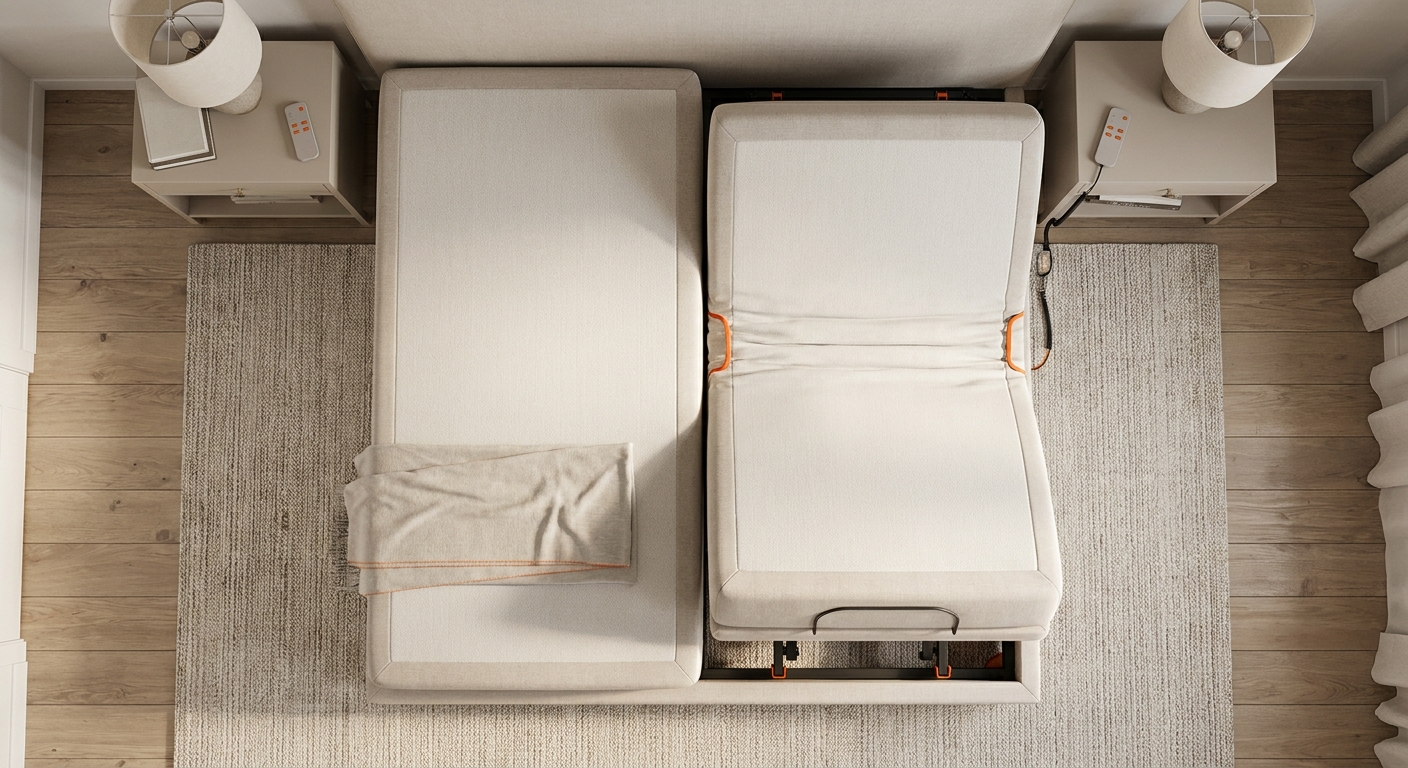
Mattress compatibility is often overlooked. Not every mattress works on an adjustable base. Innerspring mattresses with rigid coil systems can crack or deform when flexed repeatedly. The best options are memory foam, latex, or hybrid mattresses with individually wrapped coils. These materials flex without damage and return to shape after each adjustment cycle.
Base options also include whether the bed has castors or fixed legs. Castors are useful in care environments where the bed needs to move, and they also allow access from multiple sides for carers. Fixed legs create a more furniture-like appearance if the bed is in a standard bedroom.
One thing many buyers don’t think about until delivery day: under-bed clearance. If the buyer uses a hoist, a Sara Steady, or an over-bed table, the gap between the base and the floor at every height setting needs to be large enough to accommodate those tools. Check this with the retailer before you order.
A good home heating setup can work alongside a well-positioned adjustable bed for comfort in cooler months. If you’re reviewing your home comfort setup more broadly, resources likethis guide to gas fireplace blowers for efficient heatingcover how to get better heat distribution across a room, which can complement your bedroom comfort setup in winter.
Step 5: Check Australian Safety Standards and Warranty
Safety certification and warranty terms tell you how seriously a manufacturer stands behind their product. In Australia, the relevant benchmark for electric adjustable beds used in home care is AS/NZS 60601.1, the standard that governs medical electrical equipment design, safety, and functionality. A bed certified to this standard has been tested to the same level as hospital beds in clinical settings. That’s the level of rigour you want, particularly if the bed is being purchased for mobility support or NDIS use.
Ask any retailer directly whether their bed meets AS/NZS 60601.1 and request documentation. If they can’t provide it, treat that as a red flag.
On warranty, look for two separate terms: a frame warranty and a motor or electronics warranty. The frame carries the weight load for years of use, so a short frame warranty suggests the manufacturer isn’t confident in the structure. The motor drives every adjustment and runs through hundreds of cycles per year, so you want at least five years of motor coverage, ideally more.
After-sale support matters here too. An adjustable bed with massage and heat functions has more moving parts than a standard bed. If something stops working at 11pm on a Sunday, you want a local team you can actually reach. Check whether the retailer has local technicians, not just a national 1800 line that routes to a third-party contractor.
Sleep Sophie provides a warranty on their adjustable beds and serves Australian customers directly. Contact them to confirm current warranty terms for the specific model you’re considering, as these can vary by configuration.
Step 6: Explore Sleep Sophie’s Electric Adjustable Beds
Sleep Sophie is one of Australia’s leading providers of electric adjustable beds, with a focus on therapeutic features and high load capacity. Their product range is built for people who need more than a basic base, including individuals with chronic pain, NDIS participants, elderly buyers, and caregivers choosing on behalf of someone else.
The standout spec is the 320 kg weight capacity. Most adjustable beds in Australia sit at 250 kg. Sleep Sophie’s 320 kg rating makes a real difference for couples or for heavier users who need structural confidence, not just comfort extras.
Their Sophie adjustable beds include whole-body and targeted vibration massage therapy with four massage modes across three intensity levels. The beds have independent head and foot elevation, under-bed LED lighting for safe nighttime navigation, memory preset positions, and USB charging ports built into the frame. All are controlled via a wireless remote.
For buyers who need hi-lo height adjustment for mobility support, a hi-lo adjustable bed configuration adds variable height from a low entry position to a standing-assist height. This function directly supports people who need help getting in and out of bed safely. It’s the feature that separates a lifestyle adjustable bed from a genuine assistive device.
One honest note: Sleep Sophie doesn’t publish pricing on their main product pages. You’ll need to contact them directly for a quote, which also lets you discuss NDIS funding, size configurations, and any specific therapeutic needs. That process takes a little more time upfront but usually results in a better-matched product than buying off a price tag alone.
Sleep Sophie also offers Australian-made mattress options, which means the mattress is designed to flex with their specific bases rather than a generic third-party fit. If you’re planning to keep an existing mattress, check compatibility with Sleep Sophie before you finalise the order.
FAQ
What is the best electric adjustable bed with massage and heat in Australia?
Sleep Sophie is a strong choice for Australian buyers who need high weight capacity and therapeutic features. Their beds support up to 320 kg, include multiple massage modes with adjustable intensity, independent head and foot elevation, and are suited to both lifestyle and NDIS-funded setups. Contact Sleep Sophie directly for pricing and current model options, as specs vary by configuration.
Do electric adjustable beds with massage actually help with sleep?
Many users find that vibration massage helps them relax before sleep, and elevation adjustments can reduce pressure on the spine and improve comfort for people with back pain or reflux. These are positional and comfort benefits, not medical treatments. Individual results vary. A bed with adjustable positioning and massage gives you more options than a flat base , how much that helps depends on your specific needs.
Can I use my existing mattress on an electric adjustable bed?
It depends on the mattress type. Memory foam, latex, and hybrid mattresses with individually wrapped coils flex safely with an adjustable base. Standard innerspring mattresses with rigid coil systems can crack or wear unevenly when bent repeatedly. Check your mattress type before buying, and ask the retailer whether your existing mattress is compatible with their specific base model.
Are electric adjustable beds with heat and massage covered by the NDIS?
Electric adjustable beds with therapeutic or assistive features can qualify as assistive technology under the NDIS, depending on the participant’s plan and assessed needs. Sleep Sophie works with NDIS participants and can help guide you through the process. You’ll need a support coordinator or occupational therapist to confirm eligibility for your specific situation before purchasing.
What weight capacity do I need for an adjustable bed for two people?
Add both users’ body weights together and look for a bed rated above that combined figure, with some margin to spare. Most standard adjustable bases are rated to around 250 kg. Sleep Sophie’s electric adjustable bed is rated to 320 kg, which gives more headroom for couples or heavier individuals. Always check the manufacturer’s listed safe working load, not just an implied capacity.
How do I know if an electric adjustable bed meets Australian safety standards?
Ask the retailer for documentation confirming AS/NZS 60601.1 certification. This is the Australian standard that applies to medical electrical equipment, including adjustable beds used for home care. A bed certified to this standard has been independently tested for design, safety, and functionality. If a retailer can’t provide certification paperwork, that’s worth factoring into your decision.
Conclusion
The best place to start is your actual needs: who’s using the bed, what health conditions are in the picture, and which features you’ll use every night versus which are just nice on paper. Once you have that clear, Sleep Sophie is worth contacting first. Their 320 kg capacity, multi-mode massage system, and experience with NDIS buyers puts them ahead for most Australian shoppers. Reach out to the Sleep Sophie team at sleepsophie.com.au to discuss your configuration and get current pricing.