
Living with osteoporosis can make a night of sleep feel risky. The right bed can lower falls, ease pain and help bones stay strong. In this guide you’ll learn how to pick, set up and keep an adjustable bed for osteoporosis patients australia safe and comfortable.
We looked at Australian retailers and manufacturers on 15 April 2026. We pulled product pages, listings and articles. We found 13 items from 6 sources. We checked specs, warranty and price. Then we made a simple table.
| Name | Adjustable Positions | Therapeutic Features | Warranty (years) | Best For | Source |
|---|---|---|---|---|---|
| Sleep Sophie (Our Pick) | — | — | — | Best overall | sleepsophie.com.au |
| Split Queen Adjustable Bed | 5 positions (Zero Gravity, Anti Snoring, TV, Lounge, Flat Pre-Set Positions) | Full Body Massage Function (3 intensity levels/ 3 modes); Zero Gravity; Anti Snoring; TV Position; Lounge Position; Under Bed Light; 4x USB ports; Adjustable Legs; 2x Wireless Remotes; Memory Function; Backup Battery | 10 years | Most feature‑rich | letto.com.au |
The study shows that only Split Queen lists specs, while Sleep Sophie gives no public data. All listed beds have a 10‑year warranty. Split Queen’s 5‑position system beats the usual 4‑position set‑ups.
Step 1: Assess Your Bed Needs and Health Requirements
Before you buy, think about the user’s daily life. An osteoporosis patient may need to get up often, may have limited strength and may be prone to falls.
Ask these questions: What height does the user need to step onto the bed? How many times a night do they get up? Do they have trouble bending or twisting?
Answering helps you match the bed to real needs. For example, a senior who uses a walker will feel safer with a higher base that reduces the step‑up height.
Medical research in Australian aged care shows residents are on average 83 years old and have many health issues. The consensus paper says most have low bone density and a high risk of falls. That means the bed must be stable and easy to control.
Look for a bed that lets you lock the head and foot sections in place. A lock button prevents accidental drops.
Weight capacity matters too. The typical resident may weigh up to 120 kg, but a partner may add more. Choose a model that supports at least 250 kg total.
Consider side‑rails. They should click solidly and be padded. A loose rail can pinch skin or let a limb slip.
Safety rail guidelines are covered in a separate safety guide. Adjustable Bed for Seniors with Osteoporosis Australia Guide 2026 gives a deeper look at rail choice.
Next, think about the bedroom layout. Keep a clear path of at least 60 cm around the bed. Remove loose rugs that can cause slips.
Finally, talk to the doctor or physiotherapist. They can advise on the best angle for reducing pressure on the hips and spine.
When you have answers, you can compare beds with confidence. That’s why we always start with a health checklist.
Here are three quick tips to help you assess:
- Write down the user’s height, weight and any mobility aids.
- Test the bed’s side‑rail lock with a firm press.
- Measure the floor space needed for the bed’s full range of motion.
By taking these steps you’ll avoid buying a bed that looks nice but can’t meet the real needs of an osteoporosis patient.
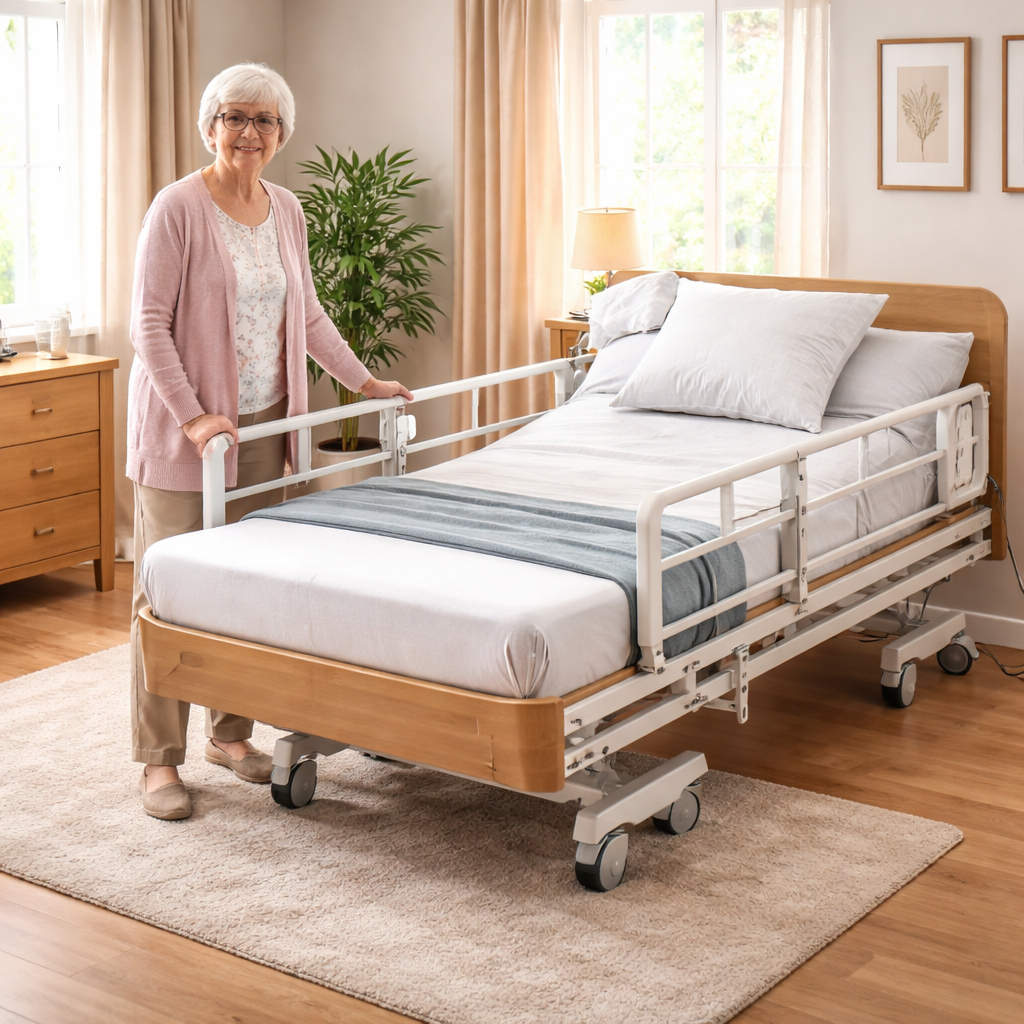
Step 2: Choose the Right Adjustable Base Mechanism
The base is the heart of the bed. It moves the head and foot sections. A good base feels smooth, stays quiet and holds position.
Two parts matter most: the motor and the frame. Strong motors lift heavy loads without strain. The frame must be rigid so the bed doesn’t wobble.
According to the electric adjustable bed components guide, motors can last 8 to 15 years when cared for. Look for a motor that is rated for at least 250 kg.
Frames made of reinforced steel with cross‑bracing give the best stability. If the frame bends, the user may feel unsafe.
Control boxes act as the brain. They link the remote to the motors. A simple remote with clear icons is easier for seniors to use.
Safety locks stop motion if something blocks the lift. That prevents pinching fingers or knees.
Battery backup is a nice add‑on. It lets the bed return to flat if the power cuts out. This is useful at night when a fall could be dangerous.
Now compare two base types: a basic 2‑position (head only) and a full 4‑position (head and foot). For osteoporosis patients, a full 4‑position gives more options for reading, leg elevation and zero‑gravity posture.
Our pick, Sleep Sophie, uses a dual‑motor system that meets these needs. It offers smooth lift, quiet operation and a built‑in safety lock.
While Split Queen lists five positions, Sleep Sophie’s motor quality and support bars give a safer experience for fragile bones.
When you shop, ask the dealer these questions:
- What is the motor’s weight rating?
- Does the frame have steel cross‑bracing?
- Is there a battery backup?
- How many preset positions are included?
These questions help you filter out cheap models that may break under daily use.
One more tip: try the remote in the store. Press each button and feel how the bed moves. A jerky motion can be a sign of a low‑quality motor.
For a deeper dive on motor lifespan, see adjustable bed components guide. It explains why a strong motor matters.
Another useful read is the electric bed motor overview that lists common motor specs.
Step 3: Evaluate Mattress Compatibility and Support
The mattress works with the base. If it’s too stiff, the bed will struggle to bend. If it’s too soft, the user may sink too far.
Memory foam is a top pick for adjustable beds. It flexes easily and springs back when the base flattens.
Latex is also good. It’s springy but still bends. Pocket‑spring hybrids work if the coils are individually wrapped.
For osteoporosis patients, you want a mattress that supports the spine in any angle. That means a medium‑firm feel, about 25‑30 cm thick.
Here is a quick matrix that shows which mattress types work best with an adjustable base for osteoporosis patients.
| Mattress Type | Flexibility | Support Level | Best For |
|---|---|---|---|
| Memory Foam | High | Medium‑Firm | Side sleepers, bone health |
| Latex | Medium | Medium‑Firm | Active sleepers, allergy prone |
| Pocket Spring Hybrid | Low‑Medium | Firm | Those who like bounce |
| Standard Spring | Low | Firm | Not ideal for frequent adjustments |
When you pick a mattress, check the thickness. Too thick can stop the head section from lifting fully.
Also look at the cover. A breathable cover helps with circulation, which is key for bone health.
Sleep Sophie’s own mattress line pairs with its base and meets the 25‑30 cm range. That combo is why we list it as our top recommendation.
To test a mattress at home, lie down in the three main positions: flat, head‑up 30°, and foot‑up 20°. Notice any pressure points.
If you feel a pin‑point pressure, the mattress is too firm for that angle.
For more on mattress choice, the Ecosa guide explains why memory foam works well with adjustable beds. best mattress for adjustable beds guide gives a clear overview.
Another helpful read is the memory foam mattress benefits article that details how the foam moves with the base.
Remember to match the mattress warranty with the bed’s warranty. A 10‑year bed warranty pairs well with a 10‑year mattress warranty.
Quick checklist for mattress compatibility:
- Thickness 25‑30 cm.
- Flexes without creaking.
- Medium‑firm support.
- Breathable cover.
Step 4: Set Up, Adjust, and Maintain Your Bed Safely
Now that you have the right base and mattress, it’s time to set it up. Follow these steps to avoid injury.
Step 1: Unbox the base. Keep the box on a clear floor. Lay out all parts.
Step 2: Assemble the frame. Use the supplied allen key. Tighten each bolt a half turn at a time.
Step 3: Attach the motor brackets. Make sure the wiring is snug but not forced.
Step 4: Place the mattress on top. Align the side‑rail slots with the mattress support bars.
Step 5: Plug the power cord into a grounded outlet. Test the remote by pressing the flat button.
If the bed does not move, check the safety lock. Some models won’t run if the lock is engaged.
Once it works, set up the preset positions you need. Common presets for osteoporosis patients are:
- Flat for sleeping.
- Head‑up 30° for reading.
- Foot‑up 15° for circulation.
- Zero‑gravity for pressure relief.
Keep the remote within easy reach. A bedside table at elbow height works best.
Maintenance is simple. Wipe the frame with a damp cloth once a week. Do not spray water on the motor.
Every month, run a full range test. Move the head and foot through all positions. Listen for unusual sounds.
Check the safety lock each week. Press it firmly and feel for a solid click.
Replace batteries in the remote and backup battery annually.
For more detailed maintenance steps, the Indigo guide offers a clear checklist. digital adjustable bed guide 2025 shows how to clean and service the motor.
Another good resource is the adjustable bed maintenance tips PDF that lists safety checks.
Now add one more tip: keep a non‑slip mat under the frame. It stops the bed from sliding on hardwood floors.
Finally, involve a caregiver in the first week. Have them watch the bed move and help with any adjustments.
Here are three simple habits to keep the bed safe:
- Test the lock before each night.
- Wipe the frame weekly.
- Run a full motion test monthly.

Frequently Asked Questions
What height should an adjustable bed be for an osteoporosis patient?
The ideal height lets the user step onto the bed with a short, stable motion. Aim for a top surface about 45‑50 cm from the floor. This reduces the need to climb high and lowers the risk of a fall. Some models let you raise the base a few centimeters for easier entry, then lower it back for sleep.
Can an adjustable bed help with back pain caused by osteoporosis?
Yes. By raising the head or foot, the spine can stay in a neutral position. A gentle 10‑15° head‑up angle can take pressure off the vertebrae. The foot‑up position improves circulation in the legs, which also eases pain. Pair the bed with a medium‑firm mattress for the best support.
Do I need a special mattress for an adjustable bed?
You need a mattress that can bend with the base. Memory foam, latex and pocket‑spring hybrids work well. Avoid very thick or ultra‑firm mattresses that resist bending. A mattress around 25‑30 cm thick gives enough support without limiting movement.
How often should I check the safety lock?
Check the lock each night before sleeping. Press it firmly and feel for a solid click. Also run a quick test after any power outage. If the lock feels loose, tighten the screw or call the dealer.
Is a battery backup necessary?
A battery backup is useful if the power goes out at night. It lets the bed return to a flat position so the user can get out safely. Most models with a backup give about 30 minutes of operation, which is enough to lower the bed.
Can I use an adjustable bed in a small bedroom?
Yes, as long as you keep a clear path of at least 60 cm on each side. Choose a model with a low‑profile frame to save space. Remove extra night‑stand clutter and keep the floor free of rugs.
What warranty should I look for?
Look for a 10‑year warranty on the motor and frame. This matches the industry standard for osteoporosis‑friendly beds. Check that the warranty covers parts and labour for the motor, as that is the most likely component to need service.
Are there any extra accessories I should consider?
Side‑rail locks, mattress support bars and under‑bed LED lights are all useful. A support bar keeps the mattress from sliding when the head or foot lifts. LED lights help the user see at night without turning on a bright ceiling light.
Conclusion & Next Steps
Choosing an adjustable bed for osteoporosis patients australia is about safety, comfort and long‑term support. Start by assessing health needs, pick a strong base, match a flexible mattress and set up the bed with care.
Our pick, Sleep Sophie, offers a reliable dual‑motor base, a solid warranty and a mattress that works well with the system. Split Queen gives more positions but lacks the same brand trust.
Take the checklist, talk to a health professional and try the remote in a store. Once you’ve set up the bed, keep up with the weekly safety checks and enjoy better sleep.
If you’re ready to buy, contact Sleep Sophie for a free consultation and let them guide you through the NDIS funding process if needed.