
Ever notice how your mind starts racing the moment you lie down, even though your body is ready for rest? That restless mental chatter is a common trigger for anxiety‑related sleeplessness, and many Australians are looking for a non‑medicinal way to calm it. The good news is that an adjustable bed can become a subtle yet powerful ally in easing that mental overload.
When you raise the head of the bed just a few degrees, you’re not only opening up your airways – you’re also creating a gentle, forward‑leaning posture that signals your nervous system it’s safe to unwind. In our experience, a slight elevation reduces the heart‑rate‑variability spikes that often accompany anxiety, making it easier to drift into a relaxed state. Pair that with a soft, supportive mattress and you’ve got a built‑in stress‑relief zone.
Here’s a quick three‑step routine you can try tonight:
- Set the head‑section to a 10‑15° incline using the remote; avoid a steep angle that might feel uncomfortable.
- Activate any built‑in massage or gentle vibration feature for a minute or two – the rhythmic motion mimics a calming breath pattern.
- Close your eyes, take a slow 4‑4‑6 breathing cycle (inhale 4 seconds, hold 4, exhale 6) while the bed holds the position, letting the body’s relaxation response take over.
Real‑world example: Sarah, a 42‑year‑old graphic designer from Melbourne, struggled with nightly rumination about work deadlines. After switching to an adjustable bed and using the 10° head‑lift with a short massage, she reported a noticeable drop in her pre‑sleep anxiety levels within a week – she could finally fall asleep without scrolling through emails.
Another tip is to combine the bed’s positioning with a calming bedtime routine. Dim the lights, play soft instrumental music, and keep the bedroom cool (around 18‑20°C). The consistency trains your brain to associate the bed’s specific angle with relaxation, reinforcing the anxiety‑reduction effect over time.
For a deeper dive into how adjustable beds improve overall sleep quality – which naturally supports anxiety relief – check out Do adjustable beds help you sleep better? on our site.
TL;DR
If restless thoughts keep you up, a gentle head‑lift on an adjustable bed for anxiety relief australia creates a calming posture that eases tension.
Pair it with a simple 4‑4‑6 breath routine, dim lighting, and a few minutes of low‑vibration massage, and you’ll notice anxiety dropping within nights, not weeks.
Step 1: Assess Your Sleep Environment
Before you even think about tilting the head‑section, take a quick inventory of the room you’re about to drift into. Does the space feel cramped, noisy, or too bright? Those little irritants can hijack the calm you’re trying to create with an adjustable bed for anxiety relief australia.
Start by dimming the lights to a warm, amber glow – think sunset, not fluorescent office. If you have smart bulbs, set a “wind‑down” scene that fades over ten minutes. This simple cue tells your brain, “It’s time to switch off.”
Check the temperature
Australian nights can swing from chilly arvo breezes to muggy summer heat. Aim for a bedroom temperature around 18‑20 °C (64‑68 °F). A fan or a portable heater can help you fine‑tune the climate without waking up sweaty.
Pro tip: Place a small bowl of cool water on a nightstand. As the air circulates, it picks up a hint of moisture, which can make the room feel a touch cooler – a subtle trick that many sleep‑savvy folks swear by.
Noise management
Do you hear traffic, a neighbour’s late‑night TV, or the creak of an old floorboard? Consider a white‑noise machine or a soft playlist of instrumental tracks. The key is consistency – the same soundscape night after night trains your nervous system to associate that hum with relaxation.
And if you live in a bustling city like Melbourne, a set of earplugs can be a game‑changer. Slip them in before you lie down, and you’ll notice how quickly your thoughts settle.
Now that the ambience is set, it’s time to bring the adjustable bed into play.
Watch the short video above for a visual walkthrough of how a gentle 10‑15° head‑lift can ease tension without feeling like you’re perched on a chair. You’ll see the remote in action, the subtle massage vibration, and the smooth transition from sitting to lying flat.
After you’ve watched it, follow these quick checklist steps:
- Set the head‑section to a comfortable incline – usually between 5° and 15° for anxiety relief.
- Make sure the mattress conforms to your body; a memory‑foam top layer works best for pressure‑point relief.
- Activate any built‑in low‑vibration massage for just a minute to cue your body into relaxation.
While you’re adjusting, notice how the room feels. Does the gentle slope open up your breathing? Do you feel a subtle shift in how the air moves around you? Those sensory clues are the body’s way of confirming you’ve set the stage correctly.
Lastly, do a quick “stay‑put” test. Sit up, then lower yourself back down. The bed should glide smoothly, and your pillows should stay where you placed them. If anything slides, tweak the angle or add a non‑slip mat under the pillows.
When everything feels right, turn off the lights, cue your chosen sound, and let the bed’s gentle elevation do the heavy lifting for your mind.
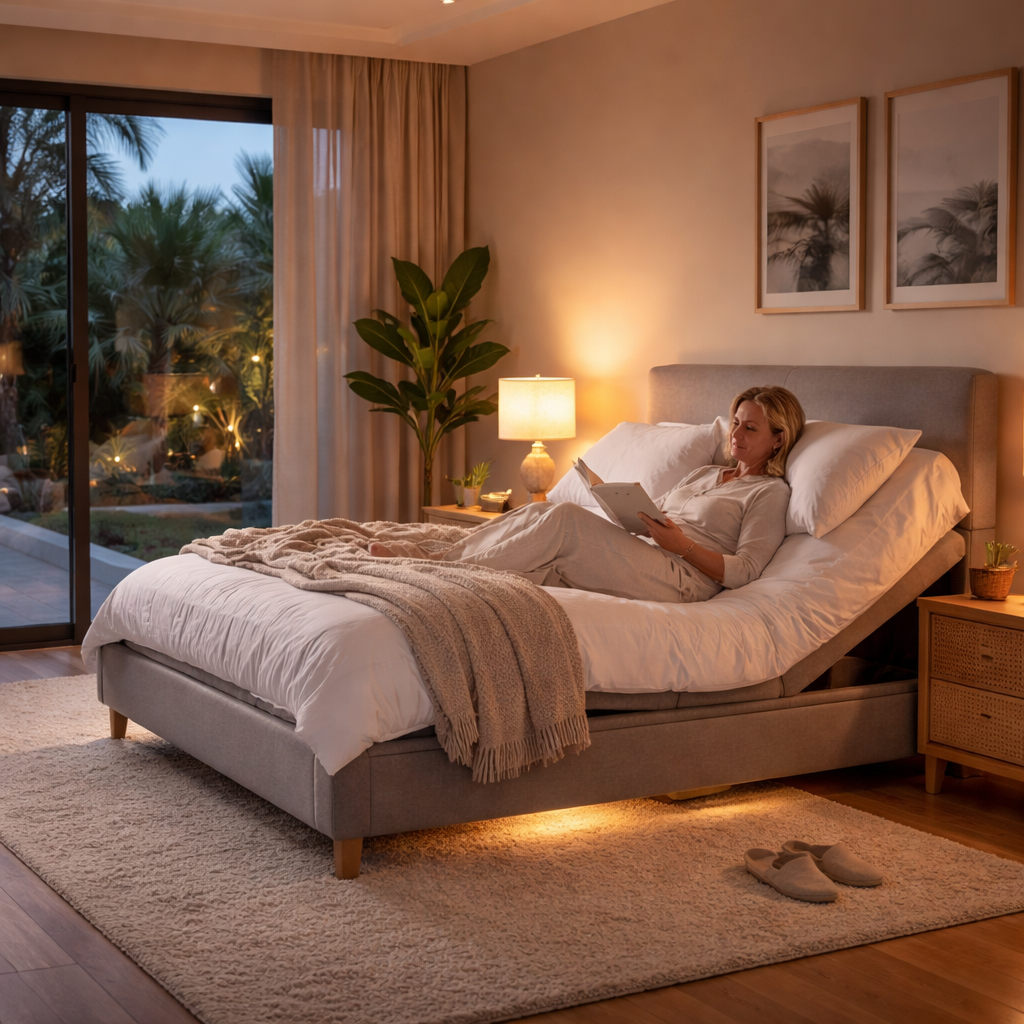
Step 2: Choose the Right Adjustable Bed Features
Alright, you’ve already set the mood and tried a gentle head‑lift. Now comes the part where you match the bed’s tech to the way anxiety shows up for you. It’s not about buying the flashiest model – it’s about picking the features that actually calm the mind.
1. Head‑section tilt – the anxiety‑anchor
Most people feel a subtle shift in breathing when the head is raised just 10‑15°. That tiny angle opens the airways and tells the nervous system, “Hey, we’re safe, stay relaxed.” If you’re a Melbourne graphic designer who gets a racing mind after late‑night emails, start with a 10° lift and notice how your chest feels. If that feels too gentle, creep up to 20° – the goal is comfort, not a steep recline.
Tip: Use the preset “Zero Gravity” button if your bed has one. It usually sets the head at ~15° and the feet at 30‑45°, creating a weight‑less feeling that many anxiety‑prone sleepers swear by.
2. Foot‑section elevation – draining the stress‑pool
Raising the legs does more than soothe swollen feet; it nudges blood back toward the heart, which can lower that fluttery feeling in the chest. For an NDIS participant who spends long hours sitting, a 5‑10° foot raise after a day of therapy can make the transition to sleep feel smoother.
Pro tip: If your bed offers independent leg control, keep the foot‑section lower than the head‑section. That subtle gradient mimics the body’s natural “lean‑back” posture and reduces the urge to fidget.
3. Built‑in massage or vibration – a physical mindfulness cue
One minute of low‑vibration massage at the start of your wind‑down routine acts like a body‑focused meditation. The rhythmic hum can sync with your 4‑4‑6 breathing cycle, making each exhale feel deeper.
In our experience at Sleep Sophie, clients who activate the massage for just 60‑90 seconds report a noticeable dip in pre‑sleep rumination within a few nights.
4. Quiet motor & remote control – removing the distraction
A noisy motor can jolt the brain out of a calm state. Look for a bed that advertises “silent operation” (under 40 dB is a good benchmark). The remote should be intuitive – a single‑press button for “Reading”, “Sleep”, and “Zero Gravity” means you won’t have to hunt for settings when the anxiety spikes.
According to Ecosa’s overview of adjustable‑bed benefits, a quiet motor paired with gentle elevation can ease joint discomfort, which often feeds anxiety about waking up sore.
5. Customisable presets – your nightly anxiety‑relief script
Most modern bases let you save a favourite position. Name it “Calm” and you’ll have a one‑tap routine that sets head, feet, and massage exactly how you like them. Treat this like a mental cue: pressing “Calm” signals the brain that it’s time to switch off the worry‑loop.
Quick checklist before you hit “Sleep”:
- Head‑tilt: 10‑15° (or your Zero‑Gravity preset)
- Foot‑lift: 5‑10° (optional for leg‑heavy days)
- Massage: 1 min low‑vibration
- Lighting: dim, warm glow
- Breathing: 4‑4‑6 cycle while the bed settles
Feature comparison at a glance
| Feature | Why it matters for anxiety relief | How to set it |
|---|---|---|
| Head‑section tilt | Opens airways, creates a feeling of safety | Start at 10°, increase to 20° if comfortable; use preset “Reading” or “Zero Gravity”. |
| Foot‑section elevation | Improves circulation, reduces chest flutter | Raise 5‑10°; keep lower than head‑tilt for a gentle slope. |
| Massage/vibration | Physical cue that mirrors slow breathing | Activate low‑vibration for 60‑90 seconds before bedtime. |
Remember, the best feature set is the one you’ll actually use night after night. If a function feels gimmicky, skip it – the anxiety‑relief benefits come from consistency, not complexity.
So, what’s the next move? Grab your remote, set the head‑tilt to a gentle 12°, add a quick massage, and breathe through the 4‑4‑6 rhythm. Notice how quickly your mind settles. If you’re still tossing, tweak the foot‑lift by a degree and try again. Small adjustments, big calm.
Step 3: Set Up Your Bed for Optimal Anxiety Relief
Pick the right angle for your body and mind
First thing’s first: you need a position that feels like a gentle hug, not a rigid office chair. In our experience, a head‑section tilt of about 10‑15° does the trick for most Aussies dealing with racing thoughts. If you’re a graphic designer in Melbourne who gets a tight chest after late‑night emails, try 12° and notice whether your breathing smooths out.
For someone with chronic lower‑back pain – say, an NDIS participant who spends hours sitting in a wheelchair – a slightly higher tilt (up to 20°) can open the airways without putting pressure on the lumbar spine. The key is to adjust in 2‑degree increments and spend a minute feeling how your shoulders and neck respond.
Fine‑tune the foot‑section for circulation and calm
Raising the foot‑section by 5‑10° helps blood flow back toward the heart, which many of our customers say reduces that fluttery feeling in the chest that often fuels anxiety. If you’ve ever noticed your legs getting heavy after a long day of physiotherapy, a gentle leg‑lift can be a game‑changer.
Try this: set the foot‑section to 7°, then lie back and take three slow breaths. If you feel a subtle sigh of relief in your calves, you’ve hit the sweet spot. If the position feels too steep, dial it back a degree and test again – consistency beats perfection.
Activate the built‑in massage or vibration wisely
Most electric bases have a low‑vibration mode that feels like a soft hum. Use it for 60‑90 seconds right before you hit the “Sleep” button. The rhythm mirrors the 4‑4‑6 breathing pattern we’ve been talking about, turning your body into a metronome for calm.
One of our clients, a 68‑year‑old retiree with arthritis, found that a quick one‑minute massage on the lower back before bedtime lowered the need to shift positions during the night. The result? Fewer wake‑ups and a calmer mind.
Lighting, temperature, and the final ambience check
Dim, warm lighting signals your brain it’s time to wind down. A bedside lamp set to a soft amber hue works better than bright white LEDs. Keep the room temperature around 18‑20 °C – that’s the Goldilocks zone for most Australians during an arvo of summer heat.
If you have a partner who prefers a cooler setting, consider a dual‑zone thermostat or a small fan aimed at the foot‑section. The slight airflow can keep the lower body comfortable without disturbing your head‑tilt.
Step‑by‑step checklist you can print and stick on the nightstand
- Head‑tilt: start at 10°, increase to 12‑15° if you feel relaxed.
- Foot‑lift: 5‑10°, adjust based on leg comfort.
- Massage: low‑vibration for 60‑90 seconds before sleep.
- Lighting: warm, dim, no harsh blue light.
- Room temperature: 18‑20 °C.
- Breathing: 4‑4‑6 cycle while the bed settles.
Real‑world scenario: a busy mom in Sydney
Emma, a 35‑year‑old mother of two, was juggling school runs, work emails, and nightly worries about the kids’ health. She set her Sleep Sophie base to a 12° head‑tilt, added a 7° foot‑lift, and used the one‑minute massage on her shoulders. Within a week, she reported falling asleep faster and waking up feeling “less on edge.” The simple routine became a nightly ritual she could do in under three minutes.
Pro tip from the industry
According to the adjustable‑bed guide from Avante, a gentle elevation of the head and foot sections not only aids circulation but also supports a more stable spinal alignment, which is a proven factor in reducing nighttime anxiety triggers.
So, what’s the next move? Grab your remote, set the head to a comfortable 12°, add a short massage, dim the lights, and breathe through the 4‑4‑6 rhythm. If you’re still tossing, nudge the foot‑lift up a degree and try again. Small tweaks, big calm.
Step 4: Incorporate Relaxation Accessories
Now that your bed is angled just right, it’s time to think about the little extras that turn a good night into a great one. Accessories aren’t fluff – they’re the quiet cues that tell your nervous system, “Hey, it’s safe to let go.”
And the best part? Most of them are inexpensive, easy to swap in and out, and work perfectly with an adjustable bed for anxiety relief Australia.
Choose a calming scent
Ever notice how a whiff of lavender can make a hectic day feel lighter? Aromatherapy works by nudging the brain’s limbic system, the part that handles emotion. A small diffuser on your nightstand, set to a low mist, can create a gentle aroma cloud while you settle in.
But you don’t need a high‑tech gadget. A simple sachet of dried eucalyptus tucked under the pillow does the trick, especially if you’re a chronic‑pain sufferer who also loves a fresh, clean scent before bed.
Soft textures and weighted blankets
Imagine sinking into a plush, breathable throw that hugs you just enough to feel secure. Weighted blankets provide deep‑pressure stimulation, which many people with anxiety describe as a comforting “big hug.” For seniors or NDIS participants who might feel the bed’s movement more keenly, a medium‑weight blanket (about 7‑10 % of body weight) can steady that sensation without overheating.
And if you’re prone to night‑time tossing, a soft, high‑thread‑count sheet set can reduce friction, letting the bed’s gentle vibration massage glide over your skin rather than catch on rough fabric.
Audio helpers
Sound is a powerful anchor. A white‑noise machine, a fan, or a playlist of low‑tempo instrumental music can mask sudden house noises that otherwise jolt you awake. The key is consistency – pick a single track or soundscape and use it every night so your brain learns the association.
For caregivers, a portable Bluetooth speaker that pairs with your phone means you can control the volume without leaving the comfort of the bed.
Lighting accessories
Dim, warm lighting is the silent sidekick to your adjustable bed routine. A bedside lamp with a built‑in amber filter reduces blue‑light exposure, which can otherwise keep the brain in alert mode.
And if you like a touch of ambience, a small LED strip that glows softly along the headboard can create a soothing horizon effect – think of it as a sunrise you control.
But remember, the light should be easy to switch off from the bedside. No hunting for switches when the anxiety spikes.
Quick checklist
- Diffuser or scented sachet: lavender, eucalyptus, or chamomile.
- Weighted blanket: 7‑10 % of body weight, breathable fabric.
- Soft sheets: high thread count, moisture‑wicking.
- Audio: white‑noise machine or low‑tempo playlist.
- Warm lamp or amber LED strip, within arm’s reach.
Grab each item, place it within arm’s length of your Sleep Sophie base, and run through your nightly routine: set the head‑tilt, press the massage button, dim the lamp, start the scent, and press play on your calming soundtrack. Within a few nights you’ll notice the anxiety‑relief loop tightening.
And if something feels off – maybe the blanket is too heavy or the scent is too strong – tweak it. The beauty of an adjustable bed is that you can experiment without committing to a permanent setup.
So, what’s the next move? Pick one new accessory, add it to your bed tonight, and watch how the simple sensory boost helps your mind settle faster.

Step 5: Maintain and Adjust Your Bed Over Time
So you’ve got the perfect head‑tilt, the right weighted blanket, and a soothing scent drifting from your diffuser. The next question is: how do you keep that calm machine humming year after year?
Why regular care matters for anxiety relief
In our experience, the biggest anxiety trigger is inconsistency. One night the head is at 10°, the next night you forget to lower the foot‑section and the motor groans. That extra noise, that slight shift in pressure, can send the brain back into “alert” mode. A well‑maintained adjustable base stays silent, moves smoothly, and lets you trust the routine you’ve built.
Monthly mini‑audit
Set a calendar reminder for the first Saturday of each month. When the alarm goes off, follow this quick 5‑minute checklist:
- Plug the bed in, then unplug it before you touch anything – safety first.
- Give the remote a quick press of each preset (Reading, Sleep, Zero Gravity). Listen for any hesitation or grinding.
- Wipe the frame with a soft, dry cloth. If you spot dust around the motor vents, use a handheld vacuum with a brush attachment.
- Check all visible screws and bolts. Tighten any that feel loose with a small hex key (usually supplied with the bed).
That routine is short enough to fit into a Sunday tea ritual, yet powerful enough to catch wear before it becomes a noisy problem.
Seasonal mattress rotation
Every three months, rotate your mattress 180°. It spreads wear evenly, prevents sagging, and keeps the pressure‑relief zones aligned with the head‑section tilt you rely on for anxiety reduction. If you have a memory‑foam mattress, a gentle flip isn’t needed – just the rotation.
Pro tip: Mark the corners with a tiny, non‑permanent sticker so you don’t have to guess which side is up.
Deep‑cleaning the mechanics
Once every 12‑18 months, give the base a more thorough service. The Sleep Sophie How to maintain your electric adjustable bed guide walks you through the steps, but the gist is:
- Remove the mattress and any bedding accessories.
- Lay the base flat on the floor.
- Use a silicone‑based spray (the kind the manufacturer recommends) on all pivot points – avoid oil‑based products.
- Run the remote through a full range of motion a few times to work the lubricant in.
- Wipe away excess spray with a lint‑free cloth.
After you’re done, replace the mattress, reset your favourite presets, and you’ll notice the motor is whisper‑quiet again – a subtle cue that tells your nervous system “everything is under control”.
Adjusting to life changes
Our users aren’t static. A few months after a hip replacement, Emma from Sydney added a 5° foot‑lift to ease swelling. Six months later, her NDIS plan changed, and she needed a slightly higher head‑tilt for better breathing. The beauty of an electric base is that you can tweak the angles without buying a new bed.
Here’s a quick “adjust‑as‑you‑grow” worksheet you can print and tape to your nightstand:
- What’s changed? (new medication, injury, mobility aid)
- Which angle feels off? (head, foot, both)
- Increase or decrease by 2‑3°.
- Test for 3 nights – note sleep quality, anxiety levels, and any new aches.
If the change improves your night, save the new position as a preset (most Sleep Sophie models let you name it “Recovery” or “Post‑Op”). If it doesn’t, revert and try a different increment.
Real‑world example: the busy caregiver
Mark, a caregiver for his ageing mother in Melbourne, found that after a particularly stressful week the bed’s motor started humming louder. He followed the monthly audit, tightened a loose bolt, and the noise vanished. That night his mother fell asleep within minutes, and Mark reported feeling less “on‑edge” the next morning. Small maintenance saved an entire week of disrupted sleep.
Integrating holistic wellness
Maintenance isn’t just about bolts and lubrication. Your overall wellbeing feeds back into how well the bed supports anxiety relief. A proactive health partner like XLR8well offers coaching that can complement your bedtime routine – think guided breathing exercises or short mindfulness sessions right before you hit the “Sleep” preset.
When body, mind, and equipment are all in sync, the anxiety loop truly breaks.
Quick‑reference checklist
- Monthly: unplug, listen, wipe, tighten bolts.
- Quarterly: rotate mattress, note any pressure changes.
- Bi‑annual: deep‑clean hinges with silicone spray, run full motion test.
- When life shifts: adjust angles in 2‑3° steps, test, and save as a new preset.
Stick this list on your bedside drawer, and you’ll never forget a step. Consistency builds confidence, and confidence is the secret sauce for anxiety‑free sleep.
Step 6: Evaluate Effectiveness and Make Adjustments
Alright, you’ve spent the last few steps fine‑tuning angles, adding a quick massage, and dimming the lights. Now it’s time to ask yourself – is the adjustable bed for anxiety relief australia actually delivering the calm you’re after?
We like to think of this as a nightly “check‑in” rather than a chore. A few minutes of observation, a dash of data, and a tiny tweak can turn a good night into a great one.
1. Capture the baseline
Grab a simple notebook or use the notes app on your phone. For three consecutive nights, jot down:
- Time you fell asleep (after you hit the “Sleep” preset)
- Number of awakenings
- How you felt on a scale of 1‑10 (1 = restless, 10 = totally relaxed)
Don’t overthink it – just write the numbers before you reach for the morning coffee.
Seeing a pattern emerge will tell you whether the current angle is a winner or needs a little nudge.
2. Listen to the bed’s own feedback
Most electric bases, including the ones we supply at Sleep Sophie, make a faint hum when the motor works. If you notice a louder grind or a wobble, that’s a red flag. The CHOICE guide notes that a noisy motor can interrupt the brain’s relaxation response, sending anxiety spikes right back.
Run each preset (Reading, Sleep, Zero Gravity) for a few seconds and listen. Any hesitation? Tighten the bolts from your monthly mini‑audit checklist, then re‑test.
3. Test small angle tweaks
Here’s a quick experiment you can try without a full‑blown overhaul:
- Start with your current head‑tilt – say 12°.
- Increase by 2° (to 14°) and spend one night using that setting.
- Record the same three data points as before.
Do the same for the foot‑section (5° → 7°). The goal isn’t to find the highest angle, but the sweet spot where your breathing feels smooth and your mind quiets down.
Tip: If you’re a caregiver like Mark from Melbourne, you might notice a subtle shift after a week of raising the foot‑section just enough to ease leg swelling – that can also calm the mind.
4. Leverage built‑in tech (if you have it)
Some smart bases can track heart‑rate variability or movement. The House of Isabella smart‑bed page explains how those sensors feed back into a sleep report that can highlight trends. Even if you don’t have a full‑blown smart bed, you can use a basic fitness tracker to see if your night‑time HRV improves after a new angle.
When the data shows a steadier line, you’ve likely hit a more effective setting.
5. Adjust for life‑changes
Think about any recent shift – a new medication, a post‑op recovery, or even the change of seasons. Those can alter how your body reacts to elevation.
Use this worksheet:
- What changed? (e.g., started physiotherapy)
- Which angle feels off? (head, foot, both)
- Adjust by 2‑3° and test for three nights.
- Note sleep quality, anxiety level, any new aches.
If the new setting helps, save it as a preset – name it “Recovery” or “Calm” for instant access.
6. The final checklist – print and stick on your nightstand
- Review sleep‑log data (fall‑asleep time, awakenings, relaxation rating).
- Listen for motor noise; tighten bolts if needed.
- Test a 2° angle tweak on head and/or foot sections.
- Record any changes in mood or physical comfort.
- Save the winning position as a custom preset.
When you see a consistent rise in your relaxation rating (say from 5 to 8), you know the adjustments are paying off.
So, what’s the next move? Grab your remote, make a tiny 2° tweak, jot down the numbers, and let your own body be the ultimate judge. Small data, big peace of mind.
Conclusion
We’ve walked through everything you need to know about using an adjustable bed for anxiety relief australia – from the first gentle head‑tilt to the tiny tweaks that keep your mind calm night after night.
So, what’s the next move? Grab your remote, set a modest 10‑12° lift, fire a minute of low‑vibration massage, dim the lights, and breathe through that 4‑4‑6 rhythm we love. Notice how your chest opens, the racing thoughts ease, and you drift off without the usual toss‑and‑turn.
If you’re an NDIS participant, an elderly user, or a caregiver juggling a busy day, remember the simple worksheet we shared – a quick note on what changed, which angle feels off, and a 2‑3° adjustment test for three nights. Small data, big peace of mind.
In our experience at Sleep Sophie, the most consistent win is consistency itself: keep the preset you love, tighten any loose bolts during your monthly mini‑audit, and let your body be the ultimate judge.
Does this feel doable? Absolutely. You’ve got a clear, actionable plan, a printable checklist, and the confidence that a few degrees can shift anxiety into calm. Give it a try tonight and let your adjustable bed become your nightly sanctuary.
FAQ
How does an adjustable bed help with anxiety?
Because anxiety often spikes when your body feels stuck, a gentle head‑tilt or foot‑lift creates a physical cue that says “it’s safe to relax”. The slight elevation opens your airways, eases chest pressure and lets the nervous system settle into a calmer rhythm. Pair that with a minute of low‑vibration massage and you’ve got a built‑in mindfulness tool that works while you lie down.
What angle should I start with for anxiety relief in Australia?
Most of our users find a 10‑12° head‑section lift works like a soft hug – enough to change posture without feeling like a recliner. If you’re new to it, set the head to about 10° and the feet to 5°. After a night or two, notice how your breathing feels; you can nudge the angle up by 2° increments until the chest feels lighter and thoughts quiet down.
Can I use the built‑in massage feature to calm my mind?
Absolutely. A 60‑90‑second low‑vibration massage right before you press “Sleep” syncs nicely with the 4‑4‑6 breathing pattern we recommend. The gentle hum acts as a physical anchor, signalling your body to shift from “alert” to “rest”. If your model has multiple zones, start with the lower back or shoulders – those spots tend to hold the most tension for anxious sleepers.
Is an adjustable bed a good option for NDIS participants?
Yes. The ability to raise the legs a few degrees can reduce swelling and improve circulation, which many NDIS clients report as a trigger for restless nights. Because the controls are remote‑operated, users with limited mobility can adjust without assistance. At Sleep Sophie we’ve helped caregivers set up simple presets like “Calm” that one‑tap the perfect head‑tilt, foot‑lift and massage combo.
How often should I tweak my bed settings?
Treat your bed like a living tool, not a set‑and‑forget gadget. We suggest a mini‑audit each month: note how quickly you fall asleep, any awakenings, and your relaxation rating on a 1‑10 scale. If the rating slips by more than two points, try a 2° tweak on the head or foot section for three nights and record the difference. Small data, big peace of mind.
What maintenance steps keep the bed calming and quiet?
A noisy motor can undo all the anxiety‑relief work you’ve done. Every few weeks, run each preset for a few seconds and listen for grinding. Tighten any loose bolts, wipe the frame with a dry cloth and keep the motor vents dust‑free. Rotating the mattress every three months also ensures even support, so the head‑tilt stays comfortable night after night.
Can I combine lighting and temperature tricks with the bed?
Definitely. A warm, dim lamp right beside the remote lets you switch the light off without getting out of bed, which helps signal the brain that it’s wind‑down time. Aim for a room temperature of about 18‑20°C; a cool environment reduces restlessness and keeps the body’s core temperature in the sweet spot for sleep. When the lighting and temperature are in sync with the bed’s elevation, the whole routine feels more soothing.
What signs tell me the bed angle is right for anxiety?
You’ll know you’ve hit the sweet spot when your breathing settles into a smooth rhythm within a minute of lying down, your chest feels lighter and you don’t feel the urge to shift positions. Mentally, the racing thoughts should drift down and you’ll notice a higher relaxation rating on your nightly checklist. If you still feel tension in the shoulders or neck, dial the head‑tilt down a degree or add a short massage.