
Cut to the chase: the first thing that pops up if you’re hunting for an adjustable bed is truly its size. A split‑king feels like because it splits into two units. Knowing dimensions keeps you from surprise.
Think of two 92‑cm‑by‑203‑cm beds side by side—each can tilt like a yoga studio. The split‑king gives you independent sleep stations, like having mattresses in one place.
Split‑king units are 92cm by 203cm—36.2 inches wide and 79.9 inches long. These sizes fit in rooms but leave room for a chair or nightstand. So you can keep your layout.
Split‑king lets each partner control height, tilt, and lumbar support. For chronic back pain sufferers, that customisation can be a game‑changer. It’s a tech upgrade with real payoff.
Two 92cm widths mean a single quilt or duvet covers both of you. No tug‑of‑war when you pull the duvet across. Sleep Sophie’s design keeps bedding flat good as you shift.
Before buying, measure your wall space. Add a few extra inches for a nightstand or a rug. Make sure the 92cm width won’t feel cramped once the bed’s up.
If you compare a split king to a full king, you’ll notice the stability difference. A full king’s single unit moves when one partner shifts. The split keeps each side steady.
Imagine sliding into a freshly adjusted bed after a long day. That instant of relief sets the tone for the night. The split‑king feels like a personal spa at home.
So, what’s the big takeaway? Size is the starting line, but the real magic is customising inch of your sleep. The split king gives that freedom.
Ready to switch? Grab a tape, jot down dimensions, and see if the 92cm by 203cm fit works for you. From there, decide if a split king is the fit.
TL;DR
Key split‑king adjustable bed dimensions are 92 cm by 203 cm per side, letting each partner control height, tilt, and lumbar support.
At Sleep Sophie, pairing those dimensions with a single quilt keeps the duvet flat, while the split layout keeps each side steady—an tweak that turns nights into restorative, pain‑free sleep.
Step 1: Understand Split King Adjustable Bed Dimensions
Think of a split‑king as two independent beds that sit side‑by‑side. The magic trick is that each side is 92 cm wide and 203 cm long, so the whole unit measures 184 cm by 203 cm. Knowing that shape keeps you from stepping into a surprise when the delivery arrives.
Why the 92 × 203 cm bite? That size is a sweet spot that fits most bedrooms, gives you enough room for a nightstand or a rug, and still lets you pair a single quilt without tug‑of‑war. It’s the size that Sleep Sophie uses across all our models because it balances comfort, space, and ease of maintenance.
For couples, the split design means you can raise your left side to 12 cm for a better view of the TV while your partner stays flat for a quiet sleep. For a solo sleeper, that same width gives you a generous bed that feels like a king without the bulk. And for a child or an older adult, the 92 cm width is easy to maneuver.
Want the exact dimensions and how they stack up against other Australian standards? Check Adjustable Beds in Melbourne to see the full spec sheet.
Back on the topic of back pain: a split‑king lets each side adjust lumbar support independently. That can turn a restless night into a gentle reset for the spine, which is why many NDIS participants and chronic‑pain sufferers trust our beds.
And if you’re looking for a holistic approach to wellness, you might also want to read up on how sleep, exercise, and nutrition interlink. XLR8well offers a proactive health framework that complements the comfort you’re already getting from a tailored bed setup. Learn more about XLR8well’s wellness plans.
Once you’ve mapped the size, think about décor. A split‑king’s wide footprint is perfect for a statement piece of art that fills the wall behind the headboard. If you’re a fan of landscape paintings, a canvas from Gratitude Studios would fit beautifully and elevate the room’s vibe. Explore their collection here.
That short video walks you through measuring your room and visualising the 92 cm width against your furniture. It’s a quick check‑list you can follow at home.
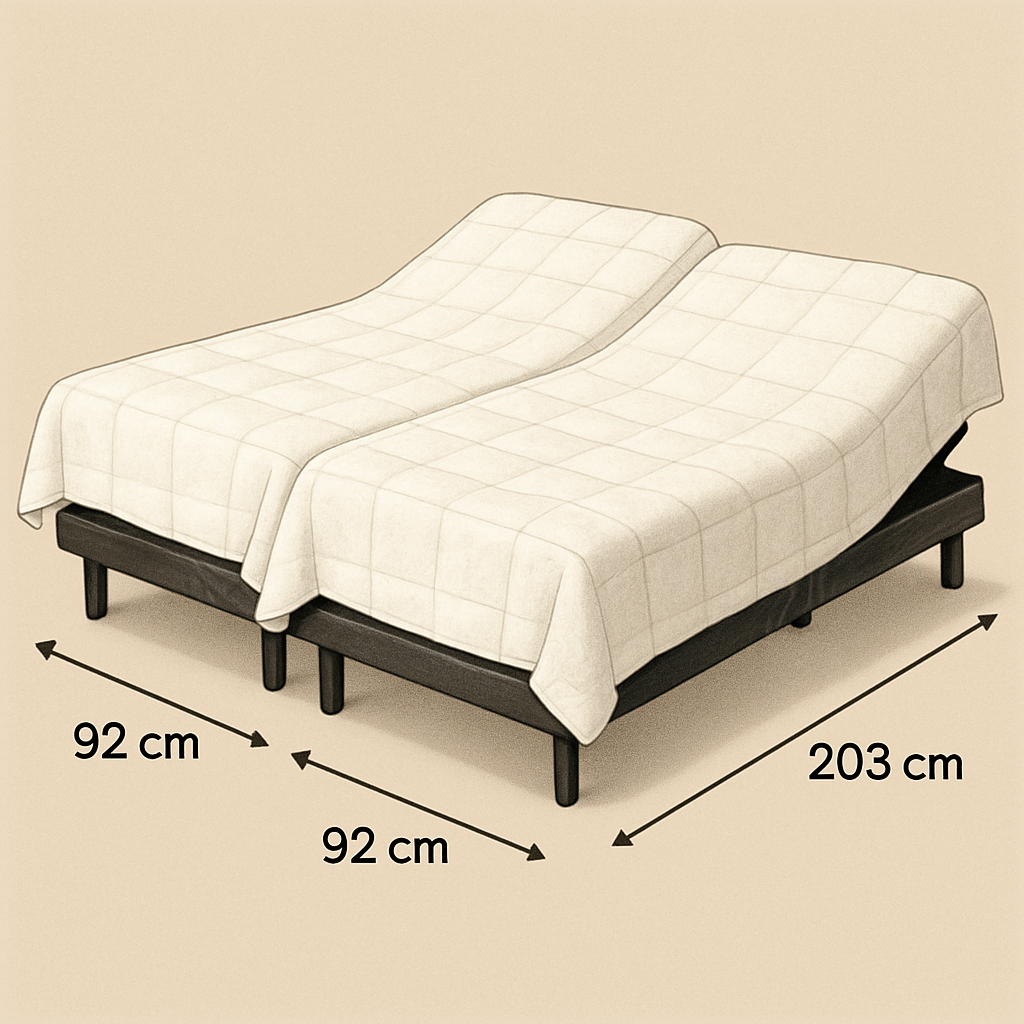
Now you know the numbers. The next step is to map those measurements onto your space. Grab a tape measure, note the width of any headboard, and double‑check the head-to-foot length from floor to ceiling. If you have a low ceiling, you might need a lower profile base, but the 203 cm length still fits most rooms. Once the math is done, you can confidently pick a mattress that matches the split‑king specs—whether it’s a memory foam that flexes or a hybrid that gives that spring feel.
Remember, the split‑king’s real power lies in its flexibility. A good start is to test a 92 cm side with a simple adjustable pillow and see how it feels at night. If you like the feeling, you’re already on your way to a more restful sleep that’s tailored just for you.
And if you’re still unsure, just sketch a quick floor plan and jot down the 92 cm width in the corner of your room—visualising the space often clears up any doubt before you even pick a bed.
Step 2: Measure Your Bedroom for the Ideal Split King Size
First thing’s first: grab a tape measure. You’re not just sizing a mattress—you’re sizing the space that will cradle you nightly. Think of the split‑king as two twin‑XL beds that share a frame. Each side measures 92 cm wide by 203 cm long. That’s 36.2 in by 79.9 in. If you want the whole bed to fit comfortably, the room has to hold both sides plus a little breathing room.
So, what’s the best way to eyeball that breathing room? Start with the longest dimension: the length of the room. A split‑king takes 203 cm (79.9 in) on each side, but the two beds sit side‑by‑side, so you only need that length, not double it. In practice, that means you should have at least 203 cm of clear floor space from one wall to the other, plus a bit of wiggle room for a nightstand or a small chair. Add another 30 cm on each side for a nightstand and 10 cm safety margin and you’re set.
Now, let’s walk through a concrete example. Picture a 3 m by 2.5 m bedroom in a Melbourne apartment. Measure the width: 300 cm. Subtract the split‑king width (92 cm) and you’re left with 208 cm of free space. That’s more than enough for a narrow nightstand and a little elbow room. On the long side, 250 cm minus 203 cm gives 47 cm of clearance—plenty for a small rug or a side table. If you’ve got a door swing that encroaches, move the bed slightly and test the clearance with a cardboard cut‑out.
What if you’re in a smaller loft, say 2.4 m by 2.2 m? The split‑king will still fit width‑wise, but you’ll have to be clever with furniture placement. One trick is to tuck the nightstand under the bed’s foot area or use a wall‑mounted shelf for essentials. That frees up floor space and keeps the room from feeling cramped.
It’s easy to forget that the split‑king’s height matters, too. Adjustable bases lift the mattress 10–12 in off the floor. In rooms with low ceilings, a “low‑profile” motor is a lifesaver. If the base raises the bed too high, you’ll end up with an awkward step that makes getting in and out a chore. Measure your ceiling height, subtract the base’s lift, and make sure you’re comfortable.
Once you’ve got your room dimensions nailed down, it’s time to think about the mattress type that will sit on the base. Twin‑XL mattresses—latex, memory foam, or hybrids—are the standard for split‑king bases because they flex nicely under the motors. If you prefer a high‑density foam that feels a bit firmer, double‑check that the base’s weight rating can handle it. Many manufacturers recommend a 200 lb per side limit, but always confirm with the supplier’s specs.
Let’s add a quick checklist you can follow next time you’re measuring:
- Room width: at least 300 cm to fit the bed plus furniture.
- Room length: at least 203 cm for the split‑king’s length.
- Ceiling clearance: room height minus base lift should be comfortable.
- Nightstand or storage: 30 cm on each side, plus a 10 cm safety gap.
- Mattress type: twin‑XL compatible, weight rating checked.
And here’s a quick visual cue: if you can sketch a rectangle that’s 92 cm by 203 cm and place two side‑by‑side copies next to each other, that’s your bed’s footprint. You can then overlay that on a floor plan to see how it fits.
Now that you’re armed with measurements, you can confidently shop for a split‑king. When you’re ready to browse, you’ll know exactly which models can fit and how much room you’ll have left for a cozy chair or a calming plant.
Speaking of plants, the right lighting can make a big difference. Position a floor lamp or a small table lamp within 30 cm of the bed to avoid harsh shadows that can disrupt your sleep environment. And remember: the split‑king’s independent motion can mean less noise—ideal for light sleepers who crave quiet.
Before we wrap up, let’s take a quick look at the video below that demonstrates how to measure a room for a split‑king. It’ll give you a visual sense of the process and help you avoid common pitfalls.
Finally, if you’re still unsure how the dimensions translate to your space, a quick visit to a showroom can be invaluable. Walking around the bed in person lets you feel the scale, test the height, and get a sense of how the split‑king will sit in your room. You’ll be able to ask questions about motor noise, weight limits, and bed‑to‑wall clearance—all of which can’t be fully understood from pictures alone.
So, what’s your next move? Grab a tape measure, map your room on paper, and run through the checklist. Once you have the numbers, you’ll be ready to choose a split‑king that fits just right—and that’s the first step toward nights that feel like a personalized spa.
For a deeper dive into how different mattress types pair with adjustable bases, check out Turmerry’s organic latex mattress guide, which offers useful tips for selecting the right mattress for your needs.
Step 3: Choose the Mattress That Matches Your Split King Bed
Now that you’ve nailed the room’s size, it’s time to pick the mattress that’ll make your split‑king feel like home. Think of it as a puzzle where every piece matters—fit, feel, and function all in one.
1. Match the Size, Not the Dream
Remember that each side of the split‑king is a twin‑XL: 92 cm wide by 203 cm long. The mattress must be that exact footprint, or you’ll end up with a lopsided sleep experience. A common mistake is buying a regular king and cutting it—nope, that breaks the integrity of the adjustable base’s motor.
Check the product spec sheet for the exact dimensions. If you’re shopping online, look for the “split king” label. A quick glance at Mattress Clarity’s review will confirm whether a mattress truly lives up to the split‑king size promise.
2. Choose Comfort That Moves With You
Because you’ll be tweaking each side independently, the mattress has to flex smoothly with the motor. Latex and hybrid models tend to be more forgiving, but memory foam with a supportive core can also work if it’s engineered for motion isolation.
Ask: does the mattress hold shape after a few days of movement? Does it feel firm enough for back support yet soft enough for side‑sleepers? If you’re a chronic pain sufferer, a medium‑firm hybrid can hit that sweet spot.
3. Think About Edge Support
Split‑king mattresses share an edge. If the edges sag, you might feel a gap in the middle, which feels like a trip‑and‑fall hazard at night. Look for a mattress that scores high on edge support—many reviewers give that score based on how much the edge sinks under weight.
When you test a mattress in-store, sit on the edge and note whether it feels solid. If it feels like a soft cushion, you’re probably dealing with a model that will crumble in the middle of your night.
4. Evaluate Motion Isolation
One of the split‑king’s biggest perks is reducing motion transfer. If you’re a light sleeper or your partner snores, a mattress that isolates movement keeps you from waking up every time the other person shifts.
In practice, feel the mattress while your partner lies down. A good motion‑isolating mattress will dampen the vibrations so you stay undisturbed. Many hybrid models score high here, but some all‑foam options are surprisingly quiet.
5. Consider Temperature Control
Heat retention can make or break your night. If you’re prone to hot flashes or just like a cooler feel, look for breathable materials—gel‑infused memory foam or latex. These materials let air circulate, keeping the surface cool.
Some mattress brands also offer a “cooling layer” that can be added on top. If you’re worried about overheating, a hybrid with a ventilated core can be a lifesaver.
6. Warranty and Longevity
Because split‑king mattresses are a bigger investment, a solid warranty protects you. Look for a minimum 10‑year guarantee on the mattress itself and a 5‑year guarantee on the adjustable base.
Read the fine print: does the warranty cover sagging, seams, or motor failure? If you’re dealing with NDIS participants or elderly users, durability is especially key.
7. Get a Feel for the Weight Capacity
Split‑king bases often have a weight limit per side. If you and your partner together exceed that, the motor can strain and the mattress may wear prematurely. Check the base’s spec sheet—most recommend 200 lb per side, but higher‑end models allow more.
When you’re in the showroom, ask about the weight rating and see if the mattress feels comfortable under the base’s support. A mattress that’s too heavy for the motor can feel stiff and unresponsive.
8. Final Test: A Live Demo
Before you click “buy,” test a mattress in a showroom or, if that’s not possible, look for a trial period. Many retailers let you sleep with a mattress for a few weeks to ensure it’s right for your body and the split‑king mechanics.
Ask: does the mattress stay stable after several hours of movement? Does it support your spine while you adjust your head or foot? A good split‑king mattress will feel like a seamless extension of the bed frame.
Ready to Make the Call?
Now you’ve got the checklist: size, flex, edge, motion, temperature, warranty, and weight. Take a quick look at Turmerry’s organic latex guide for a deeper dive into how materials influence sleep on a split‑king. That should give you a solid sense of what to expect from each type.
When you pick a mattress that respects the split‑king dimensions and your personal preferences, you’re not just buying a bed—you’re investing in nights that feel like a personalized spa.
Step 4: Compare Custom vs. Standard Split King Dimensions
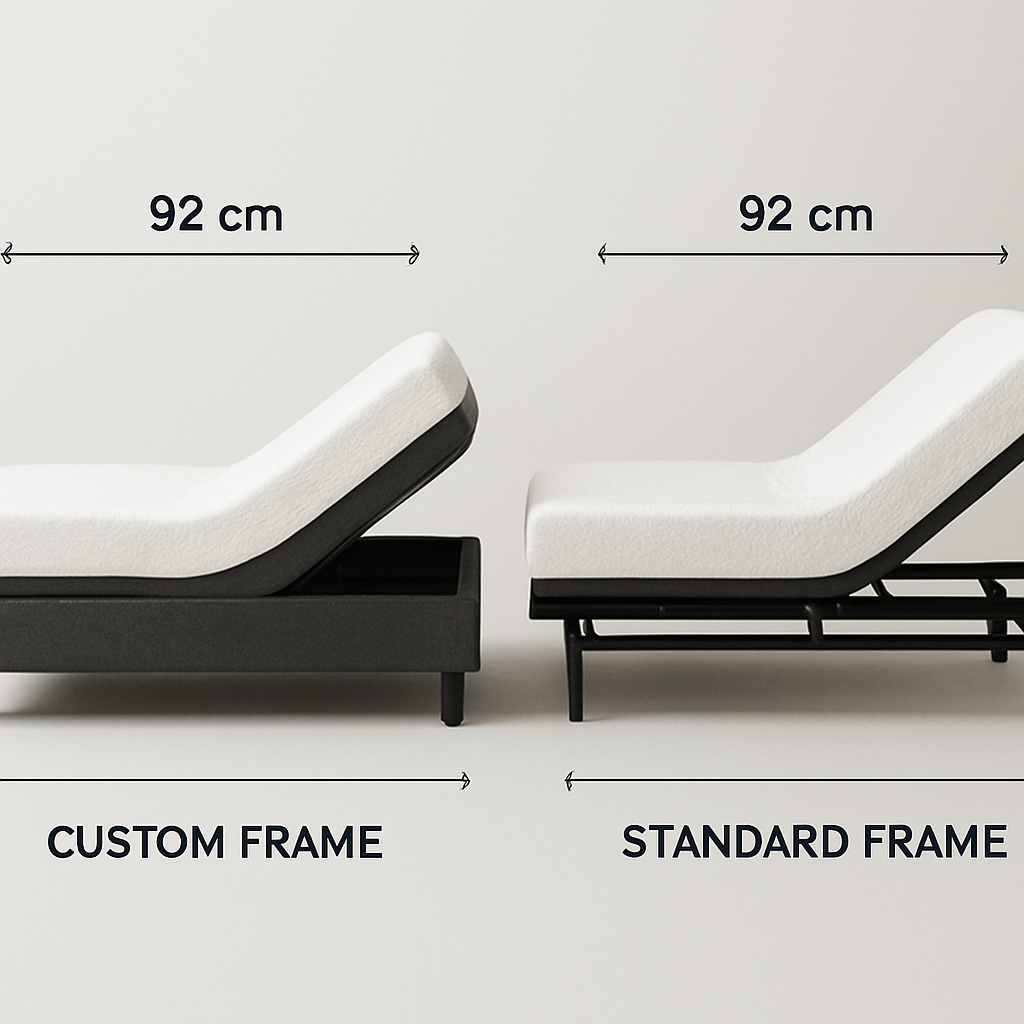
When you’re eyeing a split‑king adjustable bed, the first thing that usually pops up is the footprint: 92 cm by 203 cm per side. That’s the baseline, but the industry has been evolving, and you’ll find two broad categories – standard split‑king frames that stick to those numbers, and custom or “dual king” options that tweak the width or length for extra room or a tighter fit.
Let’s break down why the distinction matters, especially if you’re a chronic‑pain sufferer, an NDIS participant, or just someone who values that extra elbow room.
Custom vs. Standard: What’s the Difference?
Standard split‑king frames keep the 92 cm width and 203 cm length on each side. This means the total footprint is 184 cm wide – exactly what the industry standard calls for. Custom frames, on the other hand, may stretch the width to 100 cm or compress it to 86 cm, and some even extend the length to 210 cm to give you a longer sleep surface. The trade‑off is usually weight capacity and motor power – a longer frame needs a beefier motor, and a wider frame can feel a bit looser if the bed’s support rails aren’t robust.
So, what should you do next? Think about the room’s shape and your own body. If you’ve got a 3.2 m by 2.8 m bedroom, a standard split‑king leaves you plenty of clearance. But if your space is more square or you like to lean against a wall while reading, a custom width of 100 cm might be a game‑changer.
And if you’re an elderly user or a caregiver looking for a smoother transition in and out of bed, the extra height a custom 210 cm length can offer is worth the extra cost. It gives you a longer mattress, reducing the chance of tripping over the foot area.
Real‑World Examples
Take the Melbourne couple who had a 2.4 m by 2.7 m bedroom. They chose a custom split‑king with 100 cm width, which freed up an extra 15 cm on each side for nightstands. That 30 cm buffer is exactly what the Sophie Adjustable Beds FAQ lists for custom models – a handy reference when you’re sizing up.
Another example is a Brisbane resident who lives on a 2.5 m floor. They went for a standard split‑king and kept a 60‑cm walking path on the side opposite the door. The standard 184 cm width fit snugly, so they could keep the bed close to the wall without sacrificing room to move.
Actionable Checklist
- Measure room width and length in centimetres.
- Decide if you need a custom width or length (extra 8–10 cm on each side can mean a lot).
- Check the base’s weight rating – custom frames often demand a higher limit.
- Consider how the bed sits with your mattress: a longer frame can shift the weight distribution.
- Ask the supplier about motor specs – custom lengths usually require a stronger motor.
- Plan for bedding: a custom width may need a slightly wider duvet cover.
Remember, the goal is not just a big surface – it’s a surface that moves with you and stays stable. That’s why we advise testing a demo if possible, or at least visualising the room with a cardboard cut‑out before committing.
Key Takeaways for Decision‑Making
| Feature | Standard Split King | Custom Split King | Notes |
|---|---|---|---|
| Width per side | 92 cm | 86–100 cm | Adjusts room clearance |
| Length per side | 203 cm | 203–210 cm | Longer frame = longer mattress |
| Weight rating | 200 lb per side | Up to 250 lb per side | Higher limits for custom models |
| Motor power | Standard | Higher wattage | Needed for longer frames |
| Bedding fit | Standard duvet covers | Custom duvet covers may be needed | Check coverage size |
All in all, if you’re a chronic pain sufferer, you might benefit from that extra 8 cm of width – it gives you more room to rotate without having to shift the entire frame. For NDIS participants, a longer length can mean a safer bed-to-door transition.
Now that you’ve got the dimensions and the trade‑offs down, the next step is to pick the right frame for your lifestyle and space. If you’re also considering window treatments to match the new bed size, you might want to chat with a home‑improvement partner. For instance, Monroe Plantation Shutter Pros offers custom shutters that can complement a split‑king’s dimensions, ensuring your bedroom feels cohesive and privacy‑enhanced.
Monroe Plantation Shutter Pros can help you align window treatments with the size of a new bed, creating a seamless look that boosts privacy and light control for better sleep. Monroe Plantation Shutter Pros
Step 5: Budgeting and Financing Your Split King Adjustable Bed
Okay, so you’ve decided that a split‑king is the right fit for your space and your health goals. The next hurdle? The price tag. It can feel like a cliffhanger, but with a bit of planning, you can keep the dream on track.
First, let’s break down what you’re actually paying for. A split‑king frame sits at around $1,200‑$2,000, while the twin‑XL mattresses top that at $800‑$1,200 each. Add in the base’s motor—another $400‑$700—and you’re staring at a ballpark of $3,200‑$5,000. That’s a lot for a single purchase, but it’s an investment in sleep that pays dividends in pain relief and productivity.
So, how do you make that stretch? Here are three practical angles you can explore.
1. Stagger the Order
You don’t have to buy everything at once. Many suppliers let you order the base first, then add mattresses later when you’re ready to budget for them. If you’re on a tight budget, start with the base and a basic memory foam mattress. Upgrade to a premium hybrid later when your finances are a bit lighter. This spreads the cost over months instead of a single big hit.
Does that sound doable? Most people find it less stressful to pay a smaller upfront amount and then enjoy a better mattress a few weeks later.
2. Look for Built‑In Financing
Some brands partner with finance companies to offer 0% interest over 12 or 24 months. For example, Sven & Son gives you a no‑interest 12‑month plan on select bundles. That turns a $4,000 purchase into roughly $333 a month—much easier to slot into a budget.
When you’re reviewing offers, check for hidden fees. A zero‑interest period might come with a small processing fee or a requirement that you pay a minimum amount each month. Compare the total cost over the financing period against a lump‑sum payment with a credit card or a personal loan.
3. Shop Seasonal Promotions
Adjustable beds often run end‑of‑quarter sales, especially in Australian winter. You can snag a 10–15% discount, which on a $4,500 set is $450–$675 saved. Combine that with a free mattress topper or a complimentary remote, and you’re adding value without extra cash outlay.
Do you notice a pattern? Many retailers offer “bundle and save” deals when you buy a base, mattress, and accessories together. It’s worth calling a few stores and asking if they have a promotion that month.
4. Explore Second‑Hand or Certified Refurbished Options
If you’re okay with a gently used unit, you can find certified refurbished adjustable beds at a fraction of the price. Sites that specialise in refurbishing often test each component and offer a warranty. You still get the same motor performance, but you’re saving 20–30%.
When you’re checking second‑hand listings, confirm that the battery life is still good and that the motor’s noise level is within acceptable limits. A quick test can reveal if the unit will quiet down when you turn it on.
Step‑by‑Step Budget Planner
- Set a monthly “sleep budget” based on your discretionary income.
- Allocate a portion to a down payment—aim for 25% if you’re financing.
- Choose a payment plan that keeps monthly installments below 15% of your take‑home pay.
- Track your spending with a simple spreadsheet—list expected costs, actual costs, and savings.
When you see the numbers, it stops feeling like a big gamble and turns into a clear plan. Remember, the goal is to sleep better, not to feel like you’re drowning in debt.
Lastly, ask yourself: Do you need the latest tech, or will a more basic model do? A 2026‑model split‑king with basic motor control can still deliver excellent support for chronic pain patients while keeping the price lower.
So, what’s the next step? Pick a financing partner, check for seasonal deals, and create that budget sheet. Once you have the numbers, you’ll be ready to place an order without the anxiety that often follows big purchases.
Step 6: Installation, Maintenance, and Safety Tips
We’ve walked through the why and the what of your split‑king, so now it’s time to get hands‑on. You’re ready to lift that frame, secure the motors, and keep your nights trouble‑free for years to come.
Mounting the Base: A Quick Checklist
First things first: make sure the base sits level. A wobbling frame is the quickest way to ruin a quiet night. Tighten every bolt, and use a spirit level if you have one handy.
Next, lock the motor couplings. Most Sleep Sophie units come with a quick‑release lever; simply engage it and double‑check that the legs are firmly braced. If the base feels loose, a simple shim under the leg can do the trick.
Once the frame’s solid, slide the twin‑XL mattresses in. The edges should sit flush against the frame’s rails; no gaps means less chance of slippage when you raise or lower the sides.
Keeping the Mattress Together
Even a flawless frame can feel split if the two mattresses shift during the night. A quick fix is a bed bridge or non‑slip pads. You can find budget‑friendly foam bridges that sit between the two mattresses and hold them together.
Another trick is a mattress topper—especially a medium‑firm one—to add weight and stability. It also cushions the bed and can improve sleep comfort for people with chronic pain. A quick read on how to keep split‑king mattresses together explains how toppers help keep the two halves glued together: Casper article.
Routine Maintenance: A Few Minutes a Month
Spices up your bedtime routine with a 5‑minute check‑in. Inspect the motors for any unusual noise—quiet whirring is normal, but grinding can signal a problem. If you hear something off, contact your supplier for a quick inspection.
Turn the base a full rotation to ensure both sides stay balanced. If one side feels heavier, it may be due to uneven mattress wear or a loose bolt. Tightening the bolt or swapping out an old mattress can fix it.
Flip or rotate the mattresses every six months to keep wear even. This simple habit can extend the life of a twin‑XL mattress by a year or two and keep your sleep surface level.
Safety First: Electrical and Height Considerations
Because the base lifts 10–12 inches off the floor, make sure your room’s ceiling clearance is enough. Measure the room height, subtract the base lift, and you’ll know if a step is needed to get in and out.
Check the power cord for frays or wear. Replace it if you see any damage—safety first, especially around a sleeping area. Also, keep the cord away from high traffic paths to avoid tripping.
For caregivers and NDIS participants, a sturdy headboard can add a layer of safety. It provides a handhold for getting up and can act as a safety barrier if you’re prone to falling out of bed.
Quick Fixes When Things Go Wrong
If the bed motor stops quietly when you raise it, that’s a good sign. If it’s louder or stalls, call support immediately. A quick diagnostic can often reveal a loose connection or a battery issue.
Need to keep your bed low for a wheelchair? A low‑profile motor option can lift only 6 inches. Adjusting the lift height can make a world of difference for mobility.
Final Thoughts and Action Plan
Installation is a breeze if you follow the checklist. Maintenance is a small weekly habit that pays off in uninterrupted sleep. And safety? That’s your top priority—every little fix keeps you protected.
Take a moment now: measure your room again, tighten those bolts, and give the motors a quick test run. If you feel confident, you’re all set to enjoy the quiet comfort of your split‑king for years to come.
For a visual walk‑through of installing a split‑king adjustable bed, you might like to watch this brief guide: YouTube video on installation tips.
FAQ
What are the exact measurements of a split king adjustable bed?
The standard split king is two twin‑XL halves, each measuring 92 cm wide by 203 cm long. That means the combined width is 184 cm while the length stays 203 cm. The motor lifts the mattress about 10–12 inches, so you need that extra clearance from the floor to the base’s lowest point.
How does the split king size affect room layout?
Because each side sits side‑by‑side, you only need a single length of 203 cm, not double. Add 30 cm on each side for a nightstand and another 10 cm safety margin, and you’re good. If your room is only 3 m wide, you still have plenty of elbow room for a small chair.
Can a split king fit in a smaller bedroom?
Yes, but you’ll need to be clever with furniture. Tuck the nightstand under the foot area or use wall‑mounted shelves. If the room is 2.4 m by 2.2 m, the bed still fits width‑wise, but you’ll likely want a narrow dresser or a floating shelf to keep the floor clear.
Will the split king’s motor affect the height of the room?
The lift raises the mattress 10–12 inches off the floor. Measure the ceiling height, subtract that lift, and make sure you’re comfortable. If the room is only 2 m tall, a low‑profile motor that lifts only 6 inches might be preferable, so you don’t have to step over a tall base.
Do custom dimensions exist for split kings?
Some brands offer widths of 86–100 cm or lengths up to 210 cm. Wider or longer frames usually need a stronger motor and a higher weight rating. If you need more elbow room or a longer sleeping surface, talk to a retailer about custom options that still meet your room’s clearance.
What should I look for when checking the weight capacity of a split king?
Most split‑king bases specify a weight limit per side, typically 200 lb. If you or your partner together exceed that, the motor can strain and wear prematurely. Check the base’s spec sheet and make sure your chosen mattress’s weight matches that limit. A heavier mattress can feel stiffer under the motor.
How can I ensure the split king stays level during use?
Before using, level the base with a spirit level and tighten any loose bolts. Check the motors for uneven noise; a quiet whir is normal, but grinding suggests a problem. Rotate or flip the mattresses every six months to keep wear even, and keep the power cord out of high‑traffic paths.
Conclusion
We’ve chased every inch of the split king adjustable bed dimensions, but the real win comes when you sit back and see how the numbers line up with your space.
Picture this: you measure the room, draw a quick rectangle, and spot that sweet 30‑cm buffer on each side for a nightstand or a cosy plant.
When the split king sits in that frame, the twin‑XL halves fit snugly, and the motor moves in harmony—no squeaks, just a smooth hum.
So, what’s the real takeaway? It’s simple: get the exact measurements right, pick a model that matches your weight capacity, and you’re set for nights that feel like a spa.
If you’re dealing with chronic pain or help someone with NDIS, a split king’s independent motion lets each side adjust without disturbing the other.
Remember to double‑check the weight limit per side—most bases cap at 200 lb, but some premium models go higher, giving you peace of mind.
Before you hit that ‘buy’ button, run through our quick checklist: width, length, clearance, motor power, and the mattress’s feel.
Once everything lines up, the split king isn’t just furniture—it becomes your nightly sanctuary, letting you drift into deep, undisturbed sleep. Enjoy the freedom that comes from a bed that knows how to move with you.