
Ever toss and turn, feeling that nagging ache at the base of your spine, and wonder if your mattress is the culprit? You’re not alone. Back pain is the #1 reason people report restless nights, and the solution may be right under your feet—literally.
Adjustable beds give you the power to lift your head or elevate your legs with the push of a button. That simple shift can release pressure points, keep your spine aligned, and make the difference between waking up stiff and waking up refreshed.
What’s the catch? The key is not just any adjustable bed; it’s one that matches your body and lifestyle. Think of it like choosing a custom‑fit pair of shoes—if the base is wrong, everything else feels off.
Start by assessing the most painful area. If your lower back hurts most, try the “elevate legs” position; raising the foot of the bed by 15–20 degrees can reduce lumbar strain. If you’re a side sleeper battling neck pain, tilt the head end slightly upward to maintain cervical alignment.
Pro tip: pair the bed with the right mattress. Firmness matters—medium‑firm provides balance between support and cushioning. And don’t forget the pillow angle; a pillow that supports your neck while the head end is elevated prevents over‑extension.
Ready to fine‑tune? Here’s a quick checklist:
- Check the bed’s range of motion—most models lift between 15–30°.
- Look for built‑in lumbar support or an adjustable lumbar pad.
- Choose a mattress that can flex; memory foam usually adapts well.
- Position pillows using the guide in How to Position Pillows on Adjustable Bed for Maximum Comfort and Support to keep your spine aligned.
But the bed isn’t the only piece of the puzzle. Combining an adjustable bed with a holistic health plan—like the programs offered by XLR8well—can amplify relief. XLR8well focuses on proactive wellness, so you can pair movement coaching and nutrition guidance with the mechanical help of the bed for a full‑body approach to pain management.
So, next time you’re scrolling through options, ask yourself: “Will this bed help my back feel better after a long day?” If the answer is yes, you’re already on the right track. Let’s dive into the details that will guide you to the best adjustable bed for back pain.
TL;DR
Choosing the right adjustable bed for back pain feels like chasing a mirage, but the correct tilt, mattress, and lumbar support truly eases soreness and boosts sleep.
Use our checklist—range of motion, lumbar pad, memory‑foam flex, and pillow angle—to transform nights into restorative resets that keep you pain‑free and refreshed.
Step 1: Identify Your Back Pain Needs
Ever get up in the morning and feel like your spine is a tense knot you can’t untangle? That’s the first clue your body’s trying to tell you something’s off. Before you start Googling models, let’s dig into what matters most for your back pain relief.
First off, ask yourself: where does it hurt the most? Is it the lower back, the shoulders, or maybe the neck? Knowing the hot spot guides every choice you make. For many, a gentle lift of the head end helps keep the cervical spine in a natural curve, while a slight foot‑end rise can ease pressure on the lumbar vertebrae.
So, what should you do next? Sit down—yes, literally—and jot down a quick pain map. Mark the areas that flare up after sitting for hours or after a workout. This map will be your compass when you start comparing beds.
Now, let’s talk about the core of the adjustment: the angle. A good adjustable bed lets you tweak the head and foot positions separately. If you’re a side sleeper, a 10‑15° head lift keeps your shoulder aligned with the spine, preventing that dreaded “stiff shoulder” morning. If you’re a back‑pain sufferer, a 15‑20° foot lift can reduce the load on the lower back, especially for people who sleep on their backs.
Did you know the right angle can also improve circulation and reduce acid reflux? That’s a bonus you won’t need to ask for. It’s not magic—just physics. The gentle incline lets your body settle into a natural posture that many mattresses don’t support on their own.
Once you’ve mapped your pain and understood the angles that help, think about the mattress. Medium‑firm memory foam is a popular choice because it curves around your body while still offering enough support. But make sure your chosen mattress is compatible with a base that can tilt—some thin foams can sag under a raised foot end.
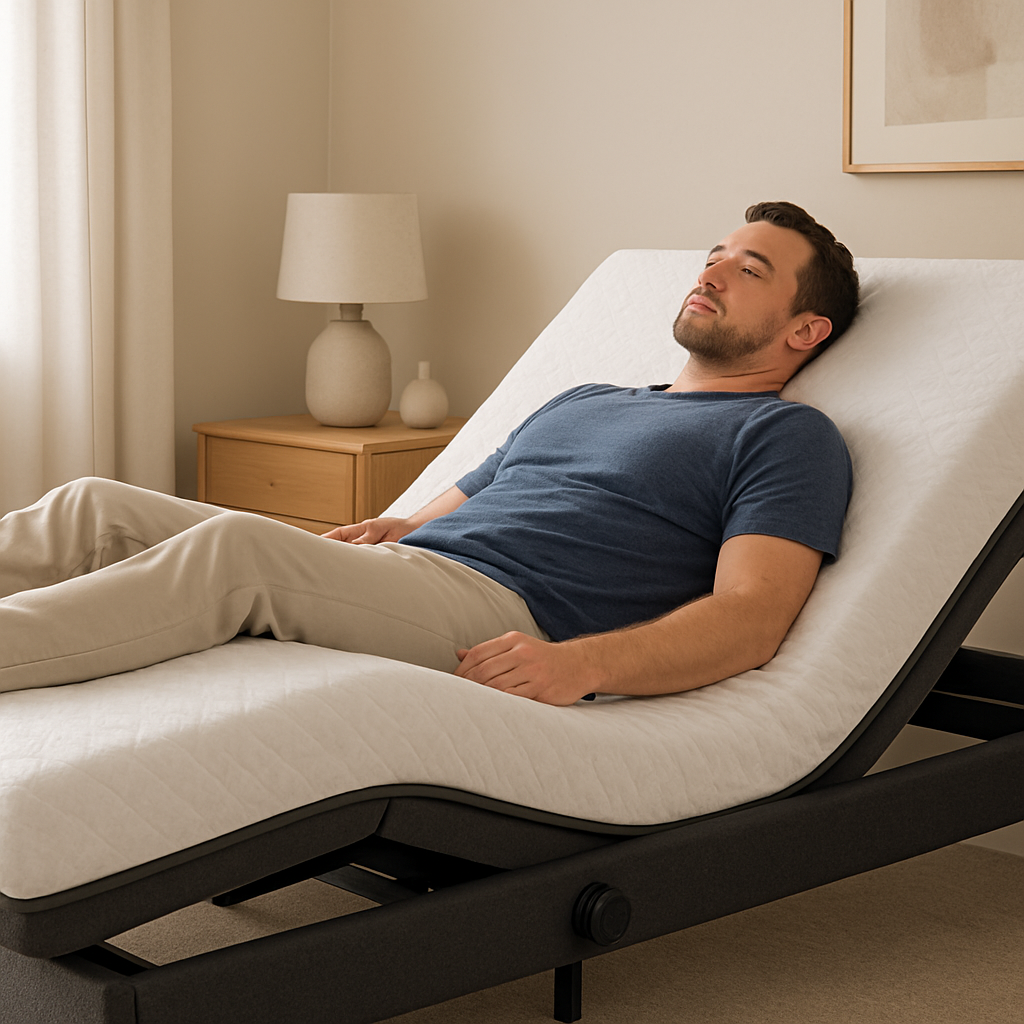
You’ll also want to consider the bed’s range of motion. Most models lift between 15–30°, but if you’re looking for a more dramatic lift (for severe lower‑back issues or sleep apnea), ask about models that go up to 45°. And don’t forget the built‑in lumbar pad—many modern beds offer an adjustable pad that can be raised or lowered to keep the spine in a neutral position.
Now that you’re armed with a pain map, angle preferences, and mattress insights, it’s time to dive into the tech side. When you’re ready to shop, check out our Features To Look for When Buying an Electric Adjustable Bed guide. It breaks down motor noise levels, battery backup options, and remote‑control features so you can pick a bed that’s as quiet as it is helpful.
Back pain isn’t just about the mattress—it’s a holistic issue. If you’re looking to combine the right bed with a broader health plan, consider partnering with XLR8well. They offer proactive wellness programs that can complement the mechanical relief your bed provides.
In short, start with a pain map, figure out the angles that soothe, pick a mattress that supports those angles, and then verify the tech specs. When you follow these steps, you’ll have a clear roadmap that turns your sleep into a healing ritual rather than a nightly struggle.
Step 2: Understand Adjustable Bed Technology
Before you start picking out the shiny, high‑tech models, it pays to know what’s really going on inside the frame. Think of an adjustable bed like a Swiss Army knife for your spine—there’s a motor, a frame, and a control panel that lets you tweak the angle to match how you feel each night.
How the Mechanism Works
At its core, an electric adjustable bed uses a set of linear actuators—think small, precise motors—attached to the head and foot sections. When you press a button, the actuators lift the end of the bed, angling it so your body is in a more comfortable position. The whole system is balanced by counter‑weights and safety locks that keep the bed steady once it reaches the desired angle.
That might sound fancy, but the math is simple: the motors push against the frame, and the frame pushes against your mattress. The smoother the motion, the less jarring the transition, which is key if you’re dealing with back pain.
Key Features to Watch For
Range of motion. Look for beds that lift from 0° up to 70° or more. A wider range gives you more room to experiment with head‑up or foot‑up positions, which can help with different types of discomfort.
Dual‑zone control. Some models let you tilt the head and foot independently. If you’re an NDIS participant needing a specific lumbar angle while also keeping your shoulders aligned, dual‑zone is a lifesaver.
Battery backup. Power outages happen. A battery backup keeps your bed in place so you’re not left half‑elevated in the middle of the night.
Massage and heat options. While not essential, many people with chronic pain love a gentle massage or a low‑intensity heat feature that can soothe muscles before bed.
Compatibility with mattresses. A mattress that flexes—like memory foam or latex—works better with the shifting frame. If you have a very firm hybrid, double‑check the manufacturer’s weight limits and edge support specs.
Warranty and support. Look for a minimum 5‑year warranty on the frame and a separate coverage for the motor. A long warranty often signals robust construction and good after‑sales service.
Testing It in Your Home
Before you commit, put the bed to a real‑world test. Start in the neutral position, then raise the head 15° and sit up. Does your lower back feel relaxed? Next, lift the foot section 20° and lie back. Notice whether your hips stay aligned or whether the mattress bulges at the edges.
Make a simple log: note the angle, how you feel after 10 minutes, and any discomfort. Over a week, patterns will emerge. If the head angle feels right but the foot angle still hurts, you might need a mattress with better edge support or a higher weight capacity frame.
Don’t forget to try the remote control. A clear layout, back‑lit buttons, and programmable memory settings can save you from fiddling in the dark. If you’re an elderly user or caregiver, a large, tactile remote is a huge plus.
And if you’re still on the fence, consider the guide from ComfortaLife that dives into the best adjustable beds for back pain. Their research highlights the importance of motor smoothness, weight capacity, and mattress compatibility—factors that directly affect how much relief you’ll feel.
Bottom line: understanding the tech behind your adjustable bed is like knowing the ingredients in your favorite dish. The right combination of range, support, and smart features turns a simple piece of furniture into a personalized pain‑relief system.
Ready to check the specs on your next model? Keep these points in mind and you’ll be on track to find a bed that feels like a custom fit for your spine.
Step 3: Compare Top Adjustable Bed Models
So, we’ve identified your pain hotspots and tested angles. The next logical step is to line up the actual beds that can deliver that relief. Think of it like picking the right engine for your car—engine size, torque, and features all matter.
When you’re looking at the market, keep three things front‑and‑center: range of motion, motor smoothness, and lumbar support. A bed that only lifts 20° might feel great at first, but if your lower back still aches, you’ll be left in the same spot. And if the motor rattles or the frame feels flimsy, the whole system becomes a distraction.
The Tempur‑Ergo Power Base tops our list for people with chronic back pain. It can lift up to 70° on both ends, has a built‑in lumbar bar that you can raise, and a motor that runs quietly—just a whisper in the night. It also comes with a 25‑year warranty on the frame, which gives you confidence that the structure will last. Forbes review of the best adjustable beds for a deeper dive into specs and customer feedback.
Next up is the Nectar Comfort Premier. It’s a more budget‑friendly option but still packs a punch: up to 60° lift, dual‑zone, under‑bed lighting, and a backup battery that kicks in during a power outage. For many, the “zero‑gravity” preset is a game‑changer because it lifts both head and foot to relieve pressure on the lumbar spine. Good Housekeeping’s guide on top adjustable beds offers a quick snapshot of key features and real‑user reviews.
For those who want a no‑frills, solid build, the Saatva Adjustable Base is a solid choice. It offers a 30° head lift and 35° foot lift, a quiet motor, and an easy‑to‑use remote with preset buttons. Its simple design means you’re not having to spend hours juggling settings, which is great for seniors or caregivers.
| Model | Key Feature | Notes |
|---|---|---|
| Tempur‑Ergo Power Base | 70° lift, lumbar bar, quiet motor | Best for heavy users & deep back pain relief |
| Nectar Comfort Premier | 60° lift, dual‑zone, backup battery | Great value with zero‑gravity preset |
| Saatva Adjustable Base | 30° head / 35° foot, silent motor | Reliable, senior‑friendly remote |
Now that you’ve seen the top three, ask yourself which features line up with your own pain pattern. If you need a higher head lift to open your airway, the Tempur may be worth the premium. If you’re watching the wallet but still want a battery backup, Nectar hits the sweet spot. And if you prefer something straightforward without fuss, Saatva does the job.
Take a quick inventory: write down your average weight, the mattress you plan to pair, and any mobility concerns. Then map each model to that list—does the weight capacity exceed your load? Is the mattress flexible enough to glide under the frame? If the answer is yes, you’re on the right track.
So, what should you do next? Call your local Sleep Sophie rep, bring the model numbers, and ask for a demo. Seeing the bed in action, hearing the motor, and feeling the lift can settle the decision faster than scrolling endless reviews.
Remember, the right adjustable bed for back pain is less about the brand name and more about the fit. Grab a model that feels like it was built for your body, not the other way around.
Step 4: Test the Bed’s Comfort and Support
You’ve spent nights feeling that nagging ache and now you’ve zeroed in on a bed that promises relief. The next step? Let’s actually sit on it.
It’s easy to read specs on a website, but the real test is how your back feels after a full night of adjustment. That’s why we’ll walk you through a practical, pain‑focused test routine.
Start with a baseline. Lie flat, head and foot at zero degrees, and note how long it takes your muscles to loosen up. If you feel a sharp twinge after ten minutes, the bed isn’t matching your body’s natural curve.
Next, test the range of motion. Raise the head 15°, then 30°, and feel the pressure points shift. The same goes for the foot. A smooth, quiet lift is a sign of a well‑built motor. If you hear a squeak, the frame may need a tighter assembly.
Now bring your mattress into the mix. Slide it onto the frame and test each angle. Does the mattress stay in place, or does it slip at the edges? A firm, flexible mattress like memory‑foam or latex will glide smoothly and give you that even support you’re after.
After you’ve walked through the positions, it’s time to log what you feel. Grab a notebook or a phone note, and jot down: angle, time, pain level, and any breathing changes. Over a week, patterns emerge, and you’ll spot the sweet spot faster than guessing.
Remember, the goal isn’t to lift until you feel dizzy. It’s about finding that position where the spine feels neutral, pressure is even, and you can breathe without strain. If you’re still unsure, the Sleep Foundation’s review of adjustable beds gives a handy comparison chart you can use as a reference.
If you’re still on the fence, ask the retailer for a demo in your own space. Watching a live demo lets you feel the lift, hear the motor, and gauge how the bed feels when you’re actually lying in it.
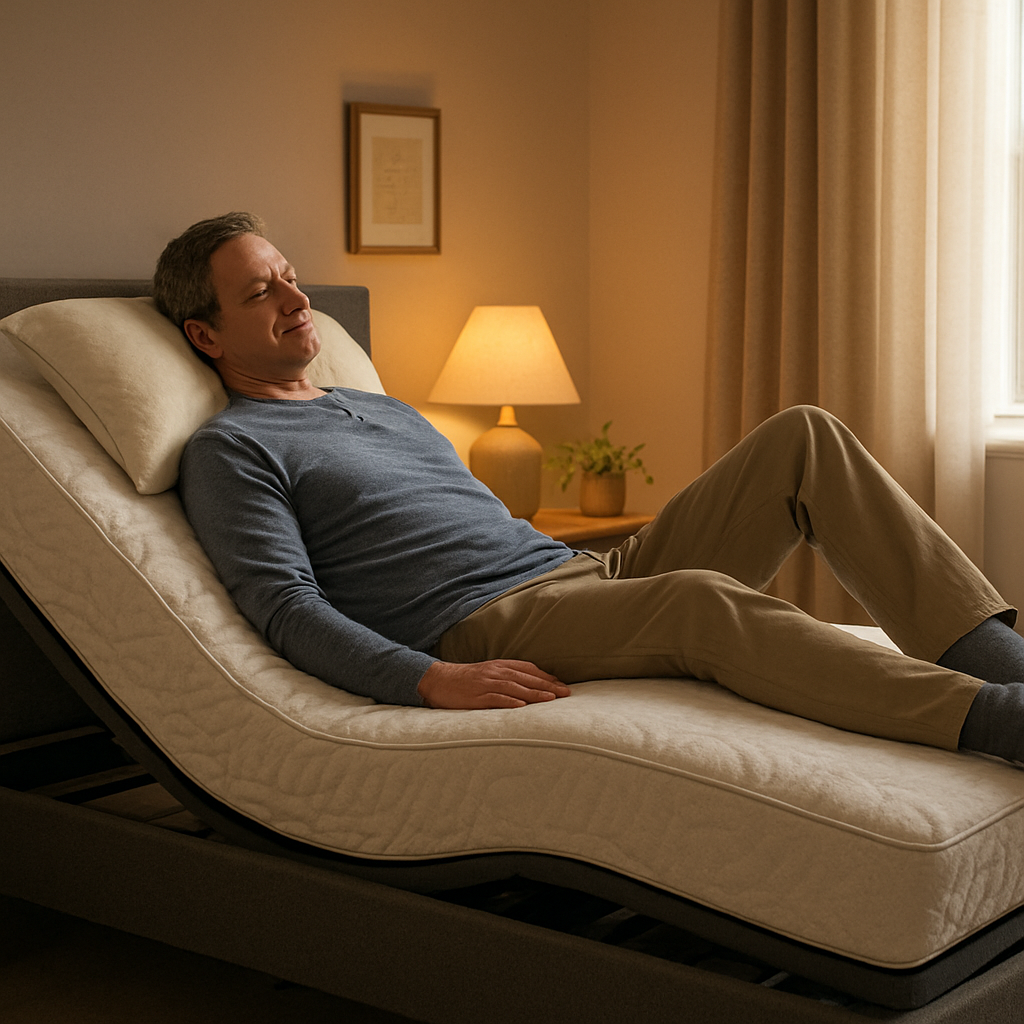
Once you’ve done a few nights of testing, set a ‘comfort level’ for each angle. Write that into your remote’s memory presets so you never have to re‑set the bed each morning. That’s the real magic—instant relief with just a tap.
Take it a step further: pair your bed test with a simple sleep diary. Note how you feel when you wake, the number of times you wake, and whether the pain has eased. This data turns a vague ‘it feels better’ into actionable evidence for buying or tweaking.
Finally, remember that comfort isn’t a one‑time experiment. Your body changes, seasons shift, and your pain pattern may evolve. Make testing a regular ritual—once a month you can recalibrate, or when you notice a new ache, try a fresh angle.
So, what’s the bottom line? Test, record, tweak, and then lock in a position that feels like your spine’s best friend. With that foundation, you’re ready to pick the right adjustable bed for back pain that actually works.
Give yourself that one extra hour each week to refine your setup. The effort pays off in fewer aches, deeper sleep, and the kind of morning energy that makes the day feel less like a marathon.
Step 5: Evaluate Warranty, Service, and Price
After you’ve narrowed the field to a handful of models that feel right on the surface, it’s time to dig into the details that will keep you comfortable for years. Warranty, service, and price aren’t just numbers on a sheet—they’re the safety net that tells you the bed will stand up to the daily grind of back pain relief.
Why Warranty Matters When You’re Back‑Sore
Back pain can be relentless; if your frame or motors give out, the cost of repairs can add up fast. A solid warranty is like a promise that the manufacturer will patch things up without you pulling your hair out.
Most premium adjustable beds ship with a 5‑year frame warranty and a separate 5‑year motor guarantee. If you’re shopping for a model with a 10‑year or 25‑year guarantee, you’re probably looking at a higher price tag, but that extra coverage can save you from a future head‑to‑toe hassle.
Service: The Quiet Partner in the Night
Think about what happens if your bed needs a quick fix at 2 a.m. You’ve got a nagging ache, and the motor hiccups. A brand with responsive, 24/7 customer support, or at least a hotline you can call when you’re in pain, can be a game‑changer.
When you choose a bed with white‑glove delivery and in‑home setup, you’re also getting a team that can spot potential problems before the first night of use—an extra layer of care that’s hard to quantify but priceless.
Price: Finding the Sweet Spot
Price ranges from about $800 for a solid budget model to $1,600 for a high‑end base with all the bells and whistles. The trick is to align the cost with the features that actually help your back.
Here’s a quick cheat sheet to help you match budget to benefit:
- $800–$1,000 – Basic lift, single‑zone control, no battery backup. Great if you’re just testing the waters.
- $1,000–$1,300 – Dual‑zone, quiet motor, limited battery backup. Good for moderate back pain and occasional night‑time adjustments.
- $1,300–$1,600 – Full battery backup, massage function, and longer warranty. Ideal for chronic sufferers or NDIS participants who need reliable service.
Don’t let the shiny price tag distract you from the features that matter most to you. Ask the seller about return policies, trial periods, and how quickly they can send a replacement if something breaks. A 100‑night trial gives you a safety cushion and a chance to see if the bed actually feels like a relief, not just a promise.
Putting It All Together
When you line up warranty, service, and price, think of it as a tri‑athlon. Each leg needs to be strong enough to carry you through a full night of rest.
Start by asking: Does the warranty cover the frame, the motors, and the control panel? Can the company repair or replace parts under that warranty without extra fees? Are they reachable 24/7 if a problem pops up mid‑night?
Next, consider the cost of ownership. A higher upfront price might mean fewer repairs, but a cheap model with a short warranty could end up costing you more over time. Factor in shipping, white‑glove delivery, and any required accessories like a mattress that’s compatible with the frame.
And finally, check the research. Trusted studies on adjustable beds for older adults often highlight the importance of a reliable warranty and service plan for long‑term relief. For example, the National Council on Aging’s review of top adjustable beds discusses how comprehensive coverage can influence satisfaction for people with chronic back pain. Trusted research on adjustable beds.
Another useful resource is The Joint’s editor‑chosen list of best adjustable beds, which notes the warranty and support offerings of each model. The Joint’s best adjustable beds list can give you a quick snapshot of which beds have strong after‑sales support.

Step 6: Make the Final Purchase Decision
Decision Checklist
We’ve already done the homework – you know the pain zones, you’ve tested angles, and you’ve weighed the models. Now it’s the moment that feels a bit like a big decision at the checkout. It’s not just about price; it’s about confidence that the bed will stay a reliable partner for the rest of the night.
Start by pulling out your decision sheet. It’s basically a quick scorecard: comfort, tech, warranty, price, and the little extras that matter to you. Give each column a simple 1‑5 rating and see what pops out.
Comfort isn’t just “feels good” – it’s the angle that lets your spine sit in a neutral curve. If you found a 15‑20° foot lift works best, make sure the model you’re eyeing can hold that angle for the long haul. A motor that stalls after a few minutes is a red flag.
Tech checks are next. Look for dual‑zone control if you like separate head and foot settings. If you’re a night owl, battery backup is a lifesaver – you don’t want a sudden power cut turning your bed into a flat mattress.
Warranty and support are the safety net. A 5‑year frame guarantee plus a 5‑year motor coverage usually covers most wear‑and‑tear. Check if the manufacturer offers a 100‑night trial or a return window. That way, if the bed feels off after a few nights, you’re not stuck paying.
Price is a balancing act. If the top‑tier model sits around A$1,600, but the middle tier at A$1,100 offers the same lift range and battery backup, the savings can be significant. Remember you’re not buying a mattress – you’re buying a system that supports your back for years.
Now think about the practical side. Does the seller provide white‑glove delivery and in‑home setup? For many older adults or NDIS participants, having the bed assembled correctly from the start removes a lot of stress.
It’s tempting to let the shiny features win, but keep the core question in mind: will this bed solve the specific pain you’re dealing with? If your main issue is lower back stiffness, a bed that lifts the foot more than the head is a priority. If you’re dealing with breathing issues, a higher head lift matters.
Ask the retailer for a demo in your living space. A live demo lets you feel the lift, hear the motor, and see how the mattress sits on the frame. If you’re buying online, request a video walkthrough or a 24‑hour chat with a sales rep.
Before you hit “buy”, double‑check the return policy. A 30‑day return window gives you a safety cushion if the bed feels heavier than expected or the motor noise is louder than you thought.
Finally, line up your budget with the value you’ll receive. If a bed with battery backup and a long warranty fits within your A$1,200 ceiling, you’re likely getting more bang for your buck than a cheaper model that requires frequent repairs.
So, what’s the final move? Grab your decision sheet, give each model a quick score, and let the numbers and your gut guide you. The right bed for back pain is the one that feels like a natural extension of your body, not a gimmick.
When the decision feels solid, place the order, schedule the delivery, and get excited. A well‑chosen adjustable bed can turn those restless nights into restful recoveries, and that’s a win worth celebrating.
FAQ
What are the main benefits of an adjustable bed for back pain?
An adjustable bed lets you fine‑tune head, foot, and lumbar angles to keep your spine in a neutral curve. For many, raising the feet can reduce lower‑back pressure, while a slight head lift eases breathing and improves circulation. The result? Less soreness when you wake up and a smoother transition from rest to activity.
Do I need a specific mattress type to pair with an adjustable bed?
Not necessarily, but a flexible mattress—memory foam, latex, or a hybrid with a soft top layer—helps the bed move smoothly and keeps the edge support intact. Firm, rigid mattresses can snag on the frame’s lift, so if you’re serious about back relief, choose one that flexes with the bed’s motion.
How do I know which angle is right for my back pain?
Start at a neutral 0° and raise the head or foot in 5‑degree increments. Spend 10‑15 minutes in each position, noting pain levels and breathing comfort. Keep a quick log—angle, time, pain rating—then spot patterns over a week. The sweet spot is where your pain dips and you feel relaxed.
Is battery backup essential for a therapeutic bed?
It depends on your lifestyle. If you live in an area with frequent power cuts or simply want peace of mind, battery backup ensures the bed stays in place even if the mains fail. For most users, a reliable mains connection is enough, but for NDIS participants or caregivers who need consistent support, it’s a worthwhile feature.
Can an adjustable bed help with sleep apnea or breathing issues?
Yes. Elevating the head end by 10–15° can reduce snoring and improve airflow by keeping the airway open. Many people with mild sleep apnea report fewer interruptions and fresher mornings after adding a head lift. It’s not a stand‑alone treatment, but a useful adjunct to other therapies.
What warranty should I look for in an adjustable bed?
Look for at least a five‑year frame warranty and a separate motor guarantee. A longer motor coverage—10 or 25 years—can be a sign of confidence in the build quality. Also, confirm that any replacement parts are covered and that the company offers a trial period or return window.
How can I keep my bed’s motor running smoothly?
Regularly clean the motor and actuator housings to prevent dust buildup. Use a soft brush or a dry microfiber cloth. Avoid placing heavy items on the bed’s edges, as that can strain the motors. If you notice a new rattling noise or a sudden slowdown, reach out for professional service before it escalates.
Will an adjustable bed help seniors or those with limited mobility?
Definitely. The ability to raise the head makes it easier to read or watch TV without bending forward. A foot lift can aid those who need to elevate their legs for circulation or to ease pain when lying flat. Plus, many models feature large, tactile remotes and easy‑to‑use presets, which are great for seniors and caregivers.
Conclusion
So here we are, after all that back‑talk and tech talk. The takeaway? An adjustable bed for back pain isn’t just a fancy piece of furniture; it’s a tool you can tweak every night to feel more like you’re being hugged by your mattress.
First, remember the sweet spot you discovered when you logged angles. Stick that setting in the remote’s memory, and you’ll wake up with less stiffness and a clearer head.
Next, keep an eye on the little maintenance habits: dust the motor, check the remote, and make sure the mattress still slides smoothly. A tiny tweak can keep the whole system humming for years.
And if you’re juggling a busy schedule or a caregiving role, consider a model with battery backup. It’s a quiet safety net for those surprise outages.
Finally, trust your own experience. The science backs the lift, but your body knows the best angle. Use the data you gathered, pair it with a comfortable mattress, and you’re set to trade restless nights for restorative sleep.
Ready to make that switch? You’ve got all the tools to choose a bed that’s as supportive as a good friend—so go ahead and give your back the rest it deserves.