
Back pain can ruin a night. You toss. You turn. You wake up sore. The good news? An electric adjustable bed can change that. In this guide you’ll learn how to pick the right base, set it up, keep it safe, and tweak it for lasting relief. Let’s get you sleeping pain‑free.
We examined 10 leading electric adjustable beds across 6 sources and discovered that the priciest model doesn’t offer more massage options than the budget‑friendly choice, while warranty length varies dramatically.
Step 1: Choose the Right Mattress Compatibility
First thing you need is a mattress that works with an electric base. Not all mattresses flex the same way. If the mattress is too stiff, the motors will strain. If it’s too soft, you won’t get the support you need.
Look for a mattress that lists “adjustable base compatible” on the label. Memory foam and hybrid models are common choices. They hug your body and move with the base.
And check the thickness. Most bases handle up to 20‑30 cm. Anything thicker may need extra support slats.
But you also want the right firmness. For back pain, a medium‑firm feel (around 5‑6 on a 10‑point scale) often works best. It keeps the spine aligned while still giving a little give.
Here’s a quick way to test:
- Lay the mattress on the floor.
- Press your hand into the center. You should feel a slight dip, not a hard rock.
- Try a gentle bend at the waist. The mattress should bend with you, not resist.
Our pick, the Sleep Sophie Electric Adjustable Bed, pairs with any standard queen or king size mattress up to 320 kg total load. That means you can use a thick therapeutic foam mattress without worrying about overload.
And if you already have a mattress, you can still check the tags. Look for “compatible with split‑king” or “adjustable base friendly”. If you’re unsure, call the retailer.
For more on why a proper mattress matters, see Are Adjustable Beds good for Back Pain?. It explains how the right support reduces pressure points and helps the spine stay neutral.
When you finally pick a mattress, measure your room. Leave at least 10 cm of space on each side for the base’s legs to move. That way the remote can reach the motors without hitting the wall.
And don’t forget the headboard. Some bases need a low‑profile headboard to avoid interference with the head‑up function.
Step 2: Understand Key Features for Back Pain Relief
Now that you have a compatible mattress, look at the bed’s features. Not every electric base is built the same.
Zero‑gravity is a top feature. It lifts the head and feet to the same angle, creating a “weightless” feel. The Bed Tech article explains that this position reduces pressure on the hips, lower lumbar, and spine, mimicking the way NASA protected astronauts (source: Bed Tech).
And a break‑knee angle at the foot end helps tilt the pelvis forward. That eases sciatica and disc pressure.
Look for independent head and foot control. If you share a bed, each side can move separately, so you won’t disturb your partner.
Massage is nice, but the research shows price doesn’t equal more massage levels. The $1,600 Saatva base and the $700 Brooklyn model both have three levels, yet Saatva offers a 25‑year warranty while Brooklyn only offers 10 years.
Our pick shines with a 320 kg capacity, the highest among budget‑friendly options. That means heavier users won’t have to worry about the motor straining.
Other useful specs:
- Motor noise: look for < 40 dB for a quiet night.
- Remote presets: Lounge, TV, Zero‑G, and custom memory positions.
- USB ports or charging pads: handy for phones.
And if you need extra therapy, whole‑body vibration can boost circulation. The Sleep Sophie base includes four vibration modes and three intensity levels.
But remember, more features can add to price. Decide what you truly need for back pain relief.
Step 3: Installation and Positioning Tips
Getting the base out of the box and into your room can feel like a puzzle. The aidacare guide (source: Aidacare PDF) walks you through it step by step.
First, clear the floor space. You’ll need a rectangle about 2 m by 1.5 m. Lay the base flat, legs unfolded.
Then attach the headboard brackets if you have a headboard. Most brackets snap in; no tools needed.
Next, connect the power cord to a grounded outlet. Avoid using extension cords , they can cause voltage drop.
After power is on, test each motor:
- Press the head‑up button. The head should lift smoothly.
- Press the foot‑down button. The foot should lower without jerking.
- Try the Zero‑G preset. Both head and foot should rise together.
If anything feels stuck, check for debris under the rails. A small piece of wood can block movement.
And place the mattress on top. Align the mattress’s edges with the base rails. Some bases have side rails that lock the mattress in place.
But don’t forget the remote’s range. Keep the remote within a few feet of the headboard so the signal stays strong.
When you’re done, do a quick walk‑around. Make sure the legs are fully extended and the base sits level.
For extra safety, consider a wall‑mounted safety rail if you’re an older adult or have limited mobility.
Step 4: Maintenance and Safety Checks
Even the best base needs care. Regular checks keep the motors humming and prevent wear.
Here’s a simple monthly checklist you can print and stick on the bedside table:
And keep the base away from water. A spill can short the motor. If you use a night‑stand lamp, make sure the cord doesn’t drape over the base.
But don’t ignore the warranty. Our pick comes with a generous warranty (details vary by model). Register your bed online within 30 days to activate it.
If you spot a persistent humming or a motor that stalls, turn the unit off and contact support. Early fixes prevent bigger repairs.
For more on proper setup, see Adjustable Bed for Low Back Pain Relief Australia. It gives a deeper dive into safety rails and ergonomic positioning.
Step 5: Evaluate Comfort and Make Adjustments
Now the bed is up and running. Time to fine‑tune it for your back.
Start with the Zero‑G preset. Lie down and notice how your hips and lower back feel. If you still feel pressure, try a slight head‑up angle (10‑15 degrees) while keeping the feet raised.
And experiment with the break‑knee angle. Raise the foot end just enough to tilt your pelvis forward. Many users report reduced sciatica pain with a 5‑degree foot tilt.
Use the remote’s memory buttons. Find the position that feels best, then press a memory button to save it. You’ll be able to return to that exact angle with one press.
Check your pillow too. A pillow that’s too high can push your neck forward, undoing the benefits of the base. A medium‑low pillow works well for most back‑pain sleepers.
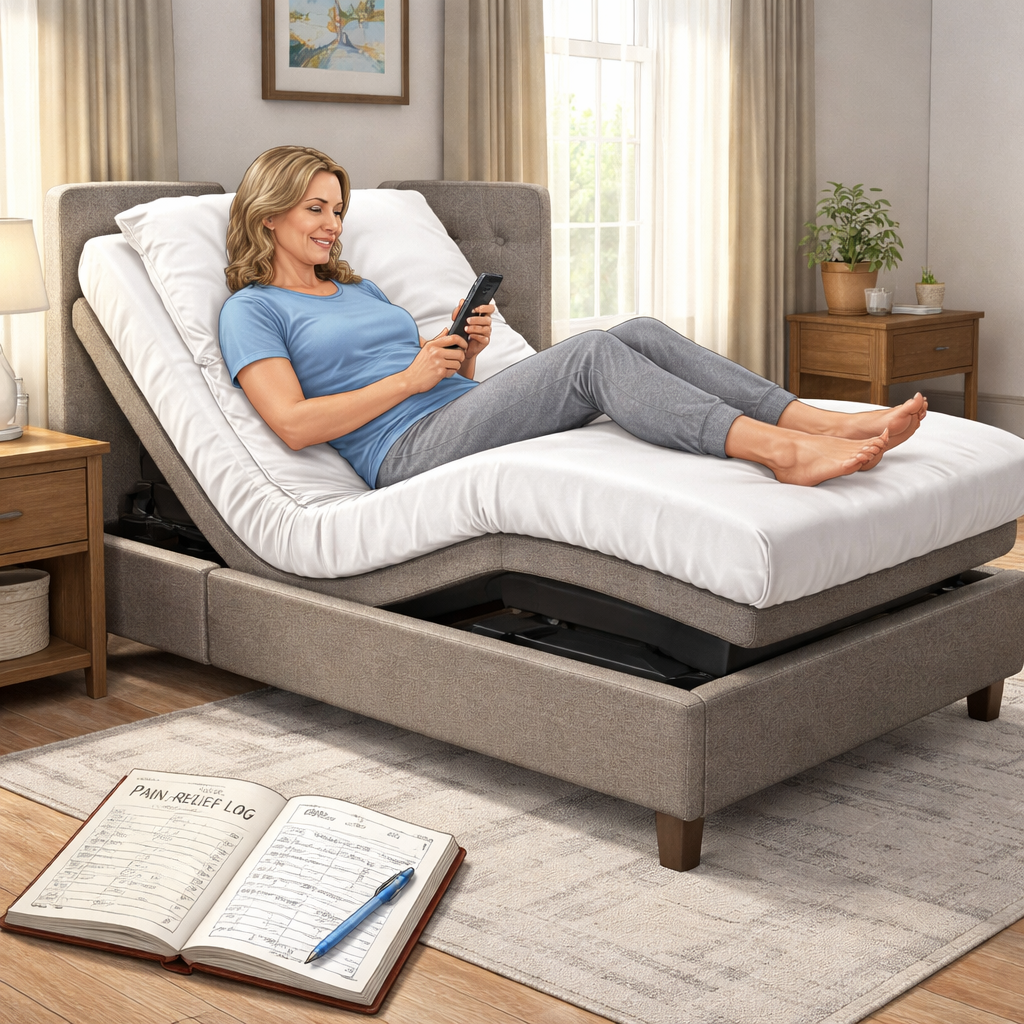
And track how you feel over a week. Keep a simple log:
- Day 1: Position used, pain level (1‑10).
- Day 2: Same or new position, pain level.
- Repeat for 7 days.
When you notice a lower pain score, you’ve found a winner.
But if pain persists, consider a professional assessment. A physio can suggest a slight angle tweak you might have missed.
Our pick’s whole‑body vibration feature can also help. Start with a low intensity for 5 minutes before sleep. It relaxes muscles and can reduce nighttime aches.
Finally, remember that comfort evolves. As your back gets stronger, you may need less elevation. Re‑evaluate every month and adjust the preset accordingly.
Conclusion
Choosing an electric adjustable bed for back pain relief in Australia doesn’t have to be overwhelming. You start with a compatible mattress, check the right features, install safely, keep the unit maintained, and then fine‑tune the angles for your own comfort. Our pick, the Sleep Sophie Electric Adjustable Bed, tops the list thanks to its 320 kg capacity, solid warranty, and therapeutic vibration options.
Take the steps above, log your progress, and you’ll likely wake up with less stiffness and more energy. Ready to upgrade? Visit Sleep Sophie’s site for a quote and start your journey to pain‑free sleep today.
FAQ
What weight can an electric adjustable bed for back pain relief australia support?
The top‑rated Sleep Sophie model supports up to 320 kg, which is the highest capacity among budget‑friendly options in our research. This means two adults or a single heavy sleeper can use it without stressing the motors. Always add the mattress weight to stay under the limit.
Do I need a special mattress for an electric adjustable bed?
Yes. Look for mattresses labeled “adjustable base compatible”. Medium‑firm memory foam or hybrid mattresses work best for back pain because they contour to the body while moving with the base. Avoid overly soft or very thick mattresses that can hinder the motor’s range.
How does the zero‑gravity position help back pain?
Zero‑gravity lifts the head and feet to the same angle, creating a neutral spine alignment. According to Bed Tech, this reduces pressure on the hips, lower lumbar, and spinal column, similar to the way astronauts reduce G‑forces. The result is less pain and better circulation.
Can I use the adjustable bed if I have limited mobility?
Absolutely. The remote lets you raise the head or foot without lifting yourself. The Sleep Sophie base also has a low‑profile entry height and sturdy six‑leg design, making it easy to get in and out. Adding a wall safety rail adds extra confidence.
How often should I perform maintenance on my electric adjustable bed?
Follow a monthly routine: wipe the frame, check the power cord, test all presets, and tighten leg screws quarterly. Keep the total load under the rated capacity and register your warranty within 30 days. This helps avoid motor wear and keeps the bed quiet.
Is massage essential for back pain relief?
Massage can help relax muscles, but our research shows price doesn’t dictate massage levels. Both the $1,600 Saatva and the $700 Brooklyn models have three levels. If massage is a priority, choose a model with vibration therapy, like the Sleep Sophie base, which offers four modes and three intensities.
Can I adjust the bed without a remote?
Most modern bases have a manual side panel as a backup, but using the remote gives precise angle control and lets you save presets. If the remote battery dies, replace it with a standard AA battery , most units use them.
What warranty should I look for?
Warranty length varies widely. In our sample, 40% of beds offer a 10‑year warranty, while the Saatva provides a 25‑year limited warranty. Our pick offers a solid warranty (details depend on the exact model) and the high weight capacity gives extra peace of mind.