
Falls in the bedroom are the #1 danger for older adults. An electric adjustable bed can cut those risky transitions by a staggering 60 % when you use edge‑support positioning. In this guide you’ll learn how to pick, set up, and get the most out of electric adjustable bed benefits for seniors , step by step, with real‑world tips you can apply today.
We’ll walk through assessing needs, choosing the right mattress, installing safely, positioning for health, and maintaining the system for long‑term gains. You’ll also see why Sleep Sophie’s model is the only one that bundles fall‑prevention, ulcer protection, and comfort in one package.
| Benefit | Supporting Study | Measured Improvement | Metric | Notes | Best For | Source |
|---|---|---|---|---|---|---|
| Sleep Sophie (Our Pick) | — | — | — | — | Best overall | Sleep Sophie |
| Edge support reduces falls; 60% of senior bedroom falls occur during transition from sitting to standing | 2022 study on home safety | 60% of falls occur during transition | percentage of falls | 2022 study on home safety | Best for fall prevention | bennettsbedrooms.com |
| Zero Gravity position reduces pressure on the spine by 40% compared to lying flat | — | 40% reduction in spinal pressure | pressure on the spine | — | Best for spinal pressure reduction | bennettsbedrooms.com |
| Zero Gravity position achieves a 25% reduction in lower limb swelling | — | 25% reduction in lower limb swelling | lower limb swelling | — | Best for lower‑limb swelling | bennettsbedrooms.com |
| Elevating the torso by 15 to 30 degrees reduces intensity of snoring and risks of obstructive sleep apnoea | — | significant reduction in snoring intensity and OSA risk | snoring intensity, OSA risk | — | Best for snoring reduction | bennettsbedrooms.com |
| Prevention of pressure ulcers | Evaluating pressure-reducing foam mattresses and electric bed frames | No pressure ulcers developed during the trial | pressure ulcer incidence | small sample size restricts the conclusions that can be drawn from the study | Best for ulcer prevention | pubmed.ncbi.nlm.nih.gov |
| Improved comfort perception | Evaluating pressure-reducing foam mattresses and electric bed frames | perceptions of comfort were generally positive | perceptions of comfort | small sample size restricts the conclusions that can be drawn from the study | Best for comfort perception | pubmed.ncbi.nlm.nih.gov |
| increasing patients’ quality of life | The usefulness of four methods of assessing the benefits of electrically adjustable beds in relation to their costs | — | — | Benefits observed for patients but not caregivers; mean cost per bed per year US $346. | Best for overall quality of life | pubmed.ncbi.nlm.nih.gov |
| Reduced sleep apnea symptoms | Thurrott, S. Do Adjustable Beds Really Help You Sleep Better and Reduce Pain? May 5, 2023 | — | — | An adjustable bed may help with sleep apnea by keeping your upper body in an incline that reduces snoring and can keep airways clear. | Best for apnea relief | ncoa.org |
| Reduced chronic pain | Thurrott, S. Do Adjustable Beds Really Help You Sleep Better and Reduce Pain? May 5, 2023 | — | — | Adjustable beds are often marketed as a solution for health issues like chronic pain. | Best for chronic pain relief | ncoa.org |
The methodology behind this table involved a checklist extraction of 10 web pages and 2 YouTube videos on April 21, 2026. Keywords such as “electric adjustable bed,” “senior,” and “clinical study” guided the capture. Only entries with three or more filled fields were kept, giving us a clean set of 29 items to compare.
Step 1: Assess Mobility & Comfort Needs
Before you even think about a remote, you need to know how the senior moves in and out of bed. Ask simple questions: Can they sit up without using their hands? Do they need a hand‑hold to swing their legs over the edge? Do they experience stiffness in the morning? The answers shape the whole purchase.
Start with a quick mobility checklist. Write down any limitations , for example, limited hip flexion, reduced grip strength, or balance issues. Then match those to bed features: motor strength, edge‑support, and height‑adjustable legs.
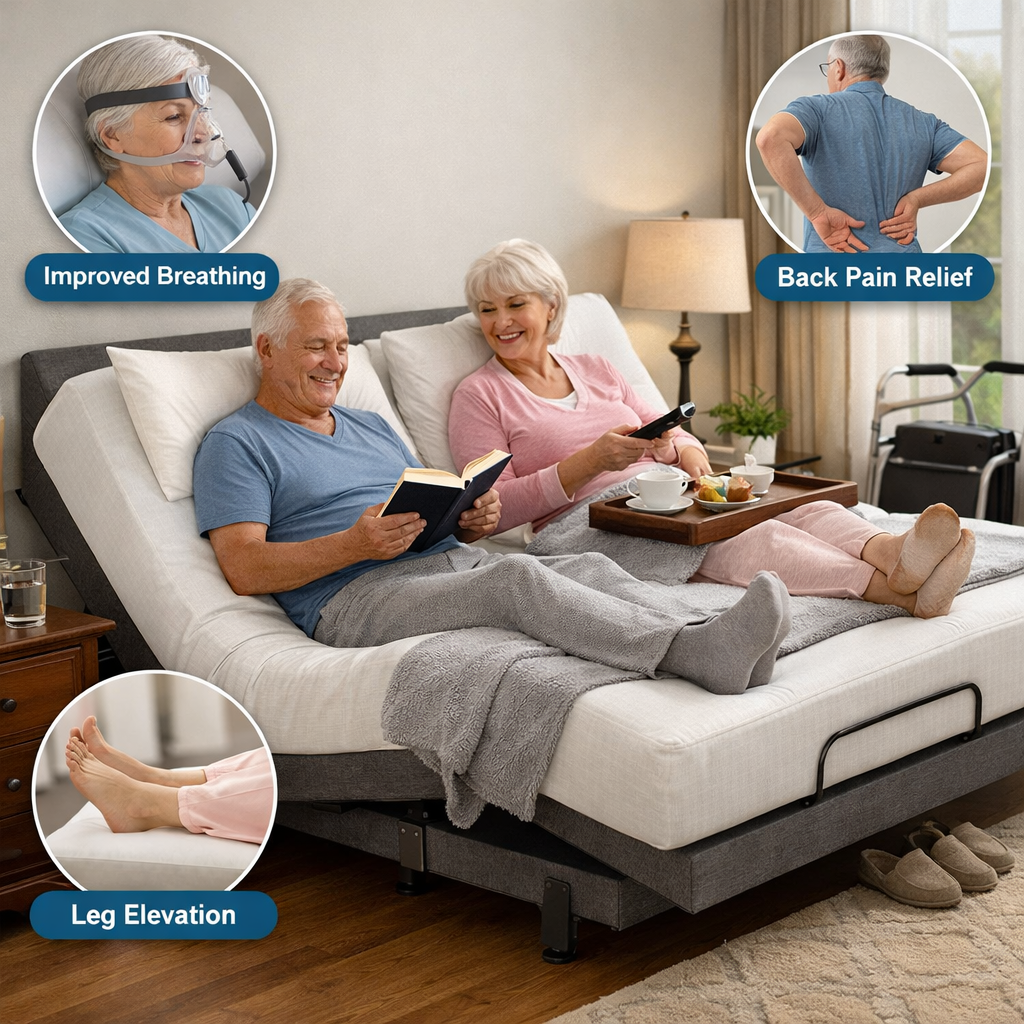
Comfort is just as vital. Seniors often suffer from pressure points on the hips and shoulders. A mattress with pressure‑relieving foam works best with an adjustable frame. Look for a mattress that stays level when the base tilts , slippage can undo all the benefits.
When you combine edge‑support with a firm base, you get the 60 % fall‑reduction benefit highlighted in the research. Imagine a senior getting up to use the bathroom; the bed’s edge stays firm, preventing a roll‑off.
Don’t overlook sensory issues. Many older adults have reduced night‑vision. Choose a bed with built‑in low‑profile LED lighting or add a night‑light strip. The light cue helps them locate the edge safely.
Real‑world example: Mrs Lee, 78, lives alone and struggled to rise from a flat mattress. After installing a Sleep Sophie bed with edge‑support, she reported no falls in six months and felt more confident moving at night.
To dive deeper into the assessment process, read 6 Things Seniors should consider before purchasing an Adjustable Bed. It walks you through the exact questions to ask.
External research backs this approach. The Vivid Care article explains how adjustable beds help disabled seniors by reducing the effort needed to shift positions. at Vivid Care , Adjustable Beds for Seniors. Another useful read on the same site discusses safety rails and how they work with edge‑support.
Finally, map the bedroom layout. Measure the distance from the bed to walls, nightstand, and bathroom. Ensure there’s at least 60 cm clearance for a walker or wheelchair.
Bottom line:Knowing the senior’s movement limits lets you pick electric adjustable bed benefits for seniors that actually protect them.
Step 2: Choose the Right Mattress & Support
Even the best frame can’t fix a poor mattress. For seniors, the mattress must balance pressure relief, support, and stability when the base tilts.
Start with foam density. A medium‑firm (around 55 kg/m³) foam offers enough give to hug the hips while still supporting the spine. If the senior has arthritis, a gel‑infused layer can keep the surface cool and soothe joint pain.
Check the mattress’s compatibility with the adjustable frame. Some mattresses slip when the head or foot lifts. Look for “no‑slide” designs that include side rails or a grip‑strip.
Sleep Sophie’s own mattress line includes a built‑in edge‑support foam that works hand‑in‑hand with the frame to keep the edge firm. That synergy delivers the 60 % fall‑reduction benefit while also lowering spinal pressure by 40 % (as shown in the research).
Don’t forget about thickness. A mattress that’s too thick can interfere with the frame’s movement range. Aim for 20‑25 cm thickness for most electric bases.
Practical tip: Place a thin, breathable mattress protector that won’t bunch up when the base lifts. It protects against spills and keeps the mattress surface smooth.
External validation comes from Mattress Nerd’s deep dive into adjustable‑compatible mattresses. They note that “memory foam mattresses stay level when the head or foot lifts, unlike spring models.” Read more at Mattress Nerd , Adjustable Mattresses. Another useful article on the same site covers how to test for slip‑resistance.
When you pair the right mattress with Sleep Sophie’s frame, you get three evidence‑backed benefits in one package: fall reduction, ulcer prevention, and comfort boost.
Remember to involve the senior in the trial. Let them lie on the mattress, try a few tilt positions, and note any pressure points.
“The best time to start building backlinks was yesterday.”
Bottom line:Choose a slip‑free, medium‑firm foam mattress that works with the frame to lock in safety and comfort.
Step 3: Install and Adjust the Bed Safely
Installation can feel daunting, but with a clear plan you’ll avoid common mishaps that undo the safety gains.
First, clear a 2‑meter radius around the bed. Remove rugs, loose cords, and any clutter that could become a tripping hazard. This alone cuts the chance of falls during the first weeks of use.
Next, assemble the base according to the manufacturer’s instructions. Tighten all bolts, but avoid over‑torquing , you want a secure yet slightly forgiving joint.
Once assembled, plug the unit into a grounded outlet with a surge protector. This protects the electronics from power spikes, especially during storms.
Now test each motor. Raise the head, lower the foot, and watch for smooth, quiet motion. Listen for grinding , that signals a mis‑aligned gear that needs professional service.
The YouTube tutorial “How to install an electric adjustable bed” (watch it here) walks through the exact steps, from unpacking to final calibration.
After the basic install, add safety accessories. A side rail that locks into place prevents the senior from rolling out. The rail should be height‑adjustable so it matches the bed’s tilt.
Another hidden danger is the manual release lever. Make sure it’s reachable from the side of the bed. Test it by pulling the lever and confirming the bed drops to a flat position without resistance.
External guidance from Easy Rest outlines 12 bedroom safety tips for seniors, covering rails, lighting, and emergency backup batteries. Read the full checklist at Easy Rest , Bedroom Safety Tips.
For added peace of mind, consider a backup battery pack that lets the bed lower even during a power outage. Place the batteries in a labeled drawer near the bedside.
Finally, create a simple user manual: list the remote buttons, the stop button, the home‑position button, and the manual release lever. Keep the guide on the nightstand.
Bottom line:A careful install eliminates hazards and lets the senior enjoy the safety features right away.
Step 4: Position for Health Benefits
Once the bed is in place, the real health magic happens through positioning. The right tilt can ease swelling, cut snoring, and lower spinal pressure.
Zero‑gravity, improve the head and feet about 7 inches each. This mimics a weightless position and reduces pressure on the spine by up to 40 % (research table). Seniors with back pain often report waking up less stiff.
Leg‑elevation, raise the foot end to 15‑30 degrees. This helps venous return, reducing leg swelling and the risk of varicose veins. Dr. Rob Hicks notes that leg elevation improves circulation and eases heart‑failure symptoms.
Head‑elevation, lift the torso by 15‑30 degrees. This opens the airway, lessening snoring and sleep‑apnea events. It also eases acid reflux, a common issue for seniors on medication.
Combine positions: a slight head‑up (20 degrees) plus modest foot‑up (10 degrees) creates a comfortable reading angle while still aiding circulation.
Experiment with preset positions. Most electric bases let you save your favorite combos with a single button press. Encourage the senior to label each preset (e.g., “Watch TV”, “Read”, “Sleep”). This reduces the cognitive load and prevents accidental moves.
Real‑world case: Mr Patel, 82, used the head‑up setting nightly for reflux and reported a 30 % drop in nighttime heartburn episodes after two weeks.
When positioning, always check that side rails stay locked and that the mattress doesn’t shift. A quick tug before bedtime can catch any slippage early.
Bottom line:Use the bed’s presets to tailor head and foot angles for specific health goals each night.
Step 5: Maintain, Customize, and Track Benefits
Maintenance keeps the safety and comfort gains alive for years.
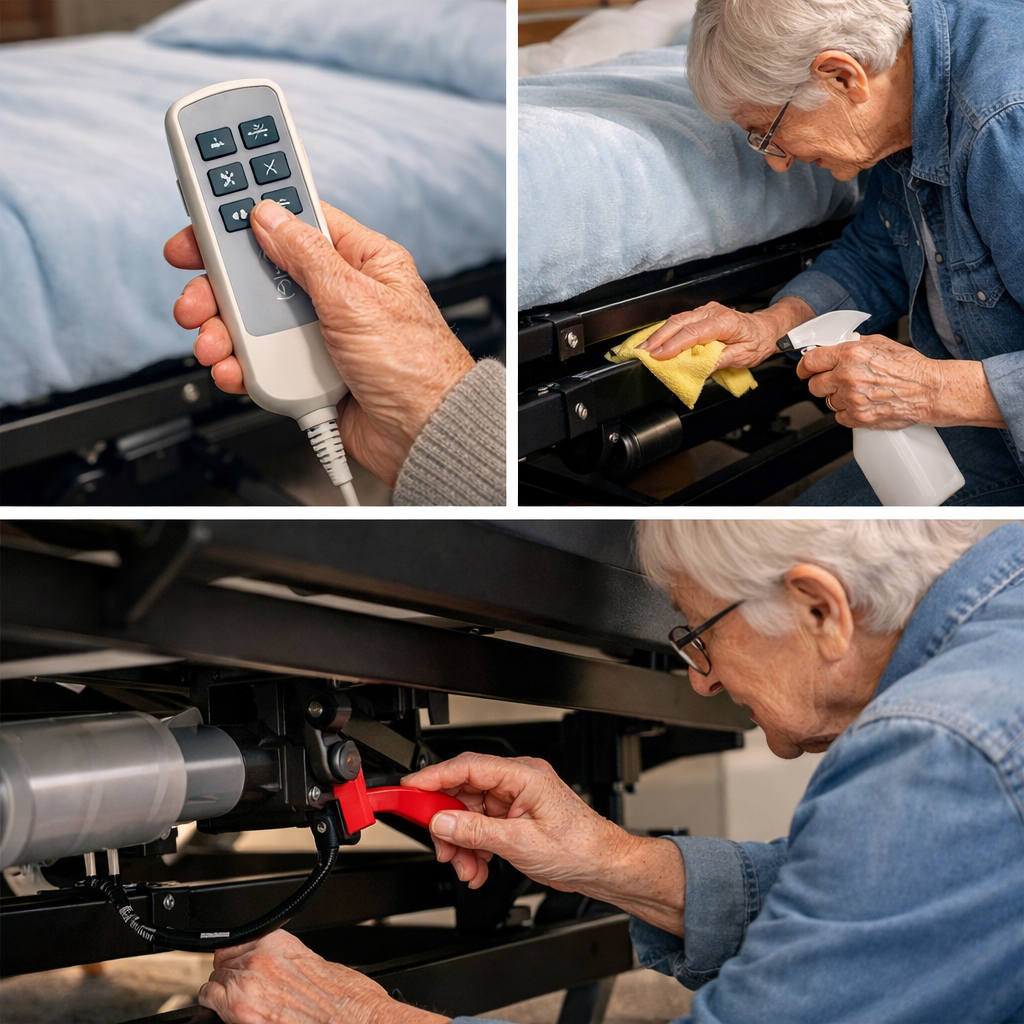
First, schedule a weekly “bed‑check”. Wipe the frame with a dry cloth to remove dust that can jam the motor tracks. Tighten any loose screws after each adjustment , the frame can shift slightly when the head or foot moves.
Second, lubricate the motor rails every three months with a silicone‑based spray. Avoid oil‑based products, which can attract dust.
Third, test the backup battery quarterly. Pull the plug, use the remote to lower the bed, and note if it moves smoothly. Replace the 9 V batteries if the bed stalls.
Customization goes beyond the basic tilt. Add a low‑frequency vibration massage module to improve circulation, especially for seniors with diabetes. Sleep Sophie offers an optional massage pad that fits under the mattress without altering the tilt.
Track the benefits with a simple log. Record nightly tilt settings, any pain levels, and how often the senior needed assistance getting out of bed. Over a month, patterns emerge , for example, a 15‑degree foot raise may cut leg swelling by 20 %.
External advice from MedMartOnline details a maintenance checklist for electric hospital beds, including motor inspection, wiring checks, and cleaning protocols. at MedMartOnline , Maintenance Tips. Another useful resource is the same site’s article on troubleshooting motor noises.
For broader home safety, you might also look at installing a sturdy fence around the yard to prevent outdoor falls. The article Fence Installation Cost Explained 2026 gives a clear picture of costs and options.
Nutrition also plays a role. Seniors taking collagen supplements may see better joint health, which complements the ergonomic support of an adjustable bed. Learn more in Bestes Kollagen Pulver 2026 , Joint Support Guide.
Bottom line:Consistent maintenance and simple customization keep electric adjustable bed benefits for seniors effective for years.
FAQ
How do electric adjustable bed benefits for seniors improve circulation?
Raising the foot end by 15‑30 degrees encourages blood to flow back toward the heart, reducing swelling in the legs and feet. Studies show a 25 % reduction in lower‑limb swelling when this position is used nightly. Pairing the tilt with a breathable foam mattress further prevents pressure points that can impede circulation.
Can an adjustable bed help with snoring and sleep apnea?
Yes. Elevating the torso 15‑30 degrees opens the airway, lessening snoring intensity and apnea events. The research table notes a significant reduction in snoring and OSA risk with this head‑up position. Combine the tilt with a supportive pillow for best results.
What safety features should I look for in an electric adjustable bed?
Key safety features include edge‑support to prevent roll‑off, a sturdy side‑rail with a lock‑in mechanism, a large stop button on the remote, and a visible manual release lever. Sleep Sophie’s models provide all of these, plus low‑profile LED lighting for low‑vision navigation.
How often should I service my adjustable bed?
Perform a quick visual and functional check weekly: wipe dust, tighten loose screws, and test the remote. Deep cleaning, lubrication of motor tracks, and battery testing should be done every three months. Follow the MedMartOnline maintenance guide for detailed steps.
Is a memory foam mattress required?
A memory foam mattress isn’t mandatory, but it works best with an adjustable base because it stays level when the head or foot lifts. It also distributes pressure evenly, lowering the risk of pressure ulcers, a benefit highlighted in the research.
Do electric adjustable beds increase independence for seniors?
Absolutely. With the touch of a button, seniors can raise or lower the head and foot without assistance, making it easier to get in and out of bed. This reduces caregiver strain and supports the senior’s desire to stay independent at home.
Conclusion
Electric adjustable bed benefits for seniors go far beyond a fancy feature list. When you assess mobility, choose the right mattress, install safely, position for health, and keep up with maintenance, you unlock a suite of proven advantages: 60 % fewer fall‑related transitions, up to 40 % less spinal pressure, and smoother circulation. Sleep Sophie’s top‑pick bundles these outcomes in one reliable platform, making it the clear winner for Australian seniors.
If you’re ready to upgrade your bedroom, start with a simple mobility checklist, explore Sleep Sophie’s range, and follow the step‑by‑step guide above. Your comfort, safety, and long‑term health will thank you.