
Ever rolled over in the middle of the night, feeling that sharp ache in your shoulder or hip, and thought, ‘There’s got to be a better way to sleep?’ You’re not alone – side sleepers make up a huge chunk of Australians, and the mattress you lie on can make or break your comfort.
The good news is that an adjustable bed can be a game‑changer. By lifting the head and gently raising the knees, you can keep your spine in a neutral position, which eases pressure on the shoulders and hips. Think of the classic ‘zero‑gravity’ position: it mimics the way astronauts float, taking the strain off the lower back and letting blood flow more freely.
But the magic only works if the mattress itself bends with the bed. A flexible, medium‑to‑soft foam that responds to the tilt will hug your curves without creating sag spots. For example, many of our clients with chronic lower‑back pain report that switching to a gel‑infused memory foam that’s rated for adjustable use reduces nightly tossing by up to 30 %.
Real‑world scenario: Jane, a 68‑year‑old NDIS participant, struggled with shoulder pain after a rotator‑cuff injury. She paired a supportive adjustable frame with a mattress designed for side sleepers and discovered she could open her chest slightly by raising the head, which cleared her breathing and let her stay on her side without waking up sore.
If you’re a caregiver, you might notice how a simple angle change can help a loved one with acid reflux. Raising the head just 15 degrees often keeps stomach acid where it belongs, while a gentle knee‑up tilt eases pressure on the lower back. It’s a low‑effort tweak that delivers big relief.
Here’s a quick checklist to test your current setup: 1) Lie on your side and see if there’s a hollow spot under your shoulder – if yes, your mattress may be too firm. 2) Adjust the head‑up angle by 5‑10 degrees; notice whether your spine feels straighter. 3) Add a slight knee‑up tilt and check if the hip gap feels more spacious. If any of these steps feel better, you’re on the right track.
And don’t forget the pillow. A medium‑to‑high loft pillow that supports the neck while the head is elevated can make the whole system work like a symphony. Our Pillow Perfection guide walks you through the exact specs to look for.
So, what’s the next move? Start by confirming your mattress is rated for adjustable use, experiment with the head‑up and knee‑up angles, and pair it with a supportive pillow. You’ll likely notice less shoulder pressure, smoother breathing, and a more refreshed you in the morning.
TL;DR
Adjustable beds paired with a flexible mattress for side sleepers in Australia let you raise the head and knees, keeping the spine aligned and easing shoulder, hip and back pressure. Experiment with 5‑10 degree head‑up and a gentle knee‑up tilt to find your sweet spot, and you’ll notice smoother breathing, reduced acid reflux, and more refreshed mornings.
Understanding Side Sleeping Needs
Imagine you’ve just rolled onto your side after a long day, and the pressure in your shoulder feels like a tiny vise. That moment of discomfort is the body’s way of saying the mattress isn’t speaking your language.
For side sleepers in Australia, the sweet spot hinges on three things: spinal alignment, pressure‑point relief, and a mattress that bends with an adjustable frame. When the head‑up angle lifts just enough to open the chest, and the knee‑up tilt creates a gentle hip gap, the spine can settle into its natural S‑shape. Suddenly the shoulder no longer bears the full weight of the body.
That’s why we always start a conversation with our clients by asking: where do you feel the most strain when you lie on your side? Most people point to the top of the shoulder or the outer thigh. Those are the classic pressure points that a flexible, medium‑to‑soft foam – especially one infused with gel for cooling – can cradle without creating a hollow dip.
Now, let’s talk numbers that actually matter. Raising the head by 5‑10 degrees often improves breathing by reducing airway compression, while a 3‑5 degree knee lift eases the shear on the hips. You don’t need a full zero‑gravity setting – just a subtle tilt that feels natural. In our experience, side‑sleepers who pair that tilt with a mattress rated for adjustable use report up to a 30 % drop in nightly tossing.
One handy resource we’ve put together walks you through the exact specs to look for in a side‑sleeping mattress, from firmness curves to edge support. Check out our guide on what seniors should consider – the principles apply to anyone who wants that perfect side‑sleep alignment.
If you’re already managing chronic pain or navigating NDIS support, having a health partner can make tweaking your sleep setup feel less like guesswork. XLR8well offers proactive health coaching that helps you track how posture changes affect daily comfort, so you can fine‑tune the angle with confidence.
Beyond the mattress itself, the surrounding environment plays a silent yet powerful role. Soft lighting, a gentle white‑noise machine, or a sleep‑tracking device can amplify the benefits of your adjusted position. Plug & Carry curates a range of smart home gadgets that slip into any bedroom without stealing the spotlight – think Bluetooth speakers that sync to your bedtime routine or low‑glare bedside lamps.
The short clip above demonstrates how a few degree adjustments feel in real life – you’ll see the mattress flexing under a side‑sleeping test dummy while the bed tilts gently. Notice how the shoulder gap widens and the hips settle into a natural cradle. That visual cue can be the confidence boost you need to experiment on your own bed tonight.
Take a quick checklist before you head to the store: 1) Lie on your side; feel a subtle dip under the shoulder? – you need more give. 2) Adjust head‑up by 5°; does your neck feel neutral? 3) Add a knee‑up tilt; does the hip gap open? If the answers are yes, you’ve found the core settings for a mattress for side sleepers Australia.
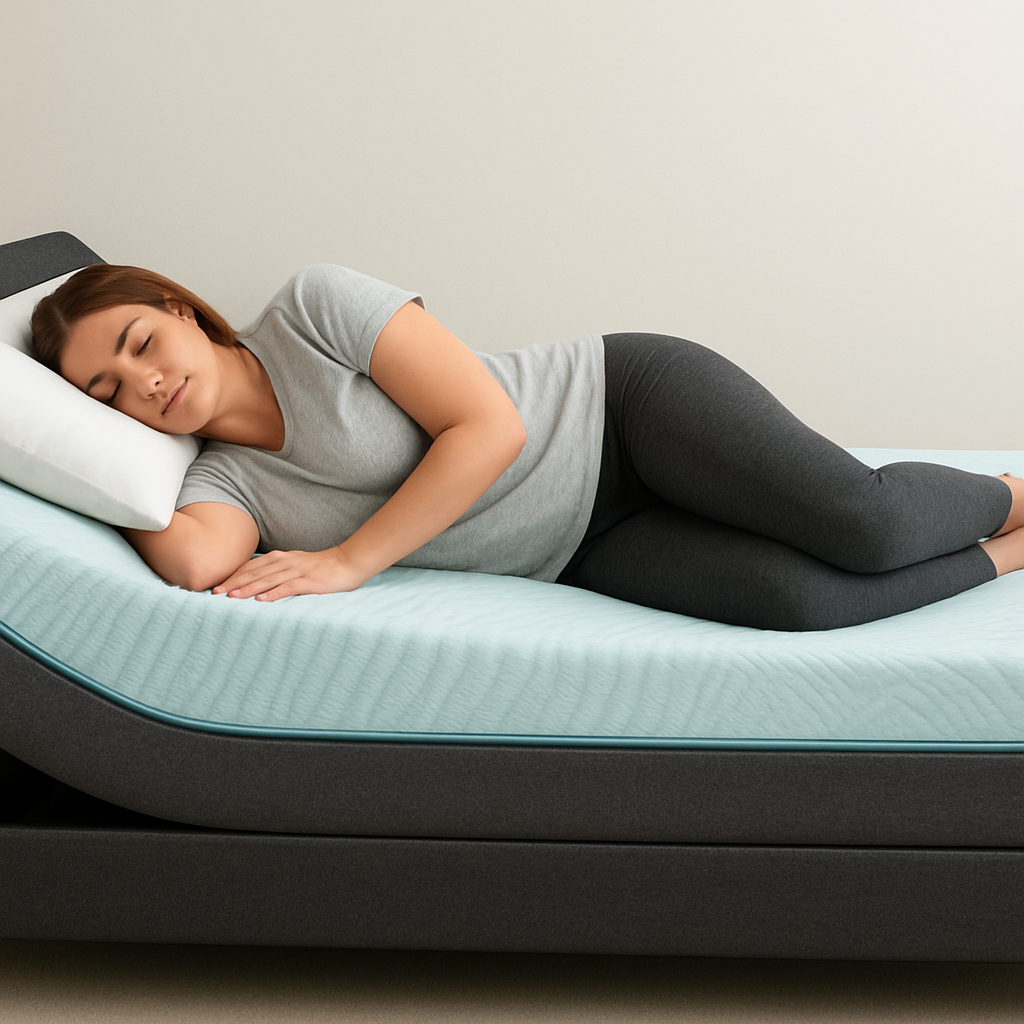
Key Mattress Features for Side Sleepers
Ever lie on your side and feel that the mattress just kind of “gives up” under your shoulder? You’re not imagining it – the right mattress needs to do a lot more than just feel soft.
For side sleepers in Australia, the sweet spot is a blend of give and support that keeps the spine straight while cradling the pressure points. Below, we break down the features that actually move the needle.
Responsive Comfort Layers
Think of the top layer as the first hug you get when you flop onto the bed. A responsive foam – whether it’s a gel‑infused memory or a breathable latex – should sink just enough to let your shoulder and hip sink in, but bounce back quickly when you shift.
Why does that matter? Because side sleepers tend to change positions during the night. A layer that’s too slow to recover can create a hollow spot, leaving you with a sore hip in the morning.
Targeted Support Zones
Many modern mattresses are built with zones that vary in firmness from head to toe. For a side sleeper, the middle‑to‑lower zones should be slightly softer, while the lower zone (under the hips) offers a bit more firmness to prevent the pelvis from sagging.
When the zones line up with your body’s natural curve, the spine stays neutral – no twist, no dip. That’s the foundation for the “spinal alignment” benefit we keep hearing about.
Adjustable‑Bed Compatibility
Here’s the kicker: a mattress that’s perfect on a static frame can feel stiff when the head or knee is raised. Look for mattresses that are marketed as “adjustable‑bed compatible” or “flexible foam”. These models are engineered to bend with the frame without creating uncomfortable gaps.
In our experience, hybrid mattresses with pocketed coils underneath a plush foam top give the best of both worlds – the coils stay flat when the bed tilts, while the foam still provides that shoulder‑hug.
Pressure‑Relief Materials
Pressure‑relieving foam blends – like gel‑infused memory or graphene‑enhanced foam – disperse weight more evenly. For side sleepers, that means less “pinching” on the shoulder and hip.
Imagine lying on a cloud that subtly shifts under you as you roll. That cloud‑like feel also helps with blood flow, which is why many NDIS participants notice fewer night‑time aches after switching to a pressure‑relief mattress.
So, what should you look for when you’re scrolling through product pages? Start with the material list, then ask yourself: does this mattress say it’s designed for adjustable beds? Does it mention zone support or pressure‑relief technology?
Durability & Edge Support
Side sleepers often sit on the edge of the bed to get in and out of it, especially seniors and caregivers helping a loved one. Strong edge support prevents the mattress from sagging over time, keeping the sleep surface even.
A durable cover – think woven polyester or a breathable Tencel weave – also protects the foam from dust mites, which is a plus for anyone with allergies.
Putting It All Together
When you combine a responsive top layer, zoned support, adjustable‑bed compatibility, pressure‑relief tech, and solid edge durability, you’ve got a mattress that truly caters to side sleepers across Australia.
Take a moment tonight: lie on your side, feel the cushion under your shoulder, and notice if your hips stay level. If the mattress flexes with the tilt of your adjustable frame, you’ll feel that extra bit of relief that makes waking up without aches feel like a small miracle.
And remember – the best mattress for you is the one that works with your body’s unique shape, not against it. Test a few options, trust the zone‑tech specs, and you’ll find the comfort you’ve been chasing.
Top Mattress Types for Side Sleepers in Australia
When it comes to finding the perfect mattress for side sleepers australia, the material you choose can make the difference between waking up refreshed or feeling like you’ve been wrestled by a bear.
We’ve seen three main families dominate the market: memory‑foam, latex, and hybrid mattresses. Each brings its own blend of give, bounce and support, and each reacts a bit differently when the head or knee of an adjustable frame is lifted.
So, which one should you try first?
Memory Foam – the pressure‑point hugger
Memory foam is famous for contouring to every curve, which is a blessing for side sleepers whose shoulders and hips need that extra cradle. A gel‑infused version helps keep the surface cool, a perk when Australian summers turn your bedroom into a sauna.
But if the foam is too soft, you might sink so far that your hips drop, throwing your spine out of alignment. Look for a medium‑soft rating (about 5–6 on a 10‑point firmness scale) if you’re around 70 kg, and a slightly firmer feel if you’re heavier.
Latex – the bouncy, breathable option
Natural latex gives a responsive bounce that many side sleepers love because it lets you shift without feeling “stuck” in the mattress. It also breathes well, so you won’t wake up sweating through the night.
On the flip side, latex can feel a bit firmer than foam, which might be too harsh for someone with very sensitive shoulders. If you’re looking for a “soft‑to‑medium” feel, a Talalay latex core with a plush pillow‑top usually hits the sweet spot.
Hybrid – the best‑of‑both‑worlds for heavier sleepers
Hybrid mattresses combine pocketed coils with a top layer of foam or latex. The coils keep the middle from sagging when you raise the head or knees, while the comfort layer still provides that gentle hug around the shoulder.
For people over 100 kg, the coil support becomes crucial – it prevents the mattress from “bottom‑out” and maintains edge stability, which is a big win for seniors or caregivers who sit on the edge to get in and out of bed.
Below is a quick side‑by‑side look at how each type stacks up against the three things side sleepers care most about: spinal alignment, pressure‑point relief, and pain‑management friendliness.
| Mattress Type | Spinal Alignment | Pressure‑Point Relief | Pain‑Management Friendly |
|---|---|---|---|
| Memory Foam | Good when medium‑soft; can sag if too soft | Excellent – conforms to shoulder and hip | Ideal for chronic shoulder/hip pain, but watch heat build‑up |
| Latex | Very supportive; bounce helps keep spine neutral | Very good – responsive yet cushy | Works well for mild joint pain; natural material reduces allergens |
| Hybrid | Strong – coils keep spine aligned even when tilted | Good – foam/latex layer adds contour | Best for heavier users or those needing extra edge support |
In practice, the “right” mattress is the one that lets you lift the head and knees without feeling a dip under your shoulder. If you notice a hollow spot when you’re in a zero‑gravity position, try a softer foam or a latex pillow‑top. If the edge feels floppy, a hybrid with reinforced coils is likely your best bet.
Try this simple test tonight: set your adjustable bed to a 5‑degree head‑up angle, lie on your side, and note how your shoulder sinks. Then add a 2‑degree knee lift and see whether the hip gap stays even. The mattress that keeps both points cushioned without sagging is the one that will give you consistent spinal alignment, pressure‑point relief and overall pain‑management comfort.
At Sleep Sophie we’ve helped countless NDIS participants and seniors pair an adjustable frame with the mattress type that matches their body’s needs. The key is to treat the mattress and the bed as a single system – the right combination can turn restless nights into gentle, restorative sleep.
How to Test a Mattress for Side Sleeping Comfort
Alright, let’s get down to the nitty‑gritty of figuring out whether a mattress actually works for you when you sleep on your side. It sounds simple, but there are a few quirks that can turn a “good enough” night into a restless one.
Step 1: Set Up Your Adjustable Base
First, make sure your adjustable bed is in its neutral, flat position. If you’re already using a head‑up or knee‑up tilt, note those angles – we’ll come back to them later. A flat start gives you a baseline so you can see exactly how the mattress responds when you start to adjust.
Step 2: Find Your Sweet Spot
Lie on your side and let the mattress hug your shoulder and hip for about a minute. You should feel a gentle “cushion” under both pressure points. If the shoulder sinks too far or the hip feels like it’s perched on a hard slab, the mattress is probably too firm or too soft for you.
Here’s a quick visual cue: picture a ruler sliding between your shoulder and hip. Ideally you’ll see a 2‑3 cm gap. Anything smaller means the mattress is crushing you; anything larger means you’re sinking too deep.
Step 3: Test the Head‑Up Angle
Raise the head of the bed by 5 degrees. This is the classic “zero‑gravity” start most of our clients use. Now roll onto your side again. Does the shoulder stay cushioned, or does a hollow spot appear as the mattress flexes? If the cushion disappears, the top layer isn’t flexible enough for an adjustable frame.
For many side sleepers, a medium‑soft to medium feel hits the Goldilocks zone – not too hard, not too squishy. The Wirecutter guide notes that side sleepers “should look for a mattress that aligns the spine and offers good support” and recommends a medium‑soft to medium rating.Read the research
Step 4: Add a Knee‑Up Tilt
Now lift the knee end by 2‑3 degrees. This small angle helps flatten the lower back and often reveals hidden sag spots. Lie back on your side and pay attention to the hip area. If the hip starts to dip or you feel a “pinch” under the pelvis, the mattress isn’t keeping the spine neutral when the base is tilted.
Tip: keep the tilt subtle. A big angle can exaggerate flaws that you wouldn’t notice in everyday use, and you might end up discarding a perfectly good mattress.
Step 5: Motion‑Isolation Check
If you share the bed, sit on one edge and have your partner roll over. A good mattress for side sleepers should absorb the movement so you don’t feel a ripple. Minimal disturbance means the layers are doing their job of isolating motion while still providing contour.
Heavy‑weight sleepers might notice more “bounce” with hybrid designs, while all‑foam models often feel more muffled. Choose what feels right for your daily routine.
Step 6: Real‑World Trial Night
All the tabletop tests are useful, but nothing beats an actual night’s sleep. Set the head‑up at 7 degrees and the knee‑up at 3 degrees, then crawl into bed as you normally would. Sleep for at least four hours – the “first‑night effect” can mask issues, so try a second night with the same settings.
When you wake, ask yourself:
- Did my shoulder feel supported or cramped?
- Was my hip level with the rest of my spine?
- Did I toss and turn because the mattress felt too soft or too firm?
If the answers are mostly “yes, it felt right,” you’ve found a mattress that works for you. If not, tweak the angles or consider a mattress with a different comfort layer – perhaps a gel‑infused foam for cooling or a latex pillow‑top for extra bounce.
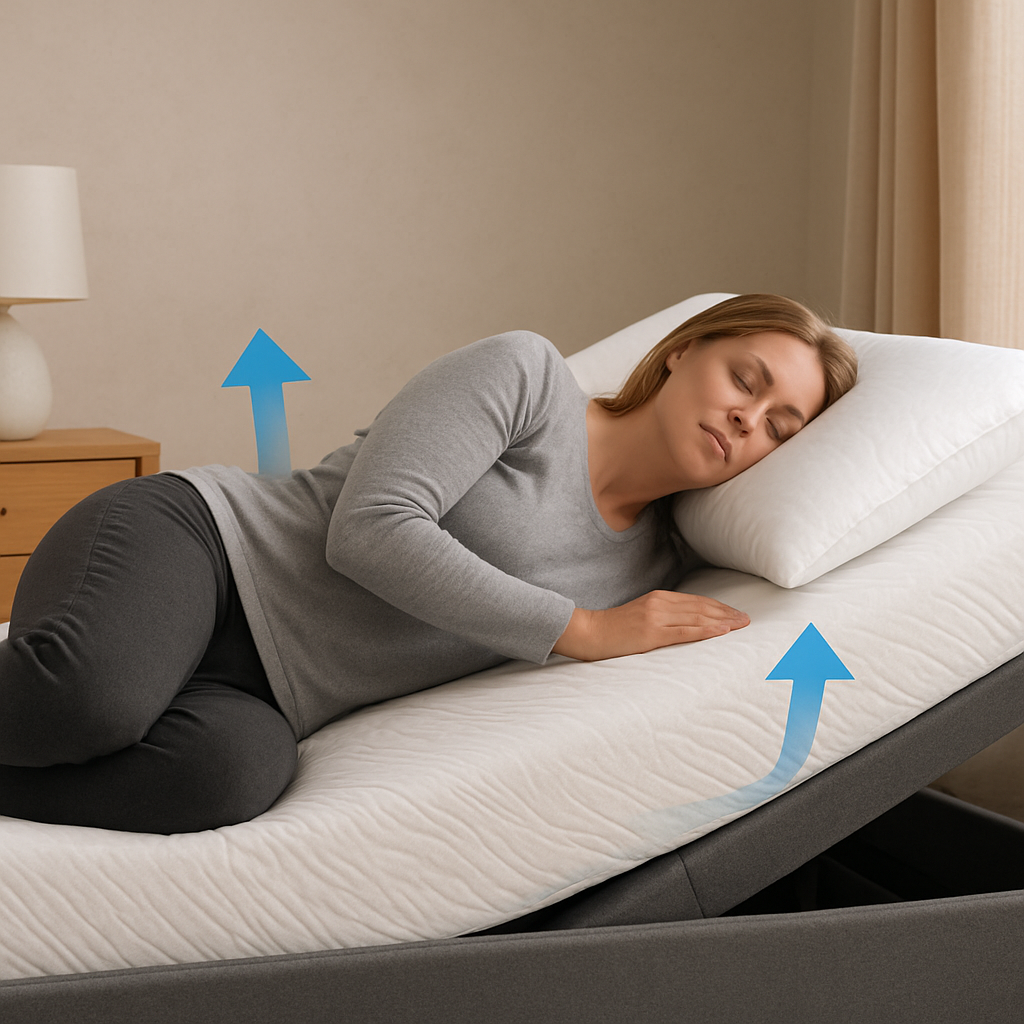
Quick Checklist
- Flat baseline test – note shoulder/hip gap.
- Head‑up 5° – check for cushion loss.
- Knee‑up 2‑3° – watch hip dip.
- Motion isolation – partner roll test.
- Two‑night trial with preferred angles.
When you walk through these steps, you’ll have a concrete feel for whether a mattress truly supports side sleeping, especially on an adjustable base. It’s a bit of work, but the payoff is a night free of shoulder aches and a spine that stays straight – exactly what a “mattress for side sleepers australia” should deliver.
Maintenance and Longevity Tips for Your Mattress
Alright, you’ve found a mattress for side sleepers australia that actually works with your adjustable base – now what? The real magic happens when you treat that mattress like a good friend: a little care, a bit of routine, and it’ll keep you comfortable for years.
1. Rotate, don’t flip (unless the label says it’s double‑sided)
Most modern foam and hybrid models are designed to be one‑sided, so flipping can actually shorten their life. Instead, give the mattress a 180‑degree turn every three months. This evens out the wear from your head‑up and knee‑up angles, so the shoulder‑hip zone doesn’t get a permanent dip.
2. Keep the surface protected
A breathable mattress protector does three things: it blocks spills, it reduces dust‑mite build‑up, and it lets the foam breathe. Look for a zip‑around cover with a soft, Tencel or cotton face – you’ll feel the difference when you slide into bed.
Pro tip: change the protector every six months, or sooner if you notice stains. It’s a cheap habit that saves the core layers from premature breakdown.
3. Mind the angles on your adjustable frame
When you raise the head or knees, the mattress bends along its length. If you habitually stay at a steep incline, the foam can compress more on one side. Try to keep the head‑up angle between 5° and 10°, and the knee‑up tilt under 5°. Occasionally return to a flat position for a night – that lets the material “reset” and prevents a permanent curve.
4. Clean the mattress the right way
- Spot‑clean spills with a mild dish soap diluted in water. Dab, don’t rub.
- Avoid soaking the mattress – excess moisture can break down foam cells.
- For a fresh scent, sprinkle a thin layer of baking soda, let it sit for an hour, then vacuum.
If you have a hybrid with coils, a quick vacuum of the edges helps keep debris from scratching the metal.
5. Check for sagging and support loss
Every six months, lie on your side and note the shoulder‑hip gap. If the gap widens noticeably, or you feel a dip under the hips, it’s time to reassess. In many cases a simple mattress topper can restore comfort, but if the core layer is permanently compressed, consider a replacement.
6. Keep the bedroom climate stable
Foam loves a consistent temperature. Extreme heat can soften the layers too much, while a chilly room makes them stiff. Aim for 18‑22 °C (64‑72 °F) and use a fan or heater only when the room drifts outside that range. This not only preserves comfort but also extends the mattress’s lifespan.
7. Use the right foundation
Even with an adjustable base, the frame should support the mattress evenly. If your base has a slatted design, make sure the slats are no more than 3 inches (75 mm) apart. Gaps wider than that let the foam sag between slats, especially under the heavier side‑sleeping pressure points.
8. Document your settings
Write down the head‑up and knee‑up angles that feel best for you, along with the date you last rotated the mattress. A quick notebook entry makes it easy to spot patterns – maybe you notice more wear after a summer when you keep the head raised for reading.
Seasonal changes can affect moisture levels, so give the mattress a quick air‑out on a sunny weekend. Letting it breathe for an hour helps reset any trapped humidity.
By treating your mattress with these simple habits, you’ll keep the pressure‑relief benefits alive and avoid the dreaded “saggy middle” that ruins side‑sleep comfort. It’s not rocket science; it’s just a few mindful steps that pay off in better mornings and a mattress that lasts well beyond the typical three‑year warranty.
FAQ
What makes a mattress for side sleepers australia different from a regular mattress?
Side‑sleepers need a surface that hugs the shoulder and hip without letting the spine sag. That’s why a mattress for side sleepers australia usually combines a softer top layer with targeted zoning in the middle‑to‑lower zones. The top foam cradles pressure points, while a firmer core keeps the hips level when you tilt the head or knees on an adjustable base. In short, the construction is tuned for a gentle, responsive hug rather than a uniform firmness.
Can I use any mattress on my adjustable bed?
Not every mattress bends gracefully when the frame lifts. Look for models that are marketed as “adjustable‑bed compatible” or “flexible foam.” Those mattresses stay even when you raise the head 5‑10 degrees, preventing hollow spots under the shoulder. If the mattress is too rigid, you’ll feel a dip as the base tilts, which defeats the whole point of pressure‑point relief for side sleepers.
How do I know if my mattress is too firm or too soft for side sleeping?
Do a quick shoulder‑to‑hip gap test: lie on your side and slide a ruler between the shoulder and hip. A 2‑3 cm gap usually means you’re in the Goldilocks zone. Smaller than that? The mattress is likely too firm and crushing the shoulder. Bigger? You’re sinking too deep, which can cause the hips to drop and the spine to curve. Adjust by swapping the topper or choosing a different firmness.
What angles should I start with on my adjustable bed for side‑sleep comfort?
We’ve found that a head‑up tilt of 5‑10 degrees and a knee‑up tilt of 2‑4 degrees work for most side‑sleepers. The slight head lift opens the airway and eases acid reflux, while the gentle knee raise flattens the lower back. If you feel a stretch in the chest or a tug in the lower back, nudge the angles up by a couple of degrees until the spine feels neutral and the shoulder stays cushioned.
Will a mattress for side sleepers australia help with chronic shoulder pain?
Yes, when the mattress has a responsive foam layer that contours to the shoulder. That layer distributes weight across a larger area, reducing the pressure that typically irritates tendons and bursae. Pairing that with an adjustable head‑up angle can further relieve the shoulder by taking some of the load off the joint. Many of our NDIS participants report noticeable less‑pain after switching to a flexible, medium‑soft foam mattress.
How often should I rotate or flip my side‑sleep mattress?
Most modern foam and hybrid models are one‑sided, so flipping can actually shorten their life. Instead, rotate the mattress 180 degrees every three months. This evens out wear from the head‑up and knee‑up positions, keeping the shoulder‑hip zone from developing a permanent dip. If your mattress is double‑sided, you can flip it as well, but rotation remains the key habit.
Do I need a special pillow to complement my mattress for side sleepers australia?
A supportive pillow that matches the head‑up angle is essential. Look for a medium‑to‑high loft pillow that keeps the neck aligned when the head is elevated. If the pillow is too flat, your neck will bend forward; if it’s too tall, it creates a new pressure point. A pillow with adjustable fill lets you fine‑tune the height, mirroring the way you tweak the bed angles for perfect comfort.
Conclusion
We’ve walked through why a mattress for side sleepers australia paired with an adjustable base can feel like a custom‑made sleep solution.
Remember the three pillars: spinal alignment from a gentle head‑up tilt, pressure‑point relief at the shoulder and hip, and the pain‑management boost that comes from staying neutral all night.
If you’ve tried the 5‑10 degree head lift and a 2‑4 degree knee raise, you probably felt the chest open a bit and the hip gap stay even. That’s the sweet spot we keep pointing you toward.
So, what’s the next move? Rotate your mattress every three months, keep a breathable protector on, and jot down the angles that felt best. A quick notebook entry saves you from drifting back into old habits.
For NDIS participants or anyone dealing with chronic shoulder pain, the right mattress isn’t a luxury—it’s a therapeutic tool. Our experience shows that a medium‑soft, flexible foam layer does the heavy lifting while the adjustable frame does the fine‑tuning.
And if you’re still on the fence, try a two‑night trial at the angles you’ve noted. Notice whether you wake up refreshed, not sore. That tiny experiment often tells you more than any product sheet.
Bottom line: a mattress for side sleepers australia that bends with your bed, combined with a few mindful habits, can turn restless nights into gentle, restorative sleep.
Ready to give your sleep the upgrade it deserves? Explore our range of adjustable beds and discover the perfect pairing for your needs.