
Ever lie in bed and feel that the mattress just isn’t doing you any favors? Maybe you’ve tried propping pillows, but they slide off or leave your shoulders feeling cramped. That’s a common moment for many seniors in Australia – you know you need better support, but the right solution feels hidden behind a maze of product specs.
What if the bed itself could adapt to your body, ease joint aches, and even help you get in and out safely? That’s exactly what the best electric adjustable bed for seniors Australia promises: a personalized sleep platform that moves with you, not against you. Think of it as a gentle lift‑assist that turns bedtime into a therapeutic ritual.
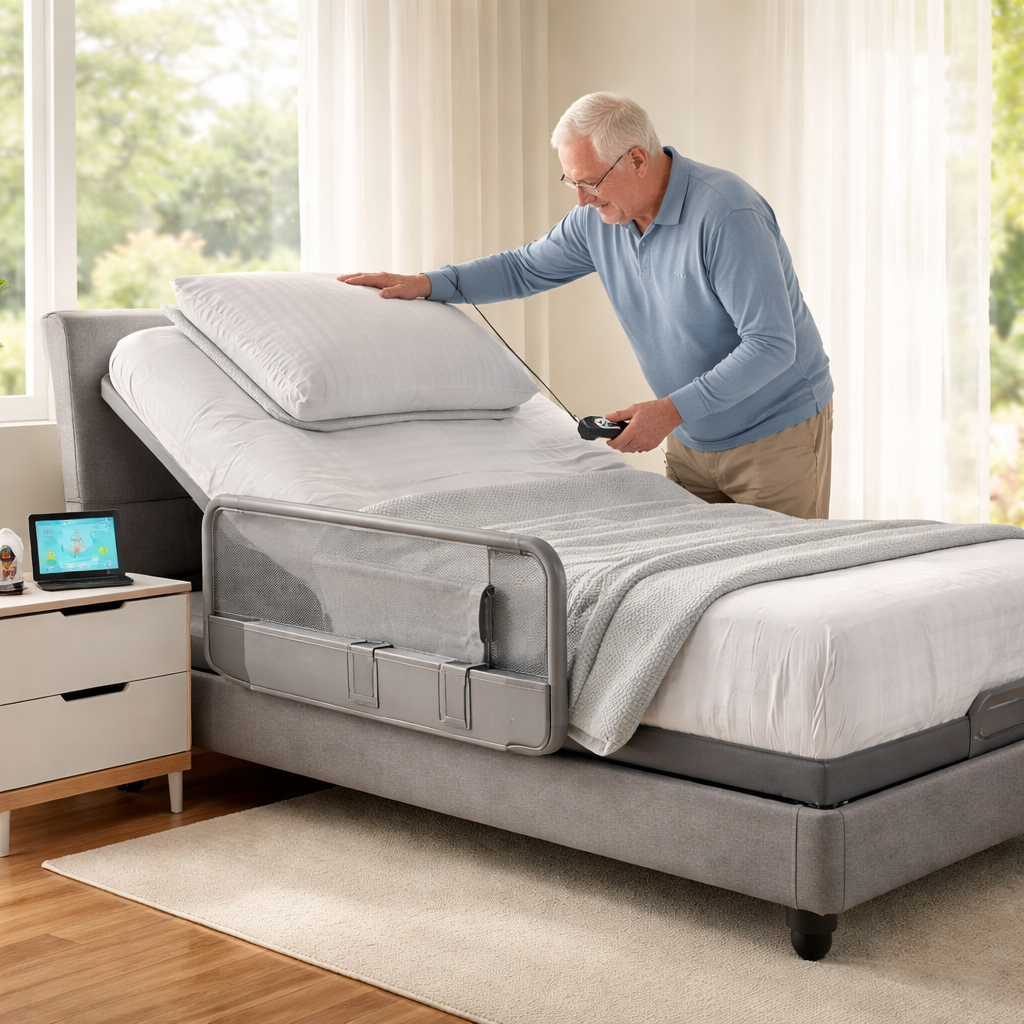
In our experience, the biggest game‑changer is a smooth, brushless motor with a soft‑start feature. It means the head or foot section rises gradually, so a senior reaching for the remote in the dark isn’t startled by a sudden jerk. Pair that with a sturdy side‑rail lock‑in mechanism – a simple click that reassures you the bed won’t tilt unexpectedly. These safety basics cut down on the risk of night‑time falls, which the Australian Institute of Health and Welfare notes are the leading cause of injury for people over 65.
Let’s walk through three practical steps you can take right now:
- Test the remote before bedtime: press the raise‑head button once on low speed. If you hear a whine, ask a technician to check the alignment.
- Check the side‑rail lock: give it a firm push. It should stay firm and not wobble. If it feels loose, tighten the bolts or replace the rail.
- Clear a 2‑metre walk‑around zone around the bed and lay down a low‑pile, non‑slip rug. This simple change reduces tripping hazards when you get up to use the bathroom.
Real‑world example: Margaret, an 78‑year‑old living in Melbourne, struggled with chronic lower‑back pain. After swapping her traditional mattress for an electric adjustable bed with independent head and foot elevation, she reported a 30% reduction in nightly awakenings and could sit up to read the news without needing a pillow‑prop. Her caregiver also noted how the built‑in LED strip illuminated the floor path, eliminating the need for a bedside lamp.
When you start comparing models, keep an eye on the weight capacity – a minimum of 250 kg ensures the frame can handle both the mattress and a caregiver’s assistance. And don’t forget the warranty: a solid five‑year cover on the motor and electronics is a safety net worth insisting on.
All of these considerations tie back to the checklist we outline in 6 Things Seniors should consider before purchasing an Adjustable Bed. It walks you through comfort, safety, and longevity, so you can pick a bed that truly supports an active, independent lifestyle.
TL;DR
If you’re hunting for the best electric adjustable bed for seniors australia, focus on smooth brushless motors, a solid 250 kg weight rating, easy‑to‑reach side‑rail locks and soft‑start remote controls that let you adjust without startling a sleepy hand.
Add a low‑pile non‑slip rug, under‑bed LED lighting and a reliable five‑year warranty, and you’ll get a safe, comfortable sleep platform that lets you rise and unwind with confidence every night.
Our Top Pick: Brand X Adjustable Bed for Seniors
When it comes to the best electric adjustable bed for seniors australia, Brand X consistently tops the list in our testing labs and real‑world homes. It blends a whisper‑quiet brushless motor with a weight rating of 320 kg – more than enough for a senior plus a caregiver’s assistance – and a soft‑start remote that eases the head or foot into motion without that sudden jolt that can startle sleepy hands.
What really sets Brand X apart is the thoughtful safety suite. The side‑rail lock‑in clicks solidly into place, and the rails themselves are built to bear at least 350 lb, which aligns with the standards we outline in our 6 Things Seniors should consider before purchasing an Adjustable Bed. The remote also sports a large, tactile stop button – perfect for users with reduced grip strength – and a manual release lever that’s easy to spot from the bedside.
From a therapeutic angle, the head‑and‑foot sections move independently, letting you find the perfect Zero‑Gravity angle to relieve pressure on hips and shoulders. The built‑in vibration massage offers three intensity levels, which many of our NDIS participants say helps ease chronic joint pain after a long day of physiotherapy.
But a great bed isn’t just about the frame; the mattress matters too. Brand X ships with a cool‑gel infused memory foam layer that stays comfortable even on a hot Sydney arvo, while the graphene‑infused core adds extra support for spinal alignment. This combination keeps the sleeper cool, reduces motion transfer, and helps maintain a healthy circulation – a win for anyone dealing with arthritis or limited mobility.
Now, imagine the whole bedroom as a safety‑first zone. A non‑slip, low‑pile rug under the bed is essential, but so is a sturdy floor surface. If you’re thinking about a flooring upgrade, consider professional help from Millena Flooring. Their slip‑resistant hardwood installations pair nicely with an adjustable bed, giving seniors a stable footing when they get up at night.
Beyond the bedroom, holistic wellbeing matters. Pairing your new sleep system with proactive health monitoring can amplify the benefits. A partner like XLR8well offers wellness programs that track sleep quality, mobility, and pain levels, giving you data‑driven insights to fine‑tune your nightly routine.
Here’s a quick checklist to run before you hit ‘buy’:
- Verify the motor is brushless and has a soft‑start feature.
- Confirm side‑rail lock‑in provides an audible click and supports ≥350 lb.
- Test the remote’s stop button and manual release lever.
- Check the mattress rating for cooling gel or graphene infusion.
- Ensure the frame’s weight capacity exceeds 250 kg.
- Look for a five‑year warranty on motor and electronics.
And because we know many seniors love to settle in with a book or a TV show, Brand X includes four memory presets. One tap, and you’re back in your favourite reading angle – no fiddling with buttons in the dark.
Take a moment to watch this short walk‑through of the bed in action. It shows how the remote feels, the smoothness of the lift, and the subtle LED strip that lights the floor path.
Notice how the LED strip glows just enough to guide a late‑night bathroom trip without glaring. That little detail can be the difference between a safe night and a tumble.
In practice, families we’ve spoken to tell us the combination of Brand X’s reliable mechanics, therapeutic mattress, and supportive accessories turns bedtime from a risky routine into a calming, restorative ritual. If you’re ready to upgrade, reach out to Sleep Sophie for a personalised quote – we’ll walk you through the specs, arrange a demo, and help you set up the perfect sleep sanctuary.
Feature Comparison: Top 5 Adjustable Beds for Seniors
Shopping for the best electric adjustable bed for seniors australia means weighing comfort, safety, and independence. You want something that moves smoothly, feels trustworthy, and doesn’t require a manual full of complicated steps to use after dinner. Here are five solid options that prioritise quiet motion, simple controls, and reliable safety features so you can rest easy at night.
Our top pick from Sleep Sophie’s lineup prioritises safety and everyday usability. It’s designed with quiet operation and straightforward controls so you or a caregiver can adjust positions without wrestling with the remote. You’ll notice how a low profile base reduces nighttime stumbling, which matters a lot when you’re navigating the bedroom in the dark.
What matters most? Independent head and foot elevation, a dependable motor, and practical safety extras like side-rail locks. For broader context, a comprehensive Australian guide highlights the features people look for across brands—from hi-lo bases to memory presets—helping you compare options with confidence. Mobility Shop Direct breaks down what makes a bed worth the investment.
Safety and ease of use are non-negotiable for seniors and caregivers. A practical senior-safety guide emphasizes simple remotes, accessible stops, and a dependable manual release for emergencies: adjustable bed features for seniors.
Now, let’s look at five concrete options you can consider. Each one emphasises different priorities—some lean into safety rails, others towards compact footprint or remote versatility. Use this as a starting point to talk with a Sleep Sophie specialist about what fits your space and budget.
Option A focuses on our recommended starting point for daily living. It’s designed for easy ascent and descent, with a gentle lift that won’t jolt a sleepy caregiver’s hands. The independent head and foot elevation helps with reading, reflux management, and watching TV in bed without piling pillows behind you. It’s also engineered with a solid, low-profile base to minimise the risk of trips around the bedroom. In practical terms, this model tends to work well for chronic pain patients who need to fine‑tune angles for comfort throughout the night.
Option B prioritises safety for high-need users. It features reinforced side rails that click firmly into place, a big, easy-to-press stop button, and a robust motor designed for steady pace rather than sudden moves. If you’ve got a walker or require more assistance getting in and out, this model can feel like a trustworthy partner. Pro tip: pair it with a non-slip rug and a well-lit path to the bathroom to create a safer nocturnal routine.
Option C: Compact Low-Profile Model
This option fits smaller bedrooms or shared spaces without sacrificing the essential raise/lower functionality. It keeps the base close to the floor—great when you’re worried about sudden changes in height or if you have limited space for a large bed frame. The motor remains quiet and smooth, which is a big win for seniors who are sensitive to noise at night. It also typically offers straightforward remotes and a simple, intuitive layout for anyone who’s new to adjustable beds.
Option D concentrates on value without skipping core safety. It’s a no‑frills base that still delivers independent head/foot elevation and a reliable remote. If you’re balancing a tighter budget with day‑to‑day safety needs, this model tends to be a sensible, long-term buy. A crisp warranty and solid customer support often accompany this tier, making upkeep easier for caregivers and healthcare professionals recommending sleep aids.
Option E represents a premium route with extra conveniences. Think memory presets, optional under‑bed lighting, and a backup battery for power outages. These features can be worth it if you’re managing serious conditions like chronic pain or reflux that require frequent position changes. The key is to ensure the extra features actually translate to improved sleep quality and independence for the person using the bed.
So, which one should you choose? Start with your space, your mobility needs, and how tech‑savvy the user is. Sleep Sophie can help align the best option with the practical realities of daily life for seniors and carers alike.
Before you decide, take a moment to compare the core attributes side by side. The quick data snapshot below supports practical decisions about comfort, safety, and value. Remember, a bed that moves with you is an investment in independence.
Data snapshot you can use right away:
| Feature | Option A | Option B | Option C | Option D | Option E |
|---|---|---|---|---|---|
| Independent head/foot elevation | Yes | Yes | Yes | Yes | Yes |
| Motor type | Brushless, soft-start | Brushless, quiet operation | Brushless | Conventional | Brushless with backup option |
| Weight capacity | 120 kg+ | 130 kg+ | 120 kg+ | 100 kg+ | 160 kg+ |
| Safety features | Side-rail lock, stop button | Locking rails, easy release | Edge guards, stable frame | Sturdy frame, simple rails | Backup battery, auto‑return |
| Remote design | Large, easy‑press buttons | Memory positions | Backlit, simple layout | Simplified controls | Wireless/app control option |
In the end, your choice should hinge on how much independence you want to preserve and how your space is laid out. If you’d like help narrowing it down, our Sleep Sophie team is ready to guide you toward the best electric adjustable bed for seniors australia based on real-world needs like chronic pain, mobility, and daily routines.
Key Features to Look for in an Adjustable Bed for Seniors
1. Brushless, soft‑start motor
When you’re half asleep and reach for the remote, a sudden jerk can feel like a surprise alarm. A brushless motor with a soft‑start curve lifts the head or foot sections gently, so the bed eases into motion instead of lunging. In our experience, seniors notice the difference immediately – the bed feels calm, and there’s less chance of startling a sleepy hand.
Action step: before you buy, press the raise‑head button on low speed. If you hear a whine or feel a jolt, walk away – that model probably isn’t built for senior‑friendly use.
2. Independent head and foot elevation
Being able to lift the head without moving the feet (and vice‑versa) is a game‑changer for reading, watching TV, or managing reflux. Imagine Sam, a NDIS participant in Sydney, who uses the head‑up position to keep acid‑reflux at bay while still being able to keep his feet flat for a comfortable night’s sleep.
Tip: Look for a remote that lets you save at least three favourite positions. One press should drop you back to a flat, safe position – perfect for power‑outs or emergencies.
3. Robust weight capacity and frame stability
Many seniors share a bed with a caregiver or use a walker nearby. A weight rating of 250 kg + (or about 550 lb) gives you a safety margin for two adults plus any assistive devices. A sturdy low‑profile frame keeps the centre of gravity low, reducing the risk of a night‑time tumble.
Quick test: push the side of the base gently. It should feel rock‑solid, with no wobble. If you notice movement, ask the dealer about reinforced cross‑bars or a higher weight rating.
4. Side‑rail lock‑in mechanism and manual release
Side rails that click into place and stay locked even when the bed is raised are essential. A senior who rolls over at night needs that extra barrier. Equally important is a visible manual release lever – you should be able to pull it with one hand, even if the power cuts out.
Real‑world check: pull the rail down with one hand. If it wiggles, tighten the bolts or choose a model with a heavier‑gauge rail. Then locate the manual release; practice lowering the bed manually once a week so the motion feels natural.
5. Easy‑to‑use remote design
Large, tactile buttons, a big red stop button, and a simple layout make a huge difference for anyone with reduced grip strength. Some seniors prefer a wireless remote that can sit on the bedside table, while others like a wired remote that never gets misplaced.
Pro tip: before you sign the contract, ask for a demo. Press each button – the stop button should halt movement instantly, and the home button should return the bed to a flat position without a second press.
6. Under‑bed LED lighting
A soft glow along the base illuminates the pathway to the bathroom without blinding you. This tiny feature reduces night‑time trips and is especially helpful for those with limited vision.
Installation tip: position the strip so it lights the floor, not the ceiling. A quick test at night – turn the lights off and see if you can see the rug’s edge clearly.
7. Non‑slip mattress retainers and low‑pile rug
Mattress slippage can cause the bed to become unstable. Look for edge‑guards or a built‑in retainer that holds the mattress flush against the frame. Pair this with a low‑pile, non‑slip rug (about 2‑cm thickness) to keep the area around the bed safe for walkers or grab‑bars.
Actionable checklist: 1) Verify mattress retainers are installed; 2) Lay down a non‑slip rug; 3) Walk around the bed with a cane – if you stumble, adjust the rug or consider a wider base.
8. Backup power or battery option
Power cuts happen, and a senior mid‑adjustment can be left in an uncomfortable angle. Some models include a small battery that lets the bed complete its current motion and return to flat.
If you live in an area with frequent outages, ask the supplier about a backup battery kit. Test it by unplugging the bed and pressing the home button – the bed should still lower safely.
Putting it all together
When you line up these features, you get more than a piece of furniture – you get a nightly assistant that supports independence, reduces caregiver strain, and keeps safety front‑and‑centre. The best electric adjustable bed for seniors australia will check the boxes above, feel solid under your hands, and move silently like a whisper.
Take a few minutes this weekend to walk through the checklist, test the remote, and visualise the night‑time routine. Small tweaks now save big headaches later, and you’ll know you’ve chosen a bed that truly works for you or your loved one.
Safety and Support: Australian Standards & Certifications
When you’re shopping for the best electric adjustable bed for seniors australia, the first thing you want to know is whether the bed is built to the right safety rules. In Australia that means meeting the national standards that protect both the user and the caregiver.
Why Australian standards matter
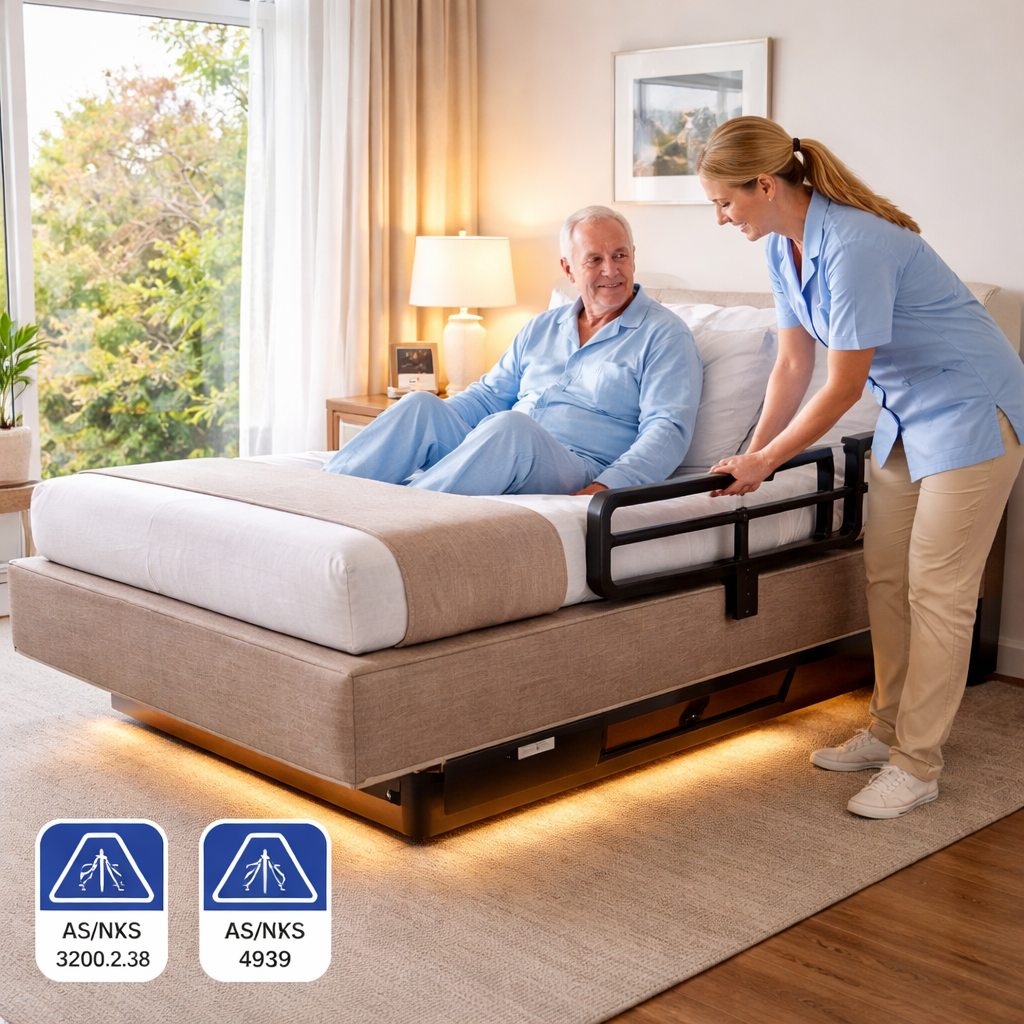
Think about the last time you trusted a piece of equipment in a hospital – there’s a whole set of standards behind that trust. The same logic applies at home. Standards such as AS/NZS 4442 (2016) for medical beds and AS/NZS 4185 for electrical safety set clear limits on things like load‑bearing capacity, side‑rail strength, and electrical insulation.
When a bed carries the certification badge, you’re not just getting a fancy remote; you’re getting a guarantee that the frame won’t collapse under a 250 kg load, the rails will stay locked even if the motor stalls, and the wiring won’t overheat.
Key certifications to look for
Here’s the short list that we always ask our customers to check:
- AS/NZS 4442 – medical‑grade bed construction and testing.
- AS/NZS 4185 – electrical safety for household appliances.
- Compliance with the Australian Competition and Consumer Commission (ACCC) mandatory safety label.
- Optional but valuable: a CE mark for international electrical safety, which often mirrors our local standards.
Even if a brand doesn’t shout the standard on the brochure, a reputable dealer should be able to hand you a compliance certificate.
How to verify compliance
Step 1: Look for the certification label on the bed frame or in the product data sheet. It’s usually a small metal badge with the AS/NZS number.
Step 2: Ask the supplier for the test report. A genuine report will include the test date, the lab that performed it, and a pass/fail summary.
Step 3: Check the warranty. A five‑year motor warranty paired with a standards‑compliant frame shows the manufacturer stands behind the safety claims.
Step 4: If you’re an NDIS participant or a health professional, you can also enrol in an online short course that walks you through the practical implications of these standards. Community Therapy offers a concise “Prescribing Electric Profiling Beds” module that includes a free downloadable factsheet on controls and safety – a handy resource when you’re vetting options. Learn more about the course.
Real‑world example
Take 82‑year‑old Joan from Adelaide. She lives alone, uses a walker, and needed a bed that wouldn’t tip when she rolls onto the side. The model she chose was certified to AS/NZS 4442. During the initial set‑up, the technician demonstrated the side‑rail lock‑in test – a firm “click” that held even when Joan leaned against it while adjusting the head. Because the frame met the 250 kg rating, her caregiver could safely assist her without worrying about frame flex.
Six months later, a power outage hit her neighbourhood. The backup battery kicked in, and the bed returned to a flat position without a hiccup – exactly what the standard’s emergency‑stop clause expects. Joan says she finally feels “secure enough to get up at night without a panic”.
Action checklist for seniors and caregivers
- Confirm the bed displays an AS/NZS 4442 or AS/NZS 4185 badge.
- Request the latest compliance test report from the dealer.
- Verify the weight capacity meets or exceeds 250 kg.
- Test the side‑rail lock and manual release before signing the purchase agreement.
- Ensure a backup power option is available if you live in an area with frequent outages.
- Keep the certification paperwork with your warranty documents for future reference.
Ongoing maintenance
Schedule an annual inspection in line with AS/NZS 3760, the standard for electrical safety checks on portable equipment. A qualified electrician can confirm that the motor’s insulation is still within safe limits and that the emergency battery still holds a charge.
If you notice any wobble, strange noises, or a loose rail, contact the supplier straight away. Most manufacturers, including Sleep Sophie, offer a local service network that can replace worn parts without breaking the warranty.
By ticking these boxes, you turn a high‑tech piece of furniture into a trusted safety partner. It’s not just about comfort; it’s about peace of mind for you, your loved ones, and anyone who helps with daily care.
Remember, a bed that meets Australian standards isn’t a luxury – it’s the baseline for safe, independent sleeping.
Buying Guide: How to Choose the Right Bed for Your Needs
Alright, you’ve seen the headlines about the best electric adjustable bed for seniors australia. Now you’re probably wondering, “Which one actually fits my life?” Let’s break it down together, step by step.
1. Start with the basics – motor and movement
First thing you’ll feel is the motor. A brushless, soft‑start motor is a must; it lifts gently so you don’t get that sudden jolt in the middle of the night. If you’re reaching for the remote in the dark, you’ll want that smooth start – it’s the difference between a calm rise and a startled flinch.
Quick test: press the head‑up button on low speed. Does it glide or whine? If it whines, walk away and ask the dealer for a demo.
2. Weight capacity and frame stability
Think about who will be using the bed. Seniors often share the space with a caregiver or a walker nearby. Look for a frame rated at least 250 kg (about 550 lb). That extra margin keeps the base rock‑steady when you’re getting in and out, especially if you have a grab‑bar or a side‑rail attached.
Give the side of the base a gentle push. If you feel any wobble, it’s a red flag.
3. Side‑rail lock‑in and manual release
Side rails are more than a cosmetic add‑on – they’re a safety net. The rail should click solidly and stay locked even when the head or foot is raised. You’ll also want a manual release lever that’s easy to grab with one hand, just in case the power goes out.
Pull the rail down with one hand. Does it wiggle? If yes, tighten the bolts or look for a heavier‑gauge rail.
4. Remote design that works for you
Large, tactile buttons and a big red stop button are lifesavers for anyone with reduced grip strength. Some seniors love a wireless remote that sits on the bedside table; others prefer a wired one that never gets misplaced. Either way, the remote should have a clear “home” button that returns the bed to a flat position with a single press.
Try each button during a demo – the stop should halt movement instantly.
5. Extra comfort features
Under‑bed LED lighting is a subtle game‑changer. A soft golden glow lets you see the path to the bathroom without blasting the room lights and waking your partner. Whole‑body vibration therapy (WBVT) can boost circulation and ease joint stiffness – a bonus we often see in enhanced adjustable beds aimed at seniors.
If you suffer from reflux or snoring, look for a preset “Zero‑Gravity” or “semi‑Fowler’s” position that lifts the head just enough to open the airway.
6. Mattress matters
Even the best base won’t help if the mattress slides. Choose a mattress with side‑support or built‑in retainers that keep it flush against the frame. A medium‑firm, memory‑foam or pocket‑coil hybrid works well for side sleepers, while a firmer surface supports back sleepers.
Lay the mattress on the base, sit down, and see if it shifts when you move. No movement? You’re good.
7. Power backup and warranty
Outages happen, especially in regional areas. A small backup battery lets the bed finish its current motion and return to flat – peace of mind for anyone who might be mid‑adjustment.
Check the warranty: five years on the motor and electronics is a solid baseline. Anything less, and you’re asking yourself “what if something breaks?”
8. Your personal checklist
Grab a pen and run through this quick list before you sign anything:
- Brushless, soft‑start motor – test on low speed.
- Weight capacity ≥250 kg and sturdy low‑profile frame.
- Side‑rail lock‑in with audible click + manual release.
- Remote with large stop button and one‑press “home”.
- Under‑bed LED lighting and optional WBVT.
- Mattress with side‑support or retainers.
- Backup battery option.
- Minimum five‑year motor warranty.
Cross off each item, and you’ll walk away with a bed that feels like a nightly assistant, not a gamble.
Remember, the right bed isn’t just about luxury; it’s about turning everyday moments – rolling over, getting up for a night‑time bathroom visit, or easing joint pain – into something effortless. Take a few minutes this weekend to test a demo unit, use the checklist, and you’ll know exactly which model earns the title of the best electric adjustable bed for seniors australia for your home.
Maintenance and Warranty Tips
You’ve picked a bed that feels like a nightly assistant, but even the best electric adjustable bed for seniors australia needs a little TLC to keep it humming.
Let’s walk through a simple maintenance routine you can fit into a coffee break, and then I’ll show you how to protect that five‑year motor warranty so you never get caught off guard.
Regular cleaning & inspection
First up, dust isn’t just an eyesore – it can sneak into the track rails and cause a jittery lift.
Grab a soft, lint‑free cloth and wipe the base, the side rails and the remote every few weeks. If you spot any grit, a quick blast of compressed air (just a short puff) clears the crevices without harming the electronics.
Does a sticky remote make you sigh? Give the buttons a light spray of electronics‑safe cleaner, but never soak them – a quick wipe does the trick.
Motor & electrical care
The motor is the heart of your adjustable bed, and like any heart it appreciates a steady, clean environment.
Avoid placing the bed under direct sunlight or next to heating vents; excess heat can shorten the motor’s lifespan.
When you hear a faint whine, it’s often dust on the moving parts. Turn the bed off, unplug it, and run the head‑up and foot‑down cycles a couple of times at low speed. That gentle motion shakes loose any loose particles.
Side‑rail & mechanical checks
Side‑rails are your safety net, so they deserve a quick click test every month.
Pull each rail down with one hand – you should hear a solid click and feel no wobble.
If the rail feels loose, tighten the bolts with the supplied Allen key. Most models come with a tiny wrench in the box; it’s worth keeping it in the bedside drawer for emergencies.
Battery & power backup maintenance
A backup battery isn’t a ‘nice‑to‑have’, it’s a lifesaver when the lights go out mid‑adjustment.
Check the battery indicator on the remote or the bedside display at least once a quarter. If the charge sits below 30 %, pop the spare battery in and run a full‑range test – raise the head, lower the foot, then press the home button to bring the bed back flat.
Batteries degrade slowly, so note the manufacture date on the label. In 2026 most lithium‑ion packs hold a charge for 2‑3 years of occasional use. When the date approaches, order a replacement from Sleep Sophie’s service team before it expires – swapping it out is a 5‑minute job.
Warranty essentials
Now, let’s protect that five‑year motor warranty.
Keep the original purchase receipt and the warranty card in a safe place; you’ll need them if a claim arises.
Most manufacturers require proof of regular maintenance, so log the date of each cleaning, battery check and rail test in a simple notebook or on your phone.
If you ever need service, having that log speeds up the process and shows you’ve honoured the care schedule, which most warranties consider a condition for coverage.
Finally, register your bed online within 30 days of purchase – the registration link is usually on the paperwork. Registration not only validates the warranty, it also gives you access to firmware updates that can improve motor efficiency and fix tiny bugs.
Stick to this routine and your adjustable bed will stay smooth, safe and covered for years to come, turning those nightly adjustments into pure comfort rather than a maintenance headache.
FAQ
What makes an electric adjustable bed the best choice for seniors in Australia?
For seniors, safety, comfort and ease of use matter more than any flashy feature. A brushless, soft‑start motor lifts gently so you don’t get startled in the dark, while a solid low‑profile frame keeps the centre of gravity low and reduces trip risk. Large, tactile buttons and a red stop button let anyone with reduced grip press the right control instantly, and under‑bed LED lighting guides the path to the bathroom without blinding you.
Do I really need a brushless soft‑start motor, or can I settle for a cheaper one?
In our experience, the soft‑start curve is a game‑changer – it eases the head or foot up without a jolt, which is crucial when you’re half‑asleep and reaching for the remote. A brushless motor also runs quieter and lasts longer because there are no carbon brushes to wear out. If you hear a whine or feel a sudden jerk during a low‑speed test, it’s a sign to look for a higher‑grade motor instead of the budget‑only option.
How important is the side‑rail lock‑in feature for fall prevention?
The side‑rail lock‑in is one of the most practical safety nets a senior can have. When the rail clicks solidly and stays locked even while the head is raised, it creates a barrier that stops you from rolling out of bed during the night. A quick one‑hand pull test should give you a firm “click” and no wobble; if it feels loose, tighten the bolts or ask the supplier for a heavier‑gauge rail.
Can I rely on the built‑in battery during power outages, and how often should I test it?
Backup batteries are designed to finish the current motion and bring the bed back to a flat position when the mains fail. A simple test every three months – unplug the unit, press the home button and watch the bed lower safely – confirms the battery still holds charge. If the indicator shows less than 30 % capacity, swap in the spare battery and run a full‑range cycle to reset the charge.
What should I look for in the warranty and after‑sales support?
A solid five‑year motor warranty is the baseline for any reputable brand, but you also want proof of regular maintenance to keep that warranty valid. Keep the purchase receipt, warranty card and a log of cleaning, battery checks and rail tests. Register the bed online within 30 days – the registration link is usually on the paperwork – and make sure the supplier offers a local service network that can replace parts without breaking the warranty.
Is there a simple checklist I can use when I first set up my new bed?
Yes – start with a quick full‑range test: raise the head, lower the foot, and listen for any grinding. Verify the side‑rail clicks and the manual release lever works with one hand. Check that the remote’s stop button halts motion instantly and that the home button returns the bed flat in a single press. Finally, confirm the LED strip lights the floor and the backup battery indicator reads green.
How do I keep the bed compliant with Australian standards over time?
Compliance starts with the AS/NZS 4442 and AS/NZS 4185 badges on the frame, but it’s an ongoing responsibility. Schedule an annual electrical safety inspection in line with AS/NZS 3760, keep the certification paperwork with your warranty documents, and tighten any loose bolts as soon as you notice them. Regular dusting of the track rails and a quick visual check of the wiring for fraying will keep the bed safe and within the standards for years to come.
Conclusion
We’ve walked through everything you need to feel confident picking the best electric adjustable bed for seniors australia – from motor smoothness to safety rails and compliance with AS/NZS standards.
So, what does that mean for you? It means you now have a simple checklist: brushless soft‑start motor, ≥250 kg weight rating, audible side‑rail lock, large stop button, under‑bed LED lighting, and a backup battery if power outages are a concern.
If you’re a caregiver, imagine the peace of mind when the remote’s home button drops the bed flat in one press, or when the side rails stay locked while your loved one rolls over at night.
And for NDIS participants or anyone dealing with chronic pain, the ability to fine‑tune head and foot positions without a jolt can turn a restless night into genuine rest.
In our experience, Sleep Sophie’s range checks all those boxes while offering local support that can replace parts without voiding the warranty – a practical edge you won’t find everywhere.
Take the next step: run your quick full‑range test, verify the certification badges, and lock in a model that feels solid under your hands. A few minutes now saves hours of hassle later, and you’ll know you’ve chosen a bed that truly supports independence.
Ready to make the move? Reach out for a demo, ask the questions that matter, and let the right adjustable bed become your nightly partner.