
Finding the right adjustable bed can feel like a big puzzle, especially if you’re caring for an older loved one. The good news? You don’t need a PhD to sort it out.
In this guide you’ll learn how to match an adjustable bed to a senior’s health needs, bedroom size, budget, and safety goals. We’ll walk through five clear steps, compare the top Australian models, and show you where to get help with funding. By the end you’ll know exactly which bed will give your family better sleep and easier mornings.
Step 1: Assess Your Sleeping Needs and Health Conditions
Before you even look at a price tag, sit down with the senior and ask simple questions. Do they wake up with back pain? Do they struggle to get out of bed? Do they have trouble breathing at night? The answers point you to the most useful positions.
Zero‑gravity is a popular setting that lifts the head and legs to a 120‑degree angle. It spreads weight evenly and eases pressure on the hips, shoulders, and spine. Wikipedia explains why this angle can reduce joint stress. That makes it a strong choice for anyone with arthritis or chronic back pain.
Leg elevation helps with swelling and improves circulation. If the senior has varicose veins or spends a lot of time sitting, a few inches of foot‑up can move fluid back toward the heart. This also cuts down on nighttime leg cramps.
Head‑up positioning is a lifesaver for snorers, people with COPD, or anyone who suffers from acid reflux. Raising the upper body opens the airway and keeps stomach acid where it belongs.
And don’t forget comfort while reading or watching TV. A slight incline means fewer pillows, less neck strain, and a more relaxed posture.
“The best time to start building a sleep‑friendly routine was yesterday.”
When you pair the right position with a flexible mattress, you get the most benefit. Memory foam that’s 20‑25 cm thick bends easily, while a thin pocket‑spring mattress can also work if it’s under 20 cm.
Bottom line:A clear health focus lets you pick the right adjustments and avoids buying features you’ll never use.
Step 2: Identify Essential Features for Comfort and Safety
Now that you know which positions matter, look at the hardware that makes them safe and easy.
First, think about the remote. Seniors need large buttons, a big stop key, and a clear home‑position button. A wireless remote keeps cords out of the way, but a wired one can be more reliable if the battery dies at night.
Second, side‑rails are a must for fall prevention. Look for rails that lock automatically when the bed is raised and that have padded interiors to stop skin from catching.
Third, motor noise matters. A quiet, brushless motor won’t startle a senior waking up in the dark. Soft‑start technology eases the bed into motion instead of jerking it.
Fourth, weight capacity should be at least 120 kg per side. Undersized frames can sag, making it harder to get up and increasing fall risk.
And don’t ignore the mattress‑support bars. They keep the mattress from sliding when the base moves, which is especially important for split‑king setups.
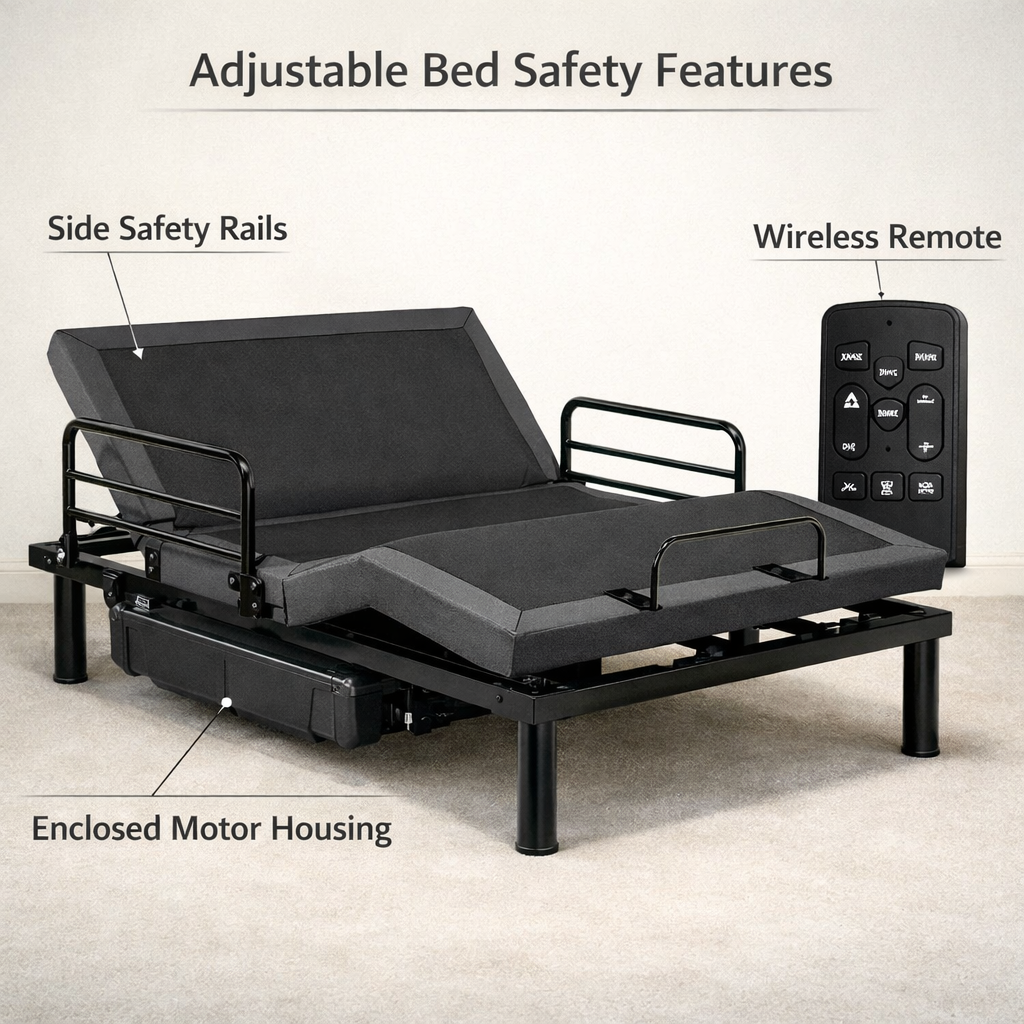
Top brands in Australia often bundle these safety bits into a single package, but you can also buy them separately. For a deeper dive on rail safety, check out adjustable bed safety tips for seniors australia. It walks you through the rail lock test and the weekly motor check.
Bottom line:Choose a bed with easy‑to‑use controls, solid rails, quiet motors, and enough weight capacity to keep seniors safe.
Step 3: Measure Your Space and Choose the Right Size
Even the most comfortable bed won’t help if it doesn’t fit the room.
Start by measuring the floor space from wall to wall and from the door to the nearest fixture. Add at least 60 cm of clearance on each side so a caregiver can move around safely.
Next, decide on the mattress size. Australian standards list twin (38×75 in), queen (60×80 in), king (76×80 in), and split options. A split‑queen lets each side move independently, which is handy if one partner needs a higher head‑up angle than the other.
Remember that the adjustable frame adds a few centimeters to the overall footprint. That’s why you should add 5 cm to each dimension when you compare the frame to the mattress size.
And don’t forget the height. Hi‑Lo models can raise the whole bed up to 60 cm, making it easier to get in and out. If the bedroom has low ceiling clearance, measure the highest point the head end will reach when fully raised.
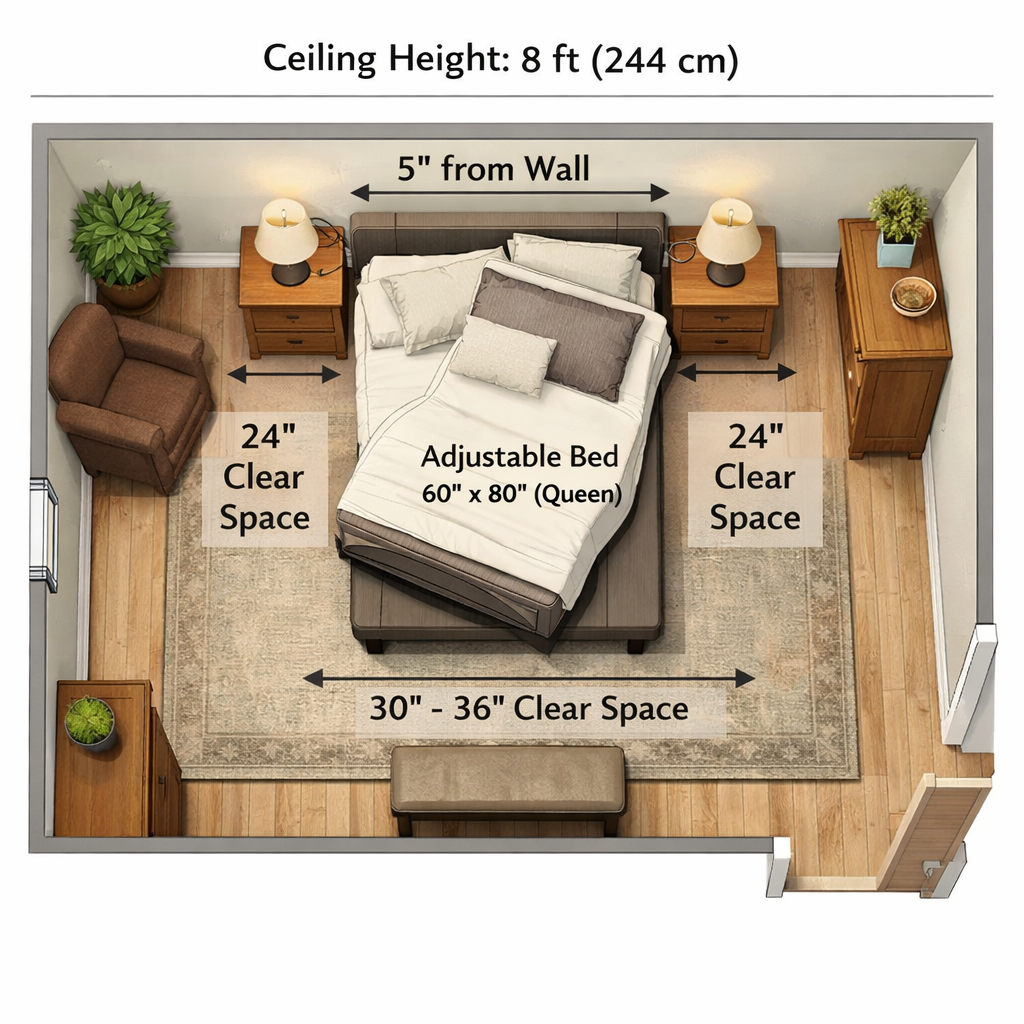
When you’ve got the numbers, write them down and compare them to the specs on each model’s sheet. If a model’s width exceeds your clearance, it’s a deal‑breaker.
That statistic matters because many seniors think a massage will fix back pain, but the core benefit comes from proper positioning. A simple lift‑up bed can give the same relief without the extra cost.
Bottom line:Measure twice, add clearance, and match the frame dimensions to avoid a bedroom that feels cramped.
Step 4: Compare Top Adjustable Bed Models in Australia
Now it’s time to line up the contenders. We’ve pulled data from the biggest Australian retailers and filtered for senior‑friendly features.
All of these models meet the core needs of seniors, but the Sleep Sophie HiLo line stands out because it was built specifically for the senior market. It skips the flashy massage and LED add‑ons that many competitors push, focusing instead on ease of use and reliable safety features.
For a quick checklist, visit 6 Things Seniors should consider before purchasing an Adjustable Bed. The page breaks down the must‑have specs in a printable format.
That means almost 40 % of beds hide important info, which can lead to surprise costs later. Stick with brands that are transparent about motor type, remote style, and weight limit.
Bottom line:Sleep Sophie’s senior‑focused design gives the best mix of safety, simplicity, and support for most Australian seniors.
Step 5: Budget, Funding Options, and Purchase
Price is often the biggest hurdle, but there are ways to stretch your dollar.
Start by setting a budget band. Entry‑level models sit around $1,200, while premium units can climb past $3,000. For most seniors, a mid‑range bed that offers independent lift, quiet motor, and solid rails is plenty.
If the senior is an NDIS participant, the scheme can cover part or all of the cost. The NDIS website outlines eligibility and the typical 21‑day processing time (source). A local occupational therapist will confirm the need and help you claim the funding.
For those without NDIS support, look into Home Care Packages. An ACAT assessment can add a modest budget line for assistive technology, including an adjustable bed.
When you’re ready to buy, ask the retailer about free delivery, assembly, and old‑bed removal. Sleep Sophie offers a same‑day set‑up in most metro areas, which can save you the hassle of hiring a third‑party mover.
Bottom line:Use NDIS or Home Care funding where possible, pick a mid‑range model with the features you need, and bundle the mattress for best value.
Frequently Asked Questions
What is the main benefit of an adjustable bed for seniors?
An adjustable bed lets a senior change head and foot angles with a press of a button, which can ease back pain, improve breathing, and make it easier to get in and out of bed. This flexibility supports better sleep and reduces the risk of falls, especially for those with limited mobility.
Do I need a special mattress for an adjustable bed?
Yes. The mattress should be flexible enough to bend with the base. Memory foam around 20‑25 cm thick or a low‑profile pocket‑spring mattress works best. A stiff, high‑profile mattress can strain the motors and make positioning feel rough.
Are wireless remotes better than wired ones?
Wireless remotes cut down on cord clutter and let you keep the remote on a nightstand. However, they need batteries, so make sure the remote has a low‑battery alert. Wired remotes never run out of power but can be harder to reach.
How do I ensure the bed is safe for night‑time use?
Install side rails that auto‑lock, test the stop button each night, and keep a clear path around the bed. A weekly check of the motor sound and rail tightness adds an extra layer of safety.
Can an adjustable bed help with sleep apnea?
Yes. Raising the head 30 degrees or more opens the airway and can lower snoring and apnea events. Pair the bed with a CPAP machine if prescribed, and use the head‑up setting before bedtime.
What funding options exist for Australian seniors?
Besides personal funds, seniors can apply for NDIS assistance, Home Care Packages, or DVA support if they have a service‑related injury. Each program requires an assessment by a health professional to confirm the need for an adjustable bed.
Conclusion
Choosing an adjustable bed for seniors in Australia doesn’t have to be a guess‑work exercise. By first assessing health needs, then zeroing in on safety features, measuring the bedroom, comparing top models, and finally looking at budget and funding, you can make a confident decision.
Sleep Sophie’s HiLo range hits the sweet spot for seniors , it offers the essential lifts, quiet motors, and auto‑locking rails without the unnecessary tech fluff that drives up price. Pair it with a flexible mattress, use the simple remote, and you’ll see a night‑time routine that feels calmer and a morning that feels easier.
If you’re ready to take the next step, reach out to Sleep Sophie for a free in‑home demo. Their team will help you measure, match, and even apply for any NDIS or Home Care funding you qualify for. A better night’s sleep is just a button press away.