
Big sleep gains in a small space. A good adjustable bed can free up floor space, make a compact room multi‑purpose, and still feel comfy. In 2026, many renters and homeowners want a bed that adapts to work, rest, and play without hogging the room. This guide shows you a usable, step‑by‑step approach to choosing an adjustable bed for a studio, with real‑world layouts, budget checks, and safety tips you can use this week. You’ll learn how to measure, pick the right base, add multi‑functional features, wire in tech safely, and install with an eye on price. We’ll also reference solid research and official product docs so you’re not guessing. By the end, you’ll know how to make the most of a small footprint while keeping comfort at the center of your setup.
These steps aren’t just about buying a base. They’re about creating a system that helps you sleep well, tidy up easier, and adapt as your needs shift. You’ll find usable checklists, simple layouts, and real‑world examples you can try in your own studio today.
To start, think of this as a small‑space plan. You’ll be measuring for fit, choosing a base that reduces stored height, and ensuring your tech remains friendly to nightly routines. You’ll also see how to preserve mattress warranties and avoid noise problems in shared spaces. The goal is a space that’s calm to look at, simple to use, and flexible enough to host a desk, a sofa, or extra storage when you need it. And yes, Sleep Sophie stands out as a strong option for space‑savvy setups, with a product line designed for comfort and multiple positions. Sophie Adjustable Beds can be a solid reference as you compare features and fit.
Step 1: Measure Your Studio and Plan the Layout
Measure first. Floor plans vary wildly from one studio to another. Start with a clean slate: measure length, width, door swing, and the path from the entry to the bed site. Don’t guess. Draw a simple map on paper or on a phone note. Then, mark where windows, outlets, and vents sit. You want room to move around the bed even when it’s raised. With heights, know the ceiling height, the bed’s total footprint, and the stored height of the base you’re considering. In cramped spaces, stored height matters as much as the mattress height. The research context for space savings shows that under‑bed clearance can swing from as low as 6 inches to as much as 15 inches, depending on the base mechanism. That’s a real difference for a studio where you need a work area or a seating nook nearby. Adjustable bed basics help you frame expectations about how you’ll use the space day to day.
Next, sketch a few layouts. In one plan, place the bed against a wall with the headboard near a window, which can provide passive light without blocking a desk area. In another plan, consider a corner setup that allows a foldout desk or sofa to sit beside it when the bed is lowered. If you rent, check ceiling and wall anchors before drilling. A common approach is to leave a 2, 3 foot clear zone along the wall for easy bed movement and to avoid clutter near outlets. Now, decide if you want a built‑in storage approach under the bed or if you’ll rely on a slim chest or cart. The goal is to minimize wasted floor space while keeping circulation intact. Architectural Digest’s space‑saving ideas can spark layout ideas, but tailor them to your room’s exact dimensions.
Tip: measure the doorways to ensure the base and mattress can pass through without disassembly. If you’re a renter, a simple, low‑risk setup helps with inspections and furniture handoff. Consider a four‑foot turning radius and test the path with a rolled mattress or a cardboard cutout of the bed to simulate movement. This is a great moment to think about cable management as well. A quick plan for routing cords behind a bed frame reduces snagging when you push the bed back into place after cleaning.
“The bed should be a tool, not a trap for your space.”
Remember to weave in a couple of usable checks in your final plan. Can you still reach a desk or a chair without stepping around the bed? Can you access the outlets on both sides of the bed for charging devices? A well‑planned layout makes daily use smoother and helps you keep your studio feeling open. For more on space‑saving design concepts, look at the space‑saving guidance in industry sources and compare how different mattress bases affect your walking space when the bed is raised.
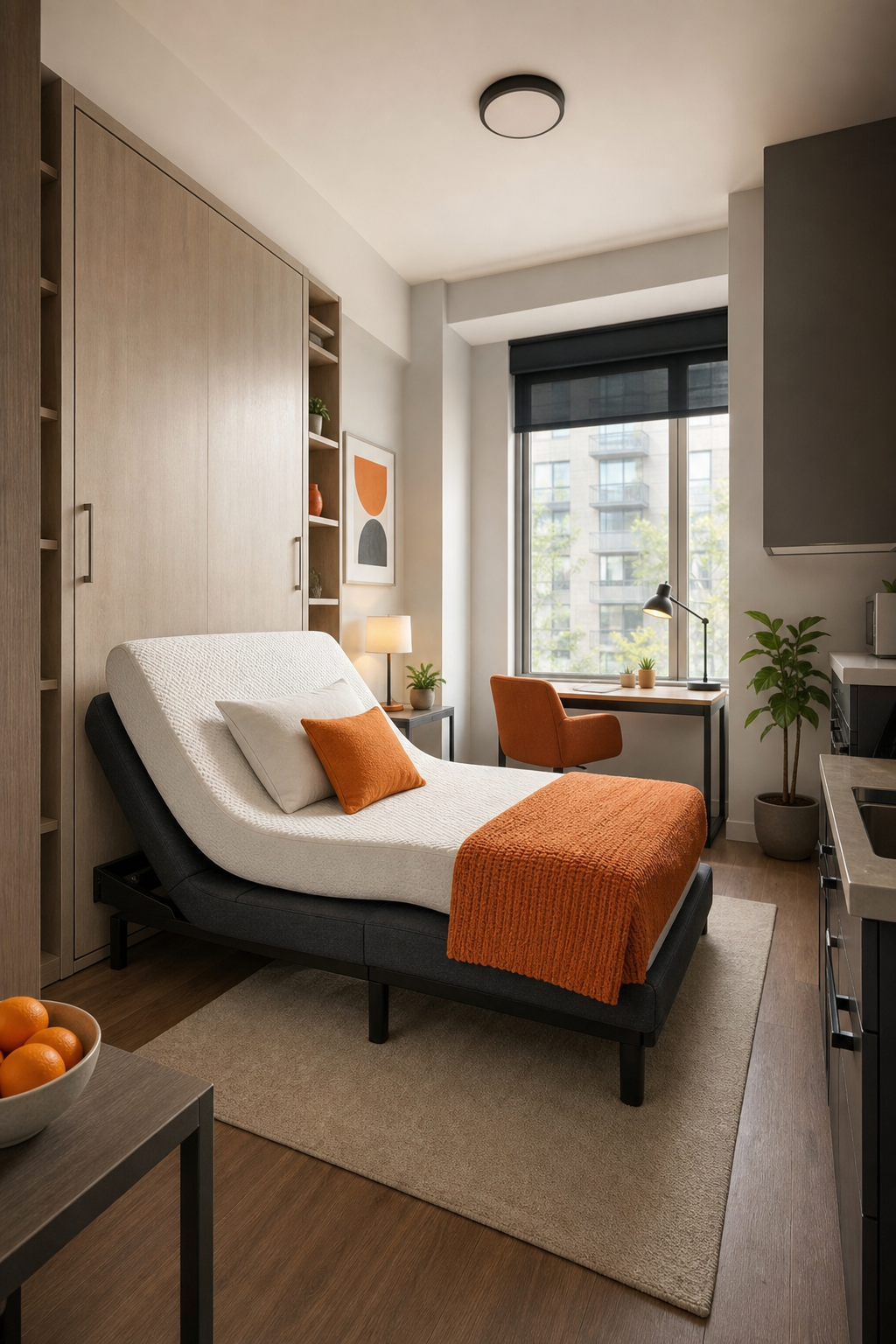
Key takeaway in the layout phase: map, measure, and test flow. A good floor plan reduces clutter and makes room for a small desk or seating area when the bed is lowered. This is the moment to decide how the bed will live in your daily rhythm, not just at night.
Step 2: Choose the Right Support System and Base
The base matters as much as the mattress. In small spaces, the right support system can dramatically reduce the footprint and keep your room airy. You’ll see options that emphasize space savings in different ways: some are zero‑clearance designs that tuck the bed against the wall, others use wall glide or low‑profile frames to pull the mattress toward the headboard while staying slim at the foot. Each system has a different impact on stored height, weight capacity, and how it sits in a studio. The goal is to match the bed base to your mattress type, space, and budget, not to chase the fanciest widget. The best approach is to understand the trade‑offs clearly. For background on different base types, the page on bed frames provides a solid primer, and you can also see usable differences in real‑world setups.
Below is a quick table to help you compare the core base types. Use this as a decision helper during your in‑store or online research. It’s not a price guide, but it does show how each option can affect floor space and access under the bed.
Real‑world tip: if you want to maximize under‑bed storage, sometimes a lower stored height lets you slide a rolling bin or a slim drawer under the bed for clothes or bedding. If you weigh more or have a heavier mattress, a sturdy foundation or a platform with strong slats may be a safer, longer‑lasting pick. Also, check the mattress warranty, some brands require a specific base or base height to keep the warranty valid. For authoritative context on bed bases and design trade‑offs, using a standard reference like the bed frame overview helps you align your choice with common industry practice.
Related context
For powered bases with extra features such as USB ports or under‑bed lighting, you can review vendor docs to confirm compatibility with your mattress and preferred head/foot angles. See the Sleep Sophie pages for product‑level details and how these features map to daily use in compact rooms. Sophie Adjustable Beds can serve as a usable comparison point when you weigh base options against your space needs.
Step 3: Add Multi‑Functional Features (Storage, Desk, Sofa)
In a studio, one bed can do more than sleep. Look for features that turn the space into a daily workspace, a lounge, or small storage. Think of a bed with built‑in drawers, a platform with a desk that folds away, or a bed that lifts to reveal hidden storage. Use the bed as a flexible anchor for your day. Here, you’ll find ideas to combine sleep with a compact desk, a sofa arrangement, or extra storage without creating visual clutter. A number of top reviews emphasize the benefit of hybrid designs that blend form and function in tight rooms. For broader context on choosing an adjustable base with extra features, many buyers turn to vendor guides that discuss USB ports, lighting, and remote presets.
In practice, you can choose a base with a small desk surface that flips up on the foot or head of the bed. That approach saves a separate desk footprint, keeps cords neat, and makes it easier to switch from work mode to sleep mode with a single push of a button. If you plan to lounge in bed for long periods, look for a pre‑set to zero gravity or a gentle incline that won’t leave you feeling backed up after a few hours. The research context shows that many bases offer a range of features such as massage, under‑bed lighting, and predictable presets that help you tailor posture and comfort for different activities.
Usable example: imagine a small studio where you use a Sophie adjustable bed with a built‑in storage drawer, a small wall desk pulled out of the side of the bed, and a compact sofa that can convert to a guest seat. You’ll need careful cable management, a wall outlet plan, and a lighting setup that won’t glare on the screen or your book. To help you visualize this, the modern bed systems from Sleep Sophie provide a clean aesthetic and usable integration with a small desk and storage options. Transform Your Sleep Experience with Sleep Sophie Electric Adjustable Beds gives a sense of how the tech‑rich base can slot into a small room without overpowering the space.
Key visual: a compact work/sleep zone with a low‑profile base, a foldable desk, and a slim sofa that slides into position when the bed is lowered. The goal is a smooth transition between activities, with enough space left for a couple of steps around the bed.
“If the bed can hide a desk, you gain real daily flexibility in a small room.”
Pro Tip: look for a bed with a compact foot area and a mattress retention system to keep sheets and covers in place during movements. This minimizes the need for extra bedding hardware and keeps the area tidy.
Step 4: Integrate Tech and Ensure Safety & Noise Control
Tech adds convenience in small spaces, but it should not wake the neighbors or rob the bed of its quiet, relaxing vibe. USB ports, under‑bed lighting, and remote presets can help, but you’ll want to verify the motor noise level, the remote control reliability, and the bed’s overall safety profile. Look for features that help with safety in night use: low current draw, smooth start/stop, and a design that minimizes pinch points near moving joints. In the step‑by‑step buying context, you’ll find that some bases excel in quiet operation, while others may be louder when adjusting to zero gravity. The authoritative data on base noise levels from independent reviews helps you judge which models best suit apartment living.
Safety matters in a studio. If you share the space, ensure that mechanisms and cords don’t trap or snag a partner’s movement. Check that the bed’s remote has clear, simple presets and a battery backup option for power outages. In the research context, durability and lift capacity matter for long‑term use in homes where people may be heavier or use heavier mattresses. A base with a strong warranty and clear safety certifications is a good sign. Nectar Sleep’s buying guide provides usable coverage on safety features and how to compare models in real life.
Stat snapshot: the 8 items reporting weight capacity show an average around 787.5 lb, with premium models hitting 850, 900 lb in some cases. This is useful when you’re pairing a base with a heavy hybrid mattress. A quiet motor rating around 32, 44 dB is a good benchmark for apartment living. These figures come from consolidated reviews and official product docs in 2026.
Step 5: Install, Assemble, and Optimize for Budget
Now it’s time to put it together and fine‑tune the setup. If you’re renting, you’ll want to minimize tools and keep original components intact. Start with unboxing and laying out the base on the floor in the room where you’ll use it most. Check the manual for any seat belts, retainer bars, or mattress‑retention features that can slow down setup. Then, follow the step‑by‑step directions to attach legs, mount the base on a stable surface, and connect the power supply. It’s usually a straightforward job that takes under 30 minutes per base if you’re not moving a heavy mattress.
Budget alignment is critical in studios. Seek models that deliver good height options and space savings without a premium price tag. The market median hovers around $1,400 for a solid, space‑savvy base, with higher end models offering more features but not always more under‑bed clearance. In practice, you can find a base with a 9, 15 inch stored height and a strong warranty near the middle of the price range. Compare starting prices across models and consider bundles that include delivery and setup to save costs. For more on budget‑friendly options in 2026, see the Sleep Sophie family of products and compare against other bases with similar storage flexibility. Transform Your Sleep Experience with Sleep Sophie Electric Adjustable Beds can be a usable benchmark for budget and features.
Once assembled, test the room’s workflow. Can you slide the bed flush against the wall with the head raised a few inches to clear a desk chair? Do a practice cleanup, pull a small cart or bin under the bed to confirm you’ve kept enough clearance to clean and reorganize without moving the whole setup. A small, well‑planned layout will save you days of rearranging later.
Tip: label the extra cords and use cable ties to route them along the bed frame. A tidy cable plan reduces tripping risk and makes it easier to unplug during power outages. You’ll thank yourself later when you need to swap sheets or adjust a chair.
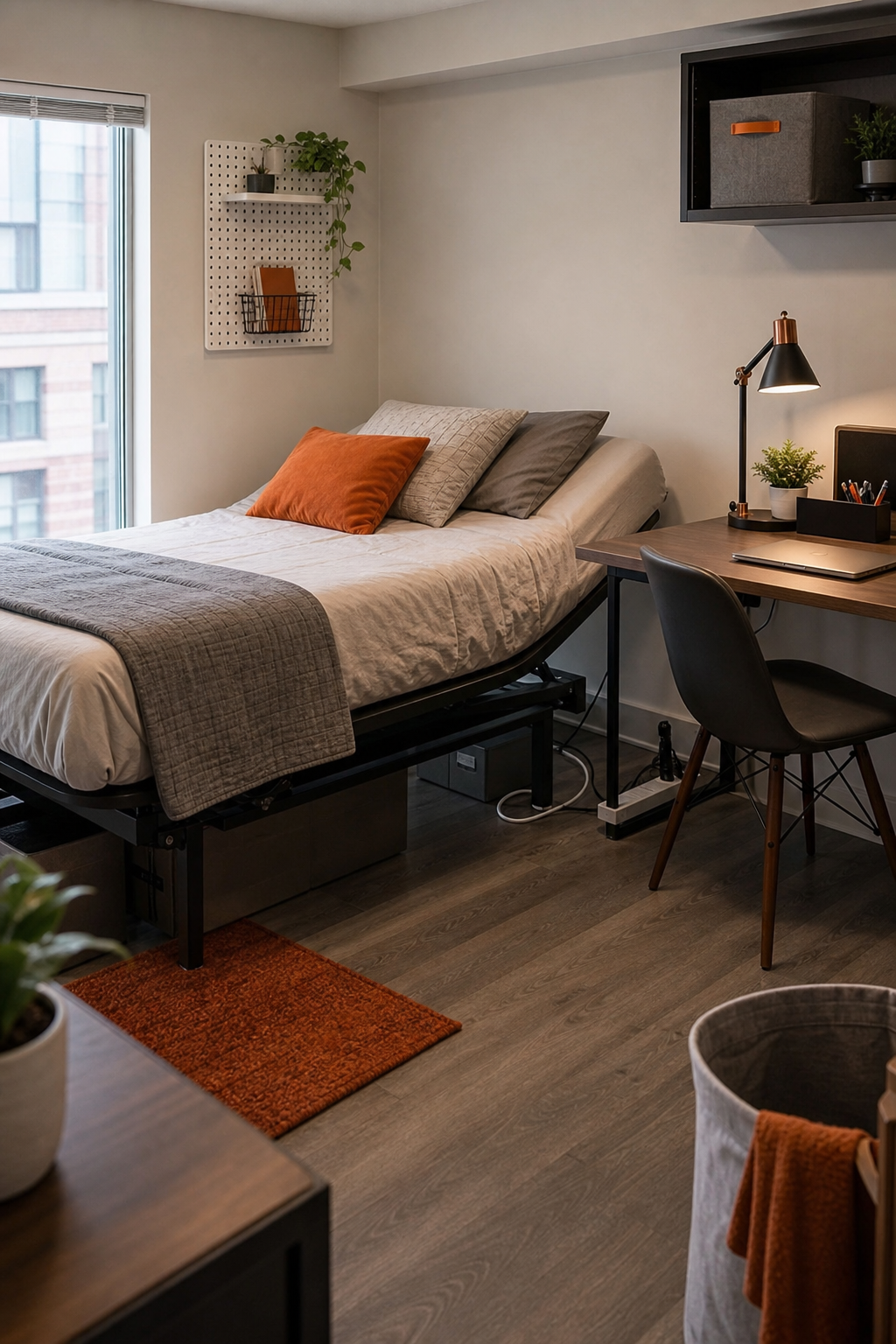
Sleep Sophie can be a good benchmark for value, with features designed to fit compact spaces and usable installation steps. Explore the Sophie Adjustables to compare how these bases fit into a 2026 city‑living layout.
Conclusion
Choosing an adjustable bed for a studio is about balance. You want space, you want comfort, and you want a setup that can adapt as your life changes. Start by measuring and mapping your room to find the best bed location. Pick a base that minimizes stored height, yet still supports your mattress well. Add multi‑functional features only if they save space and simplify your daily rhythm. Then bring in tech and safety with a focus on quiet operation and tidy cable management. Finally, install with a plan that fits your budget, and keep the layout flexible so you can move items around as your routines shift. In 2026, Sleep Sophie stands out as a usable, space‑savvy option that fits many studio setups, while other models can offer comparable features at different price points. Always weigh layout, weight capacity, noise, and warranty as you decide. A thoughtful approach now pays off in a calmer, more usable space tomorrow.
If you’re ready to see real options, review your space, and compare models designed for studio living, you’ll be in a strong position to choose the right adjustable bed for your apartment. For more about how Sophie can fit into your space, explore the Sophie Adjustable Beds page and the Sleep Sophie product family.
Ready to take the next step? Explore the Sophie range and start your space‑savvy setup today.
FAQ
How do I know if an adjustable bed base fits my studio layout?
Start with exact measurements of the bed footprint and stored height. Compare those figures to the floor plan you created. Look for a low‑profile base that hugs the wall when the head is improved and check that moving paths stay clear. If you can slide the bed flush to the wall and still access the outlets, you’re on the right track. This approach helps keep your room feeling open rather than boxed in. The key is matching the base height to the room’s clearance and traffic flow.
Can I use any mattress on an adjustable bed base?
Not always. Most memory foam, latex, and hybrid mattresses work well with adjustable bases, but some innerspring mattresses may require a different setup, and some coils may not flex well. Always check the warranty terms of your mattress and the base. If you’re unsure, consult the vendor docs or contact the mattress maker for compatibility guidance. This ensures you don’t void warranties or compromise comfort.
What multi‑functional features are most useful in a studio?
Look for features that save space: a bed with built‑in storage drawers, a fold‑out desk, or a bed that lifts to reveal a small storage compartment. USB ports and under‑bed lighting can cut clutter by avoiding extra chargers and lamps. Keep the tech in one place, with simple remote presets to switch between work, lounge, and sleep modes. The goal is a smooth daily rhythm, not extra gadgets to manage.
Is a higher price always better for space saving?
No. The research shows that high price doesn’t guarantee more under‑bed space. In fact, some budget options offer lower stored heights, while more expensive models can lock you into a fixed clearance. Focus on the mechanism that reduces height, the range of stored heights, and how easy the base is to move and use in tight spaces. Compare features against price rather than assuming premium means better space.
How do I reduce noise from an adjustable bed base in an apartment?
Choose bases with quiet motors and minimal mechanical play. Look for models with smoother start/stop and fewer vibrations when adjusting. Reading independent reviews that report sound levels helps. Place the base on a sturdy frame or a platform with minimal flex to cut noise transfer. If you share walls, consider separating the bed from the wall with a slim mat or anti‑vibration pad to dampen any echo.
What’s the simplest way to install an adjustable bed base in a rental?
Pick a model with simple instructions, a light base, and straightforward assembly. Ask for delivery with setup included to avoid extra fees. Keep tool use to the basics, likely just a wrench or screwdriver, and avoid drilling into walls. Use removable cable clips or adhesive cable sleeves to keep cords tidy. This reduces the risk of damage during a move and makes future handoffs easier.