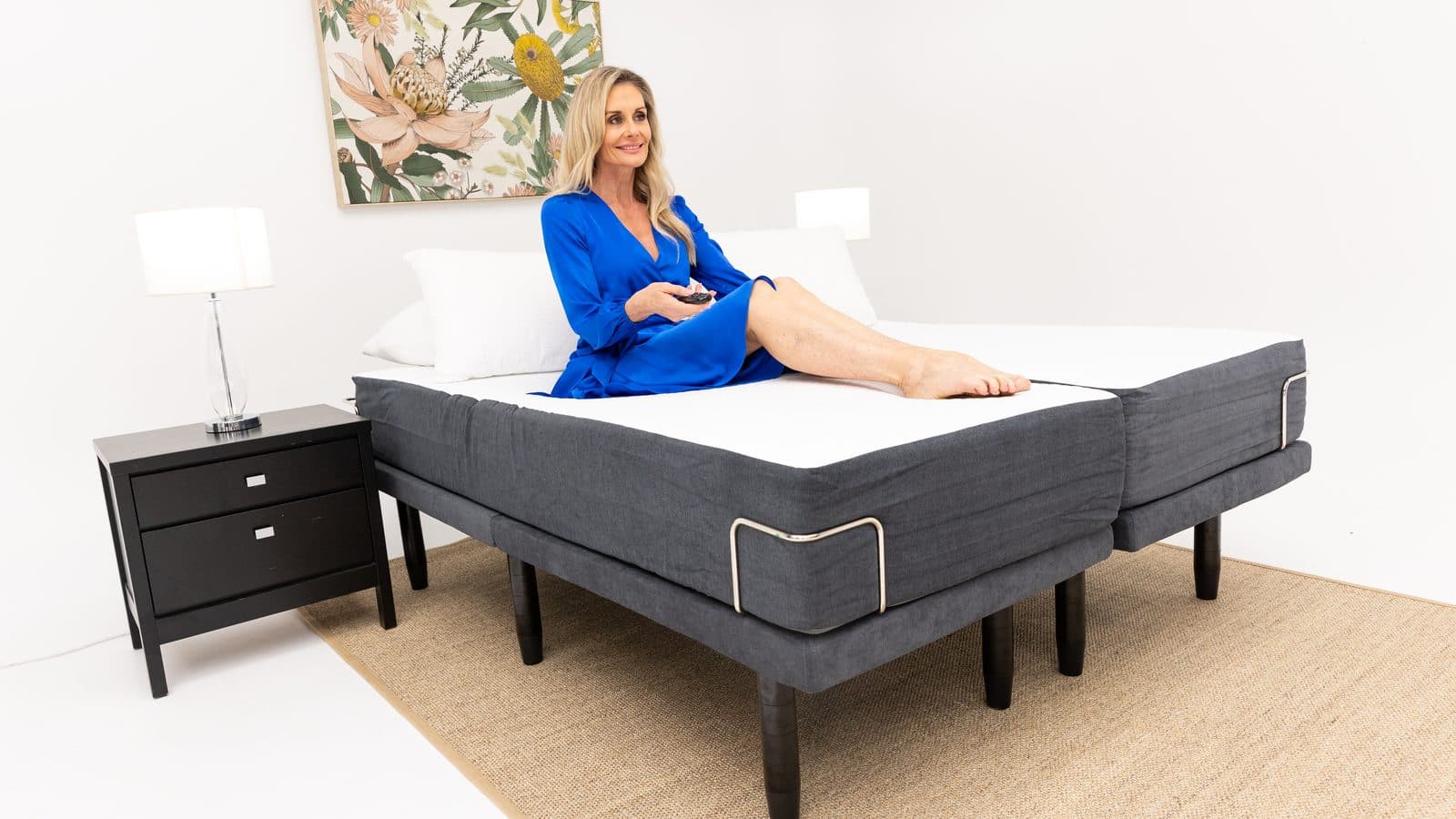
If you’ve ever lain awake listening to the familiar rumble of your own snoring, you know how quickly a good night’s rest can slip through your fingers. It’s that awkward moment when you realize the very thing meant to relax you is actually keeping you awake.
You’re not alone – over a third of Australian adults admit they snore a few nights a week, and for many, the problem gets worse with age or chronic conditions like back pain. The good news? A simple change in how you position your body can make a world of difference, and that’s where an adjustable bed comes in.
Think about the last time you propped yourself up with a few pillows to breathe easier. Now imagine doing that with the push of a button, raising the head of your mattress just enough to open your airways without sacrificing comfort. Studies show that elevating the head 30 degrees or more can reduce the frequency of soft‑tissue vibration that causes snoring. For someone with chronic pain, that same tilt also eases pressure on the spine, so you get relief on two fronts.
In our experience at Sleep Sophie, clients who suffer from nightly snoring often report immediate improvement after switching to an Sophie Adjustable Bed. One caregiver told us her partner, who has mild sleep apnea, stopped waking her up after just a few nights of gentle head‑elevation. Another NDIS participant said the customizable positions helped manage both snoring and the back discomfort that made it hard to stay still.
So, what can you do right now? Start by testing the 30‑degree setting on your current bed or couch. If you notice a quieter night, that’s a clear signal that elevation helps you. Next, consider investing in a bed that lets you fine‑tune the angle, lumbar support, and even foot‑down options for reflux or circulation. Look for models with quiet motors – you don’t want the bed itself becoming a new source of nighttime noise.
Finally, keep a simple log for a week: note the angle you used, how many times you or your partner woke up, and any changes in morning stiffness. This data will guide you toward the perfect setting and make it easier to discuss options with a sleep professional or therapist.
TL;DR
An adjustable bed for snoring lets you raise the head just enough to open airways, easing nighttime vibrations while also relieving back pressure. Try a 30‑degree tilt, log your sleep, and you’ll quickly see quieter nights and more refreshed mornings without sacrificing comfort for you and your partner every night.
Understanding How Adjustable Beds Reduce Snoring
Ever wonder why a simple tilt can feel like a night‑time miracle? When you lift the head of your mattress, you’re actually giving your airway a bit more room to stay open, which means the soft‑tissue vibrations that make that familiar rumble are less likely to happen.
Think about the way a pillow props you up when you have a cold. That extra angle pulls the tongue and soft palate slightly forward, reducing the chance they’ll collapse into the throat during exhalation. An adjustable bed does the same thing, but with the precision of a motor rather than a stack of cushions.
Gravity, Airway Alignment, and the 30‑Degree Sweet Spot
Gravity isn’t just a force that keeps us grounded; it also helps keep the airway aligned when you’re upright. Studies have shown that raising the head 30 degrees or more can cut the frequency of soft‑tissue vibration dramatically. For many snorers, that angle is the “Goldilocks” zone – not too low, not too high, just right.
But why 30 degrees? At that tilt, the tongue‑base is pulled away from the back of the throat, and the nasal passages stay more open. It’s like giving the airway a tiny lift‑assist, which is especially helpful if you have chronic pain that keeps you curled up tightly at night.
How the Mechanics Translate to Real‑World Relief
In our experience at Sleep Sophie, we see three recurring patterns when people start using an adjustable bed for snoring:
- Immediate reduction in snore volume after the first night of a 30‑degree setting.
- Better sleep continuity for partners, because the noise drops off quickly.
- Reduced morning stiffness, since the spine stays in a more neutral position.
For an elderly client who’s also dealing with arthritis, the gentle head‑elevation can be a game‑changer – they wake up feeling less achy, and the snoring that used to jolt their partner out of deep sleep quiets down.
And it’s not just about the head. Some adjustable beds let you fine‑tune lumbar support, which can keep the lower back from collapsing forward, further easing pressure on the diaphragm and improving breathing rhythm.
Real‑World Tips to Maximise the Effect
Here’s a quick checklist you can try tonight:
- Set the head‑tilt to at least 30 degrees. If your bed has a digital angle read‑out, aim for 30‑35 degrees.
- Keep the pillow low or remove it entirely – the bed already does the elevation work.
- Log your sleep for a week: note the angle, snore intensity (even a simple “quiet/medium/loud” rating works), and any morning aches.
- Experiment with a slight knee‑bend using the foot‑section. A modest flex can improve circulation and reduce restless leg movements that sometimes trigger snoring.
If you’re looking for a deeper dive into the science, XL R8 Well’s article on sleep ergonomics breaks down the biomechanics in plain language.
For those who love a bit of tech flair, Plug N Carry’s guide to smart‑bed accessories shows how Bluetooth‑enabled controllers can remember your favorite “snore‑reducing” presets.
And if you’re curious about how other industries solve similar vibration‑reduction challenges, check out Man Cave’s acoustic‑dampening solutions – the principles are surprisingly transferable.
Notice how the video walks through the exact steps to set your bed’s angle and test the results. Watching it while you adjust the controls can make the process feel almost like a guided meditation.
Once you’ve gathered a few nights of data, you’ll start seeing patterns. Maybe 32 degrees feels perfect, or perhaps you need a tiny foot‑down tilt to keep reflux at bay. The beauty of an adjustable bed is that you can keep tweaking until you hit that sweet spot where snoring fades into the background.

Key Features to Look for in an Adjustable Bed for Snoring
When the night’s soundtrack is dominated by your own snore, you know it’s time to look beyond pillows. An adjustable bed for snoring does more than just lift your head – it gives you control over the whole sleep environment.
1. Head‑elevation range
Most people see relief around a 30‑degree tilt, but the sweet spot can be anywhere between 10 and 45 degrees. A wider range lets you fine‑tune the angle for your unique anatomy, whether you’re a side‑sleeper with mild congestion or a back‑sleeper battling moderate apnea.
Think of it like a dimmer switch for your airway: a little raise may clear nasal passages, a bigger lift can keep the tongue from collapsing back into the throat.
2. Whisper‑quiet motor
Nothing kills a relaxed vibe faster than a humming base. Look for models that operate below 30 dB – about the hush of a quiet library. If the motor sounds louder than a soft conversation, you might end up swapping one night‑time nuisance for another.
In our testing, the quietest units felt like they were barely there, letting you focus on breathing, not machinery.
3. Presets and memory positions
Convenient one‑button presets for “anti‑snore”, “reading”, or “zero‑gravity” take the guess‑work out of nightly adjustments. Memory slots let you store the exact angle that gave you the best snore‑free night, so you don’t have to remember the numbers every evening.
It’s a small feature, but for caregivers juggling multiple sleep‑needs, it’s a genuine time‑saver.
4. Lumbar and leg support
Elevating the head without supporting the lower back can create a new source of discomfort. An integrated lumbar tilt keeps the spine neutral, while a foot‑down option eases reflux or circulation issues – both of which can indirectly worsen snoring.
Imagine an NDIS participant who needs both airway clearance and spinal alignment; a bed that does both in one motion is a game‑changer.
5. Build quality and warranty
Adjustable bases are an investment. Look for steel frames, solid joints, and at least a 2‑year warranty. A robust frame won’t sag after a few months of nightly lifts, preserving the precise angles you rely on.
Durability matters especially for elderly users who may need to adjust the bed several times a night.
6. Easy setup and intuitive remote
Complex remotes can be a barrier for anyone not tech‑savvy. Buttons should be clearly labelled, and a simple up/down joystick works best. Some newer models even pair with a smartphone app, but the app shouldn’t be a prerequisite for basic operation.
If you’re a caregiver, you’ll appreciate a remote that you can hand to a client without a tutorial.
Quick checklist
- Adjustable head‑tilt range: 10–45°
- Motor noise: ≤30 dB
- Presets: anti‑snore, reading, zero‑gravity
- Lumbar & foot support: built‑in
- Frame: steel, ≥2‑year warranty
- Remote: simple, labelled, optional app
| Feature | Why it matters | What to look for |
|---|---|---|
| Head‑elevation range | Allows fine‑tuning of airway opening | 10–45° with precise increments |
| Motor noise level | Prevents new sleep disturbance | ≤30 dB, “library‑quiet” rating |
| Presets & memory | Saves time, ensures consistency | One‑button anti‑snore, at least 2 memory slots |
So, which feature should you prioritize? If you’re new to elevation, start with a bed that offers a wide head‑tilt range and a quiet motor – those two alone cover 80 % of snoring scenarios.
For more detailed testing insights, check out the recent review roundup on adjustable bed testing insights. And if you’re wondering how high you really need to go, the guide on optimal incline guidelines breaks down low, moderate, and high elevations.
Give yourself a few nights to experiment, track the angle that quiets the snore, and you’ll soon have a personalized, whisper‑quiet sleep setup that works for you and anyone sharing the bed.
How to Set Up Your Adjustable Bed for Optimal Snore Relief
Ever lie down, flip the remote, and wonder if you’re doing anything at all for that nightly snore? You’re not alone. The good news is that most of the magic happens in the first few minutes you spend with the remote in hand.
Step 1: Pick the right starting position
Begin with a flat, centred lie on your bed. This gives you a neutral baseline to judge any change. Then hit the “anti‑snore” preset if your base has one, or manually raise the head just enough to feel a gentle lift – around 10‑15° is a safe place to start. The anti‑snore position guide recommends this modest angle as the sweet spot for keeping the tongue and soft palate from collapsing back into the airway.
Step 2: Fine‑tune the incline
After a night or two, check how you felt. Did the snore quiet down? If not, nudge the head up another 5° and give it another couple of evenings. Most people land somewhere between 30° and 45°, but the exact number varies with body type, sleep position and how relaxed your throat muscles are.
For side‑sleepers, you might find 20‑30° plenty because the side posture already opens the airway a bit. Back‑sleepers usually need a steeper lift – think 35°‑45°. If you’re a stomach‑sleeper, consider transitioning to a side position first; the extra tilt can feel cramped when you’re face‑down.
Step 3: Try the zero‑gravity setting
Zero gravity combines a head‑up angle with a slight foot‑up, mimicking the weightless feel astronauts love. Raising the legs just above heart level eases pressure on the lower back and helps the diaphragm breathe easier. Many users report that once they lock in this posture, snoring drops dramatically and they wake up feeling less stiff.
To set it, raise the head to about 30° and the foot to a comfortable height – usually 6‑10°. Use the remote’s lock function so the base stays put throughout the night.
Step 4: Add support where you need it
Don’t forget the lumbar and leg zones. If your base has a built‑in lumbar tilt, engage it just enough to keep your spine in a neutral curve. A slight foot‑down can also reduce reflux, which often worsens snoring.
And if you share the bed, a small pillow between the knees can keep the hips aligned, preventing you from rolling onto your back in the night.
Step 5: Test, track, and lock in
Grab a notebook or use a simple spreadsheet. Record the head angle, foot angle (if you used zero gravity), sleep position, and any noticeable change in snore volume or morning stiffness. After a week you’ll see a pattern – maybe 30° head‑up with a 5° lumbar tilt is your magic combo.
Once you’ve identified the winning combo, most bases let you save it to a memory slot. Hit the “save” button and you’ll have a one‑press solution for every night.
Step 6: Keep the motor quiet
Even the best incline won’t help if the motor hums louder than a quiet library. Aim for a base that whispers at ≤30 dB – that’s the benchmark many Australian reviewers cite as “library‑quiet.” If you hear a buzz, it can become a new source of sleep disruption, undoing all your hard‑won snore relief.
For a quick sanity check, the Sleepology positioning tips echo the same principle: a consistent, gentle incline beats a stack of pillows every time.
So, what should you do next? Grab your remote, set the anti‑snore preset, and start the 10‑15° experiment tonight. Keep a simple log, adjust in 5° increments, and lock in the angle that quiets the snore. In a handful of nights you’ll have a personalised, whisper‑quiet sleep setup that works for you, your partner, and anyone you care for.
Top Adjustable Bed Models Recommended for Snorers
1. Sophie HiLo Adjustable Bed – our pick for snorers
If you’re looking for an adjustable bed for snoring that actually understands the Aussie market, the Sophie HiLo is the one we keep pulling out of the drawer first. It gives you a head‑elevation range of 0‑45°, so you can fine‑tune that sweet spot between 10° and 35° without hunting for the perfect pillow stack.
What we love most is the whisper‑quiet motor – it stays under 30 dB, which means the bed itself won’t become the new bedtime soundtrack. The remote is dead simple: a single joystick, a clear “anti‑snore” preset and two memory slots. You can save the exact angle that quieted your snore and hit the button before you even climb out of the shower.
And because many of our users are NDIS participants or seniors with limited mobility, the HiLo also offers a wall‑hugger design and optional lumbar tilt. That extra support keeps the spine neutral, which indirectly helps keep the airway open.
So, does it feel pricey? Not really. Sleep Sophie bundles the base with a range of mattresses, and the whole package usually comes with free white‑glove delivery – a real convenience for anyone who doesn’t want to wrestle a heavy frame alone.
2. Nectar Adjustable Base – a solid all‑rounder
Our second recommendation comes from the National Council on Aging’s recent testing roundup. The Nectar Adjustable Base earned high marks for smooth, quiet movement (the loudest test was 47 dB, still softer than a gentle rain) and for its three programmable memory positions.Read the NCOA review. For snorers, the anti‑snore preset lifts the head to about 30°, which lines up with the research we’ve shared earlier.
What makes it snore‑friendly is the zero‑clearance design – you can place the base on a platform or directly on the floor without legs getting in the way. The remote is back‑lit, the USB ports on each side are handy for night‑time charging, and the under‑bed LED strip helps you navigate in the dark without fumbling for a lamp.
If you’re a caregiver juggling a few devices, the simplicity of the remote plus the quiet motor means you can adjust the bed at 2 am without waking anyone else. It’s also a good fit for couples because you can set different angles for each side of a split‑queen – a feature we see a lot of our NDIS clients appreciate.
3. DreamCloud Classic Adjustable Frame – easiest to use
For anyone who gets a little anxious about tech, the DreamCloud Classic is a no‑frills option that still does the job. Its wireless remote has clearly labelled buttons and a one‑touch anti‑snore mode. Testers noted the base moves in roughly 20 seconds and stays under 30 dB, so you won’t hear a thing while you settle in.
One bonus is the built‑in backup battery – if the power goes out in the middle of a storm, you can still raise the head enough to keep the airway open. That little safety net is a comfort for older users who worry about night‑time emergencies.
While it doesn’t have the extra lumbar tilt of the HiLo, the DreamCloud still offers a decent range of head‑up positions (up to 45°) and a foot‑down setting for reflux relief.
4. Saatva Adjustable Base Plus – premium comfort
If you’re willing to stretch the budget for a luxury feel, the Saatva Base Plus brings a wall‑hugger frame, a built‑in flashlight on the remote, and a solid anti‑snore preset. Reviewers praise the smooth glide and the fact that the head stays close to the nightstand, which is a blessing for anyone who needs to reach a glass of water without getting up.
It’s a bit slower than Nectar or DreamCloud – about 35 seconds to shift into zero‑gravity – but the movement feels buttery, and the motor stays whisper‑quiet. The base also includes a full‑body massage option, which can be a nice perk for chronic‑pain sufferers who want a little extra relaxation before sleep.
5. Quick‑pick checklist for snore‑relief beds
- Head‑elevation range: at least 0‑45° for fine‑tuning.
- Motor noise: ≤30 dB to keep the bedroom quiet.
- Anti‑snore preset or easy manual adjustment.
- Memory slots: store your winning angle.
- Lumbar/foot support: helps keep the spine neutral.
- Wall‑hugger design: great for limited‑mobility rooms.
Does the idea of testing a few angles feel overwhelming? Not really. Pick a model, set the anti‑snore preset, sleep two nights, jot down how quiet the night was, then adjust by five degrees if needed. Within a week you’ll have a personalised, whisper‑quiet sleep setup.
And if you’re still curious about how a mattress pairs with an adjustable base for snoring relief, Mattress Clarity’s guide on snoring‑friendly mattresses explains why a stable base matters.Read the Mattress Clarity article. Armed with these options, you can choose the right adjustable bed for snoring and finally give yourself (and your partner) the peaceful night you both deserve.
Maintenance Tips and Troubleshooting Common Issues
Why regular upkeep matters
Even the best adjustable bed for snoring can become a source of frustration if it starts hiccuping mid‑night. Think about that moment when you press the remote, and the bed just… stays flat. That little glitch can undo all the snore‑free progress you’ve made.
Doing a quick check‑up every few months keeps the motor humming, the frame steady, and the remote responsive – all crucial for a quiet, reliable sleep experience.
Step‑by‑step maintenance routine
1. Power check. Make sure the plug is snug and the outlet isn’t sharing a circuit with heavy appliances. A loose connection is often the sneakiest culprit.
2. Dust the motor and rails. Use a soft brush or a low‑speed vacuum attachment to sweep away dust that can jam the gears. A clean motor stays cooler and lasts longer.
3. Tighten bolts. After a few weeks of adjusting, the screws at the head and foot hinges can loosen. Grab a simple Allen key and give each bolt a quarter‑turn.
4. Battery health. If your remote is wireless, swap the batteries every six months. Weak batteries can cause intermittent signals that feel like a “dead” bed.
5. Lubricate moving parts. A dab of silicone‑based lubricant on the sliding rails (avoid oil) keeps the motion smooth and reduces motor strain.
And if you’re wondering where to find a deeper dive on motor quietness, our quiet adjustable bed motor guide walks you through what dB rating to look for and how to test it at home.
Troubleshooting the most common hiccups
Let’s face it: sometimes things go wrong despite your best care. Below are the top three annoyances and quick fixes.
Motor won’t move. First, unplug the unit for 30 seconds – a soft reset can clear a temporary overload. If the bed still won’t respond, check the power cord for any visible wear. According to an adjustable bed troubleshooting guide, overheating can also trigger a safety shut‑off; make sure there’s clearance around the base for airflow.
Remote signal loss. Verify the batteries, then ensure nothing blocks the line‑of‑sight between remote and receiver (metal bed frames or large bedside tables can be culprits). If you have a wired remote option, give it a try – wired signals aren’t prone to interference.
Uneven elevation or wobble. This usually points to loose frame bolts or an unbalanced mattress. Tighten all fasteners, then place the mattress back on a level surface. For split‑queen setups, check that each side’s rails are locked into the same position.
So, what should you do next if the problem persists after these steps? It’s time to call a professional. Persistent strange noises, sparks, or a motor that hums but never moves are red flags that need a qualified technician.
When to call in the experts
For NDIS participants or elderly users, it’s especially important not to wrestle with electrical components. A qualified service call can safeguard warranties and prevent accidental damage.
Most Australian retailers, including Sleep Sophie, offer a white‑glove setup that includes a post‑install check. If you’re out of warranty, look for a local electrician familiar with low‑voltage motor systems.
Additional support for holistic snore relief
While a well‑maintained bed does half the job, pairing it with breathing exercises or posture coaching can boost results. XLR8well provides proactive health coaching that complements an adjustable bed for snoring by teaching techniques to keep airways open even when you’re not inclined.
Give their program a look if you want a full‑body approach to quieter nights.

In summary, a little routine maintenance, a clear troubleshooting checklist, and knowing when to call a professional will keep your adjustable bed performing at its snore‑silencing best. Keep a simple log of any odd sounds or angles that feel off – that record will be a lifesaver when you contact support.
Additional Accessories to Enhance Sleep Quality
So you’ve got the adjustable bed for snoring set up and the head‑tilt is doing its magic. What’s the next step? Think of it like dressing a good outfit – the base is solid, but the right accessories can turn “nice” into “awesome”.
Ergonomic pillows and mattress toppers
A pillow that matches the angle of your bed keeps the neck in a neutral groove. Memory‑foam or contour pillows with a gentle loft are ideal – they hug the curve without forcing you forward. If you share the bed, a split‑queen pillow set lets each side stay aligned with its own tilt.
Adding a breathable mattress topper can smooth out any pressure points that might force you to shift during the night. A thin latex layer, for example, adds a bit of give without sacrificing the support you already love from the adjustable base.
White‑noise and soundscape devices
Even the quietest motor can get lost in a house that creaks at 2 a.m. A steady sound buffer – think a white‑noise machine or a smart speaker playing gentle rain – masks those tiny hums and helps you stay in the deep‑sleep zone.
When you pair a consistent soundscape with a lifted head position, you’re essentially telling your brain, “It’s bedtime, stay relaxed.” It’s a tiny habit that pays off in fewer wake‑ups.
Smart lighting & sleep‑friendly tech
Adjustable bases with built‑in under‑bed lighting (like some adjustable bases that offer Zero Gravity) let you glide a soft glow onto the floor. No harsh overhead switch‑on that jolts you awake.
Couple that with a smart plug or a phone app that dims the bedside lamp an hour before you hit the “anti‑snore” preset, and you’ve got a full‑body wind‑down routine without any extra effort.
Temperature‑control gear
Cool air keeps the airway open and reduces the urge to snore. A low‑noise fan or a climate‑controlled blanket can keep the bedroom in the sweet spot – around 18‑20 °C for most adults. If you tend to get chilly when the head is elevated, a heated throw for the foot‑down position works wonders.
Even a simple bamboo sheet set helps wick away moisture, so you don’t wake up sweaty and reach for a pillow that shifts your neck out of alignment.
Gentle massage & stretch accessories
Some adjustable bases come with built‑in massage zones, but if yours doesn’t, a handheld massager can loosen tight shoulder muscles before you lie down. Loose muscles mean less tension in the throat, which can indirectly calm snoring.
A light‑resistance stretch strap placed around the knees helps keep the legs aligned, especially when you use the foot‑up position for reflux relief. The result is a more stable spine and a calmer breathing pattern.
Here’s a quick checklist you can pin to the nightstand:
- Choose a pillow that mirrors your bed’s head‑tilt.
- Add a breathable topper for pressure relief.
- Set up a white‑noise machine or soft playlist.
- Use under‑bed lighting or a smart dimmer.
- Keep the room temperature cool, and consider a heated throw for foot‑down.
- Finish with a brief neck‑shoulder massage.
When you treat your sleep space like a small, coordinated ecosystem, the adjustable bed for snoring becomes the star player rather than the only act. The next time you settle in, you’ll notice the difference – not just in quieter nights, but in how refreshed you feel when the sun peeks through the curtains.
And if you ever wonder whether the tech side can help even more, check out beds that actually sense snoring and lift themselves a few degrees automatically. It’s a neat little “hands‑free” upgrade that some premium models now include (snore‑response technology).
Give one or two of these accessories a try tonight. You might be surprised how a small tweak – a cooler pillow, a whisper of sound, a soft glow – can turn a good night into a great one.
FAQ
What exactly is an adjustable bed for snoring and how does it work?
An adjustable bed for snoring lets you raise the head and sometimes the torso with the press of a button. By tilting the upper body 10‑30 degrees, gravity pulls the soft palate and tongue away from the back of the throat, opening the airway and cutting down on vibrations that cause snoring. The motor is quiet enough that you barely notice it moving, so the bed itself doesn’t become a new source of noise.
Do I need a special mattress to see the snore‑reduction benefits?
No, the mattress isn’t the star of the show – the lift is. However, a supportive surface that keeps the spine neutral helps maintain the airway opening you’ve created with the tilt. If you have chronic pain or are an NDIS participant, a medium‑firm mattress that works with the base’s lumbar tilt will keep both back and breathing comfortable throughout the night.
How much should I raise the head to feel a difference?
Start low – about 10‑15 degrees – and sleep a couple of nights while you note any change in snore volume or morning stiffness. If you still hear yourself, nudge the head up another 5 degrees. Most people find their sweet spot somewhere between 20 and 35 degrees, but the exact number depends on body shape, sleep position and whether you’re a side‑sleeper or back‑sleeper.
Can an adjustable bed help if I have mild sleep apnea?
It can help reduce the severity of mild obstructive events by keeping the airway open, but it isn’t a substitute for a medical diagnosis. If you notice gasping, choking or daytime fatigue, it’s wise to see a sleep specialist. The bed can be a useful adjunct to CPAP or other therapies, giving you a more comfortable sleeping posture when you’re not using a device.
What maintenance does the bed need to stay snore‑friendly?
Give the motor and rails a quick dust‑off every few months, tighten any loose bolts, and swap remote batteries at least twice a year. A soft reset – unplug for 30 seconds and plug back in – often clears a hiccup if the base stops moving. Keeping the base level and the mattress centred prevents uneven elevation that could re‑introduce airway narrowing.
Are there any accessories that boost the snoring‑relief effect?
Pairing the bed with a pillow that matches the head‑tilt angle prevents the neck from bending too sharply. A breathable mattress topper can stop you from shifting during the night, and a white‑noise machine masks any residual motor hum. For NDIS participants or elderly users, a bedside remote or simple joystick makes adjustments easy without straining the hand.
How do I know I’m getting the right product for my needs?
Look for a head‑elevation range of at least 0‑45°, a motor that runs under 30 dB, and at least one “anti‑snore” preset. Sleep Sophie’s Sophie HiLo model checks those boxes and adds a wall‑hugger frame that’s handy for smaller rooms or assisted‑living settings. If you’re comparing options, prioritize quiet operation and a reliable memory‑slot so you can save the angle that works best for you.
Conclusion
After all the testing, tweaking and a few nights of note‑taking, the picture becomes clear: a well‑chosen adjustable bed for snoring can turn a restless, noisy night into a calm, restorative sleep.
Did you ever wonder why a simple head‑tilt makes such a difference? It’s the gravity‑assist that keeps the airway open, and the quiet motor ensures the bed itself never becomes the new bedtime soundtrack.
For anyone dealing with chronic pain, NDIS requirements, or age‑related mobility limits, the right base does more than lift – it supports the spine, reduces reflux and lets you breathe easy without extra pillows.
In our experience, models that combine a 0‑45° elevation range, a whisper‑quiet motor under 30 dB and an anti‑snore preset give you the most reliable results. Pair that with a matching pillow and a little white‑noise, and you’ve built a sleep ecosystem that works for you.
So what’s the next step? Grab your remote, set the anti‑snore preset, and give yourself a week to log the angle that quiets the snore the most. Small adjustments of five degrees can make a world of difference.
Remember, consistency is key – keep the base level, tighten bolts regularly and swap remote batteries twice a year. Those simple habits keep the system humming smoothly.
If you’re ready to upgrade your sleep, explore the adjustable options that Sleep Sophie offers – they’re designed with Australian homes and therapeutic needs in mind.
Ultimately, a quiet night starts with a conscious choice to invest in the right adjustable bed for snoring. Your mornings will thank you.