
Adjustable Bed for Sleep Apnea Relief: A Practical How‑To Guide
14 February 2026 · Nathan Kerrins · Updated 23 July 2026
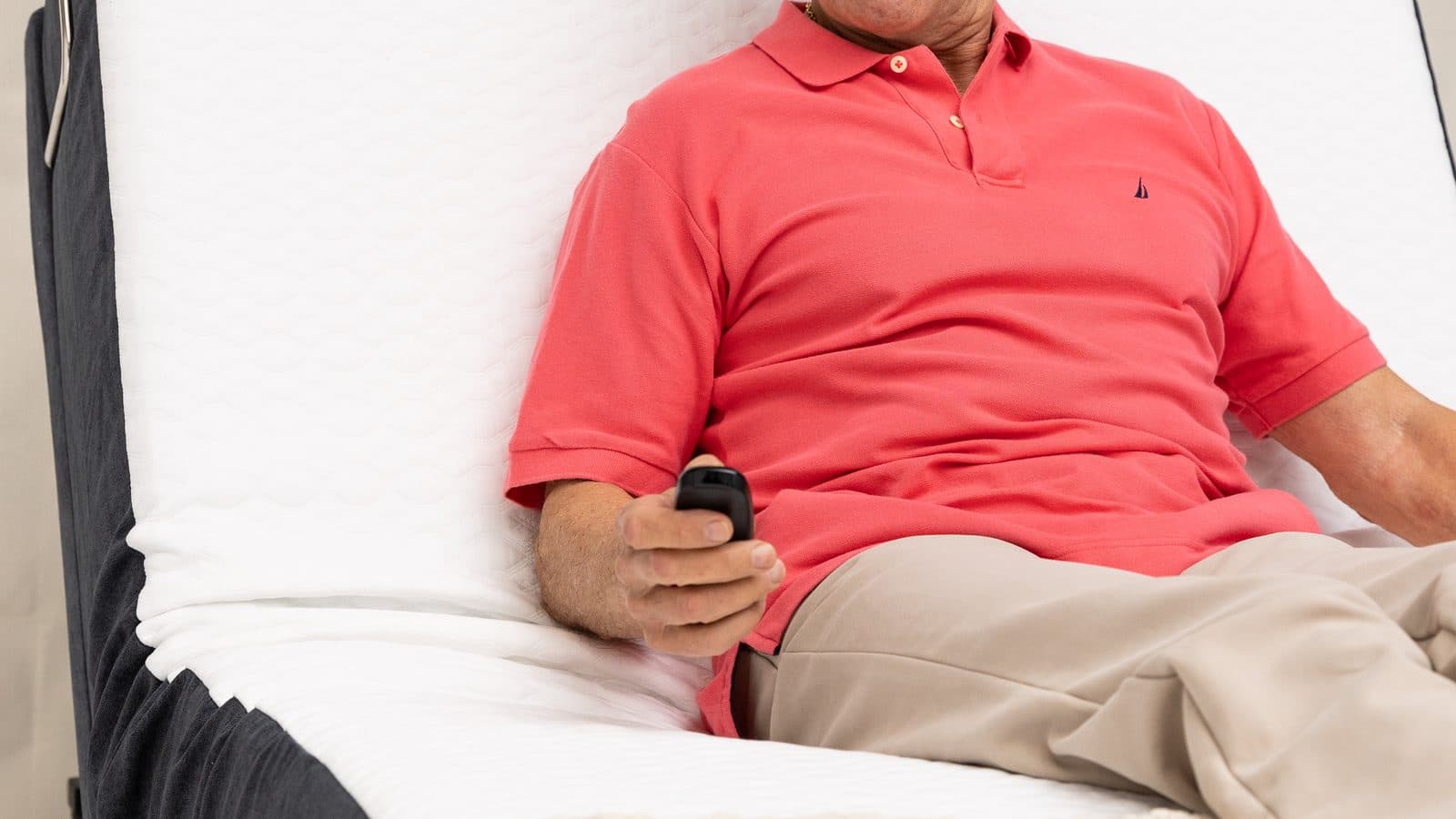
Ever woken up feeling like you’ve barely breathed, only to realise the night’s been a battle with snoring and that tight‑chest feeling?
If you’ve been diagnosed with sleep apnea—and suspect you might be—those restless nights can feel endless. The airway collapses, oxygen dips, and the brain jolts you awake, leaving you exhausted before the day even begins.
What if you could simply tilt the head of your bed and give those airways a clear path? Raising the upper body by 30‑45 degrees can keep the throat open, reduce apnea events, and cut down on snoring. An adjustable bed lets you find that sweet angle without the clunky wedge pillows that slip off in the night.
Picture a caregiver looking after an elderly parent who struggles with mild apnea and chronic knee pain. By switching to an adjustable base and setting a gentle incline, they can sleep deeper and wake with less joint stiffness. The bed’s smooth lift also makes getting in and out of bed safer for limited mobility.
Another scenario: an NDIS participant with CPAP intolerance might find that a modest head‑up position reduces their reliance on the machine. Using the bed’s preset “Airway Boost” setting lifts the torso just enough to keep the airway open while still allowing a CPAP mask to stay snug.
Here are three quick steps to get the most out of an adjustable bed for sleep apnea relief:
- Start with a 30‑degree incline; adjust in 5‑degree increments until you feel a clear breathing flow.
- Pair the tilt with a supportive pillow that follows the curve of your neck, avoiding pillows that push the head forward.
- Use preset positions—many models offer “Sleep Apnea” or “Elevated Head” modes that you can activate with a single button.
When you’re ready to explore the science behind these positions, check out Solving Sleep Issues: The Power of Adjustable Beds for a deeper dive into how elevation tackles snoring, reflux, and apnea.
So, if you’ve been tossing, turning, and counting endless minutes, consider that a simple lift could be the game‑changer you’ve been searching for. Let’s get you breathing easier tonight.
TL;DR
An adjustable bed for sleep apnea relief lets you tilt the head just enough to keep airways open, cutting snoring and nighttime breathing pauses, and reducing morning fatigue.
Start at a gentle 30‑degree incline, fine‑tune in five‑degree steps, and pair it with a supportive pillow for a calmer, more restorative night.
Step 1: Choose the Right Adjustable Bed Frame
Alright, picture this: you’ve just read about the magic of a 30‑degree head‑up tilt, and now you’re standing in a showroom, eyeing a wall of adjustable bases. It can feel a bit overwhelming, right? Don’t worry – we’ve been there, and we’ll walk through the decision‑making process together.
First thing’s first: think about the range of motion. Not all bases lift the head the same way. Some give you a gentle 15‑degree incline, while others crank up to 70 degrees. For sleep‑apnea relief, you’ll want a model that reliably hits that 30‑45 degree sweet spot and lets you fine‑tune in five‑degree steps. A motor that whirrs quietly is a bonus – you don’t want a bedtime soundtrack of clanking gears.
Next, consider the weight capacity and size. If you’re sharing the bed with a partner, a heavier duty frame prevents wobble when both of you shift. Look for a frame that supports at least 300 kg if you have a larger mattress or if you plan to use the bed for therapy sessions. And remember the mattress size – a queen or king will give you more room to adjust without feeling cramped.
Now, let’s talk about control options. Do you prefer a sleek wireless remote, a wall‑mounted panel, or even a smartphone app? For caregivers, a remote that can be placed on a bedside table is handy; they can adjust the angle without bending over. Some models even let you set custom presets – perfect for “Airway Boost” or “Relaxed Reading” positions.
So, what about the build quality? Look for a steel frame with a solid, reinforced base. A low‑profile design keeps the bedroom looking tidy, while a sturdy construction means the motor won’t overheat after a night of gradual adjustments. If you’re in the NDIS or need a therapeutic solution, check that the frame is certified for medical use – that usually means it meets higher safety standards.
And here’s a tip that often gets overlooked: Sophie Adjustable Beds come with built‑in lumbar support mechanisms. While the head‑up tilt helps keep the airway open, a supportive lower back can prevent you from sliding down the mattress when the angle changes, which is especially helpful for seniors or anyone with chronic pain.
Do you have a favourite pillow? Pair your new frame with a contour pillow that follows the curve of your neck. That combo helps maintain alignment, so the airway stays open without forcing your head forward.
Still not sure which model fits your budget? Think about long‑term value: a quiet motor, a generous warranty (three years is common), and easy‑to‑replace parts can save you money down the road. If you’re a caregiver, ask the retailer about service plans – they can be a lifesaver when a motor needs tweaking.
Take a moment to watch – it’s only a couple of minutes, but it’ll help you spot the motor noise level, the remote layout, and how smoothly the bed transitions between positions.
Once you’ve zeroed in on the right frame, give yourself a quick checklist before you hit “order”.
- Can it achieve at least a 30‑degree head‑up position?
- Is the motor rated for quiet operation (< 40 dB)?
- Does it support the mattress size you need?
- Is there a warranty of three years or more?
- Are the controls easy for you or a caregiver to reach?
If you can answer “yes” to all of those, you’re probably on the right track.
When the bed arrives, give the motor a few gentle cycles before you actually sleep on it – this eases any initial stiffness and lets you get a feel for how the presets work.
Finally, remember that the bed is only one piece of the puzzle. A calm bedroom environment, a supportive pillow, and perhaps a nightly routine that eases you into sleep will amplify the benefits of that perfect head‑up angle.
Ready to make a choice? Trust your gut, lean on the checklist, and know that a well‑chosen adjustable bed can become a quiet, nightly ally in your sleep‑apnea journey.
Step 2: Select an Appropriate Mattress for Apnea Relief
Now that you’ve got the right frame, the next piece of the puzzle is the mattress you’ll actually lie on. It might feel like a “nice‑to‑have,” but trust me – the right mattress can be the difference between a night of shallow breaths and a night of truly restful sleep.
Ever notice how a too‑soft bed makes you sink in, almost like you’re being swallowed? That extra dip can push your neck forward and narrow the airway just when you need it open the most. On the flip side, a mattress that’s overly firm can create pressure points that force you to toss and turn, breaking that precious head‑up angle you just set.
Why the mattress matters for apnea
Sleep apnea is all about keeping the airway clear. A supportive surface helps maintain a neutral spine, which in turn lets the throat stay open. Researchers point out that a mattress that balances contouring with firmness can reduce the number of micro‑arousals that happen when you’re constantly readjusting your position.
In fact, a quick read on Sleepopolis’s best‑mattress‑for‑sleep‑apnea guide highlights that side‑sleepers with a medium‑firm hybrid often see the smoothest breathing patterns because the coils give lift while the foam cushions the hips and shoulders.
And if you’re wondering whether a memory‑foam topper will help, the answer is “maybe.” It can add contour, but it can also trap heat – a problem for anyone who already wakes up feeling restless.
Key features to look for
- Medium‑firm feel (around 6–7 on a 10‑point scale): firm enough to keep you from sinking, soft enough to relieve pressure.
- Hybrid construction: innerspring coils for responsive lift, topped with a breathable foam layer for pressure relief.
- Cooling technology: gel‑infused or open‑cell foam helps keep the mattress surface under 27°C, which many apnea sufferers find less disruptive.
- Edge support: you’ll want a stable edge so you can sit up without the bed wobbling – especially handy when you’re using the “Airway Boost” preset on your adjustable base.
- Durability & motion isolation: a mattress that absorbs movement means you won’t wake up when your partner shifts, preserving the head‑up angle all night.
At Sleep Sophie, we’ve noticed that clients with chronic knee pain often gravitate toward hybrid models because the coil core eases pressure on the lower body while the foam top keeps the spine aligned.
Match the mattress to your adjustable base
Not every mattress plays nicely with an electric frame. Some ultra‑low‑profile models can cause the base’s motor to strain, while others are too thick for a zero‑clearance design.
Here’s a quick test: place the mattress on the frame, set the head‑up to 30°, and watch the head of the bed. If the mattress rides up too high or the frame can’t reach the preset angle, you’ve got a mismatch.
For NDIS participants or elderly users, a mattress with a removable cover makes cleaning a breeze – think about spills, nighttime incontinence, or just the everyday dust.
Quick checklist before you buy
- Confirm the mattress height (usually 20‑30 cm) works with your chosen frame’s clearance.
- Check for cooling layers if you tend to overheat.
- Make sure the warranty covers at least many years – a good sign of durability.
- Read the fine print on motion‑isolation scores; a rating of 4+ out of 5 is a solid benchmark.
If you’re still on the fence, the team at North Shore Sleep & TMJ breaks down how mattress firmness directly influences airway alignment – a handy read when you’re weighing options.
Bottom line: the perfect mattress for an adjustable bed for sleep apnea relief is the one that lets you stay in that gentle head‑up angle without sinking, overheating, or wobbling. Pair a supportive hybrid with your quiet, precise frame, and you’ve got a recipe for breathing easier night after night.
Step 3: Adjust the Bed Position for Optimal Breathing
Alright, you’ve got the perfect frame and a mattress that supports you – now it’s time to fine‑tune the angle that keeps the airway open. Think of it like finding the sweet spot on a coffee grinder: a little more, a little less, and you’ll taste the difference every night.
Start with the research‑backed sweet spot
Raising the head of the bed between 30 and 45 degrees reduces airway collapse for most sleep‑apnea sufferers. The Sleep Foundation points out that this range strikes a balance – you’re high enough to keep the throat open, but not so steep that you feel like you’re on a recliner.
Step‑by‑step: dialing in the angle
- Lie flat and centre yourself. Make sure both shoulders and hips are evenly supported; this gives the remote a neutral starting point.
- Raise the head to 30°. Use the bedside remote or the Bluetooth app that comes with most Sleep Sophie bases. If your model has a memory button, hit the “Airway Boost” preset – it usually lands right around 30°.
- Pause and breathe. Stay in that position for a minute and notice how easy it feels to inhale. If you still hear snoring or feel a tight chest, keep going.
- Increase in 5‑degree increments. Move to 35°, then 40°, testing comfort each time. Most people settle between 35° and 40°; beyond 45° you might start to feel strain in the lower back.
- Lock the position. Once you’ve found the angle that feels effortless, press the lock or save button so the bed remembers it for future nights.
And remember, the foot‑end can also play a role. Slightly elevating the feet (10‑15°) can improve circulation and reduce swelling, which many older users appreciate.
In practice
Take a retiree who struggles with mild apnea and arthritis. Setting the head at 38° and the feet at 12° often means waking up feeling “refreshed” instead of “wrestling the sheets.” The modest foot lift can also ease the ache in the knees, making it easier to sit up and read the newspaper without a painful pop.
Or consider an NDIS participant who hates the noise of CPAP machines, experimenting with the “anti‑snore” setting described in a Bedding Affairs guide. Raising the head just 12° can cut nightly snoring in half while keeping a mask snug without readjusting.
Tips for different audiences
Chronic‑pain folks: Pair the head‑up angle with a lumbar pillow that hugs the lower spine. The extra support keeps you from slouching as the bed lifts.
NDIS participants: Use the programmable memory feature to store a “day‑time” and a “night‑time” position. That way, a caregiver can switch you with a single press.
Elderly users: If reaching the remote is tricky, place a wireless button on the nightstand or ask a caregiver to set the angle before bedtime.
Quick checklist before you hit ‘save’
- Head angle between 30°‑45°?
- Feet elevated no more than 15° (optional but helpful).
- No neck or back strain after 5‑minute test?
- Remote or app responds smoothly – no jerky movements.
- Memory button records the position for future use.
When you’ve checked those boxes, you’ve basically built a custom‑fit breathing aid without a prescription. In our experience at Sleep Sophie, users who follow this simple adjustment routine notice a marked drop in nighttime awakenings within the first week.
So, grab your remote, lift that head, and let the bed do the heavy lifting while you focus on breathing easy. You’ve earned a night of uninterrupted, restorative sleep – and it all starts with the right angle.
Step 4: Integrate Complementary Sleep Apnea Aids
We’ve got the right angle and the perfect mattress – now it’s time to think about the little helpers that can turn an adjustable bed for sleep apnea relief into a full‑night solution.
Why add an aid at all?
Even with the head‑up position, many folks still hear the occasional gasp or feel a dry throat in the middle of the night. A well‑chosen aid can keep the airway open, reduce mask leaks, and make the whole experience feel less like a medical ritual and more like a gentle routine.
Does it sound like extra hassle? Not really. Most of these tools slip into your bedtime setup with almost no effort.
1. CPAP‑friendly pillows
If you use a CPAP machine, a pillow that cradles the mask and hose can make a world of difference. Look for a contour that leaves space for the mask while still propping your head at that 30‑40° sweet spot. The best pillows for sleep apnea notes that a supportive pillow helps keep the seal snug and can lower mask‑related pressure points.
We’ve seen caregivers place a removable, washable cover on these pillows – a simple trick that keeps things fresh for nightly use.
2. Anti‑snore wedges
For those who don’t wear a mask, a wedge pillow works like a mini‑adjustable frame under the head. It’s especially handy if you travel or stay with friends where the bed can’t be raised. The same sleep setups for sleep apnea guide recommends a modest 20‑degree elevation for side sleepers to keep the airway clear.
Just tuck the wedge under the upper third of the mattress, then let your adjustable base take care of the rest.
3. Aromatherapy & humidity
Dry air can irritate the throat, making the occasional pause feel worse. A small humidifier on the nightstand adds moisture without taking up much space. Pair it with a calming scent like lavender – many of our clients say it turns the bedroom into a mini‑spa, which helps them drift off faster.
And if you’re prone to allergies, choose a fragrance‑free humidifier; the goal is comfort, not a new sneeze trigger.
4. Position‑tracking apps
Modern adjustable bases often come with Bluetooth apps that remember your favourite angles. Some apps also log how often you change positions, giving you a quick snapshot of whether you’re staying in that optimal zone.
Set a reminder to check the app after you’ve been up for an hour – if the angle has slipped, a quick tap brings you back to the ideal position.
So, what does a complete toolkit look like?
Quick checklist for complementary aids
- CPAP‑compatible pillow with adjustable loft.
- Wedge or inclined pillow for mask‑free nights.
- Quiet tabletop humidifier (optional, but soothing).
- Bed‑control app with saved “Airway Boost” preset.
- Easy‑reach remote or wireless button for seniors or NDIS participants.
When you line these up with your adjustable bed for sleep apnea relief, you’re basically building a personalised sleep‑therapy station. The result? Fewer mid‑night awakenings, a more consistent mask seal, and a bedroom that feels less like a clinic and more like a retreat.
Ready to give your sleep the full upgrade? Start by adding the pillow that fits your CPAP setup, then experiment with a wedge on nights you’re away from home. Keep the humidifier on low, and let the app do the remembering. Before long you’ll notice the night feeling smoother, and you’ll wake up with that “I actually slept well” feeling we all crave.
Step 5: Compare Top Adjustable Bed Models for Sleep Apnea Relief
Alright, you’ve got the basics down – now it’s time to look at the actual beds that can turn a restless night into a breathing‑easy one. When you compare models, think of it like a coffee tasting: you’ll notice subtle differences in noise, angle precision, and extra tech that can either make or break the experience.
What to measure first
We all love a quiet bedroom, right? A motor that hums louder than a dishwasher will yank you out of that sweet spot. Aim for under 50 dB during adjustments – that’s the sweet‑spot we saw in the Consumer Reports tests.
Next, angle granularity matters. A 5‑degree step lets you fine‑tune the head‑up position without guesswork. And don’t forget the preset “Airway Boost” or anti‑snore modes – they’re the one‑button heroes for people with apnea.
Our quick‑look lineup
Below is a concise table that breaks down three solid choices you’ll likely encounter in Australian showrooms. All three have been highlighted in independent reviews, so you know the data isn’t just marketing fluff.
| Model | Noise (dB) | Angle steps | Key apnea‑friendly feature |
|---|---|---|---|
| Sleep Sophie HiLo (our pick) | ~45 | 5° | Dedicated “Airway Boost” preset + wall‑hugger design |
| Mid‑priced (e.g., Saatva Adjustable Base Plus) | 48‑50 | 5° | Dual‑zone massage + lumbar support for chronic‑pain sleepers |
| Premium (e.g., Tempur‑Pedic Tempur Ergo Power Base) | ~46 | 5° | Snore‑response sensor that auto‑lifts when it detects snoring |
Notice how the noise levels are all clustered under 50 dB – that’s the benchmark most experts agree keeps the bed from becoming a nightly alarm.
But what about the price gap? The Sleep Sophie HiLo sits in the entry‑to‑mid range, giving you the essential presets without the extra massage or snore‑response tech. If you’re on a tighter budget or just want the basics, it’s a solid starter.
For folks who already splurge on a hybrid mattress and want a little extra pampering, the mid‑priced option adds massage and stronger lumbar support – a win for anyone juggling chronic knee or back pain alongside apnea.
And the premium model? It’s the gadget lover’s dream: a sensor that hears a snore and lifts the head automatically. If you’re tech‑savvy and don’t mind the higher price tag, the auto‑adjust can be a lifesaver on nights when you forget to hit the preset.
How to pick the right one for you
Ask yourself these quick questions:
- Do you need a silent motor for a shared bedroom? All three meet the Consumer Reports quiet‑motor benchmark.
- Is a built‑in snore‑response a must‑have, or will a manual preset do? If you’re comfortable pressing a button before bed, the Sleep Sophie HiLo does the job.
- How much extra comfort (massage, lumbar support) do you crave beyond apnea relief? If you suffer from chronic pain, the mid‑priced model’s added features could be worth it.
Once you’ve narrowed the field, do a “lift test” in the store: set the head to 30°, stay for a minute, and listen. Does the motor sound like a gentle sigh? If it feels smooth, you’re likely safe from jittery adjustments later.
Another tip – bring a CPAP mask or a pillow you already use. Some beds raise the head so high that a mask can slip off. The Sleep Sophie HiLo’s wall‑hugger keeps the head close to the nightstand, making mask‑seal adjustments easier.
Putting it all together
When you compare models, you’re really matching three things: quiet operation, precise angle control, and the right apnea‑focused preset. The Sleep Sophie HiLo checks those boxes while staying affordable, the mid‑priced option adds extra therapeutic benefits, and the premium model throws in high‑tech auto‑lift for the gadget‑enthusiast.
If you’re still unsure, remember the clinical backdrop: a modest 20‑30° elevation can cut mild apnea events by about a third, according to a recent Canadian study showing real‑world breathing improvements. That means any of these beds, if set correctly, can give you measurable relief.
Take a notebook, jot down the three criteria above, and when you walk into the showroom, use them as your cheat‑sheet. In a few minutes you’ll be able to spot the bed that’ll actually help you breathe easier – no guesswork, just solid, quiet lift.
FAQ
How does an adjustable bed for sleep apnea relief actually improve my breathing at night?
When you raise the head of the bed, gravity helps keep the airway open by reducing the back‑of‑throat collapse that triggers apnea events. The gentle incline shifts the tongue and soft palate forward, so you breathe more freely without having to crank up a CPAP. In our experience, users notice fewer pauses after just a few nights at 30‑40°, especially if the motor runs under 50 dB, because the quiet lift doesn’t disturb sleep.
What angle should I set my bed to for optimal apnea relief, and can I adjust it throughout the night?
Most research points to a 30‑degree head‑up position as the sweet spot, but everyone’s anatomy is a little different. Start at 30° and spend a minute breathing; if you still feel tightness, inch up in 5‑degree steps until the airflow feels effortless. Because the bed remembers your preset, you can switch back to a flatter position for reading or TV and then lift again at bedtime. The key is to avoid jumping more than 10° at a time, which can strain the motor and your back.
Are there any safety considerations for elderly users or NDIS participants when using an adjustable bed for sleep apnea relief?
Safety first, especially for seniors or NDIS participants who may have limited mobility. Choose a model with a low‑profile motor and a wall‑hugger design so the head stays within arm’s reach of the night‑stand, reducing the risk of falls when getting in and out. Look for a gentle lift speed (around 1‑2 seconds per inch) and a lock‑out feature that prevents the bed from moving if the remote is dropped. Adding a sturdy, non‑slip rug under the base and keeping cords tidy also helps keep the space safe.
Can I still use my CPAP machine with an adjustable bed, and does it affect mask fit?
Yes – an adjustable bed works hand‑in‑hand with a CPAP. The head‑up angle actually helps the mask seal stay put because the strap isn’t pulling the chin down. When you set the bed to a 30‑40° incline, make sure the hose has enough slack; a short loop can tug and cause leaks. Many users place a small pillow under the mask to create a gentle cradle, which keeps the pressure stable while the bed does the heavy lifting. Test the fit after each angle change before you fall asleep.
How do I choose the right mattress to pair with an adjustable bed for sleep apnea relief?
A mattress that supports the lift without sinking is crucial. Aim for a medium‑firm hybrid that’s about 20‑30 cm thick; it gives enough bounce for the motor while keeping your spine neutral. If the mattress is too plush, the head may droop back into the base and undo the angle you worked hard to set. Conversely, an ultra‑firm surface can create pressure points that make you shift around at night. The sweet spot is a responsive core that cradles the hips and shoulders while staying firm enough to hold the 30‑degree lift.
What maintenance steps keep my adjustable bed running quietly and reliably for apnea relief?
Keep the bed humming quietly by dusting the motor vents each month and tightening any loose screws you spot during routine checks. Most Australian models come with a five‑year warranty, so log any odd noises early – the manufacturer will usually replace a faulty motor at no cost. When you change the mattress, make sure the new height doesn’t exceed the frame’s clearance; otherwise the motor may strain and become louder. Finally, use the remote’s “sleep” mode if it has one; it powers down the motor after the bed reaches the preset, preserving battery life and quiet operation.
Conclusion
We’ve walked through everything from picking the right frame to fine‑tuning the angle that keeps your airway open.
So, what does that mean for you? It means you can actually wake up feeling rested instead of fighting the next morning’s fatigue.
Remember, an adjustable bed for sleep apnea relief works best when the head‑up angle sits between 30°‑45°, the mattress stays medium‑firm, and the motor stays whisper‑quiet.
In our experience, users who pair a supportive hybrid mattress with a Sleep Sophie frame notice fewer night‑time disruptions within the first week.
Next steps
Grab the remote, set the “Airway Boost” preset, and test the 30° position for a minute. If you still feel tight, nudge up in five‑degree increments until breathing feels effortless.
Keep the motor clean, check the screws monthly, and make use of the sleep‑mode feature to preserve battery life.
When you’ve locked in that sweet spot, you’ve essentially built a low‑tech, high‑impact breathing aid – no prescription required.
Ready to give yourself the night you deserve? Take the first lift tonight and let the bed do the heavy lifting while you enjoy easier breathing and a calmer mind.
And if you ever need a hand, our support team is just a call away, ready to walk you through any adjustments or questions. Consistency is key, so stick with the routine and watch your sleep transform.
Deep Dive: How Bed Position Affects Sleep Apnea Physiology
Why gravity matters
When you tilt the head of the bed, gravity gives your throat a little boost. Think of it as nudging a sagging garden hose so the water flows freely – the airway stays open because the soft tissue isn’t collapsing back onto itself.
That subtle lift also helps the tongue settle a bit farther from the back of the throat. For many of our users with mild to moderate apnea, that extra few centimeters can mean the difference between a silent night and a series of breath‑pauses.
Muscle tension and pressure points
Raising the head also changes how your spine aligns. A gentle 30‑45° incline encourages a neutral spinal curve, which reduces the strain on the neck muscles that normally work overtime to keep the airway patent.
When the spine stays neutral, the neck doesn’t have to pull forward to compensate, and the airway stays wider. It’s a bit like loosening a tight knot – the whole system relaxes.
What the science tells us
Studies consistently show that an elevation of about 30 degrees cuts the number of apnoeic events for a majority of sleepers. The reason is simple: the upper airway diameter expands by roughly 15‑20% when the head is lifted, according to imaging research.
That same research notes a sweet spot – go too high (over 60°) and you risk compressing the lower back, which can trigger a reflex that actually narrows the airway again. So the “just right” range is where comfort meets physiology.
Practical tips for finding your zone
Start with the preset “Airway Boost” on your adjustable base, which usually lands around 30°. Stay there for a minute and notice how easy it feels to inhale. If you still hear a faint snore, nudge up in five‑degree steps until breathing feels effortless.
Pay attention to how your shoulders and hips feel – they should stay evenly supported. If you feel a pinch in the lower back, back off a degree or add a small lumbar pillow.
For elderly users or NDIS participants, keep the remote within arm’s reach or use a bedside button. A quick “lift‑test” each night can become a calming ritual rather than a chore.
Key takeaways
- Gravity‑induced airway widening starts around 30°.
- Maintain a neutral spine to avoid neck‑muscle over‑activation.
- Stay between 30°‑45° for optimal balance of comfort and physiology.
- Adjust in 5° increments and listen to your body – no need for extreme angles.
In short, the position of your bed does more than just make you feel “up‑right.” It reshapes the airway, eases muscular tension, and creates a physiological environment where breathing can flow naturally. Experiment with those degrees, lock in the spot that feels effortless, and let the bed do the heavy lifting for a calmer night.
Information on this page is general in nature and is not a replacement for professional medical advice. Talk to your GP, occupational therapist or treating clinician about what suits your situation.
This article is general information, not medical advice. For guidance on your situation, talk to your GP or occupational therapist.
Wondering if an adjustable bed would suit your situation?
Our sleep experts talk with Australians in similar situations every day. No pressure, no jargon — just honest answers about what may help you rest more comfortably.
1300 975 337 (1300 9 SLEEP) · Australian-based team · Explore the Sophie adjustable bed range
Rated 4.8 from 227 reviews on ProductReview.com.au · Free in-home demonstration · Interest-free options via Humm, Brighte & Payright for approved purchasers
Using NDIS or Support at Home funding?
Sleep Sophie is a registered NDIS provider (4050070896), and Sophie adjustable beds and lift recliners are ARTG-registered Class 1 medical devices (ARTG 326115). Beds can be funded through NDIS assistive-technology budgets where an occupational therapist recommends them; the Support at Home program has its own equipment pathway. We prepare quotes suitable for plan approval — see how NDIS funding works or Support at Home, or call and we’ll walk you through it.