
Finding the right adjustable bed for seniors with wheelchair access australia can feel like a maze. The market is crowded, yet only a quarter of the products actually list wheelchair‑transfer assistance. In this guide we walk you through every step , from measuring the room to picking features, installing safely, comparing top models, keeping the bed in good shape and staying within Australian standards.
By the end you’ll know exactly how to pick a bed that fits your space, supports independence and meets safety rules. Let’s get started.
| Name | Therapeutic Features | Best For | Best For (designation) | Source |
|---|---|---|---|---|
| Sleep Sophie (Our Pick) | Back pain relief, shoulder and neck discomfort relief, arthritis support, hip and knee pain relief, improved circulation, respiratory support | Individuals with back pain, arthritis, respiratory issues, and mobility challenges | Best for comprehensive therapeutic support | sleepsophie.com.au |
| Hi‑Lo Companion Bed | whole-body vibration massage with head and foot massage points; Zero Gravity setting; Adjustable Head & Foot Elevation | NDIS participants, limited mobility, caregiver‑assisted use | Best for advanced vibration & zero‑gravity therapy | betterlivingaustralia.com.au |
| Elite Hi‑Lo | massage | healthcare professionals in the Homecare & NDIS programmes | Best for professional care settings | sleepelectric.com.au |
| Home Care Hi Lo Electric Adjustable Hospital Beds | — | high care patients | Best for enhanced transfer assistance | townandcountrybeds.com.au |
Step 1: Assess Space and Accessibility
Before you buy an adjustable bed for seniors with wheelchair access australia you must know how much room you have. A tight bedroom can turn a helpful bed into a tripping hazard.
Start by measuring the floor area. Note the length, width and ceiling height. Most electric bases need about 5 cm clearance on each side for side‑rails and cable runs. If you plan to use a wheelchair, you’ll need a clear turning radius of at least 150 cm around the bed.
Next, think about the door swing. A hinged door that opens into the bed space can block the wheelchair. A sliding or pocket door works best. If you can’t change the door, place the bed away from it and keep the pathway clear.
Check the floor type. Hardwood or low‑pile carpet gives the best grip for wheelchair wheels. Thick rugs can cause the wheels to snag. If you need a rug, choose a low‑pile, non‑slip version and secure it with a double‑sided tape.
Consider the height range you need. Many seniors prefer a low‑height setting for easy transfer, then a higher setting to sit up comfortably. Look for a model that offers a range from about 45 cm to 65 cm. That span covers most wheelchair‑to‑bed transfers.
Finally, write down the dimensions of any existing furniture you plan to keep , nightstands, lamps, or grab rails. Sketch a simple floor plan on paper and plot the bed, wheelchair and walkways. This visual check helps you spot bottlenecks early.
For detailed standards on height‑adjustable beds see the Australian health‑facility guidelines Standard requirements for height adjustable beds. They outline the minimum clearance and load limits you should follow.
Another useful resource is the wheelchair‑accessible furniture guide from FHG wheelchair accessible furniture. It explains how adjustable height and adequate clearance boost independence.
Step 2: Choose the Right Adjustable Bed Features
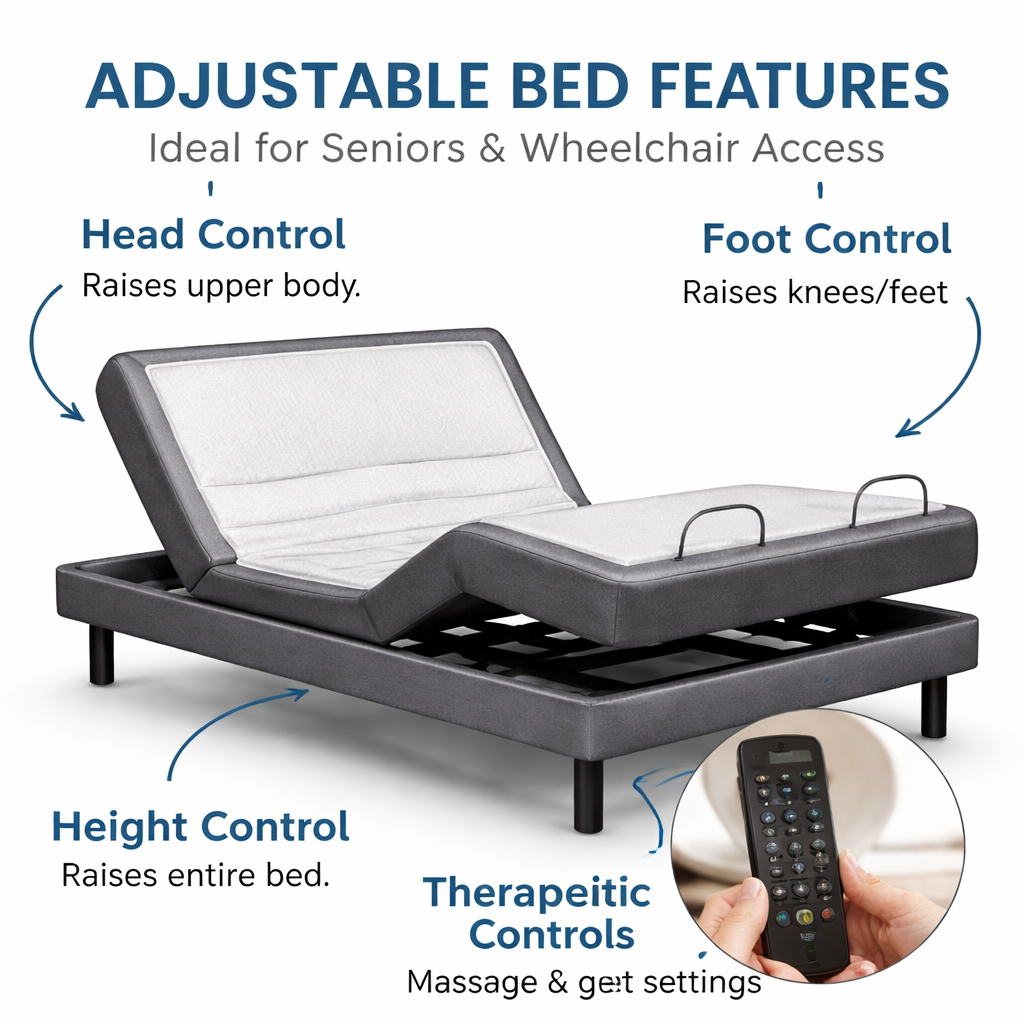
Now that you know the space, it’s time to match the bed’s features to the user’s needs. An adjustable bed for seniors with wheelchair access australia should do more than lift; it should make daily routines smoother.
First, look at the motor type. Brushless motors give a smooth, quiet lift and last longer. A soft‑start feature eases the bed into motion, which prevents sudden jerks that could unbalance a wheelchair user.
Second, check the head and foot adjustment range. Independent control lets you raise the head for breathing or the foot for circulation without moving the other end. Aim for at least 30 degrees of tilt on each side.
Third, evaluate the height‑adjustability. Some models let you change the whole‑bed height in steps of 5 cm. That lets you line up the mattress with the wheelchair seat height, creating a level transfer surface.
Fourth, think about therapeutic add‑ons. Sleep Sophie’s top pick offers six built‑in therapies , back pain relief, shoulder and neck comfort, arthritis support, hip and knee aid, circulation boost and respiratory help. That breadth is far beyond the single‑massage option on Elite Hi‑Lo.
Fifth, consider safety rails. Look for rails that lock automatically when the bed is raised and that have a padded interior. A sturdy rail reduces the risk of falls when the user sits up.
Sixth, verify weight capacity. Seniors plus any caregiving equipment can add up. Choose a bed rated for at least 250 kg to stay well within safety limits.
Seventh, review the remote layout. A large stop button, a clear home‑position button and a tactile feel make it easier for users with reduced grip strength.
Here are three quick checks before you buy:
- Does the motor run quietly and have a soft‑start?
- Can the whole‑bed height be set in 5 cm steps?
- Are therapeutic features listed and do they match the user’s health needs?
For a full product list and specifications, visit Mobility Rentals adjustable beds catalog. Their guide covers bed size, height range and safe working load.
Another trusted source is the Seniors Plus range, which outlines whole‑body vibration, zero‑gravity and other advanced options Seniors Plus adjustable beds. Compare those features with Sleep Sophie’s therapeutic suite to see why our pick tops the list.
Step 3: Install for Wheelchair Compatibility
Installation is where many people trip up , literally. A well‑installed adjustable bed for seniors with wheelchair access australia feels solid and stays level when the wheels roll by.
Start by positioning the bed on a level floor. Use a carpenter’s level on the frame to check both sides. If the floor is uneven, place a thin plywood shim under the legs until the frame is perfectly flat.
Next, set the leg height. Most beds let you adjust each leg in small increments. Align the leg height with the wheelchair seat height, typically around 45 cm from the floor. This creates a flush surface for a safe transfer.
Secure the side rails. Follow the manufacturer’s lock‑in procedure , usually a click that you can feel. Test the rail by pushing gently; it should not wobble.
Run the power cable along the wall or use the built‑in cable channel. If the cable must cross the floor, lay a short cord cover to prevent snagging.
Finally, test the remote from a seated position. Raise the head a few centimeters, then lower it. Make sure the bed stops smoothly and the stop button is reachable.
If you need professional help, many providers offer a “Silver Service” installation. Sleep Sophie’s team, for example, delivers and installs across South East Queensland, ensuring the bed meets local safety codes.
Read more about installation best practices on the Mobility Rentals site adjustable bed installation guide. For a deeper dive on NDIS‑approved accessories, see Seniors Plus NDIS approved beds.
Step 4: Compare Top Models for Australian Seniors
With the space measured and the feature list ready, it’s time to compare the market. Below is a pros‑and‑cons matrix that looks at the four products from our research table.
| Model | Pros | Cons |
|---|---|---|
| Sleep Sophie (Our Pick) | Six therapeutic functions, high weight rating, quiet motor, adjustable height, NDIS approved | Higher price point, no built‑in vibration |
| Hi‑Lo Companion Bed | Whole‑body vibration, Zero Gravity, good for NDIS users | Limited therapeutic range, fewer safety rails |
| Elite Hi‑Lo | Simple massage function, budget‑friendly | Only one therapy, lower weight capacity, no height adjustment |
| Home Care Hi Lo Electric Hospital Bed | Designed for high‑care settings, sturdy frame | No therapeutic features, limited adjustability |
Our pick, Sleep Sophie, wins on overall therapeutic breadth and safety features. The Hi‑Lo Companion Bed is the runner‑up for users who need vibration and zero‑gravity, especially NDIS participants.
When you compare, ask yourself these questions:
- Do I need built‑in massage or vibration?
- Is a high weight capacity a must?
- Will the bed’s height range match my wheelchair seat?
For more on how to choose the right model, check out the Sleep Sophie product page Sophie Adjustable Beds. It lists each size, weight rating and therapeutic option in plain language.
Step 5: Maintain and Adjust for Longevity
Even the best adjustable bed for seniors with wheelchair access australia will wear out if you ignore upkeep. Simple habits keep the motor humming and the frame solid for years.
First, dust the moving parts monthly. A soft brush or a vacuum on low suction clears dust that can cause motor strain. Wipe the frame with a damp cloth and avoid harsh chemicals.
Second, lubricate the motor bearings once a year. Use a light silicone spray , a few drops on each joint is enough. Do not over‑oil; excess can attract more dust.
Third, check the safety rails and lock mechanisms quarterly. Tighten any loose bolts and replace worn pads.
Fourth, test the height adjustment. Over time, the leg screws can loosen, causing uneven height. Re‑tighten the leg brackets and re‑measure the clearance.
Fifth, review the mattress support bars. If the mattress slides when you raise the head, the bars may need repositioning. Align them with the frame slots and tighten the set‑screws.
Finally, keep the warranty paperwork handy. Sleep Sophie offers a 10‑year frame warranty and a 5‑year mattress guarantee. Register the product online within 30 days of delivery to activate the coverage.
For a full checklist on wheelchair‑friendly furniture maintenance, see the FHG guide wheelchair accessible furniture maintenance. It covers height adjustments, stability checks and cleaning tips.
Another helpful resource is the same FHG page for a second time , it reinforces the importance of regular inspections maintenance best practices.
Step 6: Safety Tips and Australian Standards
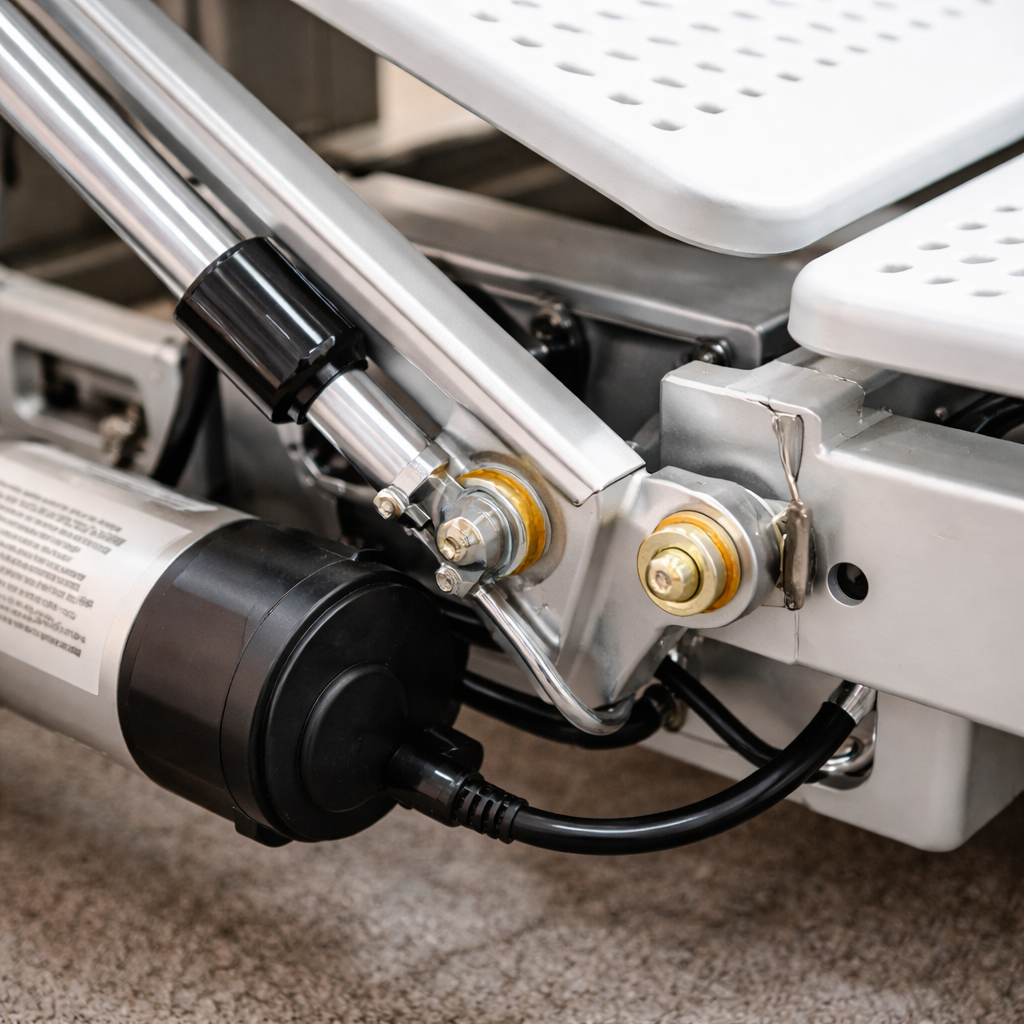
Safety is the final piece of the puzzle. An adjustable bed for seniors with wheelchair access australia must meet Australian Standard AS/NZS 4449 for home‑care beds and the health‑facility guidelines for height‑adjustable equipment.
First, always lock the bed in place before a transfer. Use the manual release lever only in emergencies. A locked position prevents the bed from moving under weight.
Second, keep the floor dry. Spills near the base can create a slip hazard for a wheelchair. Use a non‑slip mat under the bed and wipe up liquids right away.
Third, install side rails that reach at least to the head‑end height when the bed is raised. The rail should have a padded interior and a secure latch that clicks loudly.
Fourth, test the remote’s stop button daily. A stuck button can cause the bed to keep moving, which is dangerous for anyone near the edge.
Fifth, ensure the power cord is IEC‑rated and has a grounded plug. Check that the cord is not frayed and that the outlet is on a dedicated circuit.
Sixth, follow the Australian standards for load limits. Do not exceed the manufacturer’s weight rating , most top models, including Sleep Sophie, are rated for 250 kg.
For a deeper dive into aged‑care bed features, read the Care With Us article adjustable beds for aged care. It outlines safety rails, USB ports and under‑bed lighting.
Another useful piece from the same site explains how to match the bed’s features to a senior’s mobility level aged‑care safety checklist. Use those tips as a final audit before you sign the purchase order.
Conclusion
Choosing an adjustable bed for seniors with wheelchair access australia is a big decision, but it doesn’t have to be overwhelming. Start by measuring the space, then match the feature set to the user’s health needs. Install with care, keep the bed clean and lubricated, and always follow Australian safety standards. When you compare the options, Sleep Sophie stands out as the most comprehensive and safe choice, especially for anyone who needs back‑pain relief, circulation support and a sturdy, high‑capacity frame.
If you’re ready to upgrade, reach out to a certified provider, ask for a home‑visit measurement and get a quote that includes delivery and the “Silver Service” installation. A well‑chosen bed can turn a bedroom into a safe, comfortable sanctuary that supports independence for years to come.
FAQ
What height range should I look for in an adjustable bed for seniors with wheelchair access australia?
You want a bed that can lower to about 45 cm for a level wheelchair transfer and raise up to 65 cm for a comfortable sitting position. A range of 20 cm gives enough flexibility for most wheelchair seat heights and helps caregivers reach the bedside without strain.
Do I need a special mattress for an adjustable bed for seniors with wheelchair access australia?
A mattress that bends with the base is essential. Look for a medium‑firm memory foam or hybrid that is less than 20 cm thick. Thin, flexible mattresses reduce the effort needed to lift the head or foot sections and stay snug on the frame.
Can I use my existing nightstand with an adjustable bed for seniors with wheelchair access australia?
Yes, as long as the nightstand fits within the clearance zone. Place it on the same side as the remote, no more than an arm’s length away. This keeps the remote within easy reach and avoids the need to stretch while seated.
How often should I check the safety rails on an adjustable bed for seniors with wheelchair access australia?
Inspect the rails every three months. Look for any loose bolts, cracked padding or a latch that doesn’t click. A quick pull‑test , gently push on the rail , should feel firm. Replace any worn parts immediately to keep the transfer safe.
Is it safe to plug the bed into a surge protector?
Use a dedicated, grounded outlet instead of a surge strip. The bed draws a steady power load, and a surge protector can overheat. If you must use one, choose a heavy‑duty model rated for at least 15 amps and check it regularly for warmth.
Can I claim an adjustable bed for seniors with wheelchair access australia on my NDIS plan?
Yes, Sleep Sophie is an NDIS‑approved provider. They can give you a formal quote that meets the NDIS funding requirements. The bed’s therapeutic features, weight capacity and wheelchair‑friendly design all count toward assistive technology eligibility.
Additional Resources
For more on the Elite Hi‑Lo model and its care‑home features, visit the Sleep Electric page Elite Hi‑Lo product details. You’ll find specs on head‑foot independent lift, massage options and warranty terms that help you compare against the Sleep Sophie offering.