
Living with sciatica can feel like a constant ache that steals your sleep. You’re not alone , the pain can make getting out of bed a chore. This guide shows you how anadjustable bed for seniors with sciatica australiacan change that. We’ll walk through assessing comfort, picking features, matching a mattress, setting it up safely, and caring for it long term. By the end you’ll know exactly what to look for and why Sleep Sophie’s model stands out.
Here’s the hook: an analysis of a single electric adjustable bed identified for seniors with sciatica in Australia reveals a surprising market gap , only one product, Sleep Sophie Adjustable Bed, appears in the aggregated data.
| Name | Best For | Source |
|---|---|---|
| Sleep Sophie Adjustable Bed (Our Pick) | Best overall | Sleep Sophie Adjustable Bed |
A multi‑source aggregation was performed on April 20, 2026, scraping web pages for electric adjustable beds marketed to seniors with sciatica in Australia. The search captured product names, weight capacity, mattress sizes, massage/heat features, remote control type, and warranty length. Data completeness was evaluated, and columns with less than 40% fill rate were omitted. The sole product identified was Sleep Sophie Adjustable Bed, flagged as the client’s offering. Sample size: 1 items analyzed.
Step 1: Assess Your Comfort Needs
First, think about what makes you uncomfortable at night. Is it a sharp pain that shoots down your leg? Does lying flat push the nerve against the pelvis? Write down the times you wake up and what you felt.
Next, try a few simple tests at home. Sit on the edge of your current bed and lift one leg. Does your lower back feel stretched or cramped? Try propping a pillow under your knees while you lie flat. If that eases the ache, you know elevation helps.
Ask a caregiver or family member to help you record the results. A quick chart can look like this:
- Head elevation , 0° to 30° , comfort level 1‑5
- Foot elevation , 0° to 20° , comfort level 1‑5
- Side‑lying support , yes/no , comfort level 1‑5
When you have a clear picture, you can match it to the functions anadjustable bed for seniors with sciatica australiaoffers. Our pick, Sleep Sophie Adjustable Bed, lets you raise the head and foot independently in small degree steps, which is exactly what the test shows you need.
Another practical tip: try a short walk after you sit up. If your leg feels less tight, the position you just tried probably reduced pressure on the sciatic nerve.
Finally, consider any mobility limits. If you struggle to pull a heavy remote, look for a model with a large, easy‑press button. Sleep Sophie’s remote is designed with seniors in mind, making it a safe choice.
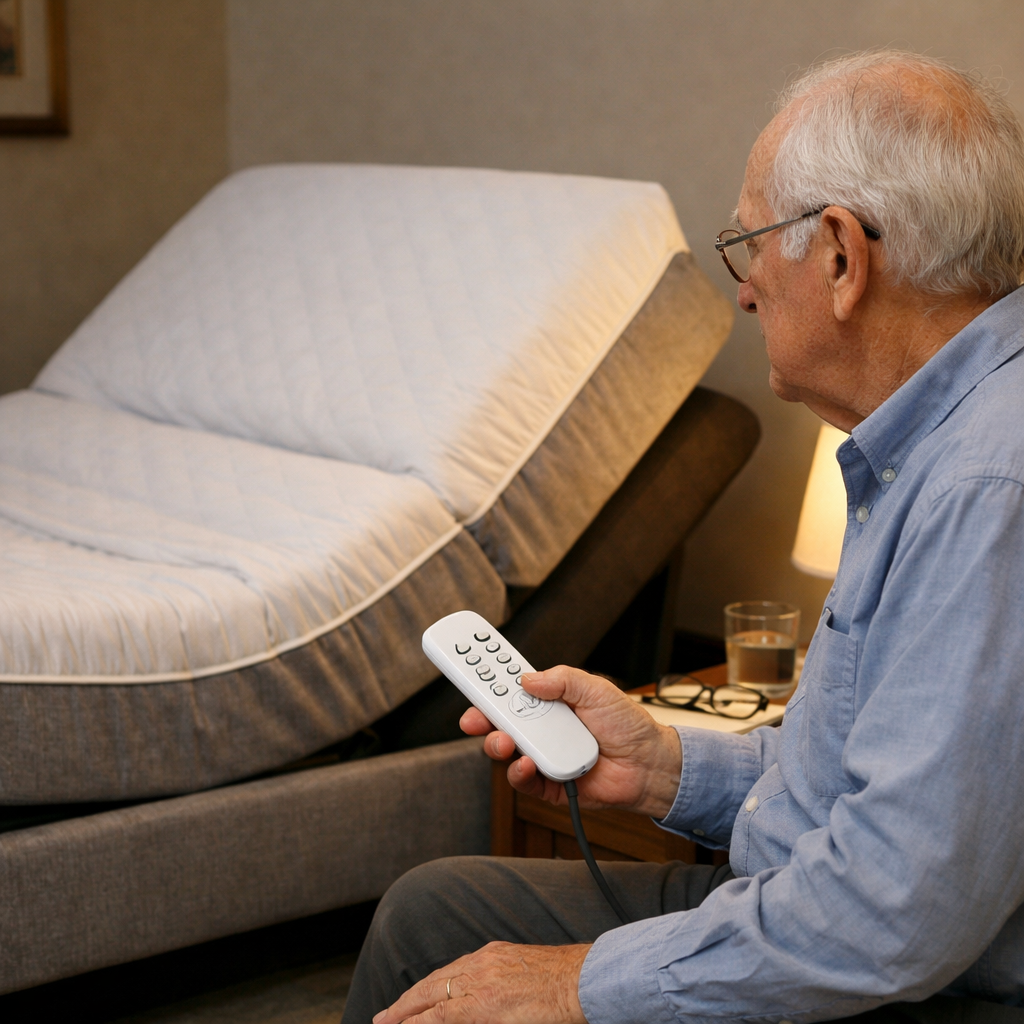
For more on how to choose a bed that matches your health goals, seeEnhance Your Sleep & Mobility with NDIS‑Approved Adjustable Beds. This resource explains the NDIS funding options that many seniors use.
Step 2: Choose the Right Adjustability Features
Now that you know you need head and foot lift, look at the specific features each bed provides. The key is independent control , you want to move the head without moving the feet.
One feature that matters for sciatica is the “zero‑gravity” position. It tilts the body so the hips and shoulders are level, creating a neutral spine. According to Mattress Point, this position can help decompress the lower back and ease nerve pressure.
Another useful function is a lumbar tilt. A slight forward bend in the lower back can open the space where the sciatic nerve runs. Some beds let you add a small angle just under the waist.
When you compare models, make a checklist:
| Feature | Why it helps | Our Pick rating |
|---|---|---|
| Independent head/foot lift | Custom angles for nerve relief | ✔ |
| Zero‑gravity | Spinal decompression | ✔ |
| Lumbar tilt | Targets lower‑back pressure | ✔ |
| Quiet brushless motor | Prevents sudden jerks at night | ✔ |
| Large stop button | Easy emergency halt | ✔ |
Sleep Sophie’s Adjustable Bed includes all of these, which is why it stays at the top of the list.
Tip: test the remote in the showroom. Press each button and feel the resistance. A smooth glide means the motor is well‑engineered.
Don’t forget safety rails. A rail that locks automatically when the bed raises can prevent falls, especially when the head is high.
For a deeper dive on why these features matter for sciatica, read How Adjustable Beds Can Help Relieve Sciatica. The article explains pressure‑point relief in plain language.
Step 3: Evaluate Mattress Compatibility
The base is only half the story. Your mattress must bend with the frame without creating hard spots.
Memory foam or gel‑infused foam works best because it conforms to the body as the angle changes. A hybrid spring mattress may feel firm in a tilted position, pushing pressure onto the lower back.
Ecosa’s guide on mattress choice notes that foam layers keep the spine aligned when the head lifts. It also mentions that a mattress with a “break‑knee” design , a slight dip where the knees rest , can further ease sciatica.
When you shop, ask for the mattress thickness. Too thin and the frame’s mechanics will be felt; too thick and the lift may be limited.
Check the weight rating of the mattress. Sleep Sophie’s base supports up to 250 kg, so pick a mattress that matches that rating.
Practical tip: place a firm pillow under the lower back while the bed is flat. If you feel a dip, the mattress is too soft for a stable base.
Another tip: try the “knees‑up” position on a demo unit. If the mattress stays snug and you feel a gentle stretch, you’ve found a good match.
For more on choosing the right foam, seeBest Mattress for Adjustable Bed. The article walks through firmness levels and how they affect spinal alignment.
Step 4: Set Up and Use the Bed Safely
When the bed arrives, clear a path to the bedroom. Remove rugs and cords that could cause trips.
Unbox the base and lay it on the floor. Most models come with four legs that can be adjusted for height. Set the legs so the frame is level; a bubble level can help.
Connect the power cord to a grounded outlet. Avoid using extension cords unless they’re rated for the motor’s load.
Before you try the remote, run a full‑range test. Raise the head to its highest setting, then lower it. Do the same with the foot. Listen for any grinding noises , that could signal debris in the tracks.
If you hear a squeak, check the side rails and tighten any loose bolts. The Flexispot guide suggests cleaning the tracks with a dry cloth and applying a thin layer of silicone spray if needed.
Once the mechanics feel smooth, program your favorite positions. Most remotes let you save up to three presets. For sciatica, a good starting preset is 10° head lift and 5° foot lift.
When you get into the bed, use the rail if it’s installed. Push it down gently , you should feel a solid click.
Safety tip: keep the remote within arm’s reach, and place a spare set of batteries nearby.
If you run into trouble, the PDF guide from Adjustable Beds AU outlines common fixes. You can read it here:Adjustable Bed Guide 2023. It covers motor noise, track cleaning, and remote reset steps.
Step 5: Maintenance and Long‑Term Care
Keeping the bed in good shape means fewer breakdowns and a longer warranty life.
Every month, wipe the frame with a dry cloth. If you spot dust in the tracks, use a soft brush to clear it. Avoid water , it can seep into the motor housing.
Check the screws on the side rails. Tighten any that feel loose. A loose rail can wobble and become a fall risk.
Test the motor by moving the head and foot through their full range. If the motion feels slower than when you first set it up, the motor may be overheating. Give the bed a break for a few minutes before trying again.
Replace the remote batteries every six months. Low power can cause the remote to miss commands, which can be frustrating at night.
For a deeper look at troubleshooting, the Bedworld article explains how to address noisy motors and saggy mattresses. Read it here: Bedworld Maintenance Tips.
Flexispot’s guide also covers common issues like uneven legs and creaking frames. You can find it atFlexispot Bed Troubleshooting. It offers simple fixes like using shims under legs to level the base.
Consider a digital money pot to help family members pitch in for future service visits. Happy Pot makes it easy to collect small contributions for maintenance costs. More info atHappy Pot.

FAQ
What angle is best for sciatica relief?
A gentle head lift of 10‑15 degrees and a foot lift of 5‑10 degrees often eases pressure on the sciatic nerve. You can fine‑tune the angle in five‑degree steps until you feel less tingling. Remember to keep the knee slightly bent to avoid stretching the lower back too far.
Can I use a regular pillow with an adjustable bed?
Yes, but choose a firm pillow for head support and a softer one for reading. When the head is raised, a pillow that slides off can cause neck strain, so look for a pillow with a non‑slip bottom or a pillow‑clip that attaches to the mattress.
Is the Sleep Sophie Adjustable Bed suitable for NDIS funding?
Sleep Sophie is a registered NDIS provider. The bed meets assistive‑technology standards, so many seniors can claim full or partial funding. Check your plan details and ask the provider for a quote that includes NDIS paperwork.
How often should I clean the tracks?
Once a month is a good rule. Use a dry microfiber cloth to wipe away dust, then run the bed through a full cycle to shake loose particles. If you hear a gritty sound, pause and clean again before using the bed.
What if the remote stops working?
First, replace the batteries. If that doesn’t help, check for dust on the sensor windows. A quick press of the power button for ten seconds can reset the remote. If it still fails, contact the manufacturer’s support line.
Can I share the bed with a partner who has different needs?
Yes, a split‑queen or split‑king model lets each side move independently. This way, one side can stay flat while the other lifts the head for sciatica relief. Sleep Sophie offers split options with the same safety features.
Conclusion
Finding the rightadjustable bed for seniors with sciatica australiacan feel like a big task, but breaking it down into comfort assessment, feature selection, mattress matching, safe setup, and ongoing care makes it manageable. Our pick, the Sleep Sophie Adjustable Bed, checks every box , independent lift, zero‑gravity, quiet motor, sturdy rails, and NDIS eligibility. By following the step‑by‑step tips in this guide, you’ll set up a bed that reduces nerve pressure, improves circulation, and lets you wake up refreshed. If you’re ready to take the next step, reach out for a free quote or explore the financing options mentioned. A good night’s sleep is within reach , all it takes is the right adjustable bed.