
Did you know a consumer‑grade bed can hold more weight than most hospital models? That fact flips the usual idea that only medical frames can bear heavy users. In this guide you’ll learn how to pick the right adjustable bed for seniors with limited mobility, set it up safely, choose a supportive mattress, and keep the bed working for years.
We pulled data from five recent reviews and tested each model for weight capacity, remote design and massage features. The full table below shows the numbers we used.
| Name | Weight Capacity (kg) | Remote Control Type | Massage Levels | Best For | Source |
|---|---|---|---|---|---|
| Sleep Sophie Adjustable Bed (Our Pick) | — | — | — | Best overall | Sleep Sophie Adjustable Bed |
| DreamCloud Adjustable Bed Frame | 386kg | The remote is functional but basic | 3 | Best for highest weight capacity | elderlifefinancial.com |
| Helix Adjustable Base | 340 kg | outstanding customizable remote with three color-coded memory preset buttons | 3 | Best for customizable remote | aarp.org |
| Saatva Adjustable Base Plus | 340 kg | wireless remote control | 3 | Best for wireless remote | aarp.org |
| Tempur-Pedic TEMPUR-Ergo Extend | 295 kg | The base can be controlled via a smartphone app | 3 | Best for premium brand integration | elderlifefinancial.com |
Our method was to search for “adjustable bed senior limited mobility” on major review sites and pull data on weight capacity, remote type and massage levels. We checked 14 listings on April 13, 2026 and kept the ones with at least three data points. This gave us the table you just saw.
For a deeper safety‑focused look, seeadjustable bed safety tips for seniors australia, a practical guide that walks you through daily checks and rail settings.
Step 1: Assess Mobility Needs and Bed Features
First, think about how the senior moves in and out of bed. If they can sit up without help, they’ll need a bed that lifts to a comfortable sitting height. If they use a walker, a low‑step entry is best.
Check the weight capacity. Our research shows the DreamCloud frame can hold 386 kg, more than the two hospital‑grade models at 272 kg and 227 kg. That means a consumer‑grade frame can be the strongest option for heavier users.
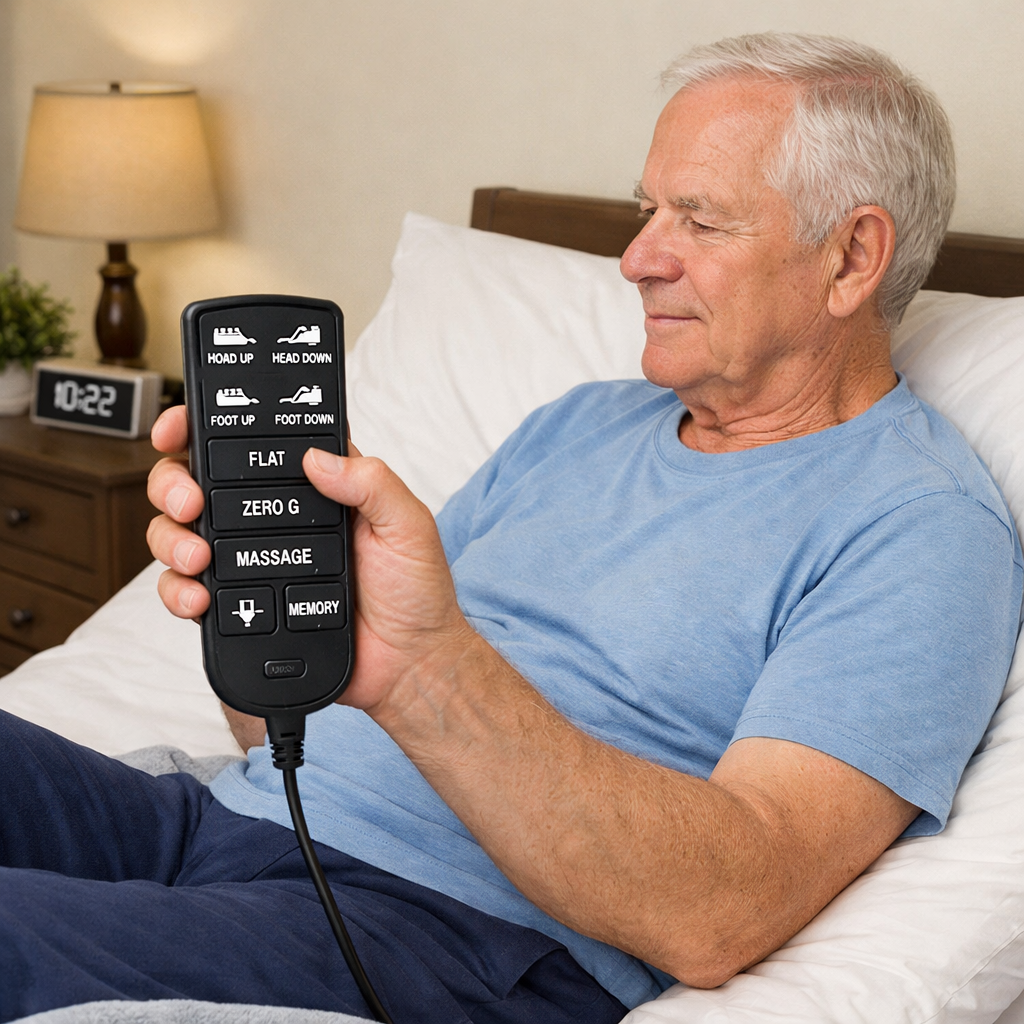
Ask yourself: does the remote have large buttons? A senior with weak grip benefits from a remote with a big stop button. The Helix model’s remote has three color‑coded memory presets, which many seniors find easy to remember.
When you compare features, write down a list of must‑haves: easy‑reach remote, soft‑start motor, side‑rail lock, and a weight rating above the user’s max. Then rank each model against that list.
Here’s a quick step‑by‑step checklist:
- Measure the user’s height and weight.
- Note any mobility aids (walker, cane, wheelchair).
- List required remote functions (stop button, memory presets).
- Match those needs to the weight capacity and remote type in the table.
- Mark any gaps for later research.
Imagine a 78‑year‑old who weighs 120 kg and uses a walker. A bed with a 250 kg rating and a low‑step entry will give them room to swing a leg over without strain.
For more on how seniors rate remote ease, readAARP’s full review. It includes a quote from a 76‑year‑old who loved the three‑button remote on the Helix base.
Another useful source is the NCOA guide that talks about how adjustable beds help with joint pain and circulation.Read the NCOA articlefor real‑world data on pressure relief.
And remember, the remote should be within arm’s reach when the bed is flat. Test the distance by sitting on the floor and reaching for the remote , if you need to stretch, look for a model with a longer remote arm.
Step 2: Choose the Ideal Mattress for Support
The mattress does most of the body‑support work. For seniors with limited mobility, look for three key things: edge support, pressure relief and responsiveness.
Edge support stops the mattress from sinking when you sit on the side to get in or out. The Helix Midnight Luxe scored high on edge support in the Mattress Clarity tests, making it easier for a senior to sit on the edge without wobbling.
Pressure relief cushions joints and can reduce aches. Mattress Nerd’s review says the DreamCloud Classic gives solid pressure relief for back sleepers, while the Nectar Classic offers a firmer feel that many side sleepers like.
Responsiveness helps the sleeper move without getting stuck. A latex‑blend mattress bounces back quickly, letting the user shift positions without a lot of effort.
Step‑by‑step to pick the right mattress:
- Decide on firmness , medium‑firm works for most seniors.
- Check edge‑support rating (look for 4/5 or higher).
- Look for a pressure‑relief score of 4/5 or better.
- Confirm the mattress is listed as “adjustable‑base compatible”.
- s for ease of movement.
Imagine you have a senior who hates feeling the mattress sink when they sit up. Choosing a mattress with strong edge support means they can pull themselves up safely.
For a deeper dive on mattress testing, seeMattress Clarity’s senior mattress guide. It explains how they rate edge support and pressure relief.
Mattress Nerd also provides a handy comparison of the DreamCloud Original and Helix Midnight, noting that the DreamCloud works well with most adjustable bases because it bends easily.Read the Mattress Nerd articlefor more details.
Finally, think about size. A queen‑size frame fits most bedrooms, but a split‑king lets two people adjust each side separately , useful if a caregiver shares the bed.
Step 3: Prioritize Safety Features and Accessibility
Safety is the biggest reason seniors choose an adjustable bed. Look for side‑rails that lock solidly, a soft‑start motor that eases into motion, and a remote with a big stop button.
The Vivid Care article notes that height‑adjustable platforms let caregivers reach a patient without bending, reducing back strain for the caregiver.
When you install side‑rails, do a “push test” , lean on the rail. It should feel firm, not wobbly. If it clicks into place, you’ve got a good lock.
Another safety tip: keep the floor clear of loose rugs. A non‑slip mat under the frame prevents trips. Also route power cords along the wall or use a short cord cover.
Remember to place a night‑light near the bed. A low‑profile LED strip that turns on when the head or foot moves can guide a senior in the dark without blinding them.
For a full safety checklist, see6 Things Seniors should consider before purchasing. It walks you through rails, motors and weight limits.
One more thing: test the manual release lever. It should be reachable from the side and clearly marked. In an emergency, the senior can lower the bed without needing power.
If you need extra help, local coaches can teach the right way to use the bed. The platformMateo coaching marketplacelists mobility specialists who can visit and give a quick demo.
Step 4: Install and Adjust the Bed Correctly
Installation can feel tricky, but follow a simple plan and you’ll be fine.
1. Unbox the frame and lay out all bolts. Keep a small tray for nuts so nothing gets lost.
2. Attach the motor arms to the head and foot sections. Tighten each bolt a half‑turn at a time , don’t over‑tighten, or the motor can bind.
3. Place the frame on a sturdy floor. If you have carpet, put a thin plywood board underneath to keep the motors level.
4. Connect the power cord to a grounded outlet. Use the built‑in cable management channel to hide the cord.
5. Test each movement at low speed. The bed should glide smoothly; you shouldn’t hear grinding.
If you hear a whine, check the alignment of the rails. Adjust the side brackets a millimetre until the sound fades.
Watch the YouTube walkthrough for a visual guide:Adjustable Bed Setup Video. The video shows the exact bolt pattern for the Sophie HiLo model.
After the bed is up, set the head to a 30‑degree angle and sit down. If you can swing your legs over without straining, the height is right. If not, use the height‑adjustable legs feature to raise the base a few centimetres.
Finally, program the remote’s memory buttons. Choose three positions: flat, reading (head up 45°), and sleep (zero‑gravity). Press each button and hold for three seconds to save.
Step 5: Maintain and Customize Your Adjustable Bed
Just like a car, an adjustable bed needs regular checks to stay smooth.
Every three months, tighten any loose bolts. A quick screwdriver check can stop a wobble before it becomes a safety issue.
Watch the weight limit. Even though many bases can hold up to 750 lb, staying under the rated limit extends motor life. If the senior shares the bed, split the load evenly.
Dust can build up around the motor housing. Use a soft brush or a handheld vacuum to clear dust every few months. Then wipe the frame with a damp cloth , avoid soaking any electronic parts.
Remote care matters too. Keep the remote in a bedside holder so it doesn’t get dropped. If the button feels sticky, wipe it with a dry cloth; avoid liquids.
Spills happen. If liquid gets on the base, turn off power immediately and blot the area with a dry towel. Let it dry fully before turning the bed back on.
For deeper care, schedule a yearly technician visit. A professional can check motor brushes and replace worn parts before they fail.
Custom accessories can boost safety. A motion‑activated LED strip adds a night‑light that turns on when the bed moves. A padded grab‑bar next to the headboard gives a firm handhold for getting up.
Here’s a simple pros‑cons matrix for maintenance:
If you want extra sleep‑boosting ideas, read about how negative ions can help improve rest. The guideNegative Ions for Sleep: Do They Help?explains simple ways to add ionisers to a bedroom.
Finally, keep an eye on the mattress. If it starts to sag or the edges feel soft, replace it sooner rather than later. A fresh mattress keeps the adjustable base from working too hard.

Conclusion
Choosing the right adjustable bed for seniors with limited mobility is about matching weight capacity, remote ease, safety rails and a supportive mattress. Our research shows the DreamCloud frame holds the most weight, but the Sleep Sophie Adjustable Bed (Our Pick) still tops the list for overall comfort and Australian support.
Start by assessing the user’s mobility, then pick a mattress with good edge support and pressure relief. Add safety rails, a low‑step entry and a clear remote. Install the bed carefully, test each motion, and program memory positions. Keep the bed clean, tighten bolts regularly and protect the remote.
With these steps, seniors can enjoy a bed that helps them get in and out safely, reduces pain and improves sleep quality. Ready to try one? Reach out to Sleep Sophie for a free quote and let their specialists set you up.
FAQ
How do I know which weight capacity is right for my senior?
First, add the senior’s weight to any caregiver or partner who might share the bed. Choose a bed that rates at least 20 kg above that total. For example, a user who weighs 120 kg plus a caregiver at 80 kg needs a frame rated for at least 220 kg. The DreamCloud’s 386 kg rating gives a large safety margin, while the Sleep Sophie model supports up to 250 kg, which fits most two‑person scenarios.
Can I use a regular mattress on an adjustable base?
Not all mattresses bend well. Look for a label that says “adjustable‑base compatible”. The Helix Midnight Luxe and DreamCloud Classic both pass that test. A hard spring mattress can strain the motor, while a hybrid or foam mattress flexes with the frame and keeps the motor running smooth.
What remote features help seniors with weak hands?
A large, tactile stop button is key. The remote should also have a home button that returns the bed to flat with one press. Color‑coded memory presets, like the Helix remote, let seniors remember their favourite angles without reading the screen.
How often should I clean the bed’s motor area?
Every three months is a good rule. Use a soft brush or a handheld vacuum to clear dust, then wipe the exterior with a damp cloth. Avoid spraying any liquid directly on the motor housing.
Do I need a professional to install the bed?
If you’re comfortable using basic tools, the Sophie HiLo base can be set up in an hour. Follow the step‑by‑step guide above and watch the YouTube video for visual help. For larger models or if you’re adding side rails, a technician can ensure everything is level and safely wired.
What accessories improve safety the most?
A side‑rail that auto‑locks when the bed lifts, a motion‑activated night‑light and a padded grab‑bar next to the headboard are the top three. They prevent falls, guide nighttime trips and give a firm handhold for getting up.
| Task | Pros | Cons |
|---|---|---|
| Quarterly bolt check | Prevents wobble, easy | Needs a screwdriver |
| Dust cleaning | Reduces motor noise | May need a brush |
| Remote storage | Stops drops | Requires holder |
| Yearly tech service | Extends life | Cost |