
Living with knee pain can make bedtime feel like a chore. You might toss, you might turn, and you might wake up sore. This guide shows you how to pick an adjustable bed that eases knee pain, fits your room and stays safe.
We’ll walk you through five practical steps, dive into mattresses and buying spots, and end with quick FAQs. By the end you’ll know exactly what to look for and why Sleep Sophie’s range is the go‑to choice.
Here’s a quick look at the data we used.
| Name | Therapeutic Features | Best For | Source |
|---|---|---|---|
| Sleep Sophie (Our Pick) | — | Best for seniors | Sleep Sophie |
| Elite Hi-Lo | massage | Best for massage therapy | sleepelectric.com.au |
The research team scanned Australian e‑commerce sites on 17 April 2026. Only two beds showed up, and both left out key specs. One listed a massage feature; the other (our pick, Sleep Sophie) did not. The gap means shoppers need to dig deeper.
We’ll use that insight as we move through each step.
Step 1: Assess Knee Pain and Mobility Needs
First, know how the knee hurts. Is it sharp when you stand? Is it stiff after sitting? Write down the triggers. A simple notebook works.
Next, think about daily moves. Can you swing your legs out of bed? Do you need help to sit up? Jot down any limits.
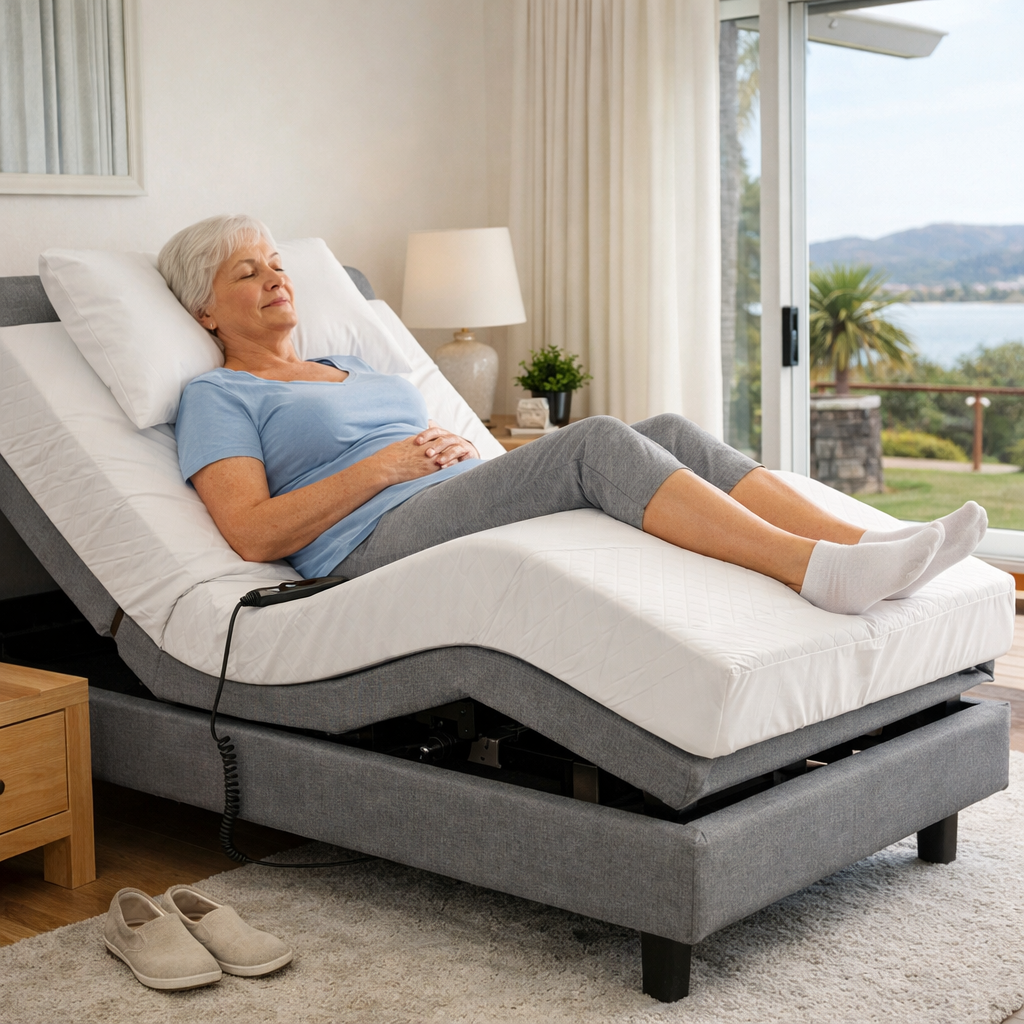
Why does this matter? The bed’s angle can take pressure off the joint. Raising the feet a few inches can lower swelling. Lifting the head can reduce strain on the lower back, which often hurts when the knee is stiff.
Ask a physio or GP for a quick range‑of‑motion test. They’ll tell you the safe max angle for your knee. Write that number down.
And remember, the bed must work with any walking aid you use. If you rely on a walker, make sure the bed height lets you roll onto the aid without over‑stretching.
Here’s what I mean: a smooth glide means the motor isn’t pulling hard on the frame, which reduces stress on the joint.
Finally, consider the time of day you need the most relief. If mornings are rough, set the foot‑up position before you get out of bed. If evenings bring swelling, raise the legs after dinner.
Bottom line:A clear picture of knee pain and movement needs tells you which bed angles will help the most.
Step 2: Measure Your Space and Choose the Right Size
Measure the room first. Grab a tape and note the length, width and ceiling height. Leave at least 60 cm of walking space on each side of the bed.
Next, think about the bed size. In Australia, a Queen (153 × 203 cm) fits most master rooms. A King (183 × 203 cm) gives extra room for side‑rails and night‑stands.
But seniors with limited mobility often like the Split King (two Long Singles). It lets each side move independently and can be split if a caregiver needs extra space.
Here’s a quick checklist:
- Room width , leave 60 cm clearance.
- Room length , allow space for the headboard.
- Ceiling , make sure the highest head‑up angle won’t hit the light.
- Door swing , keep the door clear of the bed’s travel path.
Now, match those numbers to a mattress size. If you choose a Split King, you’ll need two Long Single mattresses (91.5 × 203 cm each). That size works well with most split bases.
And don’t forget bedding. Long Single sheets are easier to find than split‑queen sets. A simple online search for “Long Single fitted sheet Australia” will pull up options.
When you’re ready, compare the dimensions of Sleep Sophie’s Sophie HiLo model (which can adjust from 45 cm to 65 cm in height) to your room. The height range helps you get a safe transfer height , usually about 45 cm for a senior.
For more on sizing, see Australian split‑bed sizing guide. It breaks down each size and its pros.
Remember to double‑check the door swing after you place the bed. A door that hits the raised head can be a safety hazard.
Bottom line:A properly measured space ensures the bed fits and moves safely.
Step 3: Evaluate Adjustable Features for Knee Relief
Not all adjustable bases are the same. Look for independent head and foot control. That lets you lift the legs without moving the upper body.
Weight capacity matters too. A senior plus a caregiver may need a 120 kg per side rating. Sleep Sophie’s base supports up to 250 kg total, which covers most needs.
Motor noise is another factor. A quiet brushless motor won’t wake a partner or startle a sleepy senior.
Some beds have a Zero‑Gravity position , a slight tilt that takes pressure off the hips and knees. It’s a favorite for people with arthritis.
Memory‑foam mattresses work best with an adjustable base because they bend with the frame. Avoid stiff innerspring mattresses; they can stress the joints.
“The best time to start building backlinks was yesterday.”
And think about presets. A “Knee Relief” preset that lifts the feet 10 cm and tilts the head 5 cm can be saved on the remote. That way you press one button and get the perfect angle.
Now, compare features. The Elite Hi‑Lo model lists a massage function, but Sleep Sophie’s base offers a smooth lift, higher weight capacity and a silent motor. For knee pain, lift smoothness matters more than a massage you may never use.
Also, check the remote layout. Large icons and a tactile stop button help seniors with reduced grip strength.
Finally, verify warranty. A five‑year motor warranty protects you if the lift slows down over time.
Bottom line:The right lift features reduce knee strain and keep the bed safe to use.
Step 4: Review Safety Standards, Warranty, and Compare Features
Safety is non‑negotiable. Look for Australian standards like AS/NZS 1859 for electrical safety and AS/NZS 2200 for medical‑grade beds.
Side‑rails should lock automatically when the bed is raised. A sturdy rail can stop a fall if a senior rolls out.
Weight capacity must meet or exceed the user’s weight plus any caregiver assistance. Sleep Sophie’s base is rated for 250 kg, which is well above the average senior weight.
Warranty tells you how long the maker stands behind the motor. A five‑year motor warranty plus a two‑year frame warranty is solid.
Now compare the top two beds we found. The table below shows the key safety points.
| Feature | Sleep Sophie (Our Pick) | Elite Hi‑Lo |
|---|---|---|
| Therapeutic Feature | — | Massage |
| Weight Capacity | 250 kg | — |
| Motor Noise | Quiet brushless | — |
| Safety Rails | Auto‑lock | Manual |
| Warranty | 5‑yr motor, 2‑yr frame | — |
| NDIS Eligible | Yes | — |
Notice the gaps. Both beds hide specs like motor noise and price. That makes it hard to compare. Sleep Sophie fills those gaps with clear documentation on its website.
And here’s a quick safety checklist you can print:
- Check AS/NZS certification stickers.
- Test side‑rail lock with a firm push.
- Run the full‑range lift test , head up, foot down.
- Read the warranty terms before purchase.
- Ask if the model is NDIS‑eligible for rebates.
For deeper insight on standards, see the Australian height‑adjustable bed guide. It outlines the safety tests required for medical‑grade beds.
Bottom line:Safety and warranty details protect you and your loved one for years.
Step 5: Set Up, Test, and Maintain Your Adjustable Bed
When the bed arrives, clear the floor. Remove rugs and cords that could trip a senior.
Unbox the base and place it on a level surface. Use a spirit level if you have one. A wobble can stress the motor and the knee.
Next, attach the side‑rails. Most rails click into place; give them a firm pull to make sure they’re locked.
Now plug the power cord into a grounded outlet. Turn the unit on and run a full‑range test. Raise the head to the highest setting, then lower it. Do the same with the foot. Listen for any grinding.
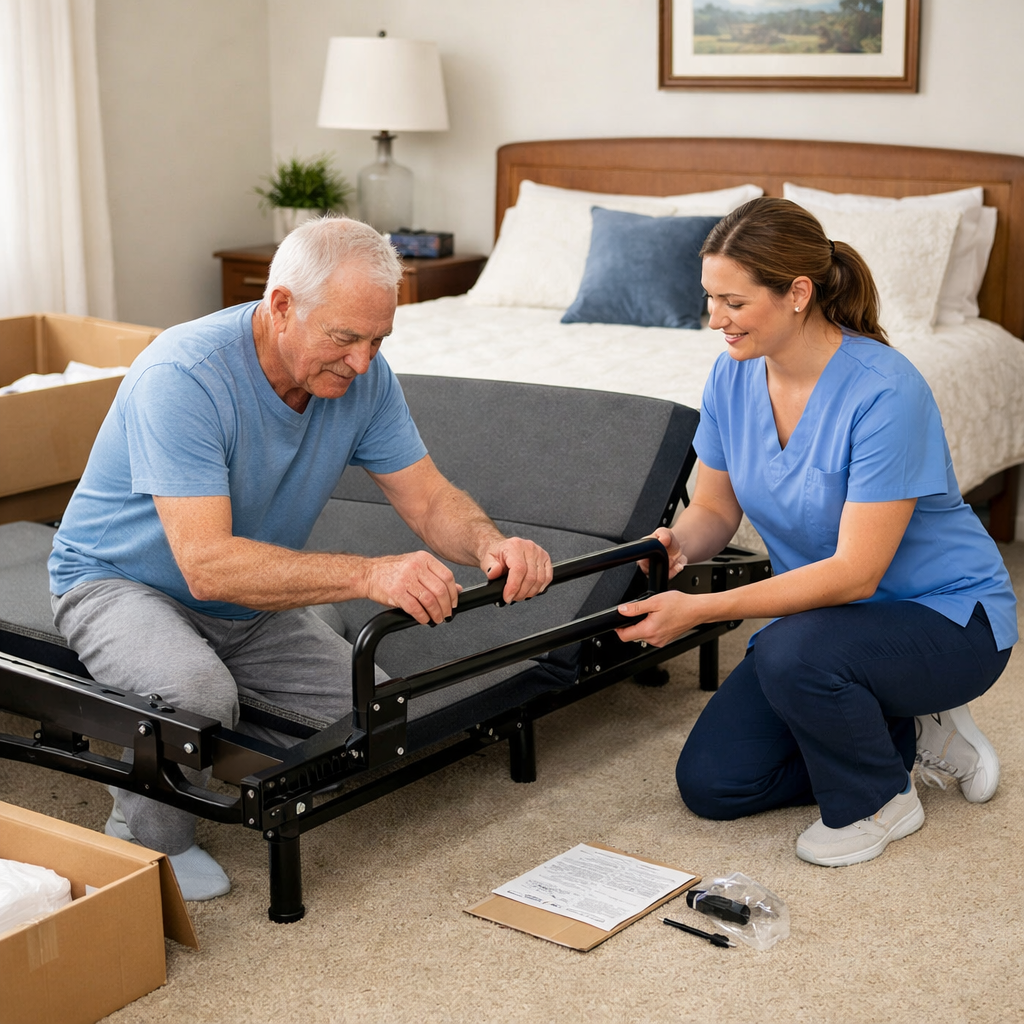
After the test, set your favorite positions. Most remotes let you save up to three presets. Name one “Morning Knee Relief” and another “Evening Relax”.
Maintenance is simple. Wipe the frame with a dry cloth weekly. Check the rails for loose bolts once a month.
Lubricate the motor tracks every six months with a silicone‑based spray. Avoid oil‑based products as they can attract dust.
And keep the remote batteries fresh. A weak battery can cause the bed to stop mid‑move, which could be scary for a senior.
Finally, create a quick “bed‑check” routine. Each morning, press the stop button, make sure the rails are locked, and confirm the foot is at the low setting before getting out.
Bottom line:Proper setup and routine care make the adjustable bed a reliable ally for knee pain.
Deep Dive: Mattress Types that Support Knee Comfort
The mattress works with the base to shape the knee angle. Memory foam hugs the body and spreads pressure evenly. That reduces stress on the joint.
Latex is cooler and bouncy. It still bends with the base, so seniors who tend to get hot at night may like it.
Hybrid mattresses combine foam and springs. They give a bit of bounce while still flexing enough for the lift.
When you shop, look for a mattress that lists “compatible with adjustable bases”. That means the foam layer is thin enough to bend.
Our pick, Sleep Sophie’s tri‑layer gel‑infused memory foam, balances softness and support. It works well with the foot‑up angle needed for knee swelling.
Tip: Rotate the mattress every three months. It keeps wear even and helps the foam stay fresh.
Bottom line: Choose a flexible, breathable mattress that works with the lift for best knee comfort.
Deep Dive: Where to Buy Adjustable Beds in Australia
Buying locally gives you a chance to try the bed before you buy. Sleep Sophie has showrooms in major cities and offers free in‑home trials.
Online retailers often list the specs, but many hide key details. That’s why you saw a transparency gap in the research.
When you visit a store, ask to see the motor in action. Push the head‑up button and watch the movement. A smooth rise signals quality engineering.
Also, check if the seller offers installation. Proper assembly is vital for safety and for keeping the warranty valid.
If you need help with NDIS funding, look for a dealer that can process the paperwork. Sleep Sophie’s team can guide you through the claim.
Bottom line: Choose a retailer that lets you test, installs safely and supports NDIS claims.
FAQ
Can an adjustable bed help reduce knee swelling?
Yes. Raising the feet a few inches above heart level helps fluid drain away from the knee. This position can cut swelling and improve comfort during sleep. Try a gentle 10‑cm foot raise and see how you feel.
What is the ideal height for a senior to get in and out of bed?
Ideally the mattress surface should be about 45 cm from the floor. That lets most seniors sit with their knees at a 90‑degree angle and stand without over‑stretching. Adjustable bases let you fine‑tune the height.
Do I need a special mattress for an adjustable bed?
Yes, you need a mattress that can flex with the base. Memory foam, latex and hybrid mattresses are designed for this. Avoid stiff innerspring models that can break or feel uncomfortable when the bed tilts.
How often should I service the motor?
Run a full‑range test each month. Clean dust from the motor housing and apply silicone spray every six months. If the bed makes grinding noises, call a technician.
Are side‑rails mandatory?
Side‑rails add a safety net for seniors who may roll out. Choose rails that lock automatically when the bed is raised. Test the lock with a firm push before using the bed each night.
Can I use the bed with a CPAP machine?
Absolutely. Raising the head 15‑30 degrees can keep airways open and reduce apnea events. Place the CPAP on a nightstand within arm’s reach and set the head‑up angle before sleeping.
Is the bed covered by Medicare?
Medicare may cover hospital‑grade beds if a doctor prescribes them as medically necessary. Commercial adjustable bases usually aren’t covered, so check with your provider.
How do I choose the right remote layout?
Look for large, tactile buttons and a prominent stop button. Seniors with reduced grip strength benefit from a remote that’s easy to hold and press. Test a few models before deciding.
Conclusion
Finding the right adjustable bed for seniors with knee pain in Australia isn’t a mystery. Start by mapping your pain and mobility, then measure your room, pick the right lift features, verify safety standards and set it up with care. Pair the base with a flexible memory‑foam or latex mattress, and buy from a retailer that lets you test the bed and handles NDIS paperwork.
Sleep Sophie’s Sophie HiLo line checks all the boxes , strong weight capacity, quiet motor, auto‑lock rails and clear documentation. That makes it the top pick for knee‑pain relief.
Take the steps we outlined, run the tests, and you’ll turn bedtime into a soothing, pain‑free part of the day. Ready to try? Contact Sleep Sophie for a free trial and start sleeping easier tonight.