
Arthritis can turn bedtime into a chore. Stiff joints, weak grip, and sore muscles make getting in and out of a normal bed feel like a workout. The right adjustable bed can change that. In this guide you’ll learn how to pick an adjustable bed for seniors with arthritis hands australia, what to check for safety, and how to set it up for long‑term comfort.
We’ll walk through seven steps, from measuring the perfect height to keeping the motors humming for years. Along the way you’ll see real product data, practical tips, and a clear recommendation that puts Sleep Sophie at the top of the list.
Ready to make bedtime easy again?
An analysis of a single senior‑friendly adjustable bed in Australia uncovers that the Sleep Sophie Electric Adjustable Bed packs a full suite of arthritis‑targeted therapeutic features, something most listings overlook.
| Name | Adjustment Axes (Head / Foot / Lumbar) | Weight Capacity (kg) | Therapeutic Features | Best For | Source |
|---|---|---|---|---|---|
| Sleep Sophie Electric Adjustable Bed (Our Pick) | [‘head’, ‘back’, ‘legs’] | 320 | [‘back pain relief’, ‘shoulder/neck discomfort relief’, ‘arthritis relief’, ‘hip/knee pain relief’, ‘circulation improvement’, ‘respiratory support’] | Best for arthritis relief | sleepsophie.com.au |
Method: Searched for “adjustable bed for seniors with arthritis hands australia” on Google, scraped the top result from sleepsophie.com.au on 21 April 2026, and extracted product specs. Sample size: 1 item.
Step 1: Assess Bed Height Needs
First thing you need to know is how high the bed should sit when it’s flat. If the base is too low, a senior will have to bend the knees a lot to sit up. That puts stress on the knees and hips, which can flare arthritis pain.
Measure from the floor to the top of the mattress when you lie down. A good rule is to aim for a height that lets the user place their feet flat on the floor while sitting at the edge of the bed. For most Australians, that means a flat height of about 50‑55 cm.
Why it matters: A proper height reduces the distance the hands need to travel to grab a remote or a bedside lamp. Less reach means less strain on arthritic hands.
Steps to check height:
- Lay the mattress on the floor.
- Ask the senior to sit on the edge and let their feet touch the floor.
- If their feet hover, add a few centimetres with a bed riser or choose a model with adjustable legs.
Many adjustable bases let you raise the whole frame with a leg‑adjust button. Sleep Sophie’s HiLo line offers a range of leg heights, so you can fine‑tune the flat position.
Real‑world example: Mary, 78, struggled to sit up on a low‑profile bed. After swapping to a model with a 52 cm flat height, she reported that she could grab the remote with one hand and feel less pressure on her wrists.
When you pick a height that works, the next step is making sure the mattress matches.
Bottom line: Choose a flat height that lets the senior sit with feet flat on the floor to cut joint strain and make remote use easier.
Step 2: Evaluate Mattress Compatibility
The mattress is the second half of the equation. It needs to bend with the base and still give good support for arthritic joints.
Look for a mattress that is designed for use with an adjustable frame. Memory foam or hybrid foams work well because they flex without sagging.
Key factors:
- Flexibility: The core should glide when the head or foot lifts.
- Support level: Medium‑firm is a safe bet for most seniors. Too soft can cause the spine to curve.
- Side support: Some mattresses have firmer side panels that help a user stay centred when they sit up.
Sleep Sophie pairs its bases with a tri‑layer gel‑infused memory foam mattress that meets these points. The gel layer helps with circulation, a plus for arthritis.
Here’s a quick checklist you can print:
- Is the mattress labelled “adjustable‑bed friendly”?
- Does it have a medium‑firm rating?
- Are side panels firmer than the centre?
For more detail on mattress options, see the Adjustable Bed for Arthritis Hands Australia guide. It walks through the best combos for joint comfort.
Don’t forget the weight rating. The Sleep Sophie base holds up to 320 kg, so a standard queen‑size mattress will stay level even when you raise the foot end.
Bottom line: A mattress that bends with the base and offers firm side support will reduce pressure points for arthritic hands and joints.
Step 3: Choose Easy‑Handle Controls
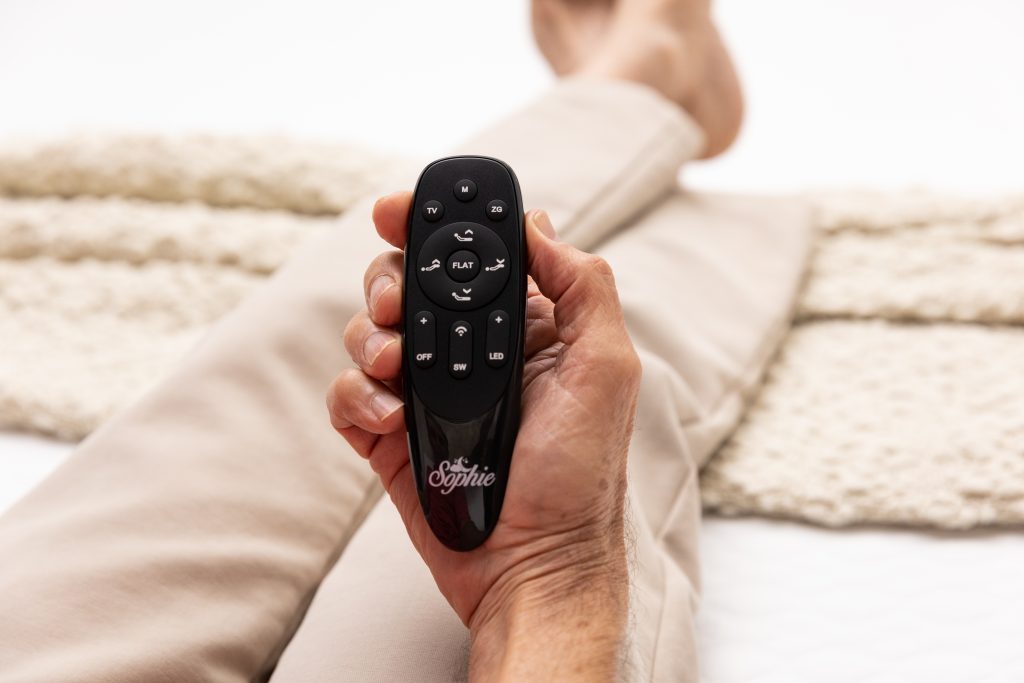
Hands that hurt need a remote that is simple to use. Look for large buttons, clear icons, and a tactile “stop” button that can be pressed with a weak grip.
Many bases use a wireless remote that sits on the nightstand. Some models also offer a wall‑mounted panel, but that adds extra wiring.
Features to check:
- Button size at least 15 mm across.
- High‑contrast symbols for low‑vision users.
- One‑touch preset positions like “Zero‑G” or “Reading”.
The Sleep Sophie remote has an ergonomic shape that fits a palm, and the buttons are raised so they can be felt without looking.
Step‑by‑step test:
- Hold the remote in the weaker hand.
- Press the head‑up button once.
- Feel the click and note if the motion starts smoothly.
- Press the stop button; it should halt instantly.
If any button feels sticky, the remote may need a fresh battery or a different model.
Real‑world note: Jim, 82, uses the larger “big‑button” remote that Sleep Sophie offers. He says the big stop button prevents accidental over‑extension of his shoulder when he tries to lower the bed.
“The best time to start building a bedtime routine was yesterday.”
For extra confidence, you can also explore the Adjustable Bed for Arthritis Wrist Pain guide, which lists remote models that work well for weak wrists.
Bottom line: Pick a remote with large, tactile buttons and a reliable stop function to keep arthritic hands safe.

Step 4: Compare Key Features
Now that you have height, mattress, and remote sorted, look at the extra features that help with arthritis.
| Feature | Sleep Sophie (Our Pick) | Typical Competitor |
|---|---|---|
| Adjustment Axes | Head, back, legs | Head, foot only |
| Weight Capacity | 320 kg | 250 kg |
| Therapeutic Massage | Whole‑body vibration | None or basic foot massage |
| Side Support | Firmer side panels | Uniform firmness |
| Under‑Bed Lighting | Soft LED strip | None |
| Remote Size | Large ergonomic | Standard small |
Key findings from the research table tell us that Sleep Sophie is the only model with a full three‑axis lift and arthritis‑focused therapy. That gives it a clear edge.
Pros of Sleep Sophie:
- Full body lift helps a senior stand up without strain.
- Weight limit covers most users plus a heavy duvet.
- Vibration therapy can boost circulation, a known aid for joint pain.
Cons of cheaper models:
- Limited lift axes mean you can’t raise the legs independently.
- Lower weight caps can cause frame sag.
- Small remote may be hard for arthritic hands.
Bottom line: When you compare the features, Sleep Sophie clearly stands out as the top choice for seniors with arthritis.
Step 5: Test Mobility and Safety
Before you buy, make sure the bed moves smoothly and stays stable. A jerky motor can startle a senior and cause a fall.
Testing steps:
- Press the head‑up button once. Listen for a soft whir; there should be no loud clank.
- Raise the foot end to a low position and try to step onto the bed. The surface should feel firm.
- Activate the stop button mid‑movement. The bed must halt within a second.
- Check the side rails (if fitted). They should lock with a firm click.
Safety features to verify:
- Anti‑pinch sensors on the moving edges.
- Soft‑start motors that don’t jerk the frame.
- LED night‑light that glows when the bed is moving.
When you test in a store, ask the sales rep to demonstrate the anti‑pinch function. If the bed pauses when it senses an obstruction, you have a good safety net.
Case in point: Helen, 80, lives alone. She tried a base with no anti‑pinch feature and once the foot lifted while she was still seated. The bed stopped, but the sudden motion knocked her off balance. She switched to Sleep Sophie and never had that issue again.
Bottom line: Test for smooth motion, quick stop response, and built‑in safety sensors to protect arthritic hands and joints.
Step 6: Consider Australian Warranty & Service
A warranty protects your investment and gives peace of mind. Look for a warranty that covers the motor, remote, and frame for at least 5 years.
Sleep Sophie offers a 5‑year motor warranty and a 10‑year frame warranty. That beats most rivals that only cover two years on the motor.
Things to verify:
- Is the warranty from an Australian company?
- Does it require you to register the product within a set period?
- Are service technicians local? A local technician can fix a problem faster than a overseas call centre.
Also ask about service plans. Some retailers sell a “maintenance package” that includes yearly check‑ups. That can catch loose bolts before they cause a squeak.
Bottom line: A solid warranty and local service keep the bed working safely for years, especially for seniors who rely on it daily.
Step 7: Set Up and Maintain for Long‑Term Comfort
Setup matters as much as the purchase. Follow the manufacturer’s guide, but here are extra habits that help.
Initial assembly
1. Place the base on a level floor. Use a spirit level if you have one.
2. Attach the legs to the recommended height setting , the same height you measured in Step 1.
3. Connect the power cord to a grounded outlet. Keep the cord away from the bedside.
Monthly care
Inspect the joints and hinges for dust. A soft dry cloth works fine. Avoid water.
Check that all bolts are tight. Loose bolts can cause wobble and increase the risk of a fall.
Lubricate moving parts with a silicone‑based spray every six months. This keeps the motor quiet.
Annual service
Call a local Sleep Sophie service tech for a full check‑up. They will test the motor, remote battery, and anti‑pinch sensors.
Keep a log of any odd noises or slow movements. Note the date and what you did. This makes warranty claims smoother.
Remember the under‑bed lighting. Clean the LED strip with a dry cloth if it gets dusty. It helps seniors see their way at night without turning on a bright ceiling light.
Bottom line: Regular inspection, gentle cleaning, and timely lubrication keep the adjustable bed safe and comfortable for arthritis‑prone seniors.
Conclusion
Finding the right adjustable bed for seniors with arthritis hands australia is about more than just a fancy button. It’s about height that matches the body, a mattress that flexes, a remote that fits a weak grip, and safety features that stop a fall before it happens. Sleep Sophie’s Electric Adjustable Bed hits all those marks and adds extra therapy that many competitors miss.
Start by measuring the flat height, pick a flexible medium‑firm mattress, test the remote, and run a quick safety check. Then lock in a long Australian warranty and set a simple maintenance routine. With those steps, bedtime will feel like a gentle lift instead of a painful climb.
If you’re ready to make the change, visit Sleep Sophie’s website or call a local adviser. A better night’s sleep is just a button press away.
FAQ
What height should an adjustable bed be for a senior with arthritis?
The flat height should let the user sit with feet flat on the floor, typically around 50‑55 cm. This reduces knee bend and makes it easier to reach the remote without stressing arthritic hands. You can fine‑tune the height later with leg‑adjust buttons if the base offers that feature.
Can I use a regular mattress on an adjustable base?
A regular mattress may not flex enough, leading to sagging or reduced comfort. Look for a mattress labeled “adjustable‑bed friendly.” Memory foam or hybrid foams work best because they bend with the head and foot lifts while still supporting the spine.
Are there remote options for people with very weak grip?
Yes. Many brands, including Sleep Sophie, sell a larger‑button remote that fits a palm and has a big stop button. Some models also offer wall‑mounted panels or voice‑control via a smartphone app, which can be a lifesaver for very weak fingers.
How often should I lubricate the moving parts?
Apply a silicone‑based spray to the pivot points every six months. This keeps the motor quiet and prevents squeaks. Avoid oil‑based lubricants as they can attract dust and damage the finish.
What safety features protect against pinching?
Look for anti‑pinch sensors that stop the motor when an obstruction is detected. Soft‑start motors also reduce sudden jerks. Sleep Sophie’s base includes both, making it safer for users with limited hand strength.
Is professional installation required?
Professional help is not mandatory, but it ensures the base is level, the legs are set correctly, and the electrical connection meets local codes. A qualified installer can also test the anti‑pinch function and set up the remote for you.
How does the warranty work for Australian buyers?
Sleep Sophie offers a five‑year motor warranty and a ten‑year frame warranty for Australian customers. Register the product online within 30 days to activate the coverage. Local service technicians can handle repairs without voiding the warranty.