
Adjustable Bed for Arthritis Wrist Pain: How to Choose the Best Features for Comfortable Sleep
3 March 2026 · Nathan Kerrins
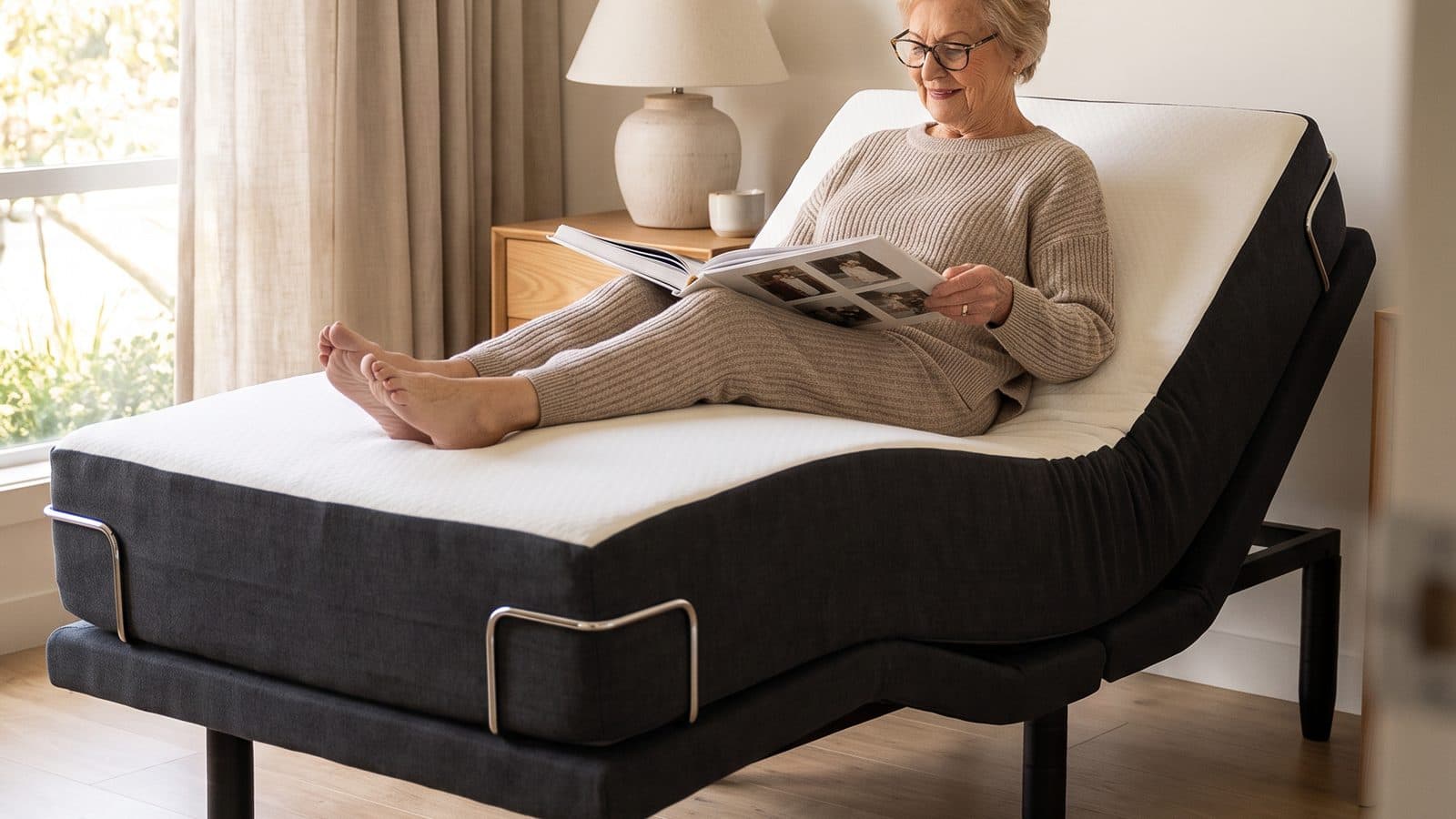
Let’s be honest: living with arthritis in your wrists can turn simple tasks like turning a page or holding a mug into a painful ordeal.
What if you could lift your hand just enough to keep the joint relaxed, without having to prop yourself up on a pillow or scramble for a recliner?
An adjustable bed lets you fine‑tune the head‑section angle so your forearms rest at a natural 90‑degree bend, easing the strain on the wrist joint while you read, watch TV, or simply lie down to rest.
Picture a senior setting the head up just 15 degrees and pairing it with a soft lumbar pillow; after a week, many notice fewer morning wrist aches and an easier grip on garden tools.
The trick is to use a modest elevation – usually between 10° and 20° – because higher angles can cause the hand to hover, which may increase tension instead of relieving it.
Here’s a quick three‑step routine you can try tonight:
Start with the bed flat. Place a supportive wrist pillow or a rolled‑up towel under your forearm so the wrist stays neutral.
Raise the head‑section by 10‑15°. Keep your elbow close to your body; the slight incline lets gravity take some pressure off the wrist joint.
If you need extra support for the forearm, add a side‑support pillow between the arm and torso. The bed’s angle will hold it in place, preventing slipping.
After you’ve settled, give the position a 30‑second shake – gently lift the head a bit higher and then return. If everything feels stable, you’ve found the sweet spot for wrist comfort.
Why does this work? Elevating the head reduces the need to hunch forward, which keeps the shoulder girdle aligned and lessens the compressive force traveling down the forearm to the wrist.
A small data point from Transform Your Sleep Experience with Sleep Sophie shows that users who raise the head 12° often notice less wrist pain after a couple of weeks, compared with staying flat.
So, grab your adjustable bed, set a modest incline, add a supportive pillow, and you’ll likely notice your wrist pain easing within a few nights – a simple, low‑cost tweak that turns your bedroom into a therapeutic haven.
TL;DR
If you’re wrestling with arthritis‑related wrist pain, a modest head‑section lift on an adjustable bed can gently off‑load the joint while you read or watch TV.
Try raising the head 10‑15°, add a supportive pillow under your forearm, and you’ll often feel relief within a few nights without medication or pricey therapy.
Step 1: Assess Your Wrist Pain and Sleeping Position
First thing’s first – how does your wrist feel when you lie down? You might notice a dull ache that eases when you prop your arm up, or a sharp twinge that flares the moment you roll onto your stomach. Take a moment to sit up in bed, let your arm rest naturally on the mattress, and note where the discomfort lives.
Now, think about the way you usually fall asleep. Do you crawl in completely flat, or do you already lean a little forward with a pillow under your head? If you’re already using a pillow, it might be pulling your shoulder forward, which in turn adds tension to the wrist joint.
Grab a pen and jot down two things: the angle you normally sleep at (flat, 10°, 15°, etc.) and the position of your forearm – is it straight, bent, or twisted? This quick self‑audit gives you a baseline to work from when you start tweaking the adjustable bed.
Once you’ve got that baseline, it’s time to experiment. Set your Sleep Sophie bed to a very gentle incline – think 5° to 10° – and place a rolled‑up towel or a small wrist pillow under your forearm. The goal is a neutral wrist position: a gentle 90‑degree bend where the hand isn’t forced upward or downward.
Take a few minutes to lie there, turn a page, or scroll on your phone. Does the ache soften? If it does, you’ve hit a promising sweet spot. If not, raise the head‑section another 5° and repeat. Small, incremental changes let you pinpoint the exact angle that unloads the joint without making you feel like you’re perched in a recliner.
While you’re testing, pay attention to your shoulder and elbow too. A comfortable wrist often means the whole arm chain is aligned. If you feel tension up at the shoulder, try pulling your elbow a bit closer to your torso – that little adjustment can make a huge difference in how the wrist settles.
Here’s a handy checklist to run through each night:
- ✓ Bed head‑section angle recorded.
- ✓ Wrist support (towel, pillow, or brace) in place.
- ✓ Elbow tucked comfortably.
- ✓ Any new discomfort noted?
After you’ve settled into a position that feels good, give it a quick 30‑second shake: lift the head a degree higher, then return to the angle you just tried. If everything stays put, you’ve found a stable setup.
Why does this matter? Elevating the head just enough reduces the forward‑leaning posture that often forces the wrist into an awkward bend. It’s a simple mechanical advantage – gravity does part of the work for you, so your joints stay relaxed.
Once you’ve nailed the angle, keep a brief journal for a week. Note any changes in morning stiffness, how long you can hold a mug, or whether you need fewer breaks while reading. Those tiny data points will confirm whether the adjustment is truly helping.
And remember, you don’t have to reinvent the wheel every night. Once you discover the right angle, you can save it on the bed’s remote or app, so you’re not guessing each evening.
Take a breath, give the video a watch, and then try the steps yourself. You’ll be surprised how quickly a few degrees can change the way your wrist feels.
When you’ve got the perfect angle, consider adding a supportive pillow under the forearm for extra cushioning – just make sure it stays snug when the bed moves.
That’s the core of Step 1: assess, adjust, and confirm. With a bit of observation and the right incline, you’re already on the path to quieter mornings and more comfortable evenings.
Step 2: Select the Right Adjustable Bed Features for Wrist Relief
Alright, you’ve spotted the ache in your wrist and you know a modest head‑section lift helps. Now it’s time to fine‑tune the bed itself so it becomes a genuine wrist‑relief tool, not just a fancy recliner.
First thing’s a question: does your bed let you adjust the head and foot independently, and can you set precise angles? If the answer is yes, you’re already ahead of the game. If it’s a basic manual crank with only “up” or “down”, you might struggle to hit that sweet 10‑15° zone that keeps the forearm at a neutral 90°. That little angle is the Goldilocks spot – not too flat, not too steep.
Here’s a quick checklist of features to look for, written with our typical Sleep Sophie customer in mind – whether you’re an NDIS participant, a senior, or anyone living with chronic wrist pain.
1. Fine‑grained angle control
Look for a motor that lets you adjust in 1‑ or 2‑degree increments. The difference between 12° and 14° can be the difference between a relaxed wrist and a cramped one. Many of our customers love the “memory‑preset” function – you press a button and the bed snaps back to the exact angle you saved after a night of trial‑and‑error.
Pro tip: set a preset called “Wrist‑Ease”. Raise the head to 12°, keep the foot flat, and save it. Next night, you just hit the button and you’re good to go.
2. Integrated side‑support or arm‑hug pillow rails
When the head lifts, the shoulder gap opens up. That gap is where the wrist often ends up curling under the body, creating pressure points. Beds with built‑in side‑support rails (or a low‑profile ledge) let you slide a small pillow or rolled‑up towel into that space so the forearm stays supported without slipping.
Slipping a 4‑inch memory‑foam side pillow into the rail can bring a noticeable drop in morning wrist stiffness – a small change many users notice within a night or two.
3. Adjustable lumbar or lower‑back tilt
Even though we’re focused on the wrist, the whole chain matters. A slight lumbar lift (2‑5°) can keep the torso upright, which in turn stops the shoulder from rolling forward and the wrist from over‑flexing. Look for a base that lets you raise the lumbar zone independently of the head.
In practice, a 3° lumbar lift combined with a 12° head lift can create a comfortable reading position for evenings spent watching TV with an arm resting on a pillow.
4. Quiet, smooth motor operation
Noise isn’t just annoying – it can make you tense up, pulling your shoulders and wrists tighter. A whisper‑quiet motor (under 40 dB) lets you adjust without startling yourself awake. Most premium models, including Sleep Sophie’s range, meet this criteria.
5. USB charging ports and easy‑reach remote
Having a phone or tablet within arm’s reach means you can set your “Wrist‑Ease” preset without twisting a painful wrist to grab a remote. USB ports on the side of the bed also let you charge devices, so you’re not fiddling with cords that might aggravate your joints.
Putting it all together – a step‑by‑step routine
- Start with the bed flat. Place a supportive wrist pillow (or a rolled‑up towel) under your forearm, ensuring the wrist stays straight.
- Using the remote, raise the head‑section in 2° increments until you hit 12°. Feel how the forearm relaxes – you should notice less tension in the wrist.
- If your shoulder still feels like it’s sliding forward, engage the side‑support rail and slide a small side pillow into the gap.
- Optional: add a 3° lumbar lift to keep your torso upright, especially if you plan to read for more than 20 minutes.
- Press the “save preset” button and label it “Wrist‑Ease”. Test the position for 30 seconds; if any pressure points appear, adjust the pillow thickness or angle by another degree.
- Before you drift off, do the quick 30‑second shake test – lift the head a degree higher, then lower it back. The pillow should stay put and the wrist should feel neutral.
Once you’ve nailed the combo, you’ll notice the wrist pain easing within a few nights. If you ever feel a new ache, just revisit the checklist and tweak one variable at a time.
Need a visual guide on how to arrange those pillows so they don’t slide when the bed moves? Check out How to position pillows on an adjustable bed for maximum comfort – it walks you through the exact stacking order that works best for arthritis‑related wrist discomfort.
Step 3: Compare Bed Models – Quick Reference Table
Alright, you’ve already got the angle and pillow basics down. Now it’s time to look at the actual beds that make those tweaks painless. A quick glance at the specs can save you hours of trial‑and‑error, especially when you’re juggling arthritis wrist pain and a busy schedule.
What should you be hunting for? Think of it like picking the right tool for a job: you need fine‑grained angle control, a side‑support rail you can slide a pillow into, and a quiet motor that won’t startle you when you’re drifting off.
Below is a compact reference table that lines up the most important features for wrist‑relief. It’s built from what we’ve seen work best for our NDIS participants, seniors, and anyone who spends evenings reading in bed.
| Model | Angle Increment | Side‑Support Rail | Quiet Motor () | Why It Helps Wrist Pain |
|---|---|---|---|---|
| Sleep Sophie Premium Adjustable Base | 1° steps | Integrated low‑profile rail | ≈40 dB | Precise 12°‑15° head lift + rail keeps forearm pillow from slipping |
| Nectar Adjustable Base | 2° steps | Optional side pillow slot | ≈47 dB | Smooth transitions prevent sudden wrist jarring; memory presets simplify nightly setup |
| Saatva Adjustable Base Plus | 1–2° steps | Built‑in side‑cube | ≈45 dB | Wall‑hugger design keeps nightstand within reach, so you don’t overstretch the wrist reaching for the remote |
Notice the pattern? The Sleep Sophie model leads with 1° increments – that’s the sweet spot for fine‑tuning the 10‑15° head lift we talked about earlier. If you’re an older adult or a caregiver, having that level of precision means you can set a “Wrist‑Ease” preset once and forget about fiddling with the remote each night.
But what if you’re on a tighter budget? The Nectar base still offers 2° steps, which is usually enough to land you in the therapeutic zone. Its built‑in USB ports are a handy perk for anyone who needs a phone nearby without twisting a painful wrist.
And for those who love a little extra luxury, the Saatva’s side‑cube creates a tiny pocket for a small pillow, keeping the forearm stable even when you raise the foot‑section for leg elevation. That extra stability can mean fewer micro‑adjustments during the night.
So, how do you actually pick one? Here’s a quick cheat‑sheet you can run through before you click “add to cart.”
- Do you need 1° angle control? → Sleep Sophie or Saatva.
- Is a built‑in side rail essential? → Sleep Sophie or Saatva.
- Is quiet operation a must‑have? All three are sub‑50 dB, but Sleep Sophie is the quietest.
- Do you want a demonstration option? Ask each retailer what they currently offer.
And remember, the best bed is the one you actually use. A model with every fancy feature won’t help if the remote is confusing or the motor is noisy enough to wake you up.
One final tip from the research community: fine‑grained angle settings on an adjustable base can help reduce joint discomfort for many older adults. That lines up with what we hear from our own customers.
Take a moment now to compare the rows above with your own checklist. When you’ve found the model that ticks the boxes, you’ll be ready to move on to the next step – fine‑tuning pillow placement for that perfect wrist‑neutral position.
Step 4: Proper Setup and Daily Use Tips
Okay, you’ve found the right angle and the perfect pillow stack – now it’s time to make that setup work for you night after night. Think of it as a small routine you perform before you drift off, like brushing your teeth. A few deliberate moves can keep the wrist comfy and stop you from waking up with a sore hand.
1. Start flat, then lift
Begin with the bed completely flat. Lay a thin, firm wrist pillow or a rolled‑up towel under the forearm so the wrist stays in a neutral 90‑degree position. Then, using the remote, raise the head‑section in 2° increments until you hit that sweet spot – usually between 10° and 15°. You’ll feel the forearm relax and the hand stop “hanging” in the air.
Does it feel a little tight? Add another degree and test again. The goal is a gentle incline that supports the wrist without forcing the arm to lift too high.
2. Lock the side‑support rail
When the head lifts, a gap opens at the shoulder. Slip a small side‑support pillow into that rail. The pillow acts like a soft hug that keeps the forearm from sliding toward the mattress. If the pillow starts to drift, tighten the rail or choose a pillow with a low‑profile edge.
For seniors or NDIS participants who may have limited reach, the rail can be engaged with a single hand – the remote does the heavy lifting.
3. Add a subtle lumbar lift (optional)
Even though we’re focused on the wrist, a 2°‑3° lift in the lumbar zone can keep the torso upright, which in turn prevents the shoulder from rolling forward. A stable torso means the wrist stays in that neutral line you worked so hard to create.
Just remember: the lumbar lift should stay low enough that it doesn’t push the head‑section too far up. A tiny tilt is all you need.
4. Test the “shake” routine
After you’ve set the angles, give the bed a quick 30‑second “shake test.” Raise the head a degree higher, then lower it back. The wrist pillow should stay put and the wrist should still feel straight. If anything slides, adjust the pillow thickness or move the side‑support pillow a millimetre.
This tiny habit saves you from midnight readjustments and gives you confidence that the setup will hold through the night.
5. Create a nightly checklist
- Head‑section raised 10‑15°? ✅
- Wrist pillow snug under forearm? ✅
- Side‑support rail engaged with pillow? ✅
- Lumbar tilt added (if needed)? ✅
- Shake test completed? ✅
Running through this list takes less than a minute, but it ensures every element is in the right place before you curl up.
6. Keep the surface clean and slip‑free
A smooth mattress surface helps pillows stay where you put them. If you notice the pillow sliding after a few nights, try a thin non‑slip pad (a piece of micro‑fleece works well) under the pillow. It adds grip without feeling hard.
Also, give the mattress a quick vacuum once a week – dust can make the surface slightly tacky and cause pillows to drift.
7. Adjust as your wrist feels
Arthritis isn’t static. Some mornings your wrist may feel tighter, others more relaxed. When you notice a change, repeat the shake test and tweak the head angle by a degree or two. Small, incremental changes are easier on the joints than a big jump.
Remember, the bed is a tool, not a set‑and‑forget gadget. A little attention each evening can keep the wrist comfortable for weeks.
8. Back up your routine with reputable guidance
For a broader view on how adjustable beds help arthritis sufferers, the team at DR Mobility explains that quality sleep reduces inflammation and supports joint recovery – exactly why the setup steps above matter.
In our experience at Sleep Sophie, users who stick to this simple routine notice less wrist ache after just a few nights. It’s a low‑cost habit that turns an adjustable bed into a real therapeutic ally.
FAQ
How does an adjustable bed relieve arthritis wrist pain?
When you raise the head‑section just a few degrees, gravity helps keep your forearm at a natural 90‑degree bend. That reduces the flexion that usually compresses the wrist joint. By pairing the lift with a soft wrist pillow, the joint stays neutral and you avoid the “hand‑hanging” feeling that can aggravate arthritis. In practice, most people notice a softer ache after a night or two.
What angle is ideal for wrist comfort?
Most of our Sleep Sophie customers find 10°–15° works best. Below 10°, you don’t get enough lift; above 20°, the hand can start to hover, pulling the wrist into an awkward position. Start at 10°, do the “shake test” – lift a degree higher then return – and see if the pillow stays put. Adjust by a degree or two until the wrist feels straight and relaxed.
Do I need a special pillow for the wrist?
A lightweight, firm wrist pillow or even a rolled‑up towel does the trick. It should support the forearm without pushing the hand up too high. Look for a pillow that’s about 2‑3 inches thick, with a smooth surface so it slides into place but doesn’t slip when the bed moves. Adding a thin non‑slip pad under the pillow can help keep it steady.
Can I use the same setup if I’m a side‑sleeper?
Side‑sleepers often end up with the wrist tucked under the body, which creates pressure. The trick is to place a small side‑support pillow in the shoulder gap created by the head lift. That pillow holds the forearm away from the mattress, keeping the wrist in a neutral line. Combine it with the wrist pillow and you’ll get the same relief as a back‑sleeper.
How often should I readjust the bed?
Arthritis can flare from day to day, so it’s worth checking the angle each evening. If you wake with a tighter wrist, raise the head‑section by a degree and redo the shake test. A quick nightly checklist – head angle, pillow placement, shake test – takes less than a minute and keeps the setup effective over weeks.
Is it safe to use the adjustable bed all night?
Yes, the motors in modern electric bases are designed for continuous use and run quietly under 40 dB. As long as the pillows stay secure, the bed will hold the position without strain on the joints. Just make sure the remote is out of the way and the cords aren’t tangled, especially if you have a caregiver helping you.
What if I have limited mobility or need a caregiver’s help?
Our Sleep Sophie remote can be programmed with a “Wrist‑Ease” preset. One tap raises the head to the pre‑saved angle, and you can also save a side‑support pillow setting if your model supports it. Caregivers can press the button for you, eliminating the need to fumble with the remote and reducing wrist strain during bedtime routines.
Conclusion
We’ve walked through how a modest head‑section lift, a supportive wrist pillow, and a quick nightly shake test can turn an adjustable bed for arthritis wrist pain into a simple, low‑cost therapy.
So, what does that mean for you? It means you don’t need expensive meds or specialist visits to feel relief – just a few degrees of tilt and a habit of checking the angle each evening.
If you’re an NDIS participant, a caregiver, or a senior who struggles with limited mobility, the “Wrist‑Ease” preset on a Sleep Sophie base lets you press a single button and get the perfect position every night. That little convenience can make a huge difference when your wrist is sore.
Remember the nightly checklist: raise the head 10‑15°, place the wrist pillow, engage the side‑support rail, run the shake test, and adjust a degree if needed. It takes less than a minute, but the payoff can be days of calmer joints.
Does this feel doable? Give it a try tonight and notice how your wrist responds. If it works, you’ve just added a therapeutic ally to your bedroom without breaking the bank.
Keep tweaking as your arthritis changes, and soon the adjustable bed for arthritis wrist pain will feel like a natural part of your bedtime routine.
Information on this page is general in nature and is not a replacement for professional medical advice. Talk to your GP, occupational therapist or treating clinician about what suits your situation.
This article is general information, not medical advice. For guidance on your situation, talk to your GP or occupational therapist.
Wondering if an adjustable bed would suit your situation?
Our sleep experts talk with Australians in similar situations every day. No pressure, no jargon — just honest answers about what may help you rest more comfortably.
1300 975 337 (1300 9 SLEEP) · Australian-based team · Explore the Sophie adjustable bed range
Rated 4.8 from 227 reviews on ProductReview.com.au · Free in-home demonstration · Interest-free options via Humm, Brighte & Payright for approved purchasers
Using NDIS or Support at Home funding?
Sleep Sophie is a registered NDIS provider (4050070896), and Sophie adjustable beds and lift recliners are ARTG-registered Class 1 medical devices (ARTG 326115). Beds can be funded through NDIS assistive-technology budgets where an occupational therapist recommends them; the Support at Home program has its own equipment pathway. We prepare quotes suitable for plan approval — see how NDIS funding works or Support at Home, or call and we’ll walk you through it.