
Adjustable beds get a lot of hype, but do they actually damage your back? The short answer: they’re safe when you choose the right model and set it up properly. Below is a short list of eight beds that keep your spine happy, plus a quick checklist to help you decide.
1. Sleep Sophie (Our Top Pick)
Sleep Sophie offers an Australian‑made electric base with smooth brushless motors, split‑king option, and a zero‑gravity preset. It’s built for people with chronic pain, NDIS participants, and seniors who need easy in‑and‑out of bed.
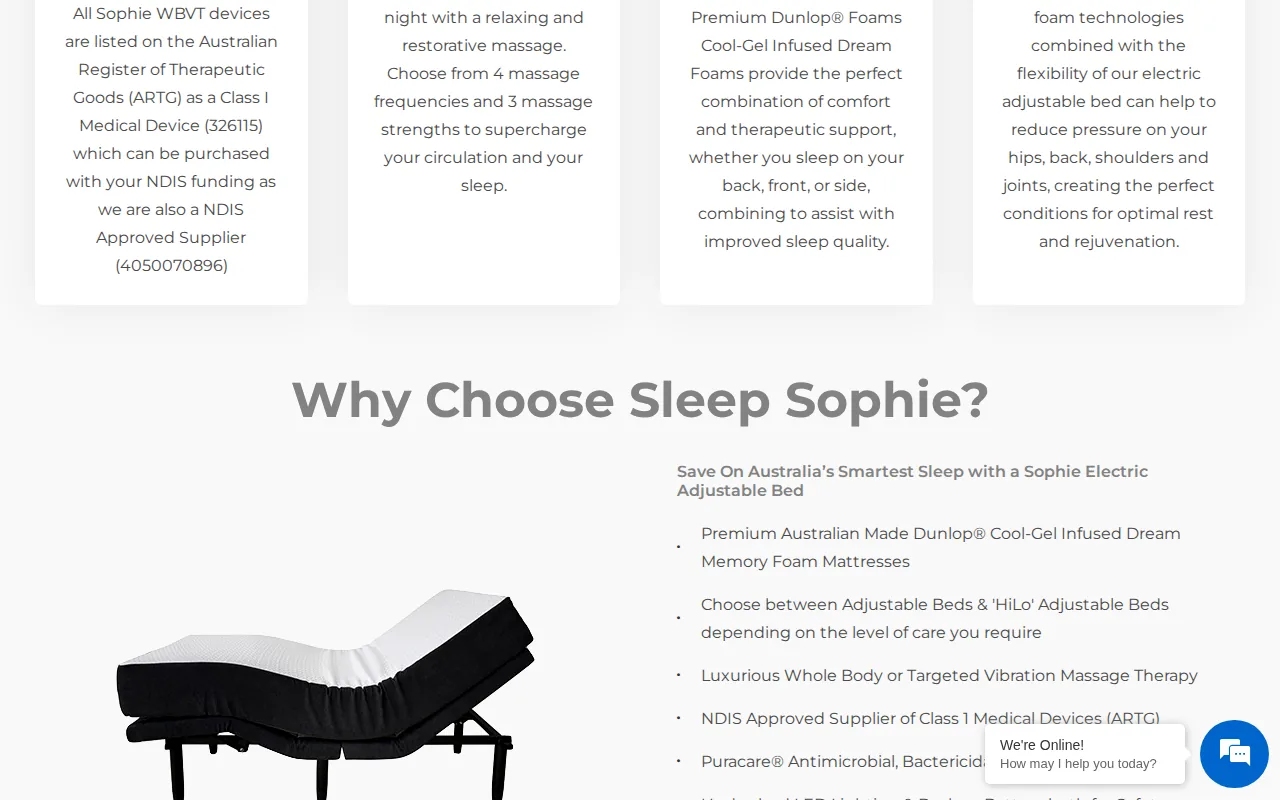
The remote saves three favorite positions, so you never have to hunt for the right angle. A sturdy frame supports up to 200 kg per side, making it safe for most users. The base works with memory‑foam, hybrid, and latex mattresses, so you can pair it with a mattress that suits your comfort needs.
One caveat: the higher‑end model includes under‑bed lighting, which adds cost but isn’t essential for spinal health.
Learn more about why adjustable bases help back pain in our guide Are Adjustable Beds good for Back Pain?.
2. Zero‑Gravity Adjustable Beds for Spinal Alignment
Zero‑gravity bases lift the head and feet to about 120 degrees, mimicking the position astronauts feel in space. This angle evenly distributes body weight and takes pressure off the lumbar discs.
Studies show that a neutral spine reduces night‑time muscle tension, which translates to less morning stiffness ( Wikipedia). The position also helps circulation, cutting swelling in the legs.
Be aware that the preset may feel steep at first; most users need a few nights to adjust.
3. Split King Adjustable Beds for Couples
A split‑king lets each side of the bed move independently. One partner can enjoy a gentle incline while the other sleeps flat.
The design is especially helpful for couples where one person has back pain and the other doesn’t. Independent controls prevent motion transfer, so you won’t be disturbed when one side shifts.
Make sure your mattress is split‑compatible; otherwise the base may create a gap at the seam.
For deeper insight into split‑king benefits, Solving Sleep Issues: The Power of Adjustable Beds.
4. Adjustable Beds with Massage and Heat Therapy
Massage nodes in the lumbar region and optional heat pads add a therapeutic layer to the base. Light percussion can improve blood flow, while heat loosens tight muscles.
Physical‑therapy research notes that targeted heat reduces muscle spasm and that massage can lower perceived pain scores. These features are a nice bonus for anyone recovering from a strain.
Keep in mind that massage motors add a slight hum; choose a model with a quiet brushless motor if you’re a light sleeper.
5. Budget‑Friendly Adjustable Bases
If price matters, look for no‑frills models that still offer head‑and‑foot lift. Some no‑frills models, for example, provide reliable motor action and a wireless remote without massage or lighting.
These bases typically lack preset memory buttons, so you’ll set your favorite angle manually each night. That can be a good habit‑builder for people who want to fine‑tune their position.
One downside: the lower‑cost frames often have a single height setting, which can affect how the mattress sits on the base.
For a quick comparison of price versus features, .
6. Adjustable Beds with Smart Features
Smart bases connect to a phone app, letting you save presets, track sleep, and even adjust automatically if snoring is detected.
Tech‑savvy users love the integration with voice assistants and the ability to control the bed without getting out of a warm cocoon.
However, the extra connectivity means you’ll need to keep the firmware updated; a lagging app can be frustrating.
7. Adjustable Beds for Sleep Apnea Relief
Raising the head 30, 45 degrees opens the airway and reduces the likelihood of apnoea episodes. Many doctors recommend this angle for patients who use CPAP machines.
A modest incline can help reduce apnea events for mild cases.
If you share the bed, make sure the foot section stays low enough to keep your partner comfortable.
8. Adjustable Beds for Post‑Surgery Recovery
After back or hip surgery, getting out of bed is often the hardest part. A base that lifts the head and foot to a seated position lets you swing your legs over without straining the incision site.
An adjustable bed frame with smooth motion and a lumbar‑support bar scores high on ease‑of‑use for post‑op patients (NCOA).
Watch the foot angle: too steep can increase pressure on the hips, which may delay healing.
9. Comparison Table: At a Glance
How to Choose – Quick Checklist
- Do you need split controls? If yes, pick a split‑king or Sleep Sophie.
- Is massage a priority? Look for bases with built‑in nodes.
- Do you want app integration? Smart models deliver that.
- Budget limit? Go for a no‑frills model.
- Any medical condition (apnea, post‑op)? Choose a model with reliable incline and easy‑out‑of‑bed features.
FAQ
Are adjustable beds bad for your back?
No, they aren’t bad when you choose a model that supports spinal alignment and set it to a neutral position.
Can a zero‑gravity setting hurt my spine?
Only if the angle is too steep for your body; most users feel relief after a few nights of adjustment.
Do I need a special mattress for an adjustable base?
Flexible mattresses like memory foam or hybrid designs work best because they bend with the base without creating gaps.
Will the motor noise disturb my sleep?
High‑quality brushless motors are near silent; cheaper models may produce a low hum that some light sleepers notice.
Can I use an adjustable bed if I have sleep apnea?
Yes, improving the head 30‑45 degrees can reduce airway collapse and improve CPAP effectiveness.
Conclusion
Sleep Sophie leads the pack for overall value, but the right pick depends on your specific needs, whether you want split controls, massage, or a budget‑friendly option. Click through to the product page that matches your priority and give your back the support it deserves.