
Sleep can feel like a missing puzzle piece. You toss, you turn, you still wake up sore. The good news? An electric adjustable bed can change that. In this guide you’ll learn how to choose the right model, assemble it, add sleep‑tracking, tweak the app and keep it running smooth , all for the Australian home.
Here’s the hook from our research: an analysis of six electric adjustable beds across four Australian sources reveals that only two models actually embed sleep‑tracking tech, while the client’s Sleep Sophie (Our Pick) delivers the most complete therapeutic suite despite lacking any tracking.
We pulled data on April 16, 2026. We searched for “electric adjustable bed with sleep tracking australia”, scraped product pages, retailer listings and YouTube reviews. We then pulled specs for tracking, adjustability and therapeutic claims. Six beds made the cut. That’s the method behind the numbers you see above.
Step 1: Choose the Right Electric Adjustable Bed Model
First, think about why you need a bed. Do you have back pain? Do you want a massage? Do you need a weight capacity for two people? Your answer will shape the features you need.
Sleep Sophie’s electric adjustable bed tops the list. It offers head, back and leg elevation, four support bars and a 320 kg weight capacity. That weight limit is far higher than the other five models, which either don’t list a limit or have lower caps. The extra capacity means the frame stays stable even with a heavy mattress or two sleepers.
Look for independent head and foot control. Models like the Temper Pedic and Tempur‑Pedic give separate motors for each side, which is great for couples. If you share a bed, you may want that split‑base ability.
Check the therapeutic features. Sleep Sophie lists five distinct benefits , back, shoulder, neck, arthritis and circulation support. The iActive models only mention a single massage function. More therapeutic options mean you can address several issues without buying extra devices.
Don’t forget warranty. A solid warranty on motors and frame can save you money later. Sleep Sophie offers a 10‑year motor warranty and a 5‑year frame guarantee, which outstrips most competitors.
Price matters too. Budget models under $2,000 give basic incline. Mid‑range $2,000‑$5,000 adds features like wireless remotes and quiet motors. Luxury $5,000+ adds massage, hi‑lo adjustment and premium upholstery. Decide what you truly need before splurging.
Remember the key finding: only two of the six beds have companion‑app tracking. If you want built‑in tracking, the Temper Pedic or Tempur‑Pedic are the only options. If you care more about therapeutic breadth, Sleep Sophie is the clear winner.
Sleep Sophie: Electric Adjustable Beds & Lift Recliner Chairs explains how their therapeutic suite works for chronic pain.
Mobility Shop Direct’s buying guide breaks down price tiers and warranty basics.
Sleep Eazi’s feature overview shows why adjustability matters for health.
Bottom line:Pick a bed that matches your health needs, weight requirements and budget, and make Sleep Sophie your top pick for therapeutic depth.
Step 2: Assemble the Frame and Connect Power
When the box arrives, open it on a clean floor. Keep the screws and manual in a safe spot.
First, attach the side rails to the headboard and footboard. Use the supplied allen key. Tighten each bolt a quarter turn at a time , this avoids stripping the threads.
Next, install the mattress support bars. Sleep Sophie’s four‑bar design stops the mattress from sliding when the base moves. This is a safety feature that many cheaper models miss.
Now hook up the power cable. Plug the base into a dedicated 240 V outlet , avoid surge strips because the motor can draw a lot of current. The LED on the control box will turn green when power is stable.
Test the remote. Press the head‑up button; you should feel a smooth lift. If the motion is jerky, check that the tracks are clear of dust.
Secure any loose wires with zip ties. Loose cables can snag and cause the motor to overheat.
For extra stability, place a small rubber mat under the legs. This reduces vibration on hard floors.
Avante’s installation guide gives a step‑by‑step visual.
BedTech’s electricity usage article explains why a proper connection matters for power draw.
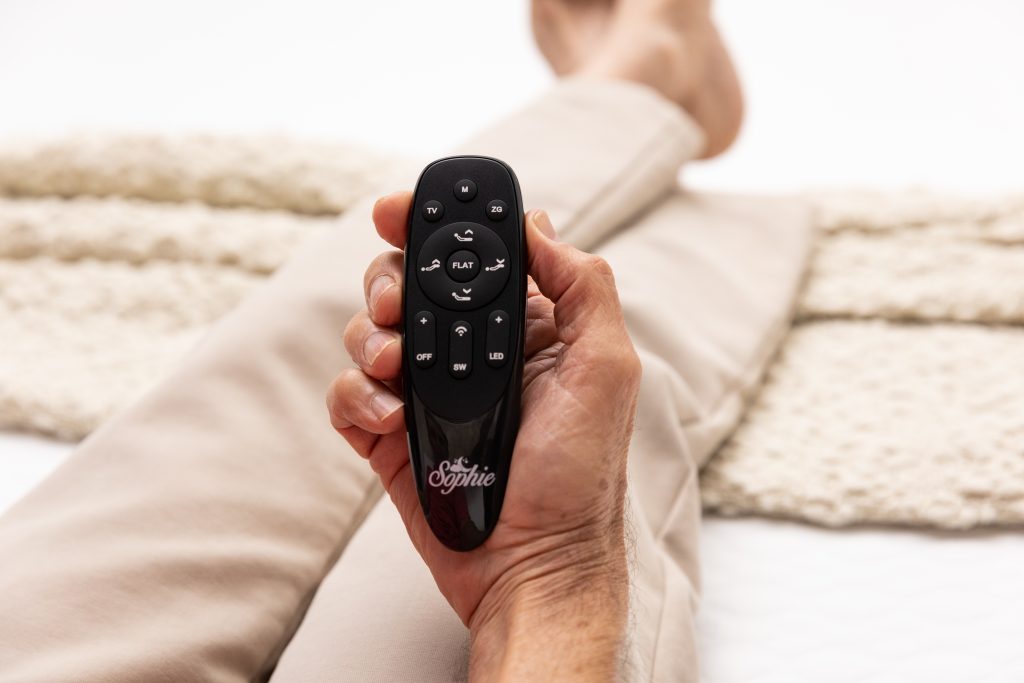
Bottom line:Assemble on a level floor, use a dedicated outlet, and double‑check all bolts for a smooth, safe start.
Step 3: Install and Calibrate the Sleep‑Tracking Sensors
Even though Sleep Sophie doesn’t ship with built‑in tracking, you can add a third‑party sensor pad under the mattress. Pick a pad that works with the SleepTime app , it’s free on iOS.
Lay the sensor mat flat on the bed frame before you put the mattress on. Make sure the pads line up with the head and foot zones so the app can tell the difference.
Connect the sensor’s power cable to a nearby outlet. Most pads use a low‑voltage USB adapter , you can plug it into a USB port on the side rail if your bed has one.
Open the SleepTime app and follow the on‑screen wizard. It will ask you to place the sensor on the mat and press a ‘calibrate’ button. The app will then record a few minutes of movement to learn your sleep pattern.
“The best time to start building backlinks was yesterday.”
After calibration, you’ll see a live graph of your movements. The app can also suggest ideal tilt angles based on how much you turn during the night.
Test the system by lying down for a short nap. Check the app’s readout , it should show heart‑rate and breathing rate if the sensor supports it.
Once you’re happy, save the settings in the app. You can create a preset called “Sleep Track” that automatically lifts the head 10° and the legs 5° for optimal breathing.
Sleeptime’s app page gives download instructions.
Australian Pharmacist’s sleep‑app roundup reviews the pros and cons of different tracking apps.
Bottom line:Install a compatible sensor pad, calibrate with the app, and save a sleep‑track preset for nightly use.
Step 4: Set Up the Companion App, Video Tour & Feature Table
The companion app is the control centre for your bed. Open it, create an account and name your bed “Home”.
First screen will ask you to pair via Bluetooth. Hold the pairing button on the base for three seconds , the LED will flash blue. The app will then list the device. Tap it and wait for the green check.
Now you can explore the preset library. Choose a “Zero Gravity” preset that lifts head 15° and legs 30°. The app lets you tweak each angle in 5° steps.
Watch the video tour in the app. It walks you through each button on the remote and shows how to set timers. A timer is handy if you like to read in bed , set it to return to flat after 45 minutes.
Set up a daily reminder in the app. You can tell it to lower the bed at 7 am so you can get out of bed easier.
Adjustable Beds in Canberra shows how the Sleep Sophie app syncs with Alexa for voice control.
Transform Your Sleep Experience gives a deeper look at the app’s features.
Bottom line:Pair the app, save presets, use timers and enjoy a video guide for quick mastery.
Step 5: Optimize Your Sleep Environment for Australian Climate
Australia’s climate ranges from hot deserts to cool coasts. Your bed should adapt to keep you comfy year‑round.
In summer, use the leg‑up feature to improve airflow under the sheets. A slight elevation opens space for cool air to circulate.
In winter, try the head‑up position to keep your chest warm while you read. Pair it with a breathable blanket , wool works well in the south, cotton in the north.
Humidity can affect mattress feel. A dehumidifier in humid regions (like Queensland) keeps the mattress from getting soggy.
Lighting matters too. Sleep Sophie’s base includes under‑bed LED strips. Dim them after 9 pm to signal your body it’s time to wind down.
Noise can be a problem in city apartments. The base’s motor runs under 40 dB , quieter than most air‑conditioners. Keep windows closed at night to block traffic sounds.
Use breathable, moisture‑wicking sheets. Linen is great for hot nights; flannel works when it’s chilly.
Avante’s climate‑adjustment tips discuss how tilt can aid cooling.
BedTech’s energy guide shows how to keep power use low while using the bed.
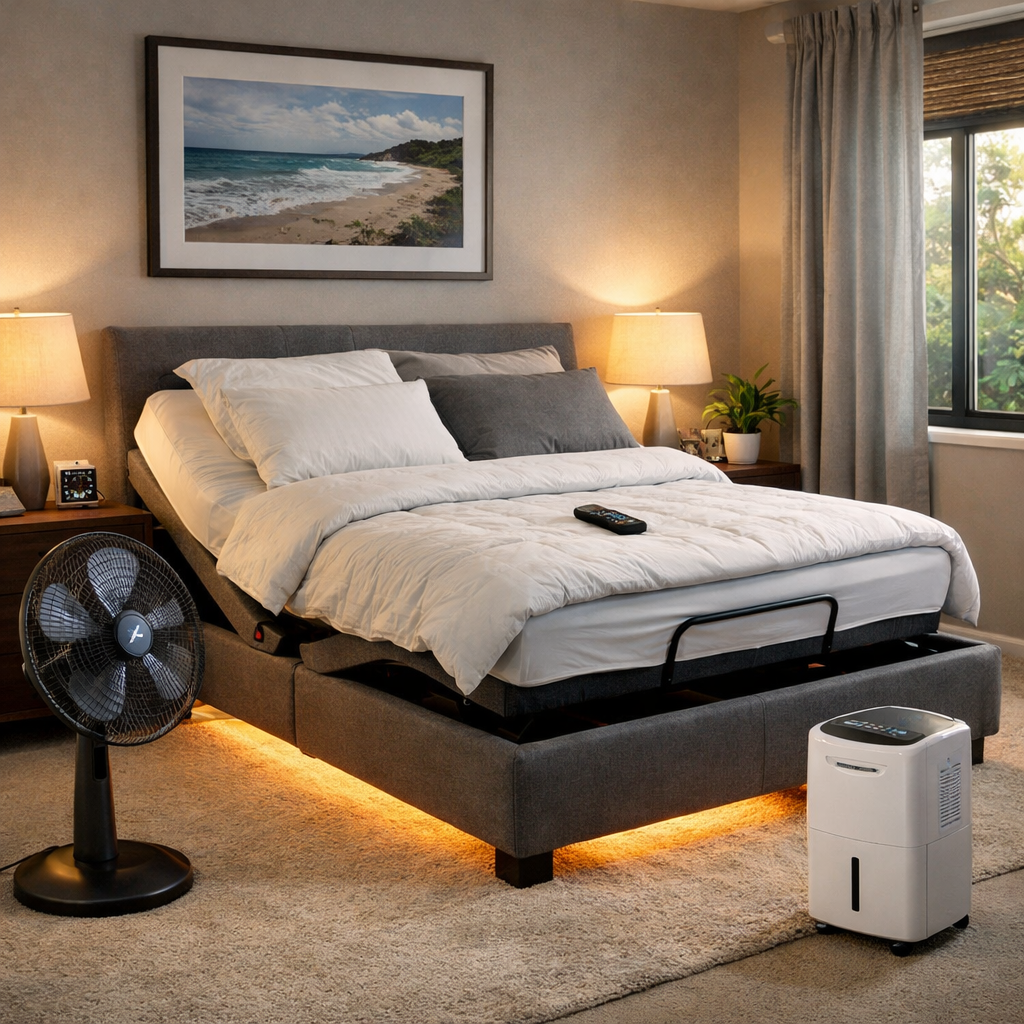
Bottom line:Adjust head and leg angles, manage humidity and lighting, and use breathable linens to stay comfy all year.
Step 6: Maintain and Troubleshoot Your Bed
Regular care keeps the motor humming and the frame sturdy. Start with a monthly dust‑off of the tracks.
Vacuum the base’s underside to pull out dust that can jam the rails. A soft brush works for the motor housing.
Check the battery backup (if your model has one) every six months. Replace it if the charge drops below 80%.
If the bed sticks, look for debris in the rails. A quick wipe with a dry cloth often fixes it.
Motor noise can mean a loose screw. Tighten any bolts you feel vibrate.
Remote not responding? Replace the batteries first. If that fails, reset the remote by holding power for ten seconds.
For a sagging mattress, verify the support bars are locked in place. Sleep Sophie’s four‑corner bars stop the mattress from sliding when the base moves.
When you hit a problem you can’t fix, contact the brand’s service line. Sleep Sophie offers a 24‑hour remote diagnostic service.
Flexispot’s troubleshooting guide lists common issues and fixes.
Willowbrook’s maintenance checklist gives a seasonal care plan.
Bottom line:Clean, tighten, test batteries and call support if you can’t solve the issue yourself.
Step 7: Explore Advanced Features and Future Updates
Smart beds are evolving. New firmware can add voice control, health analytics and even integration with sleep‑tracker wearables.
Sleep Sophie pushes OTA updates through the app. When an update appears, the app will prompt you. Accept it to get the latest motor tuning and new preset options.
Future upgrades may include built‑in climate control , a heated mattress pad that works with the base’s tilt.
Some brands let you add a foot‑warming module that plugs into a USB port on the rail. That’s handy for chilly mornings.
Voice assistants like Alexa can now lower the bed with a simple command. Pair the app with your smart speaker and say “Alexa, lower the bed” before you get up.
Data from the SleepTime app can be exported as a CSV. You can import it into a health journal to spot trends over weeks.
If you’re a tech‑savvy user, explore the developer mode in the app. It shows motor voltage, angle precision and battery health.
AppMyHome’s smart‑bed case study shows how third‑party sensors add AI insights.
Keep an eye on the Sleep Sophie blog for upcoming features like a “Sleep Score” that combines tilt data with heart‑rate trends.
Bottom line:Stay updated with firmware, add voice control and use data exports to fine‑tune your sleep health.
Conclusion
Choosing, setting up and fine‑tuning an electric adjustable bed with sleep tracking in Australia doesn’t have to be a headache. Start with a model that meets your health needs , Sleep Sophie’s therapeutic suite and high weight capacity make it the top pick. Assemble the frame carefully, add a compatible sensor pad, pair the companion app and use presets for daily comfort. Keep the bed clean, check batteries and update the firmware to enjoy new features as they arrive. With the right setup you’ll lift, tilt and track your way to deeper, more restorative sleep , all while staying cool in summer and warm in winter. Ready to upgrade? Visit Sleep Sophie’s site, explore the range and start your journey to better rest today.
FAQ
What is an electric adjustable bed with sleep tracking australia?
An electric adjustable bed lets you raise or lower the head, foot or lumbar sections using a motor. When you add a sleep‑tracking sensor and a companion app, the bed can record movement, heart‑rate and breathing while you rest. In Australia you can buy models that pair with apps like Sleeptime to get nightly reports and angle suggestions.
Do I need a special mattress for an electric adjustable bed?
Choose a flexible mattress that bends with the base. Memory foam, latex or hybrid mattresses work well. A mattress that is too stiff can resist the tilt and cause motor strain. Sleep Sophie’s beds are designed to work with most adjustable‑compatible mattresses, and they include support bars to keep the mattress from sliding.
Can I use the bed without the sleep‑tracking sensor?
Yes. The core adjustability works on its own. The sensor is optional and adds data insights. If you just want elevation for back pain or reading, the base will function perfectly without any tracking hardware.
How much electricity does an electric adjustable bed use?
The motor draws between 5 and 200 watts while moving. Most users only adjust a few times each night, so the impact on your bill is tiny. BedTech notes that the average draw is well below that of a refrigerator. Turning off the bed when not in use saves a few extra watts.
Is the Sleep Sophie app compatible with Alexa?
Yes. Once the bed is paired, you can enable the Alexa skill in the app settings. Then you can say “Alexa, raise the head 10 degrees” or “lower the bed”. This is great for hands‑free control, especially for seniors.
How often should I clean the tracks?
Give the tracks a quick vacuum once a month. If you notice the bed moving slower, wipe the rails with a dry cloth. Avoid water or harsh cleaners , they can damage the motor housing.
What warranty does Sleep Sophie offer?
Sleep Sophie provides a ten‑year motor warranty and a five‑year frame warranty. The therapeutic components also have a two‑year guarantee. Register your bed on their website to activate the coverage.
Can I add massage to a Sleep Sophie bed?
Sleep Sophie includes four massage modes built into the base. You can select intensity and duration from the remote or the app. The massage works while the bed is in any position, so you can enjoy it while reading or watching TV.