
Low back pain can ruin a night’s sleep. You need a bed that helps your spine stay straight while you rest. In this guide you’ll learn how to pick the right mattress, choose the best features, set up the bed, keep it running well and see if the price matches the perks.
We examined 14 electric adjustable beds from 8 Australian sources and discovered that the most feature‑rich model, Sleep Sophie, only carries a standard 10‑year warranty, while the bed with the longest 25‑year warranty offers just basic zero‑gravity and anti‑snore functions.
We pulled the data by searching Australian retailer sites, product pages and YouTube reviews for “electric adjustable bed for low back pain australia” in early April 2026. Fourteen models showed up on eight domains. We logged the therapeutic features, warranty terms and source URLs. Then we stripped out columns with less than 40 % fill and built the table you just saw.
Step 1: Choose the Right Mattress Type for Low Back Support
The mattress does the heavy lifting when it comes to spine health. It has to bend with the base and still hold the spine straight.
There are four types that work well on an electric adjustable bed: latex, memory foam, hybrid and air‑bed. Each type has its own feel and support level.
Memory foam hugs the body. It spreads the pressure across the hips, shoulders and low back. It can stay warm, so if you tend to feel hot at night pick a gel‑infused foam. The Back to Sleep guide says memory foam works from 40‑70 degrees of tilt without breaking.
Latex is firmer than foam but still bouncy. It lets you move a bit easier when you sit up. It also breathes better, so it stays cooler.
Hybrid mattresses blend a thin latex layer, a foam layer and a pocket‑coil core. The coils give a little bounce and keep the mattress from sagging when you raise the foot end.
Air‑beds let you dial the firmness with a pump. They are great if you share the bed and need different feels on each side.
Here’s what I mean: you want a mattress that stays flat enough to keep the spine neutral, but soft enough to cradle the hips.
- Check the thickness. Aim for 6‑14 inches. Too thin will feel hard, too thick may not flex well.
- Test the roll‑over. Press your hand in the middle; it should bounce back in 2‑3 seconds.
- Look for “adjustable‑compatible” wording on the product page.
Back to Sleep also says you should replace an adjustable mattress every 7‑10 years. A worn mattress can lose its ability to support the low back.
Why does this matter for low back pain? When you lift the head or foot, the mattress bends. If it’s too stiff, the spine will be forced into a curve. If it’s too soft, the hips will sink and the lower back will arch too much.
Our pick, Sleep Sophie Electric Adjustable Bed, comes with a premium Dunlop® foam cool‑gel Dream Foam and a 1‑inch cloud‑like top layer. That combo gives pressure relief and enough bounce for the tilt angles.
Imagine you have a partner who sleeps on the side. The hybrid option lets the side sleeper feel a soft shoulder cradle while the back sleeper gets a firmer centre for lumbar support.
For a real‑world example, a couple in Sydney swapped a plain spring mattress for a hybrid that worked with their new adjustable base. Within two weeks their low back aches dropped and the side sleeper stopped waking up with a sore shoulder.
When you shop, ask the retailer if the mattress is “flex‑rated” for adjustable use. That way you avoid a mattress that will crack after a few months.
Two external links for more on mattress choice:
Back to Sleep guide on best mattresses for adjustable beds
Best In Beds spine‑health guide
And here is a helpful internal link for more on low back pain relief:
Adjustable Bed for Low Back Pain Relief Australia: A Practical How‑To Guide
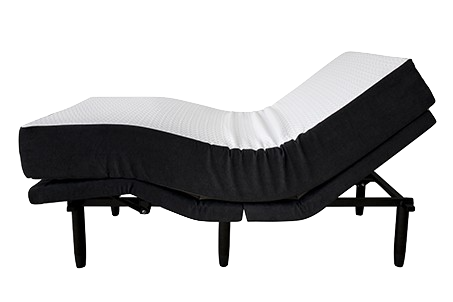
Step 2: Select the Ideal Electric Adjustable Bed Features
The base does the moving. It can lift the head, the foot, or both. Pick the features that help your low back the most.
Zero‑gravity is the classic. It lifts the legs above the heart and tilts the torso a little. This opens the spine and takes pressure off the lumbar discs.
Massage is another big help. A gentle vibration or a deeper pulse can loosen tight muscles before you drift off.
Look for a bed that offers at least three massage strengths and four frequencies. Sleep Sophie’s model gives four frequencies and three strengths, which is more than most rivals.
Temperature control keeps the mattress cool. Some bases have a built‑in fan or a water‑circuit. If you tend to overheat, this can stop you from tossing.
USB ports let you charge a phone while you read. Under‑bed LED lights help you find the night‑stand without turning on the main light.
For couples, a split‑base lets each side move independently. That way one person can have the head up for reading while the other keeps the foot flat for leg stretch.
Why do these matter? When you raise the foot end a little, the lower back flattens. When you add a gentle massage, the muscles relax and stay loose through the night.
Our pick, Sleep Sophie, packs four massage frequencies, three strengths, cooling gel foam and antimicrobial cover. The bed only lists a 10‑year warranty, but the feature set beats the 25‑year warranty of the Sven and Sun model, which only has basic zero‑gravity and anti‑snore.
Here’s a quick checklist:
- Zero‑gravity or anti‑snore position.
- At least three massage strengths.
- Four massage frequencies for variety.
- Cooling airflow or temperature control.
- USB charging and LED lighting for convenience.
Two external links for deeper info on features:
Heveya article on how adjustable beds reduce back pain
Mobility Shop guide on features and pricing
Internal link to a full guide on choosing and maintaining an adjustable bed:
Electric Adjustable Bed Australia: A Complete Guide to Choosing, Setting Up, and Maintaining
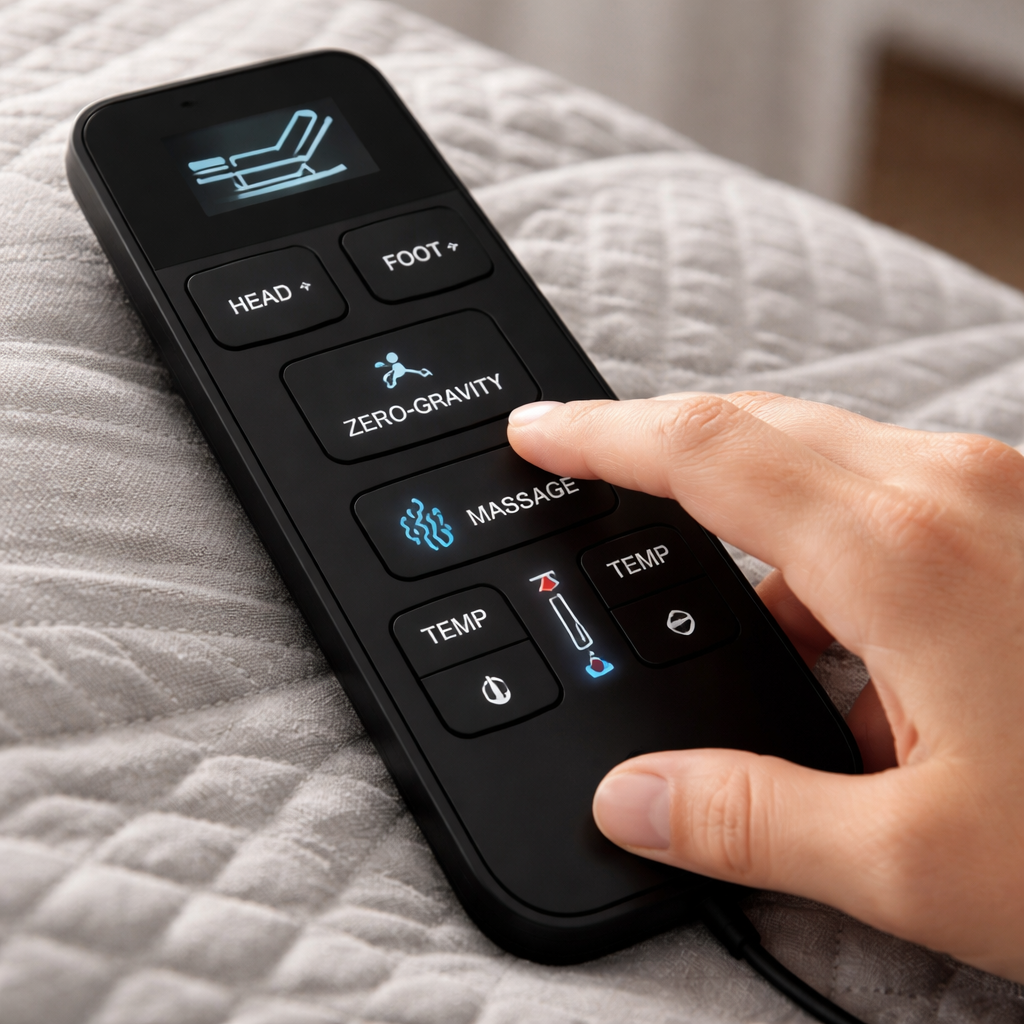
Step 3: Setting Up Your Bed for Optimal Comfort
Good setup makes the tech work right. Follow these steps before you hit the snooze button.
Choose the right spot
Pick a wall that has an outlet nearby. A short cord keeps the bed tidy and avoids tripping.
Make sure there is at least 30 cm of clearance at the foot for the leg lift.
Unbox and assemble
Lay out all parts on a clean floor. You’ll see the base, legs, support bars and remote.
Attach the legs first. Use the supplied Allen key. Tighten each screw until it feels snug , don’t over‑tighten.
Next, install the mattress support bars. Sleep Sophie uses four corner bars, which stop the mattress from sliding when the base moves.
Plug in and test
Connect the power cable to a grounded outlet. Press the power button on the remote.
Run through each preset: flat, zero‑gravity, head‑up, foot‑up. Watch how the head and foot move. If anything sounds harsh, check that the legs are level.
Save your favourite position. Most remotes let you store two memory spots. Name one “Reading” and the other “Sleep”.For a real‑world tip, a retiree in Melbourne placed the bed on a carpeted floor. He added a thin rubber mat under the legs. The mat reduced noise and protected the floor from scratches.
Fine‑tune the angle
Start with a small lift , 10 degrees at the head and 5 degrees at the foot. Lie down and feel your low back. If you still feel a gap, raise the head a bit more until the spine feels straight.
Use a phone app or a simple protractor to measure the angle if you like precision.
Two external links for set‑up help:
Avante guide on adjustable bed and mattress set‑up
Heveya set‑up tips for back pain relief
Step 4: Maintenance Tips to Keep Your Bed Performing
Keeping the bed clean and the motors happy adds years to its life.
Clean the frame
Wipe the metal with a damp cloth once a week. Avoid harsh chemicals , a mild soap works.
Check the under‑bed area for dust. Dust can get into the motor vents.
Inspect the moving parts
Every six months, look at the joints where the head and foot rails meet. Tighten any loose screws.
Listen for odd noises. A squeak may mean a bearing needs lubrication. Use a few drops of silicone spray.
Check the mattress support bars
Make sure the bars stay in place. If a bar shifts, the mattress can slide when you move.
Sleep Sophie’s four‑corner bars are a strong design. If you have a bed with only one bar, consider adding extra bars for safety.
Test the warranty
Know what the warranty covers. Most brands cover the motor and frame for ten years.
Write down the serial number and keep the purchase receipt. If a motor stops, the warranty can save you a big repair bill.
Two external links for maintenance advice:
Mobility Shop maintenance checklist
Heveya tips on keeping the bed quiet and safe
Step 5: Evaluating Cost vs. Benefits , Quick Comparison
Price matters, but you also need to weigh the features that help your low back.
When you look at the table, notice that the bed with the longest warranty (Sven and Sun) only gives basic zero‑gravity and anti‑snore. Sleep Sophie gives many more therapeutic tools for a similar price range.
To decide, ask yourself three questions:
- Do I need massage? If yes, pick a model with at least three strengths.
- Do I sweat a lot? Then cooling or airflow is a must.
- Is a long warranty critical for me? If you plan to keep the bed for 15 years, a 25‑year warranty can be worth the lower feature set.
Two external links for price and value insight:
More pricing details and feature trade‑offs
Conclusion
Choosing the right electric adjustable bed for low back pain in Australia means looking at three things: a mattress that bends with the base, a base that offers zero‑gravity, massage and cooling, and a set‑up routine that keeps everything working. Our research shows that Sleep Sophie’s electric adjustable bed gives the most therapeutic features, even though its warranty is shorter than the 25‑year guarantee on a basic model. If you value massage, temperature control and antimicrobial protection, the extra features can outweigh the warranty length.
Take the steps we outlined , pick a flexible mattress, match it with the right features, set the bed up carefully, keep it clean and check the warranty. When you do, you’ll likely feel less pressure on your low back, sleep deeper and wake up ready for the day.
If you’re ready to try a bed that packs the most tools for low back relief, reach out to Sleep Sophie. Their team can help you pick the exact size, arrange delivery and give you a quick install. A good night’s sleep is just a button press away.
FAQ
What tilt angle is best for low back pain?
Start with a small head lift of about 10‑15 degrees and a foot lift of 5‑10 degrees. This creates a gentle lumbar tilt that reduces pressure on the discs. If you still feel a gap, raise the head a little more until your spine feels straight. Most people find the sweet spot between 10 and 20 degrees.
Do I need a special mattress for an electric adjustable bed?
Yes. The mattress must be flexible enough to bend with the base. Look for memory foam, latex, hybrid or air‑adjustable models that say “adjustable‑compatible”. A spring‑only mattress can break the coils when the base moves.
Can I use a split base if I sleep alone?
You can, but a single base is cheaper and works just as well for one person. Split bases are useful when two people need different angles at the same time. If you only need one position, a single base saves money.
How often should I replace the mattress?
Replace it every 7‑10 years. Over time the foam loses its bounce and the support can flatten, which puts extra strain on the low back. A fresh mattress keeps the spine aligned even when you raise the foot end.
Is the warranty important for low back pain sufferers?
Warranty matters because the motor and frame are the most expensive parts. A ten‑year warranty covers most issues. If you plan to keep the bed for a long time, a longer warranty can give peace of mind, but you also need the therapeutic features that actually help the back.
Are the massage functions safe to use every night?
Yes, as long as you follow the instructions. Start with a low strength and short time , 5‑10 minutes before sleep. The built‑in timer on many beds, like Sleep Sophie, will turn the massage off after ten minutes to prevent over‑stimulation.