
Sleep is already hard enough with chronic fatigue syndrome. Add the physical strain of getting in and out of a flat bed, or waking up with extra pain from a poor sleeping position, and nights can feel like a second battle on top of the first. This guide walks you through exactly what to look for in an adjustable bed if you’re a senior with ME/CFS in Australia, and how to get it funded, set up safely, and working for you.
Step 1: Understand What Chronic Fatigue Syndrome Means for Sleep
Myalgic encephalomyelitis/chronic fatigue syndrome (ME/CFS) is a severe, long-term illness. According to Healthdirect Australia, the defining feature is post-exertional malaise: symptoms get worse after physical or mental activity, and recovery can take more than 24 hours. That means even minor exertion at bedtime, like repositioning yourself on a flat mattress, can trigger a setback the next day.
Sleep disturbance is one of the most common complaints in ME/CFS. People often wake frequently, sleep at odd hours, or feel no better after a full night in bed. A flat sleeping surface makes this worse because it forces the body into a single position, which puts pressure on joints and muscles that are already sensitized.
The goal of an adjustable bed is simple. You need to get into position once, with minimal effort, and stay comfortable until you choose to move. That single change can significantly reduce the physical cost of a night’s sleep.
It’s also worth noting that ME/CFS often co-occurs with other conditions like fibromyalgia, sleep apnea, and orthostatic intolerance. Each of these adds its own layer of sleep disruption. An adjustable base that lets you improve your head or legs independently addresses several of these at once, without you needing to pile up pillows or call for help.
If you’re also dealing with chronic pain alongside fatigue, the guidance on choosing an adjustable bed for seniors with chronic pain in Australia covers a lot of complementary ground worth reading before you buy.
Step 2: Know Which Adjustable Bed Features Matter Most for CFS
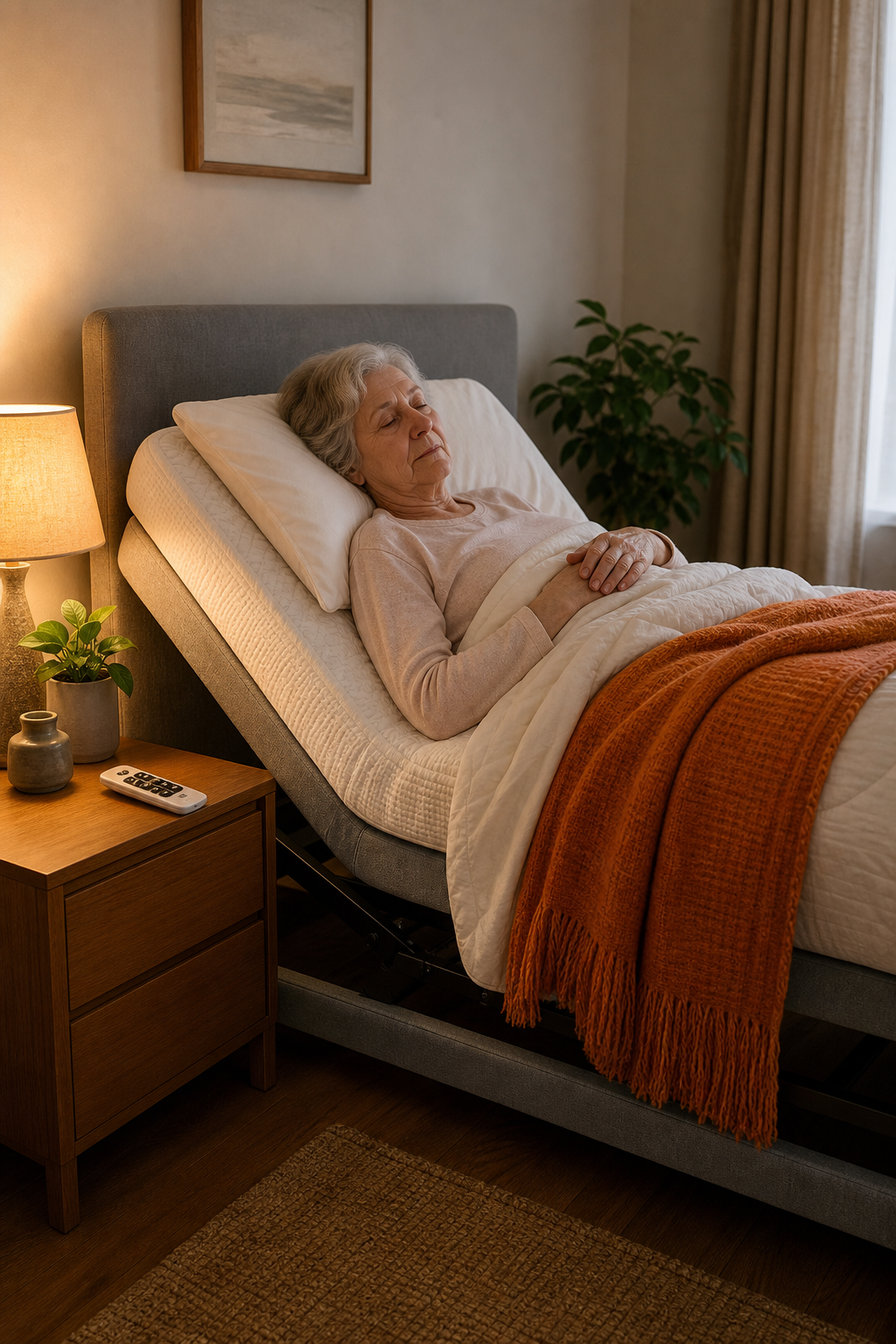
Not every adjustable bed feature is equally useful for someone with ME/CFS. Some are genuine comfort tools. Others are marketing extras. Here’s what actually matters.
Independent head and foot elevation
This is the core feature. You need to raise your upper body to ease breathing and reflux, or raise your legs to support circulation, without the two ends being tied together. Dual-zone control lets you find the precise angle your body needs on any given night, because ME/CFS symptoms vary day to day.
Zero-gravity preset
Zero-gravity positions the head and legs at roughly equal elevation, distributing weight evenly across the mattress. This reduces pressure on the lower back and hips, which is important when your body can’t tolerate long periods of stress on any one area. Most mid-range and premium adjustable bases include this as a one-button preset.
Quiet motor operation
A loud motor is a real problem for people with ME/CFS who are light sleepers or who wake at night and need to reposition. Look for brushless motors with a soft-start function. The bed should ease into motion, not jerk.
Simple remote or app control
Fatigue affects hand strength and concentration. A remote with large, clearly labeled buttons, a dedicated flat-position button, and a stop button you can find in the dark matters more than a touchscreen app. If grip is an issue, look for remotes that respond to light pressure.
Built-in massage
Gentle vibration can ease muscle tension without requiring any physical effort from the user. It won’t fix ME/CFS symptoms, but for people with co-occurring fibromyalgia or tight muscles from staying still too long, it’s a meaningful addition.
Under-bed LED lighting
Safe navigation to the bathroom at night matters. A fall is a significant setback for anyone, but for someone with ME/CFS, the recovery time is far longer. Under-bed lighting that activates automatically gives a soft glow without requiring you to reach for a lamp.
Wall-hugger technology deserves a mention here. When a standard base raises the head, the whole sleeping surface shifts forward, pushing you away from your nightstand. A wall-hugger base slides backward as the head rises, keeping you close to your water, medications, and phone. For someone with ME/CFS who can’t easily reach across a gap, this is more useful than it sounds.
Step 3: Choose the Right Mattress to Pair with Your Adjustable Base
An adjustable base without the right mattress is like buying good running shoes but wearing them on the wrong terrain. The mattress has to flex without resistance when the base moves, and it has to support your body properly at every angle you put it in.
The only mattress types that work reliably with adjustable bases are memory foam, latex, and certain foam-core hybrids. Traditional innerspring mattresses with connected coil systems will crack or deform when the base bends. If you already own an innerspring mattress, budget for a replacement.
Memory foam
Memory foam is the most common pairing for adjustable bases. It conforms to the body at every elevation angle, distributes weight evenly, and reduces pressure on joints. For someone with ME/CFS who stays in one position for long periods, this pressure relief matters. The downside is heat retention in some foam types. Look for gel-infused foam if temperature is a concern.
Latex
Latex is naturally responsive and breathes better than standard foam. It’s also more durable over time. Natural latex is a good option for people who run warm or prefer a slightly firmer feel. It costs more than foam, but it holds its shape longer.
Foam-core hybrid
A hybrid uses individually wrapped pocket coils inside a foam shell. The coils provide support and airflow while the foam layers handle pressure relief. Good hybrids flex well with adjustable bases and offer a middle-ground feel between the contouring of foam and the responsiveness of a spring.
When choosing mattress firmness, medium to medium-soft usually works best for people with ME/CFS who deal with muscle tenderness or joint pain. Too firm and the mattress creates pressure points. Too soft and it doesn’t support spinal alignment when the head or foot is improved.
The complete guide to adjustable beds for chronic fatigue syndrome in Australia goes deeper into mattress compatibility and setup specifics if you want to compare options before purchasing.
Step 4: Consider NDIS Funding and Assistive Technology Options in Australia
An adjustable bed is considered assistive technology under the National Disability Insurance Scheme. If you have an NDIS plan and ME/CFS is your primary diagnosis, or if it’s a contributing condition, you may be able to fund part or all of the bed through your plan. The key is having the right support category in place.
Adjustable beds typically fall under the Assistive Technology support category. Depending on cost, they may be classified as low-cost AT (under $1,500) or mid-to-high cost AT requiring a formal assessment. For higher-cost items, you’ll usually need a report from an occupational therapist or another allied health professional that links the bed to your functional needs.
What the OT assessment covers
The OT will look at how ME/CFS affects your ability to get in and out of bed, your sleep quality, your risk of falls, and your capacity to manage repositioning independently. They document how an adjustable base addresses each of these directly. This report becomes the evidence your NDIS planner or support coordinator needs to approve the funding.
How to start the process
First, contact your NDIS support coordinator if you have one. If you manage your own plan, reach out to an independent OT who has experience with assistive technology assessments. They can advise whether an adjustable bed is the right AT category for your situation before you spend money on a formal report.
For Australians not on the NDIS, the My Aged Care program may have options depending on age and care level. A Home Care Package at level 2 or above can sometimes fund assistive equipment including adjustable beds. Contact My Aged Care directly to check what your package allows.
Some providers, including Sleep Sophie, have experience working with NDIS participants and can provide documentation to support the funding process. It’s worth asking before you buy whether the supplier can assist with paperwork or has worked with NDIS assessors before.
The sleep-anxiety connection is also worth considering during this process. Chronic illness often brings heightened worry about sleep itself, which makes falling asleep harder. If that’s a factor, resources like evidence-based strategies for reducing anxiety and improving wellbeing can complement the physical changes you’re making to your sleep environment.
Step 5: Evaluate Safety and Ease-of-Use for Seniors
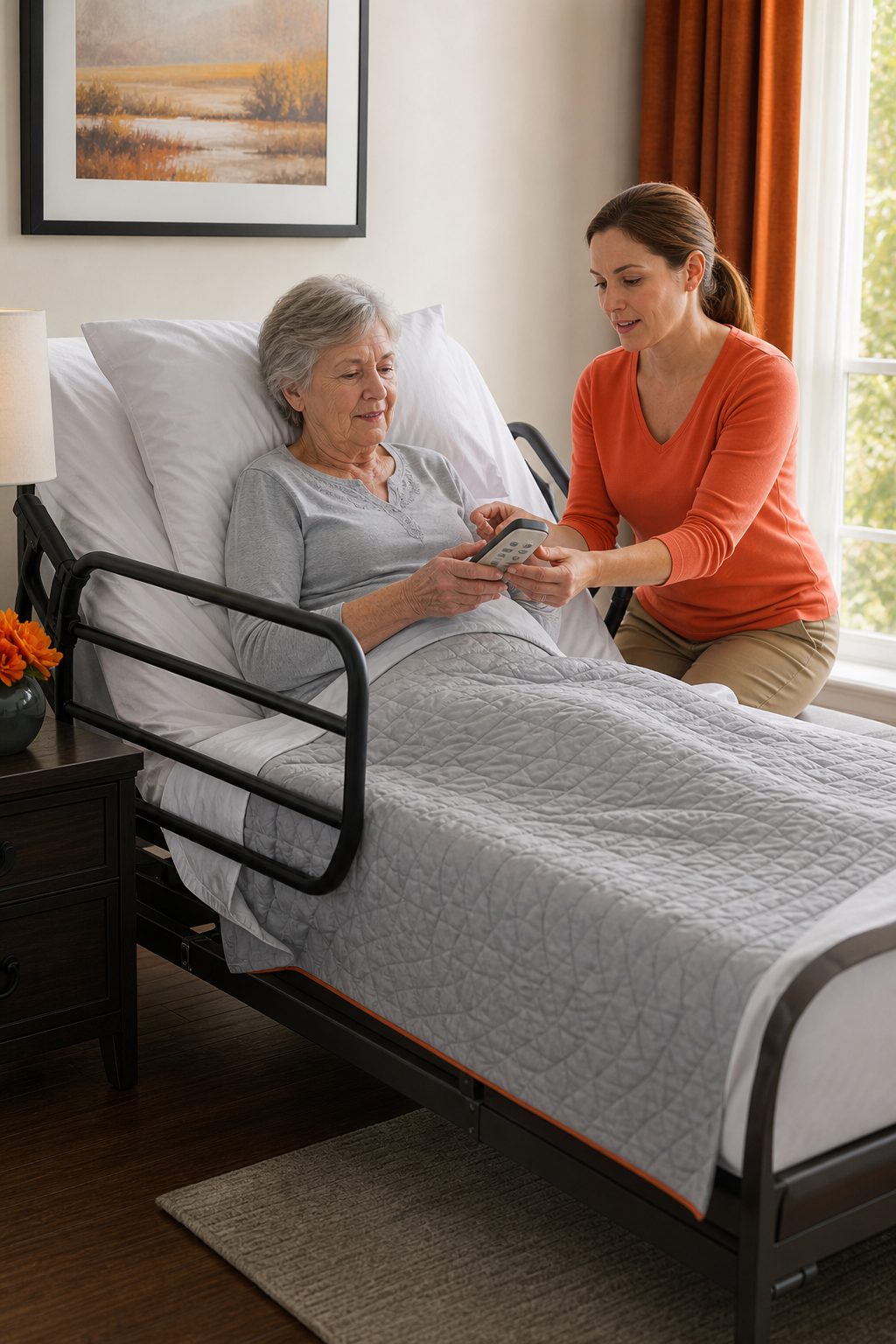
ME/CFS significantly affects energy levels, which means a bed that’s technically functional but hard to use safely is still a problem. Safety and ease-of-use are two sides of the same coin here.
Side rails
Side rails give you something to hold when sitting up, swinging your legs over, or standing. Look for rails with a firm click-in mechanism. Push against the rail when it’s installed. It should feel solid, not wobble. Padded interior rails are better for skin and clothing. If the rail can fold down, check that the latch stays engaged reliably when it’s in the down position.
Weight capacity
Don’t undersize the bed. A base rated below the user’s weight will sag over time, making it harder to get in and out and increasing the risk of a fall. A capacity of at least 120 kg per side is a reasonable minimum. Check the manufacturer’s specifications before you commit.
Manual release
Power outages happen. Every adjustable base should have a clearly marked manual release lever that drops the bed to a flat position without power. Test it before the bed is delivered if you can. If you can’t test in person, ask the supplier to confirm its location and demonstrate it on delivery.
Remote design
Look for a remote with a large stop button that’s easy to press with reduced grip strength. Buttons should be clearly labeled with icons that are readable in low light. A dedicated flat-position button means you can return to zero quickly without pressing a sequence of controls. If the remote gets lost easily, some bases offer clip-on holders for the bed frame.
For a thorough walkthrough of exactly how to set up, test, and maintain safety features, the adjustable bed safety tips guide for seniors in Australia covers everything from side rail testing to monthly motor maintenance in plain steps.
One often-missed safety factor is the floor around the bed. Keep it clear of loose mats or cords. A non-slip mat under the bed frame is useful. Route power cords along the wall. The bed itself can be perfectly safe while the path to the bathroom creates the actual hazard.
Step 6: Shop Smart , What to Look for from Australian Providers Like Sleep Sophie
Buying an adjustable bed in Australia means dealing with delivery logistics, after-sale support, and the reality that a heavy motorized base isn’t easy to return if something goes wrong. So where you buy matters almost as much as what you buy.
What to ask any Australian provider
Before you commit, ask these questions. Does the delivery include in-room setup, or just drop-off at the door? Is there a trial period? What does the warranty cover, and for how long? Can they provide documentation for NDIS or My Aged Care funding? Do they have a local service contact if the motor needs attention?
Why Sleep Sophie stands out
Sleep Sophie is one of Australia’s dedicated providers of electric adjustable beds for seniors, with a specific focus on therapeutic sleep needs. Their range addresses the exact conditions that matter for ME/CFS: independent head and foot adjustment, quiet motors, zero-gravity presets, and accessible remote controls. They also work with NDIS participants and can assist with the documentation process, which removes a significant logistical burden for people already managing a chronic illness.
Sleep Sophie’s team understands that buying a bed online is a big decision, especially when you can’t easily test one in person. They can walk you through which models suit specific health needs before you buy, and their after-sale support means you’re not on your own if setup questions come up.
Red flags to watch for
Be cautious of providers who can’t tell you where the motor is manufactured or what the weight capacity is per side. Vague warranty language like “manufacturer’s warranty” without a defined term is another warning sign. And if a provider has no process for NDIS paperwork, that’s a gap that could cost you time and money during the funding process.
It’s also worth looking at the Australian consumer protection framework. The Australian Consumer Law guarantees that goods must be of acceptable quality, fit for purpose, and match their description. An adjustable bed sold as suitable for seniors with mobility or health needs must meet that standard, regardless of what the warranty says.
Frequently Asked Questions
Is an adjustable bed good for chronic fatigue syndrome?
An adjustable bed can help manage some of the physical challenges that come with ME/CFS, particularly around sleep positioning and reducing the effort needed to reposition during the night. By allowing you to improve your head or legs at the touch of a button, you spend less physical energy on sleep management. This isn’t a treatment for ME/CFS, but it can reduce one source of daily exertion.
Can I get an adjustable bed funded through the NDIS in Australia?
Yes, adjustable beds can be funded as assistive technology under an NDIS plan. You’ll typically need an occupational therapist’s assessment linking the bed to your functional needs. Higher-cost items require more documentation. Speak to your support coordinator or an independent OT to confirm whether your current plan includes the right support category for this type of equipment.
What mattress should I use with an adjustable base if I have ME/CFS?
Memory foam, latex, and foam-core hybrid mattresses all work well with adjustable bases. They flex without cracking and maintain pressure relief at different elevation angles. Avoid traditional innerspring mattresses with connected coil systems. For ME/CFS, medium to medium-soft firmness usually works best to reduce pressure on sensitive muscles and joints without losing spinal support.
How do I know if an adjustable bed is safe for a senior with limited strength?
Check for side rails with a firm click-in mechanism, a weight capacity of at least 120 kg per side, a quiet soft-start motor, and a remote with large clearly labeled buttons. Test the manual release lever before the bed is delivered. The floor area around the bed should also be clear of loose rugs or cords, as falls most often happen during nighttime movement rather than while in the bed itself.
Does Sleep Sophie deliver and set up adjustable beds for seniors in Australia?
Sleep Sophie provides delivery across Australia and can walk you through setup and usage. They also work with NDIS participants and can assist with documentation. It’s best to contact them directly to confirm delivery arrangements for your specific location and to discuss which model suits your health needs before purchasing.
Conclusion
Getting this right comes down to matching the bed’s features to what ME/CFS actually costs you each night. Prioritize independent elevation, a quiet motor, and a remote you can use without effort. Then sort out funding through NDIS or My Aged Care before you spend. Sleep Sophie’s range is a solid starting point for Australians in this situation. Visit their site, describe your symptoms and living setup, and let their team point you to the right model.