
Paying for an electric adjustable bed can feel like a roadblock, especially when you’re hunting for the right mix of comfort and support.
In Australia there are a few finance routes that keep the upfront cost low: interest‑free store plans, 0% credit cards, and third‑party lenders that let you spread payments over 12 or 24 months.
If you’re an NDIS participant, you can ask your plan manager to include the bed as a therapeutic aid. A simple letter from your OT often unlocks the funding path.
For seniors or caregivers, look for retailers that partner with finance companies offering no‑deposit options. Compare the total cost, not just the monthly figure, and read the fine print on early repayment fees.
A practical way to start is to sit down with a budget sheet. List your monthly outgoings, decide how much you can comfortably add, then use an online calculator to see the payment schedule.
Need more detail on what to check when you shop? Our complete guide to choosing and setting up an electric adjustable bed walks you through features, safety tips, and maintenance, so you know you’re getting value for every dollar you finance.
Once you’ve nailed the finance plan, arrange delivery and set‑up. Most Aussie providers include a quick in‑home demo, so you can learn the remote controls and adjust the head‑or‑foot positions right away.
Step 1: Determine Your Budget and Financing Options
First, see what you can spend each month. Grab a paper sheet or open a budgeting app. List rent, bills, groceries and other regular costs. Then decide how much you could add without feeling squeezed.
Next, think about the total price of the bed you want. Sophie’s beds start around a few thousand dollars, but the amount depends on size and features. Write that number down and now you have two numbers: what you can pay each month and the total cost.
Now match those numbers with a finance choice. A common option is an interest‑free store plan that spreads the cost over 12 or 24 months. NDIS participants can use a therapist’s letter so the plan covers the whole bed as a therapeutic aid.
Here’s a quick example. Imagine you can add A$150 a month to your budget. A 24‑month interest‑free plan for a A$3,600 bed works out to A$150 each month, so it fits. If you only have A$80 a month, you might look at a 36‑month plan or ask a caregiver to help with part of the cost.

Tip: always check the total amount you’ll pay, not just the monthly figure. Some plans add fees for early repayment or admin costs, so write down any extra charge before you sign. Finally, set a reminder to review the payment schedule after the first few months. If the amount feels too high, you can talk to the finance provider about adjusting the term. Knowing your budget makes the buying process smoother.
Step 2: Compare Lenders and Loan Terms
Now that you know your monthly comfort zone, start hunting for lenders that match it. Not every finance offer is built the same, so a quick side‑by‑side look saves headaches later.
What to line up
First, check the interest rate. Some “0% for 12 months” deals hide a set‑up fee. Others charge a low flat rate and let you stretch to 48 months. Note APR, admin fees, and early‑payoff rules.
Second, note the loan term. Shorter terms mean higher monthly bills but lower total cost. Longer terms ease cash flow but can add up if interest applies. Ask if the lender offers a true zero‑interest option like the one the Sleepwell Company lists for up to 48 months.
Third, look at flexibility. Can you pause payments if a caregiver steps in? Is there a grace period for missed months? Does the provider handle the paperwork with your NDIS plan manager?
Here’s a quick cheat sheet you can print:
Imagine you find a lender with 0% for 24 months and no fees. Compare that to a bank charging 5% over 36 months but offering a lower payment. Your spreadsheet will show which truly saves you money.
When you’ve narrowed it down, ask for a written quote. A clear quote lets you double‑check the numbers you entered. If anything feels off, don’t hesitate to walk away, there are other options that respect your budget.
Sleep Sophie’s finance partners often list zero‑interest plans that meet these criteria, so you can start the comparison with a trusted source.
Step 3: Apply for Financing and Secure Approval
Now you have a lender and a plan on paper. The next move is to turn that plan into a real loan.
Gather the paperwork
Most finance firms ask for proof of identity, a recent bank statement, and the quote you got from the retailer. If you’re using NDIS money, you’ll also need the OT report and the NDIS plan approval letter. The NDIS funding guide explains exactly what the NDIS needs.
Ask for a written quote
Get a formal quote that lists the price, the interest-free period, any fees, and the payment schedule. A clear quote helps the lender check the numbers quickly.
Submit the application
Fill out the lender’s form online or in person. Attach the quote and all supporting docs. Double-check each field, a tiny typo can stall the process.
Follow up and lock in approval
After you send the package, call the lender within a day to confirm they received everything. Ask how long they expect a decision. If they need more info, give it right away.
When the approval comes, read the contract line by line. Look for any hidden admin charge or early-payoff fee. If something feels off, you can still walk away, there are other lenders that respect your budget.
Tip: set a calendar reminder for the repayment start date.
By moving step by step, you turn the idea of electric adjustable bed financing australia into a real purchase without surprise costs.
Step 4: Evaluate Bed Features and Costs – Comparison Table
Now you have a budget and a lender. The next move is to match the bed’s features to the cost you’ll actually pay each month.
Pick the features that matter
Do you need a full‑body lift that helps you get in and out of bed? Or would a simple incline be enough for reading in bed? Think about who will use the bed – a senior with limited mobility, an NDIS participant, or a couple with different sleep positions.
Here’s a quick way to see how each add‑on changes your payment.
Does this help you see where the money goes? If a feature feels nice but not essential, you can skip it and keep your payment lower.
Action steps
- Write down the three features you can’t live without.
- Use the table to add the extra cost to your monthly budget.
- Ask the retailer for a detailed quote that breaks out each add‑on.
- Compare that quote with the zero‑interest plan you got from your lender.
Many buyers find that a single base with a wireless remote gives the best balance of comfort and cost according to industry guides. If you’re an NDIS participant, double‑check that the chosen features are covered under your plan before you sign.
Bottom line: a simple table lets you see the real price of every upgrade, so you can pick the right mix without surprise fees.
Step 5: Finalize Purchase and Set Up Your Bed
Now that the loan is locked, it’s time to turn the paperwork into a real bed in your room.
First, double‑check the quote. Make sure the model, size, and any add‑ons match what you wrote down in the feature table. If something looks off, call the retailer before they ship.
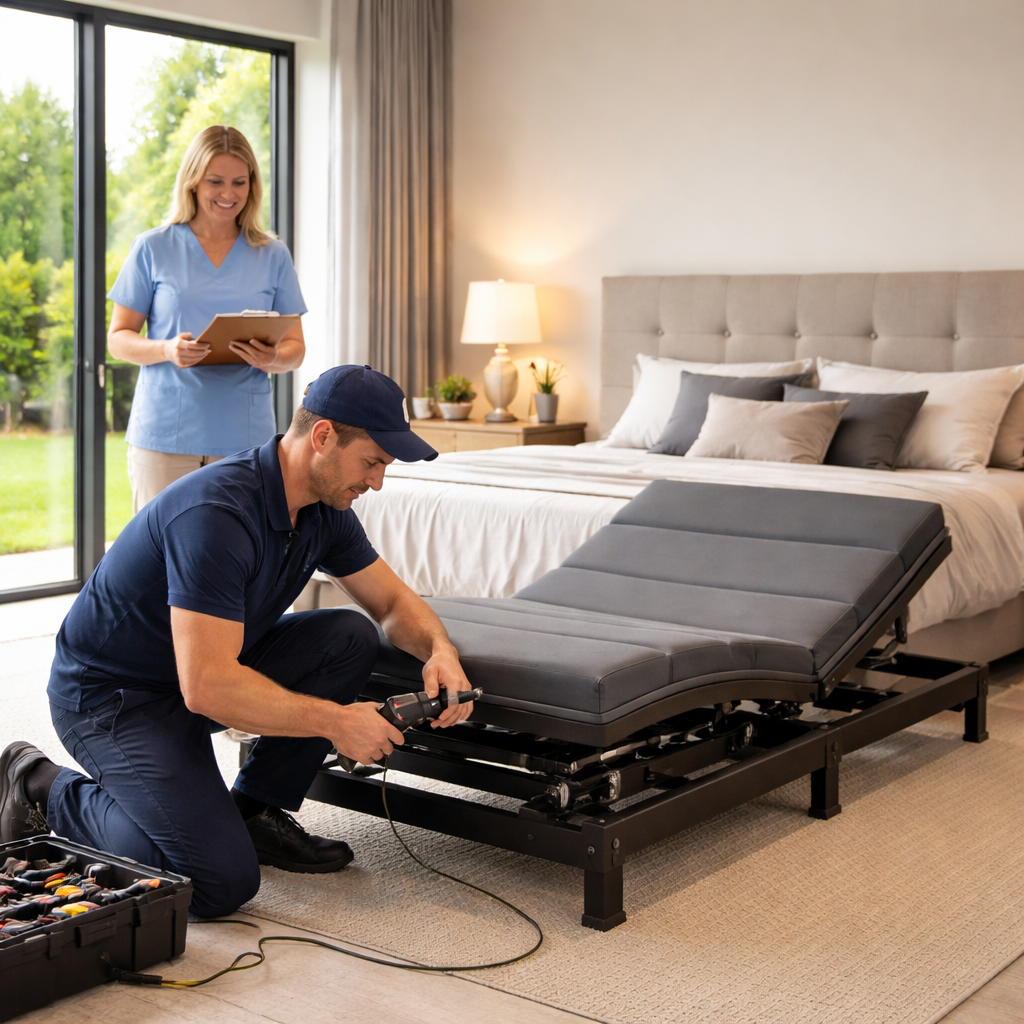
Next, set a delivery date that works with your schedule. Most Aussie sellers include a free in‑home demo, so ask for a slot when someone can stay to walk you through the remote.
When the crew arrives, do a quick walk‑around. Look for any dents, missing screws, or scratched panels. Take photos right then, they’re handy if you need to claim a replacement later.
After the bed is in place, follow these three set‑up steps:
- Plug the base into a grounded outlet. The motor draws a few amps, so a standard 240 V socket is fine.
- Attach the headboard and footboard according to the manual. Tighten each bolt by hand first, then give a final quarter‑turn with the supplied wrench.
- Power on the unit and test the lift, tilt, and remote functions. If the remote feels laggy, replace the batteries with fresh AA cells.
A handy tip: keep the remote within arm’s reach of the bedside lamp. That way you’ll remember to use it every night, and the battery lasts longer.
For a step‑by‑step visual guide, check the delivery and installation guide that many Australian retailers follow.
It shows where to position the power cord for safety.
Conclusion
You’ve walked through the whole financing maze, from budgeting to picking a lender and signing the deal. The biggest win is knowing exactly what you can afford and which plan keeps the cost low.
Next step: grab a copy of the feature table, write down the three add‑ons you really need, and ask the retailer for a detailed quote. Then match that quote against the zero‑interest offer you got from your lender.
If the numbers line up, lock in the loan, set a calendar reminder for the first payment, and schedule the delivery. When the crew arrives, do the quick walk‑around we covered and test the remote right away.
Need a quick place to see all the bed models? Check out Sleep Sophie’s range of adjustable beds for options that fit therapy needs and budget.
For a different kind of financing perspective, you might read about pontoon boat financing tips – the same principles of zero‑interest deals and clear payment schedules apply.
FAQ
What financing options can I use for an electric adjustable bed in Australia?
In Australia you can choose from three main routes: a zero interest store plan, a 0% credit card offer, or a short term loan from a bank or finance company. A store plan spreads the cost over 12 or 24 months with no interest, while a credit card lets you pay monthly but may charge interest after the promotional period. A loan gives you a set payment schedule and may include a small admin fee.
How does a zero interest store plan work?
A zero interest store plan works like a rent to own agreement. You sign a contract for a set number of months, usually 12 or 24, and pay the same amount each month. Because the retailer does not add any interest, the total you pay equals the sticker price of the bed. Just be sure to read the fine print for any admin charges or early pay off penalties that could add cost.
Can NDIS fund an electric adjustable bed and what do I need?
Yes, NDIS can fund an electric adjustable bed if it is deemed a therapeutic aid. You will need a letter from your occupational therapist that outlines why the bed helps with daily living, plus the approved NDIS plan and any required purchase quotes. Submit these documents to the NDIS portal or your plan manager, and they will process the payment directly to the retailer.
What should I watch out for in the loan contract?
When you sign the loan or financing agreement, check three things: the total amount you will repay, any fees for early repayment, and the exact monthly due date. Make sure the interest rate is truly zero and not hidden in a set up fee. Write down the contact name of the lender so you can call quickly if anything looks odd.
How long does the approval process usually take?
Most retailers and lenders aim to give you an approval decision within a few business days, often 2 to 3 days if you have all paperwork ready. Gather your ID, bank statement, the quote from the retailer, and any NDIS documents before you apply. After you submit, a quick phone call to confirm receipt can keep the process moving.
Is it better to pay the full price up front or spread it over months?
Paying the full price up front removes any interest or fees, but it also ties up a big chunk of cash that could be used for other needs. Spreading the cost with a zero interest plan lets you keep cash flow steady while still paying the exact price of the bed over time. Compare your budget and decide which approach feels less stressful.