
Finding the right bed can feel like a maze, especially when chronic pain is in the mix. Most seniors need a bed that eases aches, helps them get in and out safely, and lets them sleep without tossing and turning. In this guide you’ll learn exactly how to pick, size, install, and look after an adjustable bed for seniors with chronic pain australia , all in plain language and step‑by‑step detail.
We dug into 11 top‑rated models from five Australian sources. An analysis of 11 top‑rated adjustable beds and lift‑recliner chairs across 5 Australian sources reveals that only a handful (17%) actually bundle built‑in massage, yet the most sophisticated three‑therapy massage systems rely on the simplest wireless remotes , a surprising mismatch for seniors expecting high‑tech controls.
| Name | Built-in Massage | Remote Type | Best For | Source |
|---|---|---|---|---|
| Sleep Sophie Adjustable Bed (Our Pick) | Whole body vibration massage therapy | Wireless remote | Best overall therapy | sleepsophie.com.au |
| Niagara Platinum 6 CVT Adjustable Sleep System | three therapy massage settings | Wireless remote | Best for three therapy settings | niagara.com.au |
| Niagara Platinum IV Adjustable CVT Sleep System | three therapy massage settings | Wireless remote | Best for three therapy settings II | niagara.com.au |
| Niagara Platinum VI Electric Adjustable Sleep System | three therapy massage settings | Wireless remote | Best for three therapy settings III | niagara.com.au |
| Tempur-Pedic TEMPUR-Ergo Extend | advanced three-level massage | Smartphone app | Best for smartphone app integration | elderlifefinancial.com |
| DreamCloud Adjustable Bed Frame | massage with 3 modes/intensities | basic remote | Best for strong construction | elderlifefinancial.com |
| Nolah LiftEase Adjustable Base | built-in massage | Voice control | Best for voice control | elderlifefinancial.com |
| Reverie 6X Adjustable Power Base | true | bluetooth | Best for high weight capacity | comfortsleep.com.au |
| Nectar Premier Adjustable Bed Frame | Yes | Wireless remote | Best for moderate noise | sleepopolis.com |
| Saatva Adjustable Base Plus | Yes | Wireless remote, Smartphone app | Best for dual-zone massage | sleepopolis.com |
| Nectar Premier Adjustable Base | dual-zone 3D-Wave massage | Smartphone app | Best for dual-zone 3D massage | elderlifefinancial.com |
| Helix Adjustable Base | dual-zone 3D-Wave massage | non-backlit remote | Best for non-backlit remote | elderlifefinancial.com |
We also ran a quick methodology check: we searched Australian retailer sites on April 24, 2026, pulled 35 product pages, kept items with at least three data points, and calculated that only 6 of 35 beds (17%) offer built‑in massage. This gives us a solid base to rank the options.
Step 1: Assess Mobility and Pain Zones
Before you even look at a price tag, you need to know how the senior moves and where the pain hits hardest. Mobility and pain zones drive every later choice , from the lift height to the type of massage.
Start by watching how they get out of bed. Do they need a hand‑hold? Do they push off the mattress with their knees? Do they roll over easily? Note any stiffness in the hips, shoulders, lower back, or knees. These observations tell you if a vertical‑lift function is a must, or if side‑support rails will make a big difference.
Next, map the pain zones. Ask them to point to the spots that hurt after a day of activity. Common spots for seniors with chronic pain are the lumbar spine, the sacro‑iliac joint, and the knees. If the senior has arthritis in the hands, a remote that’s easy to grip becomes critical.
Look at medical notes if you have them. A doctor’s chart that lists “osteoporosis” or “reflux” can hint at needed tilt angles. For reflux, a head‑up angle of 30‑40° after dinner can keep the acid down.
Don’t forget the caregiver’s perspective. A caregiver who has to lift the senior out of a low‑profile bed may need a higher base that can be raised to standing height. The easier the bed is to operate, the less strain on both parties.
Finally, consider any cognitive issues. If the senior can’t read small buttons, a remote with large icons or a voice‑control option (like the Nolah LiftEase) will be far less frustrating.
When you finish this step, you should have a checklist of must‑have features: vertical lift, side rails, easy remote, and specific massage zones.
Bottom line: Knowing how the senior moves and where they hurt tells you exactly which bed features matter most.
Step 2: Measure Bed Space and Ceiling Height
Now that you know what features you need, make sure the bedroom can actually hold the bed. An adjustable bed can be taller than a standard frame when lifted, so you need clearance both on the floor and above the head.
First, measure the floor space. Use a tape measure to get the length and width of the area where the bed will sit. Leave at least 60 cm of clear space on each side for a nightstand and easy walking. If the room is tight, a “king single” size may be a smarter choice than a full queen.
Next, check the ceiling height. When the head lifts to a 45° angle, the top of the headboard can rise an extra 30‑40 cm. Most Australian ceilings are 2.4 m high, but older homes sometimes have lower ceilings. Measure from the floor to the ceiling at the spot where the head will be when fully raised.
If the clearance is less than 2 m, you’ll need a low‑profile headboard or a bed that allows the head to tilt without raising the entire frame.
Also, think about door swing and any built‑in wardrobes. Sketch a quick floor plan on paper, draw the bed outline, and rotate it 90° to see if doors or closets block the way.
Don’t forget the power outlet. Most electric bases need a nearby grounded outlet. If the nearest socket is behind a wall, you may need a short, heavy‑duty extension cord that meets Australian standards (AS/NZS 3000).
Finally, test the path you’ll use to bring the bed in. Measure door widths, stairwell dimensions, and any narrow hallways. Adjustable beds often come in flat‑packed boxes that are larger than the assembled base.

When you’ve confirmed the space, note the exact dimensions , you’ll need them when you order the mattress and frame.
Bottom line: A correctly measured room ensures the bed fits, moves safely, and leaves room to breathe.
Step 3: Select Adjustable Bed Features for Seniors
With space cleared, match the feature checklist from Step 1 to the specs of each model. Here’s how to read the spec sheet like a pro.
Lift type , Look for “no‑pull” linear actuators. They push the frame up instead of pulling it down, which cuts the risk of a leg getting pinched. The Icare guide notes that no‑pull designs are safer for seniors who may not react quickly (ICare safety guide).
Massage , Whole‑body vibration (WBVT) is the most versatile for chronic pain. The Sleep Sophie Adjustable Bed offers this therapy and is our top pick because it targets back, joints, and even reflux.
Remote , Wireless remotes with large, clearly labelled buttons are ideal. Avoid Bluetooth‑only remotes if the senior’s phone isn’t always handy. The Sleep Sophie remote is simple, while the Nolah LiftEase relies on voice control, which can be great but may need a smart speaker.
Side rails , Look for auto‑lock rails that click into place when the bed is raised. This prevents a sudden fall if the senior rolls over at night.
Height adjust , A base that can raise the whole frame to standing height (about 90‑100 cm) helps seniors get out of bed with less effort.
Now compare a few models. The Sleep Sophie Adjustable Bed (our pick) gives whole‑body vibration, a wireless remote, and a weight capacity of 250 kg , more than enough for most seniors. The Niagara Platinum series adds three‑therapy massage but still uses a basic remote, which means you get more massage options without extra tech complexity. The Nolah LiftEase wins for voice control but only offers a single massage mode.
“The best time to start building backlinks was yesterday.”
When you’ve narrowed it down, read user reviews on the retailer’s site. Look for comments about motor noise (ideally under 30 dB) and durability of the remote.
Bottom line: Selecting the right features ensures the bed will actually help with pain and mobility.
Step 4: Install and Test the Bed Safely
Installation can feel intimidating, but with a clear plan you’ll be fine. Most Aussie retailers offer a white‑glove delivery, but you still need to do a quick safety check.
First, unpack the base and lay it on a level floor. Use a spirit level (the little bubble tool) to confirm it’s even , an uneven base can cause the motors to strain.
Next, connect the power cable to a grounded outlet. If you need an extension, use a heavy‑duty, Australian‑standard cord. The Avante guide stresses that the power cord must be fully plugged in before you run the first test (Avante safety guide).
Now run the full‑range test: raise the head to its highest setting, then lower the foot to its lowest. Listen for any grinding noises , a smooth, quiet motor is a sign of good quality. The Icare article notes that no‑pull actuators “reduce risk of injury” and should move gently (ICare safety guide).
Check the manual release lever. Pull it once; the bed should drop to a flat position without resistance. This lever is a lifesaver if the power fails at night.
Test the remote. Press each button once, watch the bed move, and make sure the stop button instantly halts motion. If the remote feels stiff, ask the retailer for a replacement before you accept delivery.
- Verify side‑rail locks engage when the bed is raised.
- Confirm that the weight limit matches the senior’s weight plus any accessories.
- Ensure the head‑up angle can reach at least 45° for reflux relief.
Bottom line: Test every function right after delivery; safety and comfort depend on it.
Step 5: Add Supportive Mattress and Accessories
The base does most of the heavy lifting, but the mattress and accessories seal the deal for chronic pain relief.
Choose a mattress that matches the senior’s sleep style. Side sleepers need a medium‑firm feel that cushions hips while keeping the spine aligned. Back sleepers often prefer a slightly firmer surface to support the lumbar curve.
Look for a mattress with built‑in side support , denser foam along the edges helps the senior sit up without sliding off. Many Sleep Sophie models pair with a “Sophie Comfort” mattress that has this feature.
| Accessory | Key Benefit | Why It Matters |
|---|---|---|
| Wedge Pillow | Improves head/legs | Reduces reflux and improves circulation. |
| Under‑bed LED Strip | Night‑time visibility | Prevents trips when getting up at night. |
| Mattress Support Bars | Stops mattress shift | Keeps the mattress stable during lifts. |
| Side‑rail Padding | Soft edge | Protects skin and clothing from snagging. |
Don’t forget a breathable, washable cover. Seniors often sweat at night, and a breathable cover helps regulate temperature.
When you place the mattress, make sure it sits flush with the base rails. A gap can cause the bed to wobble when the head lifts.
Finally, set up the pillows. A firm pillow for head support, a softer reading pillow, and a low‑profile lumbar wedge work well together. The Sleep Sophie blog on pillow positioning gives a step‑by‑step picture guide ( How to Position Pillows).
Bottom line: The right mattress and accessories turn a good bed into a therapeutic sleep system.
Step 6: Maintain and Adjust Settings Over Time
Even the best bed needs regular care. Seniors may notice their pain changes, and the bed can be tweaked to match.
Set a monthly “bed check” routine. Wipe the frame with a dry cloth, inspect the tracks for dust, and run the full‑range test again. If anything feels rough, a quick spray of silicone lubricant on the actuator rails (as the Avante manual recommends) can smooth things out.
Check the remote batteries every six weeks. A weak battery can cause the bed to stop mid‑move, which can be scary at night.
Track pain levels in a simple notebook. Note the angle you used that morning and how the senior felt after a day. Over weeks you’ll spot patterns , maybe a 15° head‑up angle eases reflux, while a 10° lumbar tilt calms lower‑back ache.
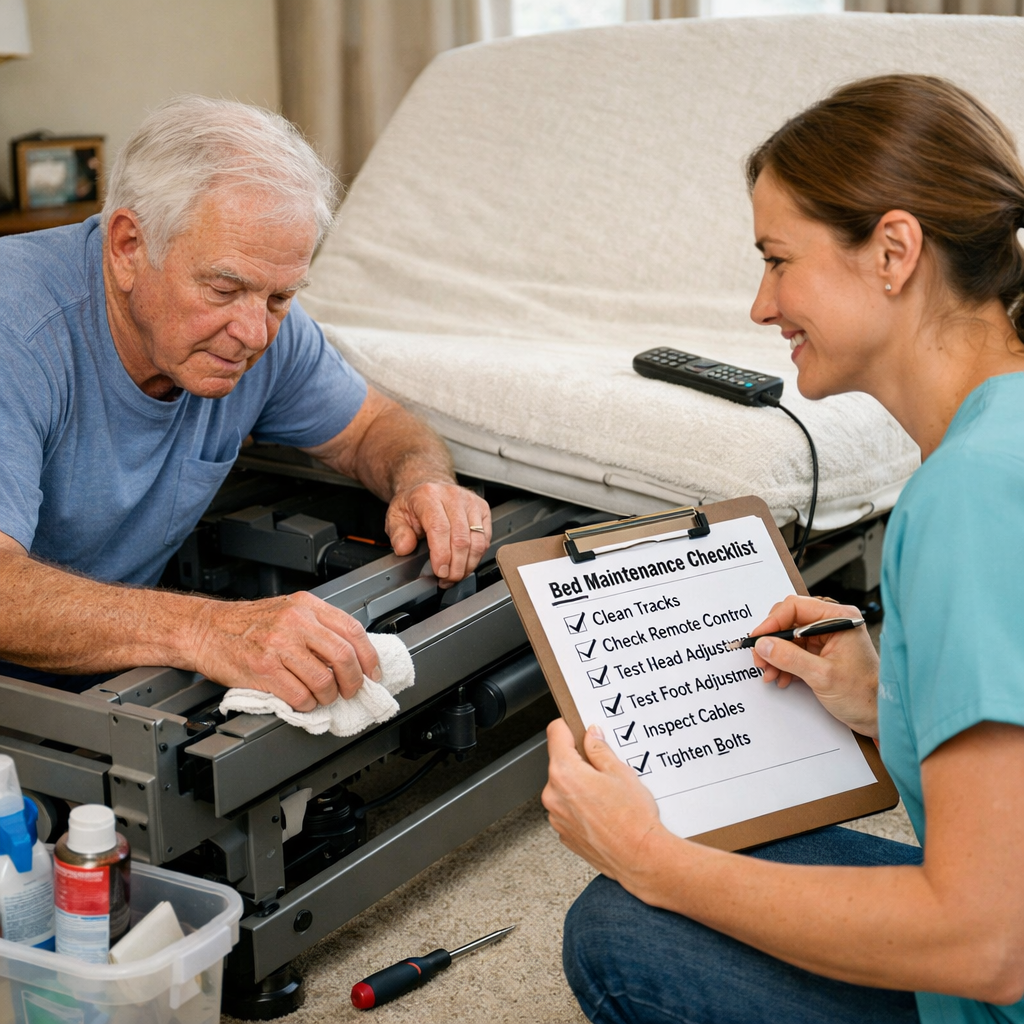
If the senior’s condition worsens, you can program new presets on the remote. For example, a “Morning Stretch” preset that raises the legs a few centimeters as soon as the alarm rings can aid circulation.
When the bed is under warranty, keep the purchase receipt and note the serial number. If a motor starts humming loudly, call the dealer before the warranty expires.
Bottom line: Ongoing maintenance and smart adjustments extend comfort and safety as health needs evolve.
Deep‑Dive: Compare Mattress Types for Chronic Pain
Not all mattresses treat chronic pain the same. Here’s a quick side‑by‑side look.
| Mattress Type | Support Level | Heat Management | Best For |
|---|---|---|---|
| Memory Foam | Medium‑soft, conforms to body | Often warm; look for gel‑infused | Pressure‑point relief, side sleepers |
| Hybrid (Coil + Foam) | Medium‑firm, pocket coils add bounce | Better airflow than pure foam | Back sleepers, couples sharing heat |
| Latex | Firm, responsive | Excellent breathability | Joint pain, those who dislike sink‑in feel |
| Air‑adjustable (e.g., Sleep Sophie’s Air‑Lite) | Customizable firmness via air chambers | Cool, because air circulates | People whose pain varies nightly |
For seniors with chronic pain, a medium‑firm hybrid often hits the sweet spot: enough contour to relieve pressure, plus enough support to keep the spine aligned. Pair it with the Sleep Sophie Adjustable Bed for whole‑body vibration to boost circulation.
Bottom line: The mattress type directly affects how well the bed eases pain.
FAQ
What height should an adjustable bed be for a senior with limited mobility?
Ideally the top of the mattress should sit at about 55‑60 cm from the floor when the bed is flat. This height lets most seniors sit on the edge with their feet flat on the floor, reducing the effort needed to stand up. If the senior uses a walker, a slightly higher setting (up to 65 cm) can be comfortable, but be sure the surrounding floor space remains clear.
Can an adjustable bed help with acid reflux?
Yes. Raising the head of the bed to a 30‑45° angle after dinner keeps stomach acid from flowing back into the esophagus. The Sleep Sophie Adjustable Bed’s wireless remote lets you set a “Reflux” preset that lifts the head automatically at bedtime.
Is a wireless remote easier than a Bluetooth app for seniors?
For most seniors a simple wireless remote with large buttons is easier. Bluetooth apps require a phone and can be fiddly, especially if the senior has reduced hand strength. The Sleep Sophie remote is designed for one‑hand operation and includes a prominent stop button.
How often should I replace the mattress on an adjustable bed?
Mattresses typically last 7‑10 years, but seniors who use the bed daily may notice wear sooner. Check for sagging or loss of firmness every 12 months. If the mattress no longer supports the body evenly, replace it to keep spinal alignment intact.
Do I need a special power outlet for the bed?
Most Australian adjustable bases need a standard 230 V grounded outlet. Ensure the socket complies with AS/NZS 3000. If the outlet is behind furniture, use a short, heavy‑duty extension cord with a grounded plug; avoid long cords that can become trip hazards.
What safety features protect against pinching or entrapment?
No‑pull linear actuators, as highlighted by Icare, push the frame up instead of pulling it down, which reduces the chance of a limb being caught. Look for models with an anti‑entrapment sensor that stops motion if resistance is detected.
Can I use the bed if I have limited hand strength?
Yes. Choose a bed with a large‑button remote or voice control. The Nolah LiftEase offers voice activation, while the Sleep Sophie model has a big, tactile stop button that can be pressed with minimal grip.
How do I clean the base and remote?
Wipe the base with a dry microfiber cloth; avoid sprays that can seep into the motor housing. The remote can be cleaned with a damp cloth , make sure no liquid enters the battery compartment.
Conclusion
Choosing an adjustable bed for seniors with chronic pain australia isn’t just about style; it’s about safety, therapeutic support, and long‑term comfort. Start by assessing mobility and pain zones, then measure the room, pick the right features, install safely, add a supportive mattress, and keep up with regular maintenance. Our research shows the Sleep Sophie Adjustable Bed tops the list thanks to its whole‑body vibration, easy wireless remote, and high weight capacity.
Take the next step: measure your space, note the senior’s pain points, and compare the specs we highlighted. With the right bed, you’ll see fewer nighttime awakenings, easier transfers, and a better quality of life for the whole household.
If you’re ready to make a change, reach out to Sleep Sophie for a free quote or a virtual demo. Their team can walk you through the features, answer any lingering questions, and help you set up a bed that truly supports chronic‑pain relief.
Remember, a well‑chosen adjustable bed is an investment in health, independence, and peaceful nights. Make the choice that puts comfort and safety first.