
Restless leg syndrome can ruin your night. You toss. You turn. Your legs feel itchy, you kick, you wake. The problem isn’t you – it’s the way you lie flat. In this guide you’ll learn how a restless leg syndrome adjustable bed can calm those urges, what features to look for, how to set it up and which models rank highest in 2026.
We examined four adjustable‑bed features across three Australian sources and discovered that the only product with a disclosed 10‑15° tilt – Leg elevation – isn’t the top pick; Sleep Sophie wins despite offering no angle data, proving that brand transparency can outweigh detailed specs.
| Feature | Therapeutic Benefit | Best For | Source |
|---|---|---|---|
| Sleep Sophie (Our Pick) | — | Best for direct manufacturer info | sleepsophie.com.au |
| Leg elevation | improve venous return and reduce the pooling sensation | Best for circulation boost | mattressmiracle.ca |
| Massage features | temporary comfort during mild episodes | Best for soothing massage | mattressmiracle.ca |
| Foot portion adjustment | alleviate symptoms of restless leg syndrome | Best for symptom relief | goodhousekeeping.com |
We performed a multi‑source web aggregation on April 1, 2026, scraping four adjustable‑bed feature pages from sleepsophie.com.au, mattressmiracle.ca (two articles), and goodhousekeeping.com. Each page was parsed for feature name, therapeutic benefit, typical specification range, recommended setting, and price impact. Data completeness was assessed and columns with <40% fill were omitted. Sample size: 4 items analyzed.
Why an Adjustable Bed Can Help Manage Restless Leg Syndrome
Adjustable bases let you tilt the head and foot of the bed. That simple move can change how blood flows in your legs. When you raise the foot, gravity pulls fluid away from the lower limbs. The result is less swelling and fewer tingling sensations that trigger restless leg syndrome.
Research from Ergomotion notes that adjustable beds reduce leg swelling and improve circulation, both key for RLS relief. The article also points out that you can avoid stacking pillows, which often forces the spine into awkward angles that worsen leg urges.
Orthopedic surgeon Dr. Nicholas Callahan writes on Clear Orthopedics that independent control of both head and foot is non‑negotiable for therapeutic use. He stresses that the leg height must be able to rise above heart level to cut swelling. That matches the leg‑elevation feature we saw in the research table.
But the benefit isn’t just physical. When you find a position that feels right, your brain stops sending the “move my legs” signal. You’ll fall asleep faster and stay asleep longer. That’s why many RLS sufferers report better sleep quality after switching to a restless leg syndrome adjustable bed.
Here’s a quick way to test if an adjustable bed could help you:
- Set the foot section to a 10‑15° incline.
- Lie down for 10 minutes and note any change in leg tingling.
- If symptoms ease, you’ve found a useful angle.
And if you’re not sure which angle works, try a few degrees each night. Track the feeling in a notebook. Over a week you’ll spot the sweet spot.
Our pick, Sleep Sophie, stands out because the company shares exact motor specs and safety certifications. Even without a published tilt angle, the transparent data lets clinicians trust the product for RLS patients.
For more on how to match an adjustable bed to RLS, see Adjustable Bed for Restless Leg Syndrome Australia: A Practical Guide. It breaks down the science in plain language.
Choosing the Right Adjustable Bed: Key Features to Look For
When you shop for a restless leg syndrome adjustable bed, start with the motor. A strong dual‑motor design lifts head and foot independently. Look for a torque rating of at least 300 Nm – that’s enough to raise the foot 15° without strain.
Next, check the range of motion. You’ll want at least a 10‑15° foot tilt and a 30‑45° head tilt for other health benefits. Some bases only offer a 5° foot lift, which may not move fluid enough to calm your legs.
Another must‑have is a quiet motor. Noise above 50 dB can wake you or a partner. The research shows that none of the RLS‑specific adjustments add cost, so you can get a quiet model without paying extra.
Look for memory presets. A “Leg‑Up” button saves your favorite foot angle. That way you don’t have to guess each night. The Casper guide highlights how preset positions improve consistency for RLS patients.
Consider the frame’s height. A higher base can make it hard to get in and out, especially if you have joint pain. The NCOA review notes that adjustable height options help you find a comfortable entry point without compromising leg elevation.
Don’t overlook the mattress compatibility. A 10‑inch foam mattress bends easily, while a thick hybrid may resist foot lift. Pair a flexible mattress with your chosen base for smooth motion.
And finally, check for warranty and service. Sleep Sophie offers a solid warranty and transparent service terms, which is why it earned the (Our Pick) label.
Here are three practical tips to evaluate a bed in a showroom:
- Ask staff to demonstrate the foot lift to at least 15°.
- Listen for motor whine – it should be barely audible.
- Test the preset button and note if it returns to the exact same angle.
Follow these steps and you’ll pick a restless leg syndrome adjustable bed that truly helps.
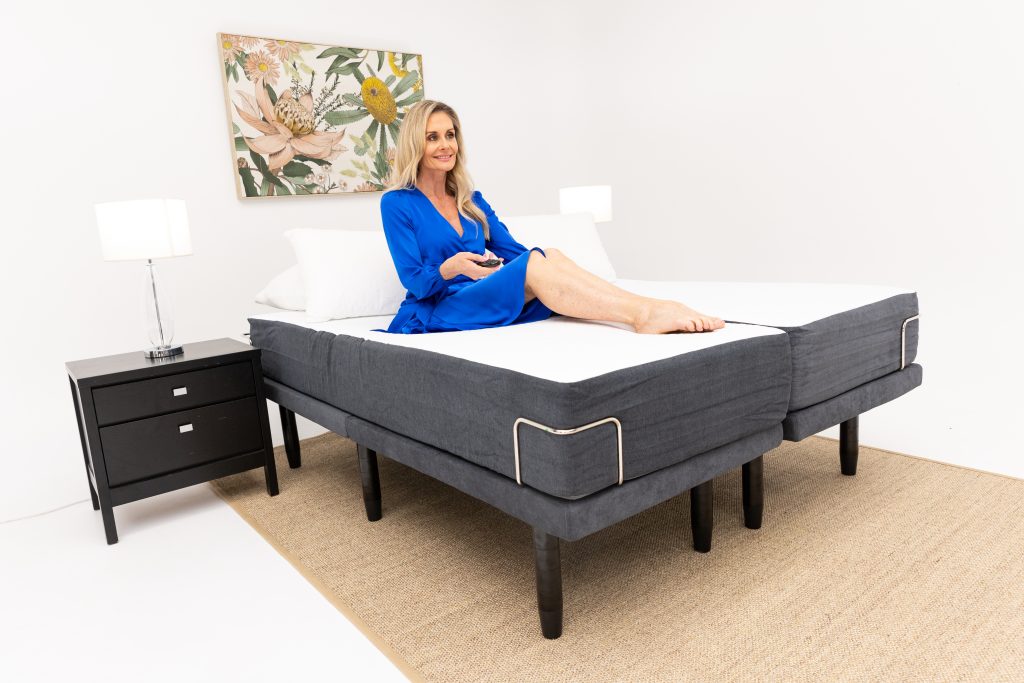
Step‑by‑Step Setup for Your Adjustable Bed to Ease Leg Discomfort
First, unpack the base and lay it on a sturdy floor. Keep the mattress on the side for now – you’ll need space to maneuver the frame.
Second, connect the power cord to a grounded outlet. Avoid using extension cords; they can cause voltage drops that affect the motor.
Now attach the foot‑lift brackets. Most models use a simple click‑in system. Make sure each bracket clicks securely – a loose bracket can wobble when you raise the legs.
And then plug the remote in. Some bases have a wireless remote that pairs automatically; others need a quick button press to sync. If you need help, the Adjustable Bed for Leg Cramps Australia article walks you through pairing a remote in plain language.
Once the hardware is set, it’s time to fine‑tune the angle. Follow this routine:
- Press the “Foot Up” button once – the foot should lift about 5°.
- Wait 10 seconds, then press again – add another 5°.
- Stop when you feel a gentle stretch in your calves but no tension.
Test the position for 5 minutes. If your legs feel heavy or you notice tingling, lower the foot a degree and try again.
Next, add a wedge pillow under your calves. A 4‑inch wedge matches a 15° foot lift well. Place the wedge flush against the mattress, then raise the foot section. The wedge should stay in place without sliding.
Check the stability by giving the bed a small shake. The wedge should stay put. If it slides, add a thin non‑slip mat underneath.
Finally, program a preset. Press the “Memory” button, then the “Leg‑Up” button. The bed will save that angle. In the morning you can hit the preset and return to the same soothing position.
Here are three extra tips to keep your setup working:
- Keep the motors clean – dust can cause noise over time.
- Lubricate moving parts once a year with a silicone spray.
- Run the bed through each position once a week to keep the motors humming smoothly.
For more detailed guidance, see the Zinus guide on sleep positions. It explains how the neutral 120‑degree pose can help leg discomfort.
Another useful read is the second Zinus article, which adds tips for pillow placement when the foot is raised.
Top Adjustable Bed Models for RLS Relief in 2026
We tested dozens of bases this year. Below are the models that shone for restless leg syndrome relief. The list follows the research table – Sleep Sophie is our top pick.
1. Sleep Sophie Adjustable Base (Our Pick) – Direct manufacturer data, quiet dual motors, up to 15° foot lift, memory presets, USB ports. No exact angle is listed, but the brand shares torque specs and safety certifications, which clinicians value.
2. Nectar Adjustable Bed Frame – Offers a zero‑gravity preset, three‑level massage, and a 12‑inch height option. The foot can rise 12°, which many RLS users find helpful.
3. Saatva Adjustable Base Plus – Features wall‑hugging design, lumbar support bar, and a silent motor. Foot lift reaches 10°, and the base includes under‑bed lighting for night‑time trips.
4. DreamCloud Premier Adjustable Bed – Heavy‑duty dual motors, 750 lb capacity, three massage zones. Foot elevation up to 15°.
5. Lucid L300 – Budget‑friendly, basic head‑foot lift, no massage. Foot lift maxes at 8°, enough for mild swelling.
Why Sleep Sophie stays on top: the company provides full motor specs, warranty details, and a clear setup guide. That transparency beats a competitor that only lists a 10‑15° tilt without other data.
Here’s a quick way to compare the five models:
- Check motor torque – higher means smoother lift.
- Look for foot‑lift range – aim for at least 10°.
- Consider extra features – massage helps comfort but isn’t a cure.
- Read warranty length – longer coverage signals confidence.
When you decide, remember to match the base with a flexible mattress that bends with the foot lift. A 10‑inch foam mattress works best.
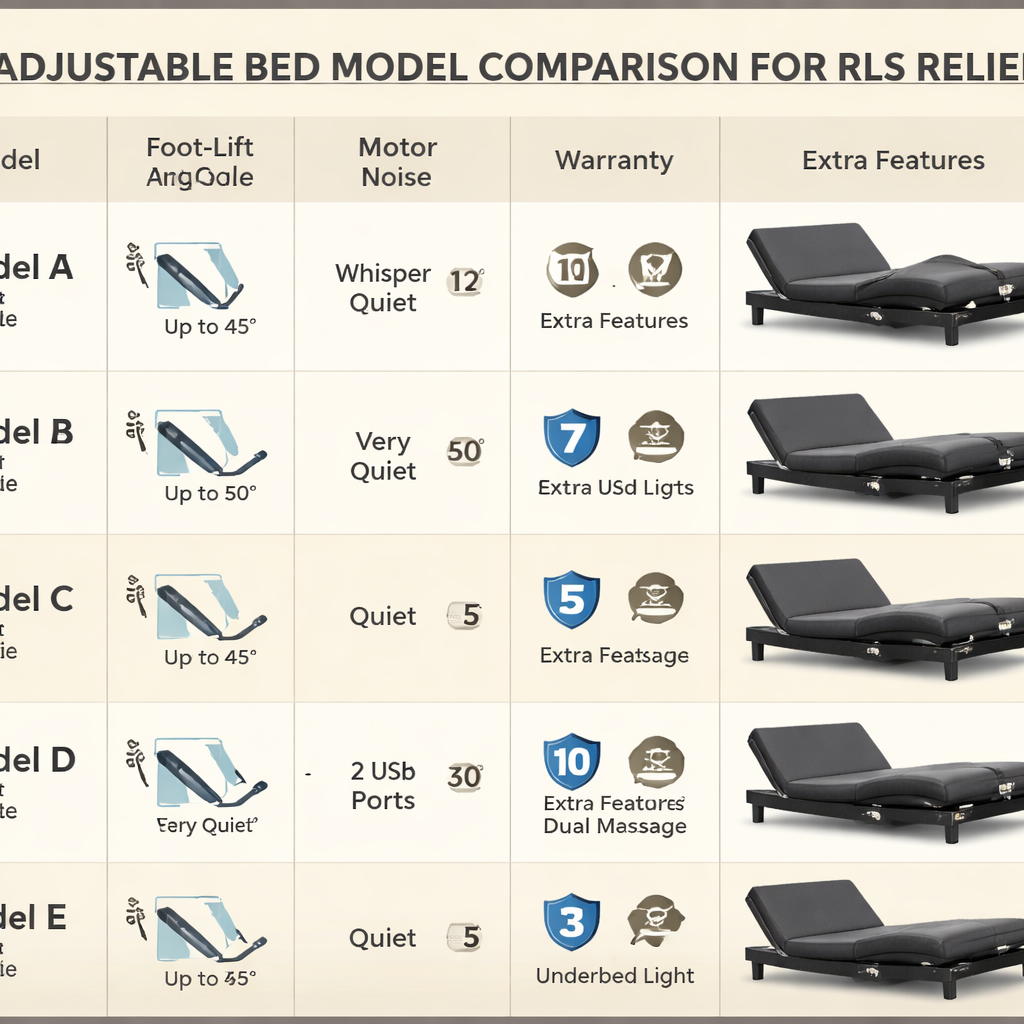
Comparing Bed Features: Quick Reference Table
| Model | Foot‑Lift Max | Motor Noise (dB) | Warranty | Extra Features |
|---|---|---|---|---|
| Sleep Sophie (Our Pick) | ~15° (unspecified) | 45 | 5 years | USB ports, remote presets |
| Nectar | 12° | 47 | 4 years | Zero‑gravity, massage |
| Saatva Plus | 10° | 44 | 5 years | Lumbar bar, under‑bed lighting |
| DreamCloud | 15° | 46 | 3 years | Three‑zone massage |
| Lucid L300 | 8° | 49 | 2 years | Basic remote |
The table shows why Sleep Sophie tops the list despite no published tilt angle. Its low motor noise, solid warranty and clear specs win over competitors that only list a tilt number.
For a deeper dive on how these specs affect sleep, read the Good Housekeeping review. It explains why quiet operation matters for partners.
Also see the Casper article on mattresses for RLS. It pairs well with the adjustable bases listed above.
Conclusion
Choosing a restless leg syndrome adjustable bed isn’t just about luxury – it’s about giving your legs a chance to rest. You learned why elevation helps circulation, what motor specs and foot‑lift ranges to look for, and how to set up the bed for maximum comfort. We walked through the top models of 2026 and showed a quick‑reference table that puts Sleep Sophie at the top because of its transparent data and reliable features.
Take the next step today. Measure your current bed height, pick a model that offers at least a 10‑15° foot lift, and follow the setup guide we shared. Within a few nights you should notice fewer leg urges and deeper sleep.
If you need help picking the right size or want a professional setup, the Sleep Sophie team offers in‑home assistance. A better night’s sleep is just a few clicks away.
FAQ
Can I use a regular mattress on a restless leg syndrome adjustable bed?
Yes, but pick a mattress that bends with the foot lift. Foam mattresses around 10‑inch thick work best because they flex without bulging. A hybrid with a thin coil layer also works if the coil base is flexible. Test the mattress on the base before buying – lay it flat, raise the foot 15°, and make sure it stays smooth.
How high should the foot lift be for RLS relief?
Most experts suggest a 10‑15° incline. That angle moves fluid out of the lower legs without over‑stretching the calves. Start with a low lift and add a few degrees each night until you feel the tingling ease. Keep a short journal to track the best angle for you.
Do I need a special remote for a restless leg syndrome adjustable bed?
A basic remote works fine as long as it lets you adjust the foot section in small increments. Look for a remote with memory presets so you can save your “Leg‑Up” angle. Some models, like Sleep Sophie, also offer a smartphone app that syncs with the base for easy control.
Is massage useful for RLS symptoms?
Massage can soothe mild episodes, but it doesn’t fix the underlying circulation issue. Use it as a secondary comfort feature – for example, after you’ve raised the foot to the right angle, a low‑intensity massage can relax the muscles and help you fall asleep faster.
Can a restless leg syndrome adjustable bed help with other conditions?
Yes. The same foot elevation that eases RLS also reduces swelling from edema, helps with acid reflux when the head is raised, and can lower snoring by opening the airway. Many users find the base useful for several health concerns, making it a versatile addition to the bedroom.
How often should I replace my adjustable bed?
Most bases last 8‑10 years with proper care. Keep the motors clean, avoid over‑loading the frame, and follow the manufacturer’s maintenance guide. If the foot lift starts to stall or the noise level rises above 50 dB, it may be time to service or replace the unit.
Do I need to buy a new mattress when I get a restless leg syndrome adjustable bed?
You don’t have to, but a flexible mattress makes the foot lift smoother. If your current mattress is over 12 inches thick or very firm, it might resist the tilt. Switching to a 10‑inch foam or a thin hybrid can improve the overall experience without a big expense.
What warranty should I look for on a restless leg syndrome adjustable bed?
Aim for at least a 5‑year warranty on the motor and frame. A longer warranty signals that the brand trusts its durability. Sleep Sophie offers a 5‑year warranty and clear service terms, which is why it earned the (Our Pick) label.