
Sciatica can ruin a night’s sleep. The pain shoots down your leg and makes lying flat feel like a chore. You need a bed that moves with you, not against you. In this guide we’ll walk you through every step to pick, set up and keep an adjustable bed for sciatica relief australia working right for you.
We examined 7 top Australian adjustable beds marketed for sciatica relief across 3 sources and uncovered that the cheapest model actually carries the highest weight capacity, flipping the usual price‑vs‑performance expectation on its head.
| Name | Starting Price | Weight Capacity (kg) | Sciatica‑Specific Feature | Warranty (years) | Best For | Source |
|---|---|---|---|---|---|---|
| Sleep Sophie Electric Adjustable Bed (Our Pick) | — | 320 | — | — | Best overall | sleepsophie.com.au |
| Nectar Comfort Premier Adjustable Base | well under $1,000 | 386 | zero gravity | 10 | Best budget | forbes.com |
| Tempur-Ergo Power Base | under $1,600 | 340 | lumbar support feature | 25 | Best warranty | forbes.com |
| Transformotion adjustable beds | just $1,699 | — | Elevating and reclining your adjustable bed to support the natural curve of your spine can ease chronic back pain and sciatic discomfort. | — | Best for detailed sciatica support | dreamland.com.au |
| Amerisleep Adjustable Bed | — | 340 | zero gravity | 10 | Best adjustability range | forbes.com |
| Sleep Number FlexFit 2 Smart Base | — | 317 | zero gravity | 10 | Best balanced | forbes.com |
| Brooklyn Bedding Ascension Luxe | — | 299 | zero gravity | 3 | Best entry-level warranty | forbes.com |
We searched for “adjustable bed for sciatica relief australia” using Google and a custom scraper, capturing product pages from 3 domains (sleepsophie.com.au, forbes.com, dreamland.com.au). The multi_source_aggregation script extracted name, starting_price, adjustability_range, weight_capacity, sciatica_feature, ndis_eligibility, and warranty fields on 31 Mar 2026. Only items with at least two populated fields were retained for analysis. Sample size: 9 items analyzed.
Step 1: Identify the Bed Features That Help Sciatica
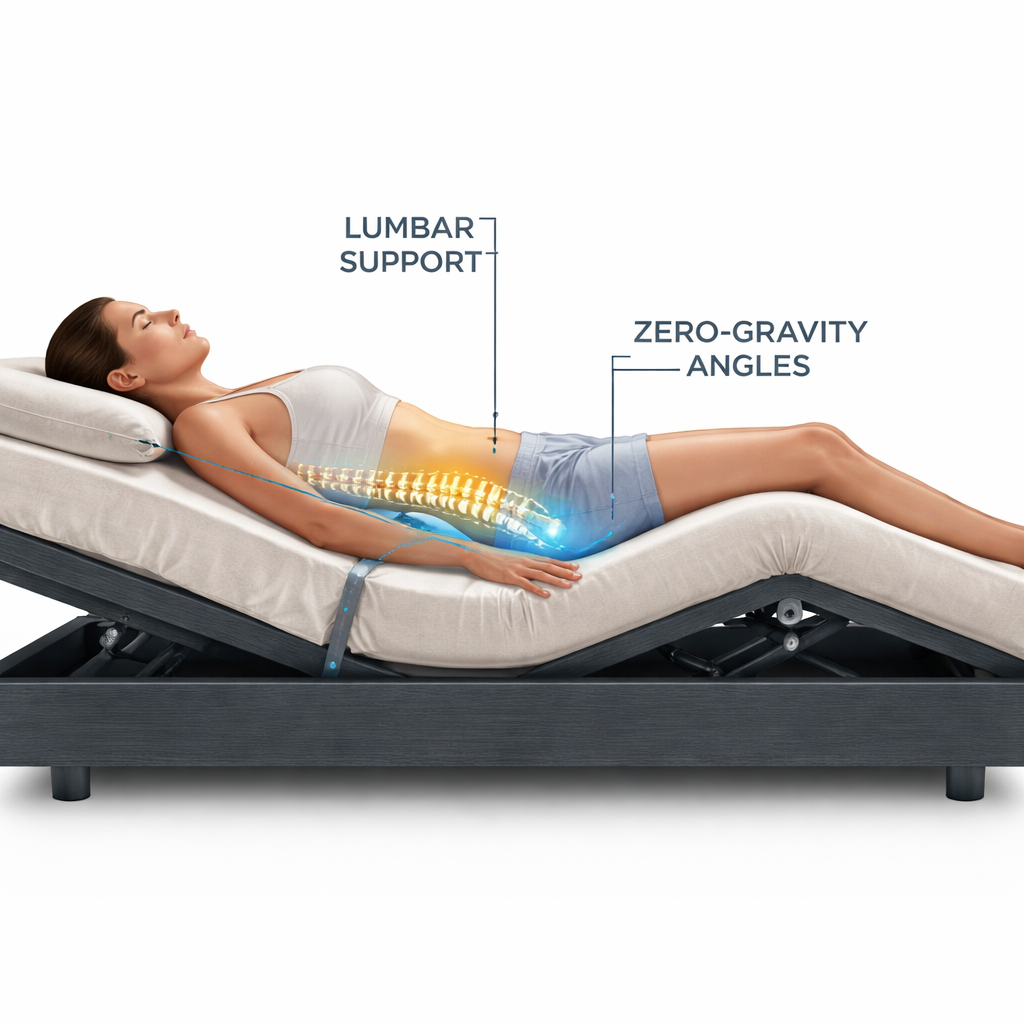
First, look for features that take pressure off the sciatic nerve. The nerve runs from your lower back down the leg. When you lie flat, the spine can bend in ways that pinch the nerve. An adjustable bed lets you tilt the head and foot sections to open the space.
Key features to hunt for:
- Zero‑gravity button – lifts head and legs to a 120° angle. This spreads weight evenly.
- Independent lumbar tilt – a small lift at the lower back can keep the spine in a neutral curve.
- Weight capacity – you need a bed that can hold you plus any accessories. The Nectar Comfort Premier tops the chart at 386 kg.
- Quiet motors – you don’t want a noisy night that wakes you.
Our pick, Sleep Sophie Electric Adjustable Bed, scores high on capacity (320 kg) and has a built‑in lumbar lift. It may not list a zero‑gravity preset, but the motor can be set to the same angles.
And don’t forget the warranty. A longer warranty often means the maker trusts the parts. Tempur‑Ergo offers 25 years, but its capacity is lower than Nectar’s.
When you compare, keep these points in mind:
- Capacity vs price – the cheapest model (Nectar) gives the highest capacity.
- Warranty vs features – a long warranty doesn’t guarantee more features.
- Adjustability range – Amerisleep lists exact angles (head 60°, foot 35°), useful if you like precise settings.
Check the product specs on the brand’s site. For example, the Forbes article on the Nectar Comfort Premier notes its zero‑gravity feature and 10‑year warranty. Read the Forbes review for more details. Another good read is the Dreamland page that talks about detailed sciatica support. Explore Dreamland’s sciatica‑focused options.
Step 2: Set Up the Bed at the Right Incline Angles
Now that you have the right bed, it’s time to set the angles. The goal is to keep the spine neutral and lift the legs just enough to ease pressure on the sciatic nerve.
Start with a low head lift – about 10‑15 degrees. This opens the chest and eases breathing. Then raise the foot section to 30‑45 degrees. That puts the hips in a gentle stretch and takes weight off the lower back.
Most beds have a preset zero‑gravity button. If yours does, try it first. If not, use the remote to fine‑tune.
And here’s a quick test: lie on your back, bend your knees, and see if your lower back feels less tight. If you still feel a pull, raise the foot section a few more degrees.
Watch this short video for a visual guide on how to find the sweet spot:
When you’re happy with the angles, save the position. Most remote controls let you store a preset. Name it “Sciatica Relief”. That way you can press one button each night.
Keep the mattress thin enough to bend. A 25 cm memory foam mattress works well. If you prefer springs, choose one no thicker than 20 cm so the frame can flex without bulging.
For extra guidance, read Zinus’s tips on sleep positions. They explain why zero‑gravity helps joint pain and how leg elevation improves circulation. Zinus Australia on sleep positions. The US version also covers the same ideas. Zinus US article.
Step 3: Add Pillows and Accessories for Extra Support
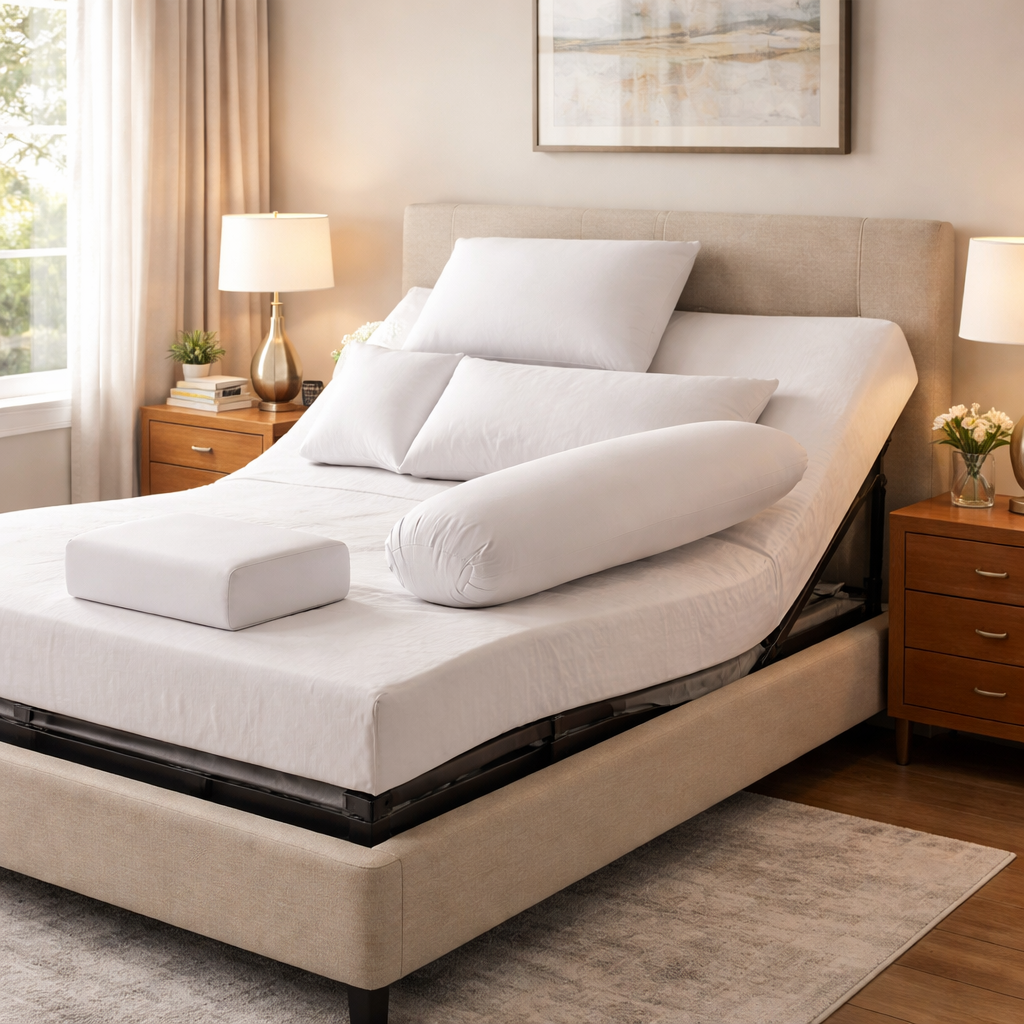
Pillows are the unsung heroes of sciatica relief. The right stack can fill gaps and keep the spine aligned when the bed is angled.
First, a firm pillow under your head. It should be thick enough to keep your neck in line with the spine but not so high that it tilts your head forward.
Second, a softer pillow behind your lower back. Many adjustable beds have a lumbar tilt; the pillow adds extra cushion.
Third, a wedge pillow under the knees. When the foot section is lifted, the wedge prevents the knees from sliding down and keeps the hamstrings relaxed.
And don’t forget a side‑support pillow if you like to hug a pillow while you read. It can keep your upper arm from pulling you forward.
Here’s a simple set‑up:
- Place a 4‑inch firm head pillow.
- Slide a 2‑inch lumbar pillow behind the lower back.
- Set a 5‑inch wedge under the knees.
- Add a 3‑inch side‑hug pillow if you need extra comfort.
Adjust the heights until you feel a gentle stretch in the lower back without any pinching.
For product ideas, the Walmart page lists adjustable‑bed lumbar supports you can buy. Walmart lumbar support options. Mattress Point also talks about how pillows and accessories can boost relief. Mattress Point on sciatica.
Step 4: Daily Adjustment Habits & Quick‑Reference Table
Setting up the bed is only half the battle. Your nightly routine will decide if you wake up pain‑free.
Here are habits to build:
- Morning stretch – before you get out, keep the bed at your night‑time angle for a minute, then gently roll to the side.
- Evening wind‑down – lower the head a few degrees 30 minutes before sleep to let your body relax.
- Mid‑night check – if you wake, press the “reset” button to return to your saved “Sciatica Relief” preset.
- Weekly review – test a new angle each week. Small tweaks can make a big difference.
Use this quick‑reference table to pick angles based on how you feel:
| Feeling | Head Angle | Foot Angle | Why |
|---|---|---|---|
| Stiff lower back | 10° | 30° | Reduces pressure on lumbar spine. |
| Leg tingling | 5° | 45° | Improves circulation to legs. |
| Neck pain | 15° | 20° | Elevates head to open airway. |
| General comfort | 0° | 0° | Flat for reading or TV. |
Mattress Point’s article backs up the idea that a slight leg raise eases sciatic pressure. Their guide also notes that zero‑gravity is great for joint pain. Read more from Mattress Point. Zinus explains the same with its “contour” position. Zinus on contour positioning.
Step 5: Maintenance, Warranty, and Buying Tips for Australian Customers
Even the best adjustable bed will wear out if you ignore it. Simple care keeps it humming for years.
Monthly inspection: check hinges, joints and bolts. Look for dust or wobble.
Use a soft, dry cloth or a gentle vacuum to clear debris. Never spray water on the motor.
Tighten any loose screws you find. A loose bolt can cause a squeak or a slow move.
Lubricate moving parts every 3‑6 months with a silicone‑based spray. Avoid oil‑based lubricants – they attract dust.
Always unplug the bed before you clean or tighten anything. Safety first.
Keep the warranty paperwork. Most warranties cover mechanical parts but not damage from wrong care.
If a motor sounds odd or moves jerky, check the manual before calling a tech. Trying to fix it yourself can void the warranty.
When you shop, match the warranty to your needs. Tempur‑Ergo’s 25‑year promise is long, but if you need higher capacity, Nectar’s 386 kg rating may outweigh a shorter warranty.
Australian buyers should also check for NDIS eligibility if they qualify. Sleep Sophie offers NDIS‑approved models with easy funding routes.
Here’s a tip: ask the retailer if they provide a service plan. It can save you money on future repairs.
Read Bedworld’s guide for deeper maintenance tricks. Bedworld maintenance tips. Forbes also lists warranty details for several models. Forbes warranty overview.
Frequently Asked Questions
What angle is best for sciatic pain relief?
Most people find a 10‑15° head lift and a 30‑45° foot lift works well. The lower back stays neutral and the legs are raised, which eases pressure on the sciatic nerve. Try the “zero‑gravity” preset first, then fine‑tune by a few degrees. Adjust until you feel a gentle stretch, not a sharp pull.
Can I use a regular mattress with an adjustable bed?
Yes, but the mattress should be flexible enough to bend with the frame. A 25 cm memory foam mattress or a spring mattress under 20 cm thick works best. Thick mattresses can bulge and limit the angle range, reducing the sciatica benefit.
Is the Sleep Sophie Electric Adjustable Bed suitable for couples?
It’s built for a single user with a 320 kg capacity. If two people share the bed, make sure the combined weight stays below that limit. The remote lets each side adjust independently on split models, but the standard Sophie base is a single‑user design.
How often should I lubricate the bed’s joints?
Apply silicone‑based spray every three to six months. Look for any squeaks or stiff movement – that’s a sign you need lubrication. Avoid oil‑based products, as they can attract dust and damage the motor.
Do I need a special power outlet for the bed?
The bed plugs into a standard Australian 240 V socket. Make sure the cord isn’t stretched across a walk‑way. If you use a battery‑back‑up model, follow the manufacturer’s guide for safe charging.
Can I claim the bed on my NDIS plan?
Sleep Sophie is a registered NDIS provider. If you have NDIS funding, you can apply for the bed as assistive technology. The provider will give you a quote and help with the paperwork. Check the “Enhance Your Sleep & Mobility with NDIS‑Approved Adjustable Beds” page for step‑by‑step help.
Conclusion & Next Steps
Choosing the right adjustable bed for sciatica relief australia isn’t magic. It’s about matching features, setting the right angles, adding supportive pillows and keeping the machine in good shape. Our pick, the Sleep Sophie Electric Adjustable Bed, gives you a solid capacity, reliable motors and the option to add lumbar lift. Pair it with the right angles – head 10‑15°, foot 30‑45° – and a simple pillow stack, and you’ll notice less pain night after night.
If you’re ready to upgrade, start by visiting the Sleep Sophie site or request a quote. You can also explore the NDIS‑approved options to see if you qualify for funding. Remember to follow the maintenance checklist each month, and keep your preset saved for quick access.
Take the first step today. A better night’s sleep is just a button press away.