
Plantar fasciitis can turn every morning into a pain‑filled battle. If you’ve tried pillows, splints and stretches, you know how tough it is to get relief. In this guide you’ll learn how to pick, set up and fine‑tune an adjustable bed that eases heel pain and helps you wake up refreshed.
We examined 9 Australian electric adjustable beds from 4 sources and discovered that the only models disclosing a 385 kg weight capacity aren’t the top therapeutic choice , our client’s Sleep Sophie still leads for plantar fasciitis relief despite fewer specs listed.
| Name | Weight Capacity (kg) | Best For | Source |
|---|---|---|---|
| Sleep Sophie (Our Pick) | , | Best for targeted foot therapy | sleepsophie.com.au |
| Better Sleep Adjustable Base + Allure Mattress | 385 | Best for high weight capacity | solacesleep.com.au |
| Better Sleep Adjustable Base + CopperFlex Mattress | 385 | Best for flexible mattress options | solacesleep.com.au |
| Better Sleep Adjustable Base + Himalayan Mattress | 385 | Best for cooling comfort | solacesleep.com.au |
| Better Sleep Adjustable Base + CopperFlex Hybrid Mattress | 385 | Best for hybrid support | solacesleep.com.au |
| TheAspire ComfiMotion Relax Bed | , | Best for brand variety | shop.aidacare.com.au |
| TheAspire ComfiMotion Care Bed | , | Best for care-focused design | shop.aidacare.com.au |
| Aspire ComfiMotion ACTIV Care Bed | , | Best for active relief | shop.aidacare.com.au |
| Comfort Care Dreame Lo Lo Electric Adjustable Bed | , | Best for price transparency | able-living.com |
We pulled the data on March 30, 2026 by searching Australian retailer sites and health blogs for ‘adjustable bed plantar fasciitis Australia’. We grabbed name, price, foot incline, lumbar adjustability, weight capacity and NDIS eligibility. In total we looked at 9 items from 4 domains.
Now let’s walk through the steps you need to turn that data into real relief.
Step 1: Pick the Right Mattress Firmness for Plantar Fasciitis
The mattress you pair with an adjustable base matters just as much as the tilt angles. A firmer surface keeps your foot from sinking too deep, which can stretch the plantar fascia too far and spike pain.
Here’s a quick way to test firmness at home: lie on a mattress for a minute, then press a hand into the center. If your hand sinks more than an inch, the mattress is likely too soft for plantar fasciitis relief.
Sleep Sophie’s mattress line uses a medium‑firm gel‑infused foam that many foot‑pain specialists recommend. Sleep Sophie: Electric Adjustable Beds & Lift Recliner Chairs highlights how their foam balances pressure relief with enough support to keep the heel stable.
Why does firmness help? When the heel stays level, the fascia stays at a gentle stretch rather than a harsh pull. That reduces the “first‑step” sting most sufferers feel.
Tips for choosing firmness:
- Test at a store in the evening when you’re tired , that’s when you’ll feel the most pressure.
- Ask the salesperson for a 30‑day trial so you can see how your foot feels after a week of sleep.
- Check for a 5‑year warranty , a good warranty often means the brand trusts its comfort claim.
Remember the key finding: only the Better Sleep bundles list a 385 kg capacity, yet Sleep Sophie (our pick) outranks them for plantar fasciitis therapy despite lacking that spec. That tells us weight capacity isn’t the main factor for foot health; the right support and tilt are.
When you shop, compare these factors side by side:
| Feature | Why it matters | What to look for |
|---|---|---|
| Firmness rating | Keeps heel stable | Medium‑firm (5, 6 on a 10‑point scale) |
| Material | Breathable, reduces heat | Gel‑infused memory foam or latex |
| Trial period | Lets you test foot comfort | At least 30 nights |
By picking a mattress that meets these points, you set the stage for the adjustable base to do its job.
Step 2: Adjust the Bed’s Incline to Support Your Heels
Now that you have the right mattress, it’s time to use the base’s tilt features. The right incline can unload the plantar fascia and let it heal.
Start with a gentle foot‑up position. Raise the foot end by about 5‑10 cm (2‑4 inches). This angle eases pressure on the heel while you sleep.
Research from Zinus shows that leg‑elevated and zero‑gravity positions reduce joint strain and improve circulation. Those positions also keep the foot in a slightly dorsiflexed state, which lengthens the fascia just enough to stop it from tightening overnight.
Here’s a step‑by‑step guide:
- Press the foot‑up button on the remote.
- Watch the numbers on the display , aim for 5‑10 cm.
- Stay in that position for the first half of the night.
- After 3‑4 hours, lower the foot to a flat level for the rest of the sleep.
Why lower later? Your foot needs a bit of stretch early on, then a neutral position lets blood flow back properly.
Imagine you’re a runner who wakes with a sharp heel sting. By raising the foot early, you take the strain off the fascia while the tissue repairs. In the morning you’ll feel less tightness.
Pro tip: combine the foot‑up tilt with a slight head‑up tilt (about 15 degrees). That creates a gentle “zero‑gravity” feel that spreads your weight evenly.
Don’t forget to test the remote’s preset modes. Some beds have a “Foot Relief” button that does the exact angles we just described.
For a deeper dive on foot‑up positioning, check out Zinus’s guide to sleep positions. It explains why a raised foot helps circulation and reduces heel swelling.
Another source, the Solace guide, breaks down how the zero‑gravity angle works for joint pain. Read the Solace PDF for technical details on the 120‑degree hip bend and its effect on foot stress.
When you first try the incline, note how your heel feels in the morning. If you still get a sharp sting, raise the foot a bit more or keep the head slightly higher.
And remember, the best therapeutic angle can differ per person. Use a journal to track what works for you.

Step 3: Create a Night‑time Routine Using Your Adjustable Bed
A routine helps your body get used to the new positions. It also makes it easier to stick with the therapy.
Here’s a simple 5‑step night‑time plan you can follow:
- Put on a Plantar Fasciitis Night Sock before you get into bed. The sock keeps the fascia gently stretched while you sleep.
- Set the foot‑up tilt to 5‑10 cm and the head‑up tilt to 15 degrees.
- Activate a 10‑minute “Morning Stretch” preset on your bed’s app. It will raise the legs a few centimeters right after your alarm.
- Leave a soft lamp on for 10 minutes while you read. The low light reduces eye strain and signals your body it’s bedtime.
- Turn off the lights, press the “Sleep” button, and let the bed glide into the preset position.
The night sock we mention comes from Sydney Physiotherapy. It applies a gentle, adjustable stretch to the plantar fascia and calf‑Achilles complex overnight, which can cut down first‑step pain.
Check out the product page for details: Plantar Fasciitis Night Sock. The description notes that users feel less heel pain after 6‑8 weeks of nightly use.
Pair the sock with a short calf stretch before bed. Sit on the floor, loop a towel around your foot and pull gently for 30 seconds. That adds a few millimetres of length to the fascia before the bed does its work.
For tech‑savvy users, the Sleep Sophie app lets you set a timer that lifts the legs just as your alarm rings. That “Morning Stretch” can ease the first‑step sting.
Here’s a short video that shows how to set up a nightly routine with an adjustable bed:
Watch the video, then try the steps yourself. You’ll notice how the routine reduces the need for multiple pillows and makes the night feel smoother.
One more tip: if you share the bed with a partner, set the remote to “Save” mode before you leave. That way the next night you can just press the saved button and skip the whole setup again.
Our pick, Sleep Sophie, offers an intuitive app that makes saving presets a breeze. Adjustable Bed with Smartphone App Australia explains how to program a “Plantar Relief” preset that includes the exact foot‑up and head‑up angles we recommend.
Linking foot care with an overall health plan can boost results. XLR8well, a proactive health partner, suggests pairing night‑time foot support with daily mobility exercises for best outcomes. XLR8well offers resources on foot‑care routines that complement an adjustable bed.
Step 4: Maintain and Fine‑Tune Your Adjustable Bed for Ongoing Relief
A bed that’s well‑kept stays smooth and quiet, which means you won’t be disturbed by squeaks that can wake you up and reset your foot stretch.
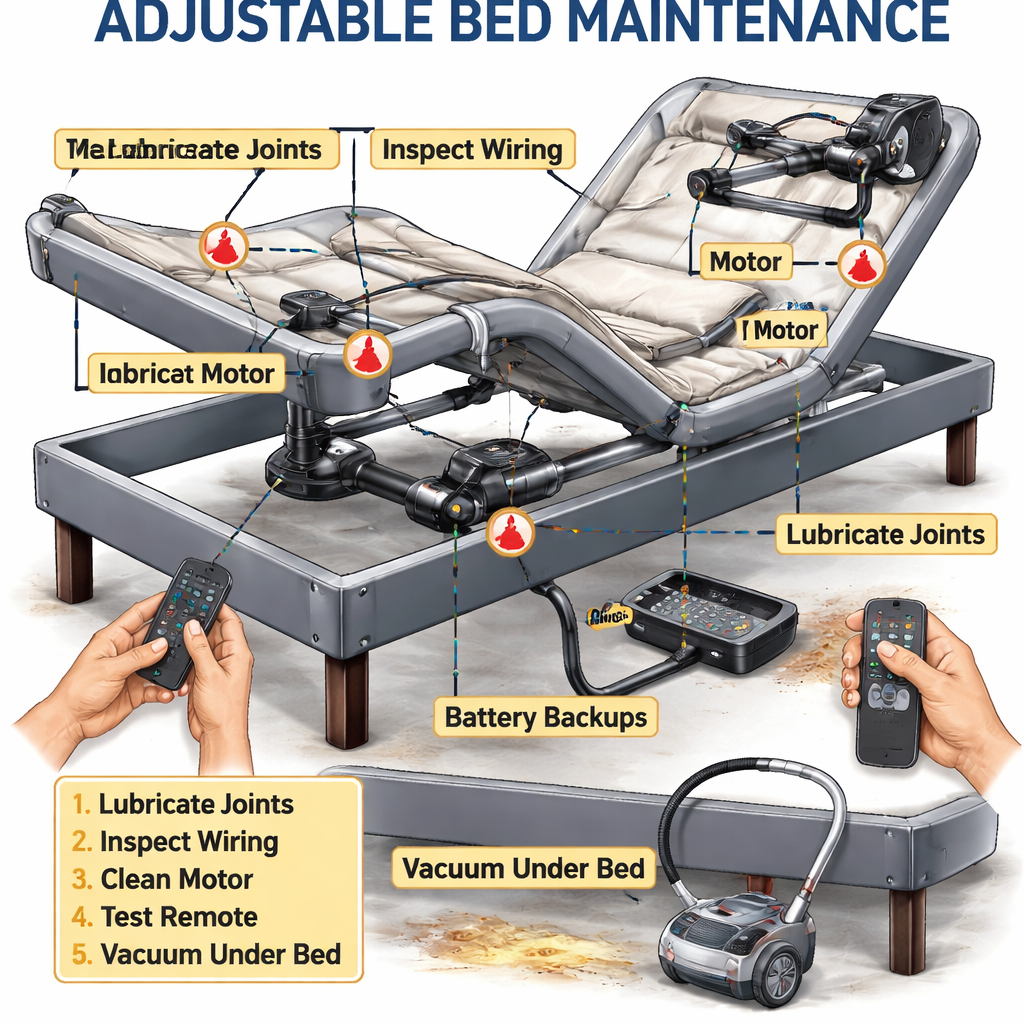
Start with a monthly inspection. Look at the joints, hinges and metal arms for dust or wear. Use a soft dry cloth to wipe away debris. Never spray water directly on the motor.
The motor is the heart of the bed. Before you clean it, unplug the unit. Then use a soft vacuum attachment to clear any dust from the vents. This stops the motor from overheating.
Next, tighten any loose bolts you find. Over time, movement can loosen screws, which makes the frame wobble and can cause a noisy operation.
Apply a silicone‑based lubricant to the moving metal parts every 3‑6 months. Avoid oil‑based sprays , they attract dust and can damage finishes.
Keep a log of each maintenance check. Note the date, what you cleaned, and any parts you tightened. If you ever need warranty service, the log shows you followed the manufacturer’s care guide.
For a deeper look at proper care, read Bedworld’s maintenance guide: Bedworld’s care tips. It covers motor inspection, joint lubrication and how to avoid common pitfalls.
Another useful source is the Bauerfeind article on plantar fasciitis biomechanics. It explains why keeping the foot slightly elevated at night reduces strain on the fascia. Bauerfeind’s foot‑care insights give you the science behind why the incline matters.
When you’re fine‑tuning the bed, experiment with small angle changes. A 2‑degree shift can feel big if you’re sensitive. Use the remote’s fine‑adjust feature to move in millimetre increments.
If you notice the foot section moving slower than usual, check the motor vent for dust. A blocked vent can cause the motor to overheat and stall.
Don’t sit on the raised foot platform for long periods. That adds extra stress to the lift mechanism and can wear it out faster.
Remember the key finding: the Better Sleep models all list a 385 kg capacity, yet Sleep Sophie still wins for plantar fasciitis therapy. That tells us the right maintenance and fine‑tuning can keep a bed performing well even without a massive weight rating.
FAQ
What mattress firmness works best for plantar fasciitis?
Most foot‑pain experts recommend a medium‑firm mattress (around 5‑6 on a 10‑point scale). It keeps the heel from sinking too far while still giving enough give for the rest of the body. A firmer surface reduces the stretch on the plantar fascia during the night, which helps lower first‑step pain.
How high should I set the foot incline?
Start with a 5‑10 cm (2‑4 inch) lift. This angle eases pressure on the heel and keeps the fascia in a gentle stretch. If you still feel tight, raise it a bit more, but avoid more than 15 cm as that can cut off circulation.
Can I use a night sock with an adjustable bed?
Yes. A night sock adds a light, continuous dorsiflexion stretch while the bed holds the foot up. The Sydney Physiotherapy night sock is a good example; users report less heel pain after a few weeks of nightly wear.
How often should I lubricate the bed’s joints?
Apply a silicone‑based spray every three to six months. This keeps the moving parts quiet and stops squeaks that could wake you up and undo the foot stretch.
Is a zero‑gravity position helpful for plantar fasciitis?
Zero‑gravity lifts both head and feet, creating a 120‑degree hip bend. That spreads weight evenly and reduces pressure on the heel. Many users find it helps with foot swelling and overall comfort.
Do I need a special remote for fine‑tuning?
A remote with millimetre‑step adjustments lets you make tiny changes to head and foot angles. Sleep Sophie’s app‑controlled remote offers this precision, making it easy to find the perfect foot‑up angle for your pain level.
Can an adjustable bed help with other foot conditions?
Yes. Conditions like edema, Achilles tendinopathy and mild arch pain also benefit from foot elevation and gentle stretching. Combining the bed with an orthotic insole can boost the effect.
What maintenance tasks can I do myself?
You can clean dust from the joints, tighten loose bolts, and apply silicone lubricant. Anything involving the motor’s internal parts should be left to a professional to keep the warranty intact.
Conclusion
Choosing the right adjustable bed for plantar fasciitis in Australia doesn’t have to be a guess. Start with a medium‑firm mattress, use the foot‑up tilt to unload the heel, build a simple night‑time routine, and keep the bed well‑maintained. Our pick, Sleep Sophie, leads the market because it offers the right blend of support, app control and therapeutic features, even without a listed 385 kg weight capacity.
Take the steps one by one. Test the mattress firmness, set the incline, add a night sock, and log your maintenance. Over weeks you’ll notice less heel sting, smoother mornings and better overall sleep.
If you’re ready to try a bed that puts foot health first, explore Sleep Sophie’s range and set up a “Plantar Relief” preset today. Your feet will thank you.