
Low back pain affects millions of Australians every night, turning what should be restful sleep into hours of tossing and turning. If you’re waking up stiff and sore, your current sleeping setup might be working against you rather than helping you heal.
We examined 12 top adjustable beds across three Australian retailers and found that none advertise adjustable lumbar support—even though low‑back relief is the primary selling point.
| Name | Price (AUD) | Source |
|---|---|---|
| SmartFlex 3 | 5192 | mooreshomemakers.com.au |
| Ezyflex Delux | 3785 | mooreshomemakers.com.au |
| Ultimate Flex | 3299 | mooreshomemakers.com.au |
| Lo Lo Adjustable Electric bed | 3299 | mooreshomemakers.com.au |
| EzyFlex Delux Adjustable Bed | 3099 | mooreshomemakers.com.au |
| Mi Life 400 | 2918 | mooreshomemakers.com.au |
| UltraFlex Supreme Adjustable Bed | 2199 | mooreshomemakers.com.au |
| SmartFlex 2 | 2099 | mooreshomemakers.com.au |
| ErgoAdjust Lo Lo | — | sleepcenterbeds.com.au |
| Electrical Adjustable Bed Base With Storage Bed Frame – Split King – C | — | sleepcenterbeds.com.au |
| Elite Hi-Lo | — | sleepelectric.com.au |
| SleepMaker Adjustable Bed Base | 1924 | mooreshomemakers.com.au |
This guide walks you through six practical steps to choose, set up, and maintain an adjustable bed for low back pain relief Australia residents can trust. You’ll learn how to match mattress firmness to your body type, compare essential features, find the perfect sleep position, and keep your investment working for years to come.
Step 1: Choose the Right Mattress Firmness
The foundation of any adjustable bed for low back pain relief Australia starts with getting the mattress firmness right. Too soft and your spine curves unnaturally. Too firm and pressure builds at your hips and shoulders.
Most people with lower back pain do best with medium to medium-firm support. Think of it as finding the sweet spot where your spine maintains its natural S-curve without creating pressure points. Research shows that medium-firm mattresses reduced back pain by 62.8% and stiffness by 58.4% compared to overly soft or firm beds.
Your body weight plays a crucial role in firmness selection. Here’s how to match your needs:
- Under 68kg: Medium firmness works well as lighter bodies need more contouring
- 68-104kg: Medium-firm provides the ideal balance of support and pressure relief
- Over 104kg: Firm support prevents excessive sinking that can misalign your spine
Sleep position matters just as much. Side sleepers need softer surfaces to cushion shoulders and hips. Back sleepers require firmer support to maintain spinal alignment. Stomach sleepers, though not ideal for back pain, need the firmest surface to prevent their midsection from sinking.
Memory foam offers excellent pressure relief but can trap heat. If you’re a hot sleeper with back pain, look for gel-infused or plant-based foams that breathe better. Hybrid mattresses combine pocket springs with comfort layers, offering the support of springs with the pressure relief of foam.
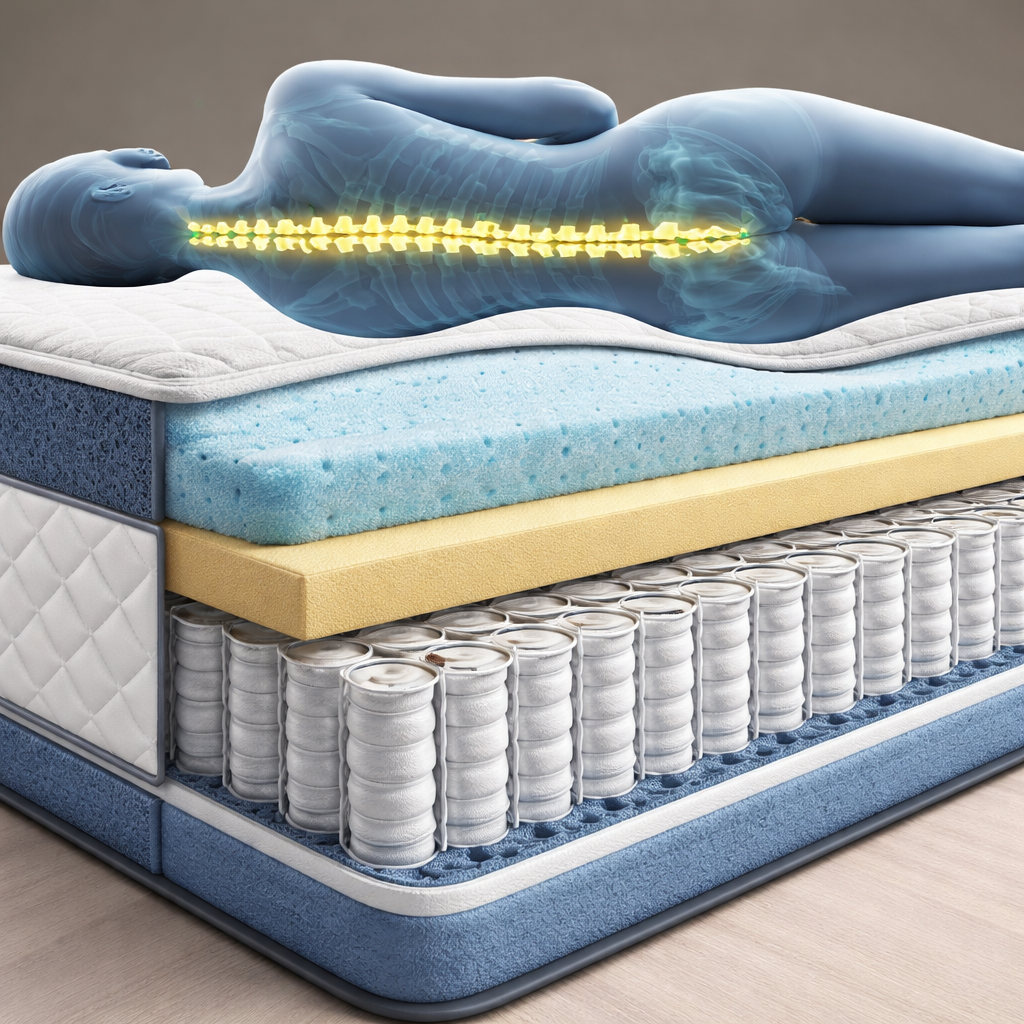
Don’t overlook the importance of mattress age. If your current mattress is over 7-8 years old, it’s likely losing its ability to support your spine properly. Sagging and worn materials can force your spine out of alignment, making back pain worse regardless of your adjustable base.
Test any mattress for at least 30 nights before deciding. Your muscles have memory from your old sleep surface, and it takes 2-4 weeks to adjust to a new firmness level. Most reputable retailers offer sleep trials specifically for this reason.
Step 2: Compare Adjustable Bed Features
Not all adjustable beds are created equal when it comes to back pain relief. The features you choose can make the difference between genuine therapeutic benefit and an expensive disappointment.
Start with the basics: head and foot elevation ranges. Look for beds that offer at least 60 degrees of head elevation and 45 degrees of foot elevation. This range gives you access to the zero gravity position, which elevates your legs above your heart while slightly raising your torso.
Motor quality determines both performance and longevity. Choose models with whisper-quiet motors and smooth adjustments to avoid disturbing your partner during position changes. Dual motor systems provide more precise control than single motor setups.
Here’s a comparison of essential features for back pain relief:
| Feature | Basic Models | Mid-Range | Premium |
|---|---|---|---|
| Head Elevation | 45° | 60° | 70°+ |
| Foot Elevation | 30° | 45° | 45°+ |
| Memory Positions | 2-3 | 4-6 | 8-12 |
| Massage Function | None | Basic | Multi-zone |
| Weight Capacity | 180kg | 250kg | 320kg+ |
Split bases deserve special consideration for couples. They allow each side of the bed to operate independently, so one partner can find their ideal position without affecting the other. However, they come with a higher price tag and create a gap in the middle of the bed.
Wall-hugging technology keeps your nightstand within reach even when the head is elevated. Without this feature, the entire bed moves away from the wall as it adjusts, potentially leaving you stranded without your water glass or phone.
Remote controls have evolved beyond basic wired versions. Wireless remotes offer convenience, but some users prefer wired ones to avoid misplacement. Look for backlit buttons and intuitive layouts that you can operate in the dark.
Weight capacity isn’t just about the maximum load. Higher capacity ratings typically indicate stronger construction and longer-lasting motors. Even if you’re well under the limit, choosing a bed with higher capacity often means better durability.
Consider your specific back pain needs when evaluating features. If you have morning stiffness, programmable memory positions let you save your optimal sleep angle and return to it instantly. If circulation is an issue, massage functions can help with blood flow, though they’re not essential for everyone.
Step 3: Set Up the Ideal Sleep Position
Finding the right sleep position on your adjustable bed for low back pain relief Australia can transform your nights from restless to restorative. The key lies in understanding how different angles affect your spine’s natural alignment.
Start with the zero gravity position, considered the gold standard for back pain relief. This position elevates your legs above your heart level while raising your torso to about 30 degrees. The zero gravity position provides spinal decompression, taking almost all pressure off your lumbar region and mimicking the weightless posture used by astronauts.
For lower back pain specifically, try the “break-knee” position. Elevate the foot section to create a bend at your knees while keeping your head relatively flat. This tilts your pelvis forward, reducing compression in the lower back joints. Many users find this position more comfortable than zero gravity for sleeping.
Upper back and shoulder pain responds well to gentle head elevation. Start with just 15-20 degrees of elevation to relax the shoulder blades and reduce tension in the thoracic spine. Too much elevation can strain your neck, so increase gradually.
Side sleepers need special consideration. When sleeping on your side in an adjustable bed, a slight head elevation helps maintain proper spinal alignment. Place a pillow between your knees to keep your hips aligned, especially when the foot section is elevated.
Here’s a step-by-step approach to finding your ideal position:
- Start flat: Begin with the bed in a flat position and lie down normally
- Elevate gradually: Raise the head section 10 degrees at a time until you feel comfortable
- Add foot elevation: Raise the foot section to create a gentle knee bend
- Fine-tune: Make small adjustments until pressure points disappear
- Test for 20 minutes: Stay in position to ensure it remains comfortable
Don’t expect perfection immediately. Your body needs time to adjust to sleeping at angles. Start with shorter periods during daytime rest, then gradually increase to full nights. Some people need 1-2 weeks to fully adapt to their new sleep position.
Keep a sleep diary during your first month. Note which positions help most with morning stiffness and which angles cause discomfort. This information helps you refine your setup and identify patterns in your pain relief.
Remember that your ideal position might change based on your pain levels, activities during the day, or even weather changes. The beauty of an adjustable bed lies in its flexibility to adapt to your changing needs.
Step 4: Adjustability Tips for Daily Use
Getting the most from your adjustable bed for low back pain relief Australia requires more than just finding one good position. Daily adjustability strategies can help you manage pain throughout different activities and times of day.
Morning stiffness often responds well to gentle movement before getting up. Instead of lying flat all night, program a “wake-up” position that gradually elevates your torso 15-20 degrees about 30 minutes before your alarm. This gentle transition helps your spine adjust before you stand.
For reading or watching TV, create a comfortable upright position around 45-60 degrees. This angle supports your natural posture without straining your neck or lower back. Adjustable beds help keep airways open and reduce gastric pressure when you’re in an upright position, making activities more comfortable.
Pain flare-ups require different positioning strategies. During acute episodes, the zero gravity position often provides the most relief by removing pressure from inflamed areas. Keep this position programmed in your remote’s memory for quick access during difficult nights.
Here are daily use tips that make a real difference:
- Change positions every 2-3 hours: Even comfortable positions can cause stiffness if maintained too long
- Use memory settings: Program your most effective positions for quick access
- Adjust for activities: Different angles work better for sleeping, reading, or resting
- Listen to your body: What works one day might not work the next
Temperature can affect your comfort in different positions. Elevated positions often feel warmer because they reduce air circulation around your body. Consider lighter bedding or adjust your room temperature when using higher elevation angles.
Partner considerations matter if you share the bed. Even with split systems, dramatic position changes can affect the other person’s sleep. Communicate about timing and use the bed’s quiet motors to minimize disruption during nighttime adjustments.
Meal timing affects which positions feel comfortable. Avoid lying completely flat within 2-3 hours of eating, as this can worsen acid reflux and interfere with digestion. A slight head elevation helps if you need to rest after meals.
Weather changes can influence your optimal sleep position. Many people with back pain report increased stiffness during cold or rainy weather. On these days, you might need slightly more elevation or different angles to achieve the same comfort level.
Keep your remote easily accessible but secure. Many people lose remotes in bedding or knock them off nightstands. Consider a remote caddy that attaches to your bed frame or nightstand to keep controls within reach but protected.
Regular position changes during the day can prevent stiffness from building up. If you spend long periods in bed due to pain or illness, alternate between flat, slightly elevated, and zero gravity positions throughout the day.
Step 5: Incorporate Supportive Pillows and Accessories
The right pillows and accessories can dramatically improve how your adjustable bed for low back pain relief Australia performs. Standard pillows often work against adjustable positioning, sliding around or failing to provide proper support at various angles.
Start with a pillow system designed for adjustable beds. Traditional thick pillows can push your head too far forward when the bed is elevated, straining your neck. Look for thinner, more flexible pillows that adapt to different head positions.
Wedge pillows work exceptionally well with adjustable beds. Place a wedge pillow under your knees when the foot section is elevated to maintain proper leg alignment. Adjustable memory foam pillows allow you to customize loft and firmness by adding or removing filling to match your bed’s position.
For side sleepers using adjustable beds, a body pillow provides crucial support. Position it along your torso to prevent rolling toward the middle when the bed is angled. This maintains proper spinal alignment throughout the night.
Lumbar support pillows deserve special attention for back pain sufferers. A small lumbar pillow placed at the curve of your lower back provides targeted support, especially when the head section is elevated. Choose one that’s firm enough to maintain its shape but soft enough for comfort.
Here’s how to layer your pillow system effectively:
- Foundation pillow: A firm, thin pillow that stays in place
- Comfort layer: A softer pillow on top for cushioning
- Support accessories: Wedges, lumbar pillows, or body pillows as needed
- Side support: Additional pillows to prevent rolling or fill gaps
Mattress protectors become more important with adjustable beds because the constant movement can cause regular sheets to bunch or slip. Look for deep-pocket fitted sheets designed for adjustable beds, or consider split-sheet systems that accommodate independent movement on dual bases.
Temperature regulation accessories help manage the warmth that can build up in elevated positions. Cooling mattress toppers, breathable pillow covers, or even a small fan can make elevated sleeping more comfortable during warmer months.
Remote control caddies and bed-side organizers keep your accessories within reach. Some adjustable bed users find that elevated positions put their nightstand out of easy reach, making bedside storage solutions essential.
Consider ergonomic accessories for activities beyond sleeping. A laptop table that adjusts with your bed position lets you work comfortably without straining your back. Reading lights that clip to your headboard provide illumination without disturbing a partner.
Footboard extensions can prevent pillows and accessories from sliding off the foot of the bed when elevated. This simple addition keeps your support system in place throughout the night.
Replace accessories regularly to maintain their effectiveness. Pillows lose their support over time, especially with the constant repositioning that adjustable bed use requires. Plan to replace pillows every 1-2 years for optimal support.
Step 6: Maintain Your Adjustable Bed for Longevity
Proper maintenance ensures your adjustable bed for low back pain relief Australia continues providing therapeutic benefits for years to come. Regular care prevents costly repairs and maintains the smooth operation essential for pain management.
Start with motor maintenance, the heart of your adjustable bed system. Keep the area around motors clean and dust-free. Vacuum around the bed frame monthly to prevent dust buildup that can interfere with mechanical components. Listen for changes in motor sounds that might indicate developing problems.
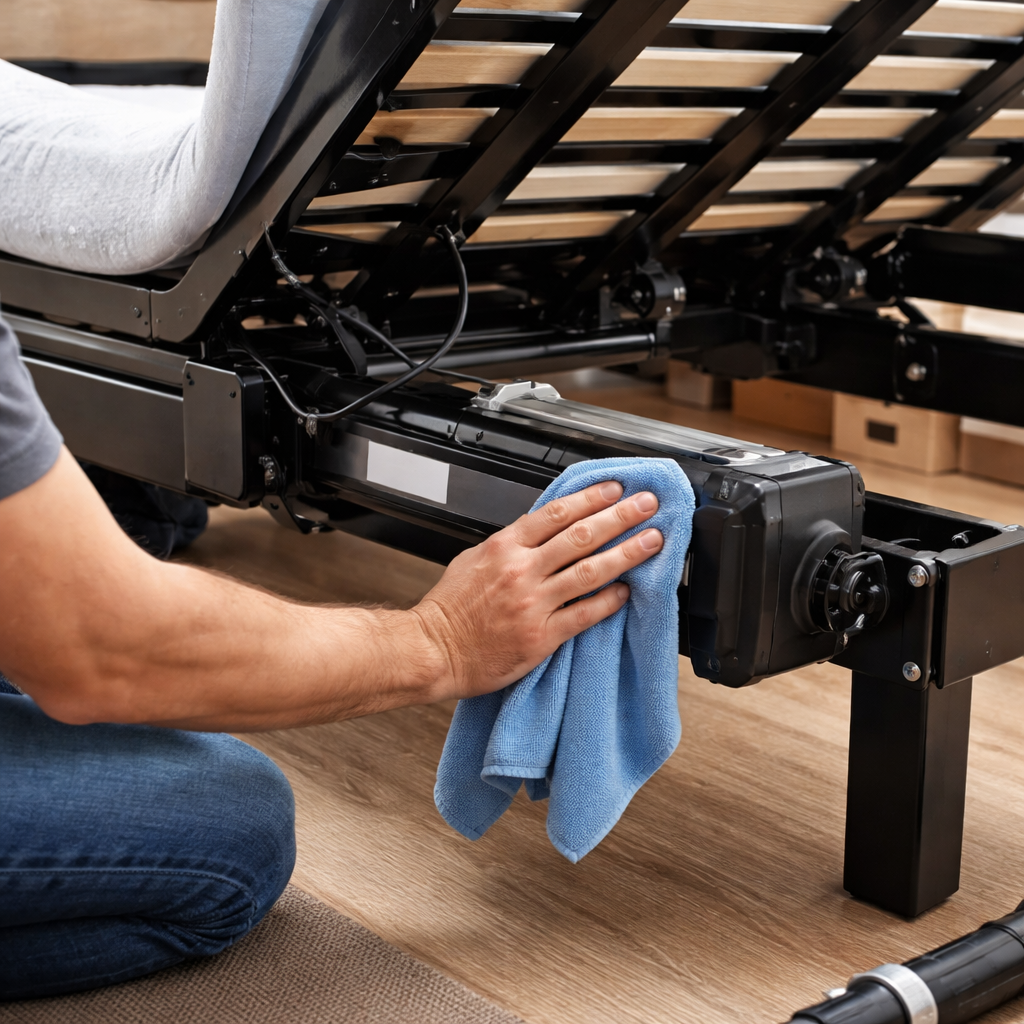
Lubrication requirements vary by manufacturer, but most modern adjustable beds use sealed systems that don’t require regular lubrication. Check your owner’s manual for specific guidance, and never add lubricants unless specifically recommended by the manufacturer.
Weight distribution affects bed longevity significantly. Avoid exceeding weight capacities and periodically inspect remotes and wires for wear. Even if you’re well under the weight limit, concentrated pressure in one area can strain the frame.
Remote control care extends beyond just keeping it accessible. Clean the remote regularly with a slightly damp cloth, avoiding moisture in button areas. Replace batteries proactively rather than waiting for them to die, as low batteries can cause erratic operation.
Here’s a monthly maintenance checklist:
- Visual inspection: Check for loose bolts, damaged wires, or unusual wear
- Operation test: Run through all positions to ensure smooth movement
- Cleaning: Dust frame, clean remote, vacuum around motors
- Mattress rotation: If applicable, rotate mattress to prevent uneven wear
- Connection check: Ensure power cords are secure and undamaged
Mattress care requires special attention with adjustable beds. The constant flexing can accelerate wear in some mattress types. Memory foam generally handles adjustment well, but innerspring mattresses may develop weak spots at flex points over time.
Power surge protection becomes critical with electronic beds. A quality surge protector prevents damage from electrical fluctuations that can destroy motors or control systems. This small investment can save thousands in repair costs.
Seasonal maintenance includes checking for changes in bed operation during temperature extremes. Cold weather can affect motor performance, while humidity might impact electronic components. Adjust room conditions if you notice operational changes.
Professional servicing schedules depend on usage and manufacturer recommendations. Most beds benefit from professional inspection every 3-5 years, especially if used heavily for medical reasons. Keep maintenance records for warranty purposes.
Troubleshooting common issues saves service calls. If the bed stops responding, check power connections first. If movement becomes jerky, ensure nothing is blocking the mechanism. Strange noises often indicate loose components that can be tightened.
Warranty maintenance requirements vary significantly between manufacturers. Some require professional servicing to maintain warranty coverage, while others allow owner maintenance. Read your warranty terms carefully and follow requirements exactly to avoid voiding coverage.
Plan for eventual component replacement. Motors typically last 7-15 years with proper care, while remotes may need replacement every 5-7 years. Knowing these timelines helps you budget for maintenance costs and avoid surprise expenses.
Additional Considerations for Australian Homes
Australian homes present unique challenges for adjustable bed installation and use. Climate, electrical standards, and housing styles all affect how well your adjustable bed for low back pain relief Australia performs in real-world conditions.
Power requirements in Australia use 240V systems, which is ideal for adjustable bed motors. However, older homes may have insufficient power outlets near bedrooms. Plan for electrical upgrades if your bedroom lacks convenient power access, as extension cords aren’t recommended for permanent use with adjustable beds.
Climate considerations vary dramatically across Australia’s diverse regions. In tropical areas like Queensland, humidity can affect electronic components over time. Use dehumidifiers in bedrooms if necessary, and ensure adequate ventilation around the bed frame.
Southern Australian winters can affect motor performance in unheated bedrooms. Cold temperatures may cause motors to operate more slowly until they warm up. This isn’t harmful, but expect slightly delayed responses during cold snaps.
Delivery challenges in rural areas require advance planning. Many adjustable bed retailers offer delivery and setup services in major cities, but rural customers may need to arrange their own transport and assembly. Factor these costs into your budget when comparing prices.
Australian building codes affect bedroom modifications for adjustable bed installation. If you’re planning electrical work for dedicated circuits or outlets, ensure compliance with local codes. Licensed electricians understand these requirements and can ensure safe installation.
Dust and allergen management becomes more important with adjustable beds because the mechanical components can accumulate particles over time. Australia’s high allergen environment, particularly during spring, requires regular cleaning of bed mechanisms.
Insurance considerations may apply if you’re purchasing an adjustable bed for medical reasons. Some private health insurance policies provide partial coverage for medically necessary adjustable beds. Check with your insurer about requirements and documentation needed for claims.
Import regulations affect warranty and service availability for some international brands. Choose brands with established Australian service networks to ensure parts availability and warranty support throughout the bed’s lifespan.
Noise regulations in apartment buildings or shared housing situations require consideration. While modern adjustable beds are much quieter than older models, late-night position changes might still disturb neighbors in closely-spaced housing.
Resale value considerations matter for expensive adjustable beds. Australian consumers increasingly value adjustable beds, but specialized medical models may have limited resale appeal. Consider this when choosing between basic and feature-rich models.
Frequently Asked Questions
How much should I expect to spend on an adjustable bed for low back pain relief Australia?
Based on current market research, adjustable beds in Australia range from AUD 1,924 to AUD 5,192, with the average price being AUD 3,012. Budget models under $2,000 offer basic elevation features, while mid-range beds ($2,000-$4,000) include wireless controls and better motors. Premium models over $4,000 add massage functions, advanced presets, and superior build quality. For back pain relief, focus on motor quality and elevation range rather than luxury features, as a reliable mid-range model often provides better therapeutic value than a feature-packed budget option.
Will Medicare or private health insurance cover my adjustable bed for low back pain relief Australia?
Medicare typically doesn’t cover adjustable beds unless they’re deemed medically necessary hospital-type equipment prescribed by a doctor. Private health insurance coverage varies by provider and policy level, with some offering partial rebates for adjustable beds prescribed for specific medical conditions. You’ll need documentation from your healthcare provider detailing medical necessity, not just comfort preference. Contact your insurer before purchasing to understand coverage requirements, pre-approval processes, and documentation needed. Some NDIS participants may qualify for adjustable bed funding under assistive technology provisions, depending on their plan and assessed needs.
How long does it take to adjust to sleeping on an adjustable bed for low back pain relief Australia?
Most people need 1-3 weeks to fully adjust to sleeping on an adjustable bed, though some notice immediate relief from back pain. Your muscles have memory from your previous sleep surface, and it takes time to adapt to new positions and angles. Start by using the adjustable features for short periods during daytime rest, then gradually increase to full nights. Expect some initial stiffness as your body learns new sleeping positions. Keep a sleep diary to track which positions help most with morning pain and stiffness. Don’t give up too quickly, as the therapeutic benefits often become more apparent after the adjustment period.
Can I use my existing mattress with an adjustable bed base for back pain relief?
Your existing mattress may work with an adjustable base, but compatibility depends on the mattress type and construction. Memory foam, latex, and specially designed hybrid mattresses work best because they flex easily without losing support. Traditional innerspring mattresses, especially those with rigid coil systems, may not bend properly and could be damaged by repeated flexing. Pillow-top mattresses often don’t adjust well because the top layer can bunch or separate. Check your mattress warranty before using it on an adjustable base, as some manufacturers void warranties for adjustable bed use. For optimal back pain relief, consider investing in an adjustable-compatible mattress.
What’s the difference between single and split adjustable beds for couples with back pain?
Split adjustable beds allow each partner to control their side independently, which is ideal when only one person has back pain or when partners need different sleep positions. Single adjustable beds move as one unit, affecting both sleepers equally. Split systems cost more and create a gap in the middle of the bed, which some couples dislike. However, they’re essential if partners have different medical needs or sleep preferences. Single systems work well for couples with similar comfort needs or when both partners benefit from the same adjustments. Consider your relationship dynamics, space requirements, and budget when choosing between single and split configurations for back pain management.
How do I know if an adjustable bed is actually helping my back pain or just masking it?
Track your pain levels, sleep quality, and morning stiffness over 4-6 weeks to determine if your adjustable bed for low back pain relief Australia is providing genuine therapeutic benefit. Helpful signs include reduced morning stiffness, less pain when getting out of bed, improved sleep duration, and decreased need for pain medication. Keep a daily pain diary rating your discomfort on a 1-10 scale before bed and upon waking. If you’re only comfortable in extreme positions or pain returns quickly when resuming normal activities, consult your healthcare provider. True therapeutic benefit should improve your overall pain management, not just provide temporary relief while in bed.
What safety features should I look for in an adjustable bed for elderly users with back pain?
Essential safety features for elderly users include emergency lowering capabilities, which return the bed to flat position during power outages for easy exit. Look for beds with hi-lo functionality that lower the entire bed closer to the floor, reducing fall risk when getting in and out. Battery backup systems ensure the bed remains operational during power failures. Rounded corners and smooth edges prevent injury during transfers. Weight capacity should exceed the user’s weight by at least 50kg for safety margin. Remote controls should have large, backlit buttons that are easy to operate in low light. Some models include bed exit alarms or motion sensors for additional safety monitoring.
How often should I replace or service my adjustable bed for continued back pain relief?
Most quality adjustable beds last 10-15 years with proper maintenance, though motors may need replacement after 7-10 years of heavy use. Schedule professional servicing every 3-5 years to maintain optimal performance for back pain relief. Replace mattresses every 7-10 years, as they may wear faster due to constant flexing. Remote controls typically need replacement every 5-7 years as buttons wear out. Clean and inspect your bed monthly, checking for loose connections, unusual noises, or jerky movement that might indicate developing problems. Keep maintenance records for warranty purposes and budget approximately $200-500 annually for routine maintenance and minor repairs to ensure continued therapeutic benefit.
Conclusion
Finding the right adjustable bed for low back pain relief Australia doesn’t have to be overwhelming when you follow these six practical steps. Start by matching mattress firmness to your body weight and sleep position, then compare essential features like motor quality and elevation ranges rather than getting distracted by luxury add-ons.
Remember that our research revealed zero out of 12 beds advertise adjustable lumbar support, despite being marketed for back pain relief. This highlights why understanding the fundamentals matters more than relying on marketing claims. Focus on finding your ideal sleep position through gradual experimentation, and don’t expect immediate results—most people need 1-3 weeks to fully adapt.
Daily adjustability strategies, proper pillow systems, and regular maintenance ensure your investment continues providing therapeutic benefits for years. Consider Australia-specific factors like climate, electrical requirements, and insurance coverage when making your decision.
The key to success lies in patience and consistency. Track your pain levels, sleep quality, and morning stiffness over 4-6 weeks to determine genuine therapeutic benefit. Your adjustable bed should improve your overall pain management, not just provide temporary relief while lying down.
Take the time to research thoroughly, test different positions systematically, and maintain your bed properly. With the right setup and realistic expectations, an adjustable bed can transform your nights from painful endurance tests into restorative sleep that supports your journey toward better back health. Your spine will thank you for making this investment in your long-term comfort and well-being.