
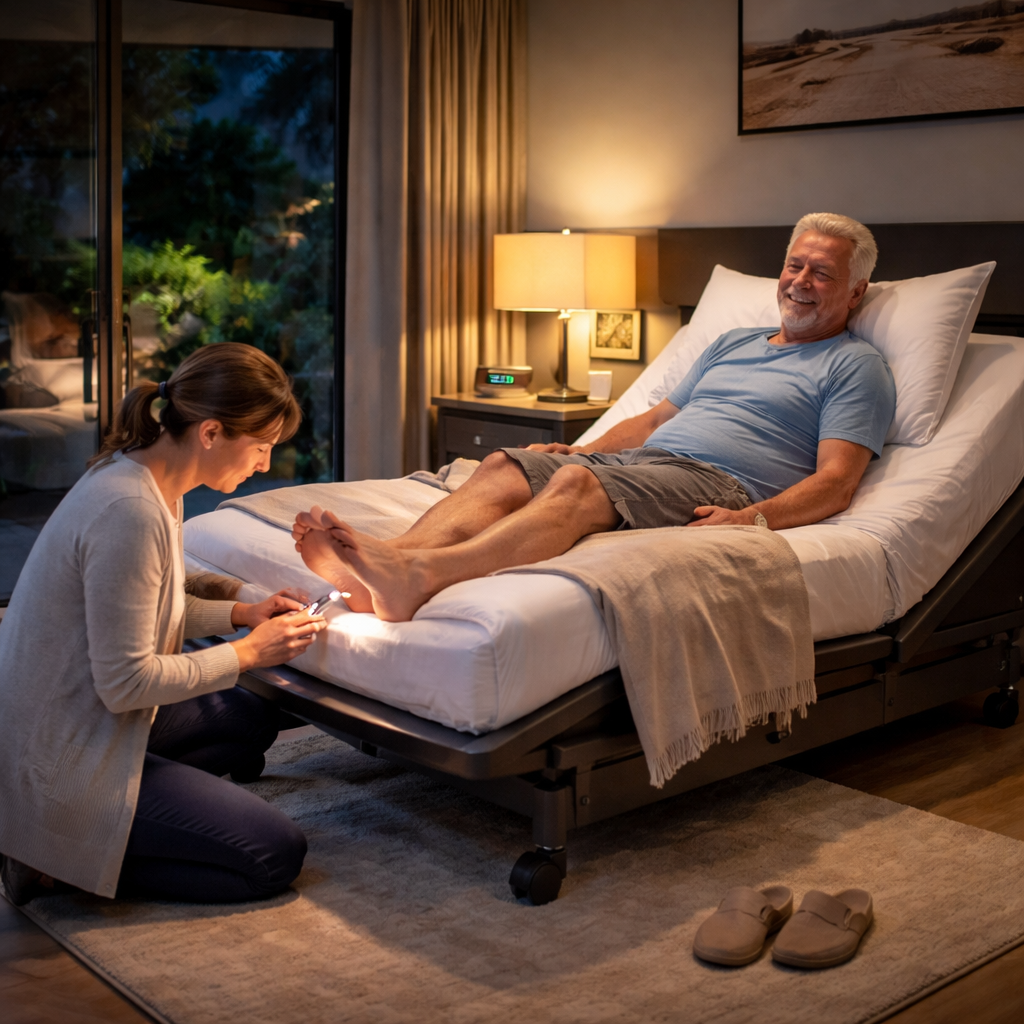
Living with diabetic neuropathy can feel like a nightly battle. Numb toes, burning feet, and restless legs make it hard to drift off and stay asleep.
That’s why an adjustable bed for diabetic neuropathy Australia can be a game‑changer. By lifting the foot end you can reduce pressure on the nerves and improve blood flow, which often eases the tingling and pain.
Here’s a simple way to start: set the foot platform to a gentle 30‑degree incline. If you notice any extra pressure on your knees, lower the head end a bit. Try a few positions over a few nights and note which feels most comfortable.
Many caregivers find that pairing the bed with a soft, breathable mattress helps keep the skin cool and dry, lowering the risk of foot ulcers. And if you’re worried about circulation, check out this guide on how an adjustable bed can improve your circulation.
Remember, you don’t need a fancy preset to feel relief. A few minutes of adjustment each evening can turn a restless night into a restful one.
Take the first step tonight: raise the foot end, test the angle, and notice the change. Small tweaks can lead to big comfort.
Step 1: Evaluate Your Comfort and Health Requirements
First, take a moment to feel how your body reacts when you lie flat on a regular mattress. Notice any tingling, pressure, or tightness in your feet, calves, or lower back.
Write down what you feel. Does the heel hurt? Do your toes feel numb after a few minutes? Jot these notes so you can compare them when you start to adjust the bed.
Next, experiment with the foot end. Raise it just a few inches, about a 10-degree tilt, and stay there for a night. Sleep on it and see if the tingling eases or if your knees feel strained.
If the tilt feels good, raise it a bit more, up to 30 degrees. If you notice extra pressure on the knees or hips, lower the head end a little. The goal is a position that eases pain without creating new aches.
Keep a simple log. A phone note or a small notebook works. Record the angle, how you felt in the morning, and any changes in swelling. Over three nights you’ll spot a pattern.
Ask your doctor or physio if the angle feels right for your nerve health. They can suggest a safe range and may recommend a breathable mattress to keep skin dry.
For extra wellness tips, check out XLR8 Wellness. They share easy ways to boost circulation and manage neuropathy symptoms at home.
Remember, an adjustable bed is just one tool. Make sure the bed you choose meets Australian safety standards and fits your budget.
If you need help understanding your rights when buying medical-grade furniture, Law Champions offers clear advice on consumer protection and warranty issues.

Step 2: Choose the Right Adjustable Bed Features for Diabetic Neuropathy
First, think about how the bed moves. A quiet motor means you can shift the foot platform without waking up yourself or a partner. Look for a motor that glides smooth and hums low. If the motor clicks or rattles, it can add stress to already sore nerves.
Next, focus on the angle range. A foot‑raise that tops out around 30‑35 degrees is usually enough to boost circulation without over‑stretching the calves. Try a few degrees each night and note which feels the least tingling.
Mattress flexibility matters, too. Foam or pocket‑spring mattresses bend with the frame, keeping pressure even on the hips and lower back. For a deeper dive on mattress match‑ups, check out Features to Look for in an Adjustable Bed Australia.
Don’t forget extra comforts. Some beds have USB ports for a night‑time lamp, and a built‑in lumbar pad can cradle the spine when the foot end lifts. If you share a bed, a breathable cover helps keep feet cool and dry.
And what about the bedroom’s soundscape? Adding silicone earplugs can silence a partner’s snore, letting you stay in the ideal position longer. Learn how to pick the right pair for a quieter night.
For a holistic approach, consider complementary physiotherapy or health coaching from a service like XLR8well. Explore their programs to support nerve health alongside your bed adjustments.
| Feature | Why It Matters | Tip |
|---|---|---|
| Quiet motor | Prevents sleep disruption | Test the bed in a dark room; you should barely hear it. |
| Adjustable foot angle | Improves blood flow to feet | Start at 30° and fine‑tune each night. |
| Mattress flexibility | Keeps pressure even when tilted | Choose foam or pocket‑spring mattresses under 30 cm thick. |
Keep a simple log: angle, motor noise level, and how your feet feel in the morning. Small tweaks add up, and after a week you’ll spot the sweet spot that eases neuropathy pain.
Step 3: Check Australian Standards and Certifications
Skipping standards is a risk you can’t afford when you rely on an adjustable bed for diabetic neuropathy australia. The right bed must meet safety rules that protect your nerves and keep the motor quiet.
First, ask the seller for the Australian Standard number the frame follows. Most reputable beds cite AS/NZS 2441 for height‑adjustable furniture. That standard covers load limits, stability and electrical safety. You can see the official guidance in the RACGP height‑adjustable‑bed fact sheet.
Second, look for a certification badge from a recognised health body. The RACGP fact sheet mentions that beds approved by the Australian government health agencies carry a clear mark on the product label. The South Western Sydney PHN fact sheet also lists these certification points South Western Sydney PHN height‑adjustable‑bed fact sheet. If the badge is missing, ask for a copy of the certification.
Third, request a compliance statement that lists the exact tests the motor and mattress have passed. A good supplier will hand you a short PDF that shows CE marking, electrical safety test results and a warranty that covers motor noise under 40 dB.
Sleep Sophie’s range is built to meet these checks, so you can ask their team for the compliance sheet before you buy. A quick call can save you weeks of guesswork.
Quick checklist
- Confirm AS/NZS 2441 compliance.
- See the RACGP certification badge on the product.
- Ask for a CE‑mark and motor‑noise test report.
- Verify warranty covers motor silence for at least one year.
- Keep a copy of all documents for future reference.
When you tick every box, you’ll know the bed is safe, reliable and ready to help ease neuropathy pain.
Step 4: Set Up and Maintain Your Adjustable Bed for Optimal Relief
You’ve got a certified adjustable bed for diabetic neuropathy australia. The next step is to set it up so it works day after day.
First, clear a space around the base. You need at least a foot of room on each side so cords don’t get pinched and you can reach the remote. Plug the bed into a grounded outlet and make sure the cable isn’t stretched.
Second, level the frame. Use a bubble level or the built‑in indicator. A level bed stops the motor from straining and keeps the foot platform steady.
Third, test the motor. Run each movement, such as head up, foot up, or zero‑gravity, and listen. You should hear only a soft hum, not a click or grind. Anything louder than 40 dB should be noted and reported.
Now clean the joints. A soft brush or handheld vacuum removes dust that can make the bed feel stiff. Wipe moving parts with a dry cloth; avoid spray cleaners.
Mattress care matters too. Spot‑clean spills with a mild soap solution, then let it air‑dry. If the mattress is foam‑based, follow the maker’s guide for flex limits.
Do you have a simple routine?
- Clear space and check cords.
- Level the frame.
- Test each motor function.
- Vacuum dust from joints.
- Wipe mattress surface.
Following these steps lets you enjoy consistent relief without surprise breakdowns. For a deeper dive into maintenance best practices, see the adjustable bed maintenance guide. And if you want a quick overview of what to look for in a good adjustable bed, the Indigo guide offers a handy checklist.
Step 5: Troubleshoot Common Issues and Maximize Comfort
Sometimes the bed will act up even after you’ve followed the set‑up steps. Below are the most common hiccups and quick fixes to keep your adjustable bed for diabetic neuropathy australia comfortable night after night.
If the motor hum turns into a click or a grind, first check that the frame is level. A slanted base makes the motor work harder and creates extra sound. Tighten any loose bolts and run the foot lift a few times to let the gears settle.
Stiff movement often means something is blocking the track. Look for dust, a stray sock, or a pet hair strand stuck in the rails. A soft brush or a quick vacuum swipe usually clears the jam and restores smooth glide.
Your mattress may feel tighter after a few weeks if the cover or topper has shifted. Pull the mattress straight up the base, realign the edges, and give the foam a gentle press to let it flex back. A proper fit helps blood flow stay even.
Loose cords can cause the remote to lag or the power plug to spark. Make sure the power cable has a little slack and isn’t pinched by the wall or furniture. Use a short extension with a grounded outlet if you need extra reach.
- Listen for motor noise above 40 dB; if louder, contact support.
- Check frame level with a bubble level; adjust feet until even.
- Clear tracks of dust or debris each week.
- Re‑seat the mattress and press gently to restore flex.
- Secure cords and use a grounded extension if needed.
By running through this quick checklist you can spot a problem before it turns into a full‑blown repair. Keep a small notebook of any odd sounds or tight spots – a few minutes now saves hours of hassle later.
Frequently Asked Questions
Can an adjustable bed help with diabetic neuropathy pain?
Yes. Raising the foot end a few degrees eases pressure on the nerves and can improve blood flow. Many people with neuropathy notice less tingling after they tilt the bed to about 30°. The key is to move slowly and find an angle that feels comfy. Start low, test each night, and note how your feet feel in the morning over time consistently.
What motor noise level should I look for?
Ideally the motor should stay below 40 dB, which is about the sound of a quiet conversation. Anything louder can wake you or a partner and may add stress to sore nerves. When you test a bed, listen from the mattress surface; a soft hum is a good sign. Sleep Sophie’s models are designed to meet this quiet‑motor standard for comfort.
How often should I clean the bed tracks?
Cleaning the tracks once a week keeps the bed moving smoothly. A soft brush or a quick vacuum swipe removes dust, hair, or stray socks that can cause a jam. After you clean, run the foot lift a few times to make sure the rails glide free. This simple habit can prevent noisy motor work and keep the bed safe for daily use.
Can I use a regular mattress on an adjustable bed?
Most standard foam or pocket‑spring mattresses work fine, as long as they are under 30 cm thick and can bend with the frame. A mattress that’s too stiff may create pressure points when the foot end lifts. Check the product details or ask the retailer; many Sleep Sophie mattresses are built to flex with the bed for diabetic neuropathy relief comfortably today.
How should I adjust the bed if my legs swell at night?
If you notice swelling, try a lower foot angle, like 15‑20 degrees, and keep the head slightly elevated. This helps fluid return to the heart without putting pressure on the lower leg. You can also add a pillow under the knees while the foot end is raised to relieve strain. Track how your feet feel each morning and tweak the angle as needed.
What warranty or support should I expect for an adjustable bed?
Look for at least a one‑year motor warranty that covers noise levels under 40 dB and a three‑year frame guarantee. Good support includes a clear phone line and quick on‑site service if something stops working. Sleep Sophie provides a warranty package that matches these standards, plus a user guide that walks you through basic troubleshooting steps for your peace of mind.
Conclusion
Choosing the right adjustable bed for diabetic neuropathy australia can change a restless night into real relief.
Remember to check the motor noise, the mattress flex, and the safety certifications. Those three things keep the bed quiet, comfy, and safe.
If you’re a caregiver, a quick log of angle, noise level, and morning foot feeling will guide you to the sweet spot.
And if you need help, Sleep Sophie’s team can walk you through the warranty papers and set‑up steps.
So tonight, raise the foot end just a little, note how your toes feel in the morning, and tweak as needed. Small moves add up to big comfort.
Ready to try? A gentle lift tonight may be the first step toward better sleep and less pain.
When you feel the difference, share what worked with your health team – they can fine‑tune the plan and keep you safe.