
A single night on the right bed can change how a COPD patient breathes. When the airways stay open while you lie down, the whole body feels calmer. That’s why an adjustable bed for COPD patients australia is more than a luxury—it’s a daily health boost.
COPD makes it hard to get enough oxygen, especially when you’re flat. Even a modest head‑up tilt can reduce pressure on the lungs and make breathing easier. With an electric base you can lift just enough to feel the difference without piling pillows that slip at night.
At Sleep Sophie we design the lift mechanism to move smoothly in five‑degree steps, so you can find the sweet spot quickly. The remote lets you adjust while you’re already in bed, so you never have to wrestle with a crank. That simplicity matters for seniors or anyone who gets tired fast.
What to look for? First, a sturdy frame that holds up even when you set the head to 30 degrees. Second, a breathable mattress that doesn’t trap heat, because excess warmth can worsen breathlessness. Third, easy‑to‑reach controls – a button on the side or a phone app if you’re comfortable with tech.
Stick around and you’ll learn exactly how to set it up for maximum breathing comfort.
Step 1: Assess Your Sleep Needs and Space
First thing you need to know is how you sleep now. Do you wake up short of breath? Do you need to sit up to catch a breath? Those clues tell you how much lift you may need.
Measure your usual sleeping position. If you lie flat and feel tightness in your chest, try a gentle head‑up tilt of 5‑10 degrees. Notice if your breathing feels easier. That small change can make a big difference for a COPD patient.
Next, look at the room. You’ll need a clear path around the bed so the base can move. Measure the width of the space in front of the bed, at least 60 cm is a good rule. Check ceiling height too; the head section will rise, so make sure there’s enough room above the mattress.
Also check any ceiling lights or fans. The head can lift up to 30 cm, so make sure nothing hangs low enough to hit the bed. A quick test is to stand where the head will be and raise your hand, you should have at least a few inches of space.
Take a look at where the power plug will go. The base needs a nearby outlet and a stable floor. If you have carpet, a small rug under the foot of the bed helps keep it steady.
After you’ve checked space, it’s time to test the lift. Use the remote that comes with the bed, press the up button a few times and watch the head rise in five‑degree steps. Feel the change in your chest each time.
When you’re happy with the range, think about the features you need. Sophie Adjustable Beds offer independent head and foot control, quiet motors, and a remote that stays within reach.
If you want extra health tips, you can read advice from XLR8well. They share simple breathing exercises and lifestyle tweaks that work well with an adjustable bed.
Finally, write down the angles that feel best and save them as presets if your remote allows it. A simple note helps you and any caregiver reset the bed each night without guesswork.
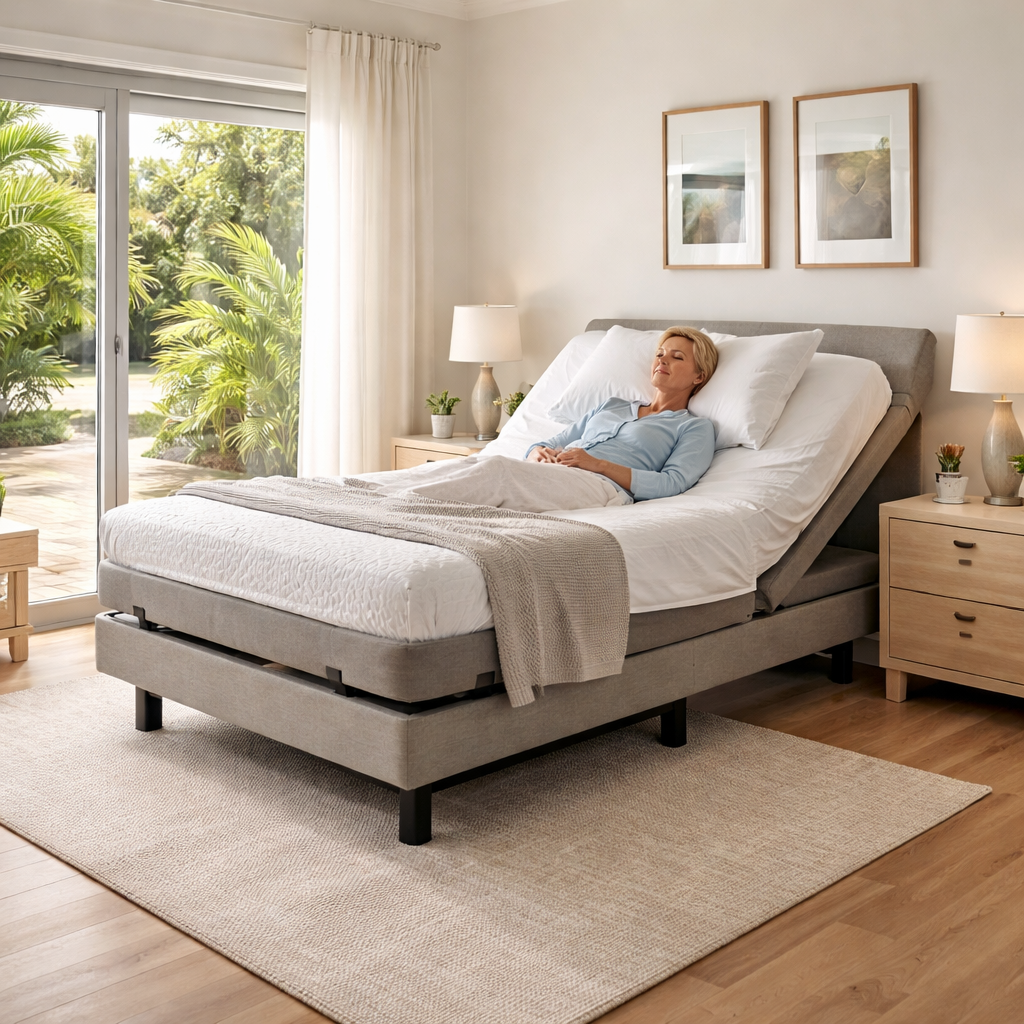
Step 2: Choose the Right Mattress Type
Once you’ve set the tilt, the next piece that decides how well you breathe at night is the mattress. A good mattress does more than feel soft, it can keep your airways open and stop you from overheating.
First, look for a surface that lets air flow. A mattress with open-cell foam or a quilted cover that isn’t sealed helps heat leave your body. When you stay cool, the muscles in your chest relax and you won’t feel short of breath.
Second, think about firmness. Too soft and you may sink deep, which can press on the rib cage. Too hard and you’ll feel pressure points that make you toss and turn. Aim for a medium-firm feel, firm enough to support the spine, but with enough give to cushion the shoulders and hips.
Third, check the material. Gel-infused foam is a popular choice because the gel draws heat away. If you prefer a more natural feel, look for latex that bounces back quickly and stays cool. Memory foam works well for many COPD sleepers, but pick a version that has cooling tech built in.
Size matters, too. Measure the space you have and leave at least a few centimetres around the bed so you can get in and out without hitting night-stands. A mattress that matches the frame of your adjustable base will move smoothly when you raise the head or foot.
Now test it. Lie down in the same position you’ll use at night, head lifted about 10-15 degrees. Stay still for a minute and notice any hot spots or tight spots. If you feel a pinpoint of pressure, shift your weight or try a different pillow placement.
Tip: many people find that a thin, breathable topper adds extra comfort without changing the core support. Just make sure the topper stays flat when the bed lifts.
When you’re ready to shop, the electric adjustable bed advantages page explains how the right mattress works with the lift mechanism to give you a steady, cool surface all night.
Step 3: Evaluate Adjustable Bed Mechanisms and Controls
Now that you have the right mattress, the next thing to check is how the bed moves. The motor, the remote, and any safety bits can make or break the night for a COPD user.
First, feel the lift. Good beds use twin 3500 N Okin motors – they pull the head and foot sections smoothly and hold the weight of a grown adult plus a caregiver. If the bed shudders or stalls, the motor is probably cheap or worn.
Second, listen. A quiet motor (under 45 dB) won’t add extra noise to the room, which helps you keep a calm breathing rhythm. A loud whine can startle you awake and raise your heart rate.
Third, test the remote. You want a six‑button handset that sits on the side of the bed, easy to reach when you’re lying down. Buttons should be big enough for arthritic fingers and the layout should let you raise head and foot independently without hunting for the right key.
Fourth, think about power backup. Some beds have a built‑in battery slot for emergency lowering. This can be a lifesaver if the power goes out while you’re upright.
Here’s a quick checklist you can run at the showroom or at home:
- Motor brand – look for Okin or similar reputable maker.
- Noise test – ask for a demo at full lift and listen.
- Remote reach – hold it while you’re lying flat; can you press it without stretching?
- Battery backup – is there a 9 V slot ready to install?
- Spare parts – can you order a replacement actuator like the Okin Okimat set if needed?
When you spot a bed that checks these boxes, you’ve got a solid platform for COPD care. If a motor needs swapping, the Okin Okimat actuator kit is a plug‑and‑play fix that most technicians can install in ten minutes.
| Feature | What to look for | Why it matters |
|---|---|---|
| Motor type | Twin 3500 N Okin motor | Smooth lift, holds weight |
| Noise level | Quiet (<45 dB) operation | Doesn’t disturb breathing |
| Control layout | Six‑button remote within arm’s reach | Easy for seniors or caregivers |
Once you’re happy with the mechanics, you can move on to fine‑tuning the angles. Remember, a small head‑up tilt of 10‑15° can open the airways, while a gentle foot lift eases leg swelling.
For a holistic approach, consider pairing the right bed set‑up with supportive nutrition. Great Bite Supplements offer gentle energy boosters that many COPD patients find helpful alongside better sleep.
Finally, check the warranty. A good bed will cover the motor and remote for at least three years, so you’re not stuck paying for a fix later.

Step 4: Consider Health‑Related Features and Certifications
Now that the frame and mattress are sorted, look at the health side of things. A bed that meets the right standards can keep you safe and make breathing easier.
Check the safety certifications
The Royal Australian College of General Practitioners notes that height‑adjustable beds used for chronic lung care should meet the Australian Standard AS/NZS 3666 for fire safety and the Medical Device Regulations for electrical safety. RACGP guide on adjustable beds gives a quick checklist.
Step 1: Look for a fire‑rating label on the frame. It should say “Class 1 – Low flame spread”.
Step 2: Find the electrical certification mark (e.g., SAA, RCM). That means the motor won’t overheat while you lift.
Step 3: Verify the mattress cover is hypo‑allergenic and has a bacterial‑resistant treatment. This helps keep dust mites away, which can trigger coughing.
Features that aid breathing
Some beds offer a “low‑noise” motor (under 45 dB). Quiet operation means you won’t be startled during the night.
Look for an independent head lift that can be set in five‑degree steps. Small changes let you find the sweet spot without raising the head too high, which can cause a feeling of pressure.
If you use a CPAP mask, make sure the head‑up position can stay at 30° or more without the mask slipping. A sturdy headrail and a smooth glide help keep the mask in place.
Real‑world tip
Jane, a 68‑year‑old COPD patient in Melbourne, switched to a bed that had the fire and electrical marks. She says the quiet motor let her fall asleep faster, and the anti‑microbial cover reduced her night‑time cough.
Action checklist
- Find the fire‑rating label (Class 1).
- Confirm the electrical safety mark (SAA/RCM).
- Check motor noise spec (<45 dB).
- Make sure the head can lift in 5° increments.
- Verify the cover is hypo‑allergenic and antibacterial.
- Test CPAP mask fit at the highest head angle you’ll use.
When every point checks out, you know the bed is built for health, not just comfort.
Conclusion: Making the Best Choice for Comfort and Health
When every check on safety, noise, and breathing support lines up, you’ve found the right adjustable bed for COPD patients australia.
Think about the night you finally drift off without a cough, the moment the motor stays quiet while you breathe easy. That’s the payoff of a bed that lifts in five-degree steps, holds a hypo-allergenic cover, and meets fire and electrical marks.
Take a quick look at the checklist you just built: fire rating, SAA/RCM tag, motor below 45 dB, smooth head lift, mask‑friendly angle. If each point checks out, you’re set for comfort and health.
One last tip: give the head‑up position a test run with your CPAP mask before you buy. A snug fit at 30° means fewer night‑time interruptions.
Ready to make the switch? A well‑chosen adjustable bed can turn restless nights into calmer mornings, giving you more energy for the day ahead.
Frequently Asked Questions
How does an adjustable bed help COPD patients breathe easier?
When the base lifts the head just a few degrees, the lungs stay more open and you won’t feel as tight. The gentle tilt stops the weight of the mattress from pressing on the chest. What we’ve seen work best is a smooth, five‑degree step motor that lets you find the sweet spot without using a stack of pillows. That makes each night calmer.
What head‑up angle is ideal for COPD relief?
Most people feel a big change around 30° to 45°. Start low – maybe 10° – and stay there a few minutes. If breathing feels easier, raise a little more. Aim for a position where your mask stays snug and you can still talk without huffing. Every body is different, so test a few angles before you settle on the best one.
Which safety certifications should I look for?
Check the frame for a fire‑rating label that reads “Class 1 – Low flame spread”. The electrical tag should show SAA or RCM approval – that means the motor won’t overheat. Also look for a hypo‑allergic, antibacterial cover. Those marks tell you the bed meets Australian standards and is safe for long‑term use.
How quiet should the motor be for a good night’s sleep?
A motor under 45 dB is quiet enough that you won’t hear it over soft music or a TV. Ask the dealer for a demo at full lift and listen close. If you can hear a faint hum but it doesn’t startle you, the bed is likely a good match for a calm bedroom.
Can I use my CPAP mask with an adjustable bed?
Yes, as long as the head‑up position can stay at about 30° without the mask slipping. Make sure the headrail holds the mattress steady and that there’s enough room for the mask straps. A quick test at the showroom – wear the mask, raise the head, and see if it stays in place – will save you trouble later.
What maintenance steps keep the bed working well for COPD?
Wipe the cover regularly to stop dust mites. Check the remote batteries each month and replace if weak. Tighten any loose bolts on the frame quarterly. Run a short lift test weekly to catch motor noise early. If the bed has a backup battery slot, keep a fresh 9 V ready for power outages.