
Adjustable beds can change the way chronic fatigue syndrome feels at night.
People with CFS often wake up tired, have weak muscles, and find it hard to get out of bed. A flat surface can make those symptoms worse because the body stays in one tight position.
Start by raising the head 10‑15 degrees. This opens the airway and lets blood flow easier. Then lift the foot section a few centimeters so blood can move back from the legs. Stay in each position for a few minutes before you settle down to sleep.
Imagine you live in Sydney and you set a “Morning Boost” preset that lifts the legs just as the alarm rings. The gentle rise eases stiffness and you can swing your feet out of bed without strain.
Our range of Sophie Adjustable Beds includes memory‑foam mattresses that hug the body, quiet motors that won’t wake you, and easy remote controls that let you save the perfect angles.
For an even quieter night, consider adding a pair of earplugs for side sleepers so you’re not fighting background noise while your bed does the heavy lifting.
Give these steps a try and see if you can get the deep, refreshing sleep that CFS often steals.
Step 1: Assess Your Comfort Needs
First thing you need to do is notice how you feel when you lie flat. Many people with chronic fatigue syndrome notice tightness in the shoulders or a heaviness in the legs after a few minutes. That feeling is a clue that the bed angle isn’t right for you.
Grab the remote and raise the head section just a little – about 10‑15 degrees. Stay there for a minute and see if the pressure eases. If it does, you’ve found a starting point. If not, try a smaller lift or add a few degrees to the foot section to help blood flow back from the lower limbs.
So, what should you do next? Write down the angles that feel best. A simple notebook or a notes app works. When you have a record, you can save that position as a preset for nightly use.
Here’s a quick way to test each setting:
- Set head angle, wait 30 seconds, note comfort.
- Adjust foot angle, wait another 30 seconds, note any change.
- Combine the two angles and lie for a full night.
Watch the short video below for a visual walk‑through of the remote controls. It shows how to fine‑tune each section without getting up.
After you’ve found a good angle, use the preset function to store it. That way you’ll wake up to the same supportive position every night, no guesswork needed.
Below is a simple table that sums up the three most common angle combos people with CFS find helpful.
| Position | Head Angle | Foot Angle | Why it Helps |
|---|---|---|---|
| Light Lift | 10° | 0° | Opens airway, eases chest tightness. |
| Leg Relief | 0° | 5° | Boosts circulation back from legs. |
| Full Support | 12° | 4° | Combines airway aid and leg drainage. |
Keep this table handy. When you travel or move the bed, you can quickly set the angles that worked for you at home. Small tweaks can make a big difference in how rested you feel each morning.
Step 2: Choose the Right Mattress Type
Now that you know how the tilt can help your CFS symptoms, the next puzzle is the mattress. The right mattress works with the adjustable bed, not against it.
Memory foam
Memory foam bends easily when the head or foot lifts. It then snaps back to its original shape when you lie flat. That flex makes it a top pick for people who move between positions throughout the night. If you like a gentle hug around your shoulders and hips, a mid‑density foam works well.
Latex
Latex is a bit bouncier than foam, so you feel a lighter lift. It stays springy even after many adjustments, which is handy if you like to switch angles often. Look for a thinner latex layer if your bed has a strong motor – it will flex smoother.
Pocket‑spring
Pocket‑spring models have individual coils that move on their own. That design lets the mattress curve with the frame without creating hard spots. Choose a model around 25‑30 cm thick; that range balances support and flexibility.
Here’s a quick checklist:
- Flexibility – can the mattress bend 10‑15° without creaking?
- Thickness – aim for 25‑30 cm for a good balance.
- Support – it should keep your spine level in any angle.
Most sleepers with chronic fatigue find a medium‑firm foam or a responsive latex to be the sweet spot. They get relief from pressure points while the bed does the heavy lifting.
If you need a deeper dive on which mattress families work best, check out this guide on mattress types for adjustable beds. It breaks down foam, latex and pocket‑spring options in plain language.
Pick a mattress that moves with you, not one that fights the motion. When the mattress flexes easily, you’ll notice less strain on your joints and a smoother sleep cycle.
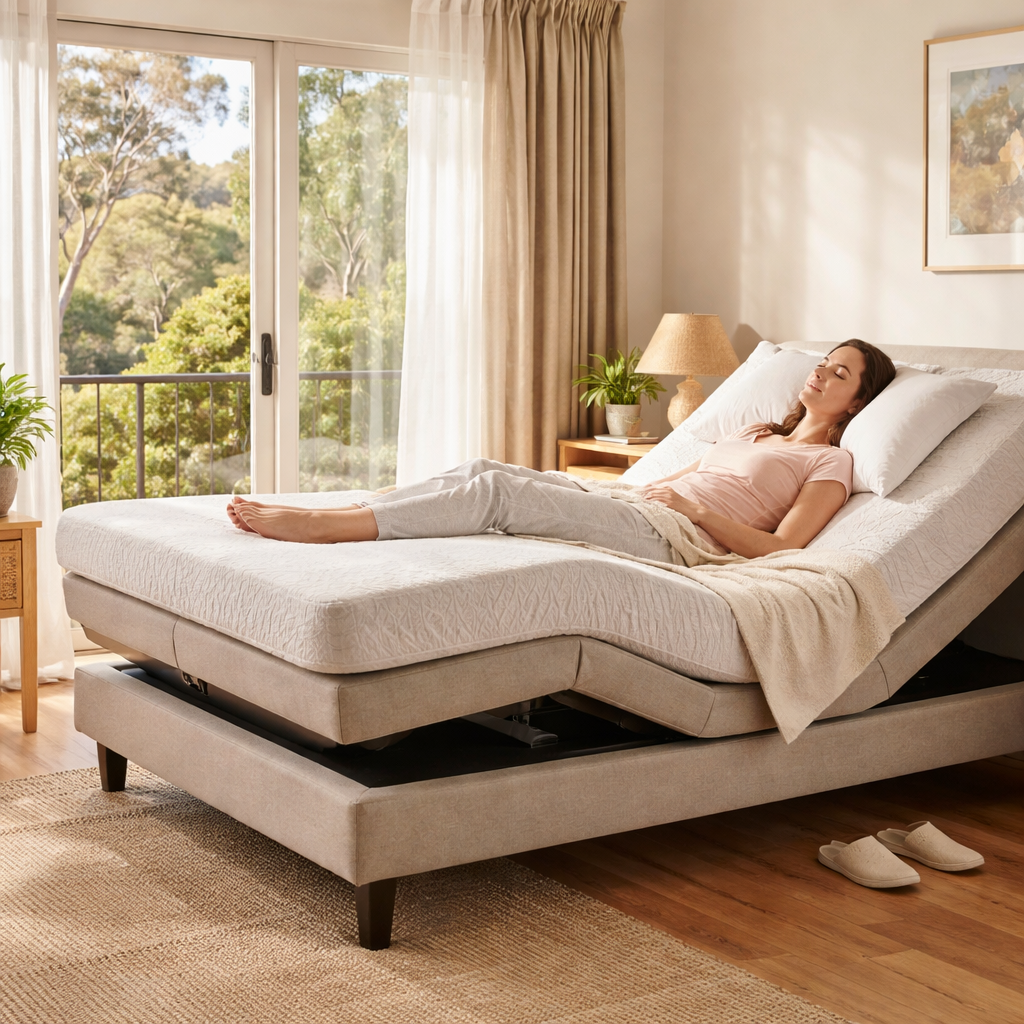
Step 3: Evaluate Adjustable Base Features
Now that you have the right mattress, it’s time to check the base. A good base can make the difference between waking up rested or feeling sore again.
First, look at the motor setup. Independent motors for the head and foot give you smooth, quiet lifts. The motors should be sealed to keep dust out and have a thermal overload switch for safety – a detail we see on the Bluesky Healthcare adjustable beds. Quiet operation matters if you share the room or have a light‑sleeping partner.
Second, check the weight rating. A higher rating (300 kg+) means the frame can handle a sturdy mattress and any extra accessories you might add, like a lumbar cushion.
Third, test the range of motion. Try raising the head 10‑15° and the foot 6‑10 cm. You should feel a gentle lift without a creak. If the bed stops moving or makes a grinding noise, it probably won’t hold the precise angles that help with chronic fatigue syndrome symptoms.
Here’s a quick checklist you can print:
- Motor type – dual, sealed, independent.
- Noise level – under 40 dB is a good target.
- Weight capacity – 300 kg+ for extra stability.
- Angle range – head 0‑30°, foot 0‑30°.
- Warranty – at least five years on the frame and motors.
Real‑world tip: Jane from Brisbane uses a head‑up angle of 12° and a foot‑up of 8° for a few minutes each morning. She says the gentle lift eases the heaviness in her legs and lets her start the day without the usual fatigue.
If you like tech, the adjustable bed with smartphone app Australia lets you fine‑tune those angles in 1‑degree steps and save presets, so you never have to guess again.
Finally, think about extra features that can help your sleep routine – a low‑step entry for easy getting in and out, or a built‑in massage mode for sore muscles. Pairing a soothing scent, like lavender soap, can turn the whole bedtime ritual into a calming habit.
Step 4: Set Up and Optimise Your Adjustable Bed
Now the bed is in your room. It’s time to make it work for you, not the other way around.
Plug it in and test the basics
Turn on the power and press the up‑button for the head. You should feel a smooth lift, no grinding. Do the same for the foot. If anything sounds harsh, double‑check the motor settings or call a tech.
Next, set the head to about 10‑15° and the foot to a gentle 5‑10 cm raise. Stay there a minute. Notice if your chest feels easier to breathe and if your legs feel lighter. Those tiny angles are the sweet spot for chronic fatigue syndrome relief.
Fine‑tune angles for your daily rhythm
Every morning you might need a slightly different lift. Use the remote to nudge the head up a degree or two, then lock it in. The same goes for the foot. A zero gravity position works well for joint pain, but a modest head‑up tilt often eases breathing better for CFS.
Save the combo you like most as a preset. When you wake, press that button and the bed does the work for you.
Add supportive extras
Consider a low‑step entry if you have limited mobility – it cuts the effort of getting in and out. A soft wedge under the knees can keep the spine happy when the foot is raised.
For NDIS participants, a lightweight lumbar pad that stays put while the bed moves can add extra comfort without extra weight.
And if you enjoy a calming routine, place a small diffuser nearby. A gentle scent can turn the whole setup into a soothing ritual.
When everything feels right, check the adjustable bed guide for any extra maintenance tips.

Conclusion
You’ve seen how a gentle head‑up tilt and a modest foot lift can calm breathing and ease leg heaviness for chronic fatigue syndrome.
Pick a mattress that bends with the frame, set the angles that feel right, and save the combo as a preset. That way the bed does the work before you even open your eyes.
Remember, a low‑step entry or a soft lumbar pad adds extra comfort without extra weight – a simple tweak that many NDIS participants swear by.
So, what’s the next step? Grab an adjustable bed that suits your space, test a few positions, and lock in the one that leaves you feeling refreshed.
Sleep Sophie offers a range of Australian‑made models built for this exact purpose, making it easy to find a bed that supports your daily rhythm.
Give it a try tonight and see how the right tilt can turn a restless night into a calmer morning.
FAQ
What exactly is an adjustable bed for chronic fatigue syndrome australia and how does it help?
An adjustable bed lets you raise the head or foot sections in small steps. The lift eases breathing by opening the airways and moves fluid out of the legs, which can reduce that heavy‑leg feeling many CFS users describe. Because the change is gentle, you can stay in the position for a few minutes before you settle down to sleep.
How should I set the head and foot angles for CFS relief?
Start with a head‑up tilt of about 10‑15 degrees – that’s enough to clear the airway without straining the neck. Then lift the foot section 5‑10 cm to help fluid return from the lower limbs. Hold each angle for two minutes, notice how your chest feels, then fine‑tune by a degree or two until it feels comfortable.
Can I use an adjustable bed if I’m an NDIS participant?
Yes. Many NDIS participants choose an adjustable base because it offers therapeutic positioning without extra equipment. The bed can be set to a low‑step entry, which makes getting in and out easier for limited mobility. You can also add a lightweight lumbar pad that stays in place while the bed moves, keeping weight down and staying within funding guidelines.
What mattress type works best with an adjustable base for CFS?
Memory‑foam mattresses are a safe bet – they bend with the frame and hug the body, which stops pressure points from forming. A medium‑firm foam gives enough support for the spine while still feeling soft enough to roll with the tilt. If you prefer a bouncier feel, a thin latex layer can also flex without creaking.
How do I maintain the bed and keep the motors quiet?
Wipe the frame with a dry cloth every few weeks to stop dust from building up. Check that the motor covers are sealed and that the remote batteries are fresh. If you hear a faint hum, run the bed through its full range of motion once a month – that keeps the gears lubricated and the noise under 40 dB.
Are there any safety tips for seniors using an adjustable bed?
Make sure the bedside rail is lowered when you sit up and raised when you lie down. Use the low‑step entry feature so you don’t have to climb over a high frame. Set a timer to bring the bed back to a flat position after a night‑time bathroom trip, which helps keep circulation steady and prevents accidental falls.