
Ever wake up with that sharp, tingling ache in your wrist after a night of scrolling, typing, or even just holding a phone? You’re not alone. Carpal tunnel can turn a simple morning stretch into a painful struggle, and the usual pillows and mattresses often don’t help.
What if the bed you sleep in could actually ease that pressure? An adjustable bed lets you raise the head and lower the foot just enough to keep your hands in a neutral position while you drift off. That subtle tilt takes the strain off the median nerve, which is the main culprit behind carpal tunnel symptoms.
We’ve seen real results with clients who set a gentle 10‑degree head‑up angle and a flat foot section. After a few weeks, they report less numbness and a smoother transition from sleep to getting out of bed. For NDIS participants, caregivers love the preset feature that can be activated with a single tap – no need to wrestle with heavy blankets or awkward pillows.
Here’s a quick way to try it: start with the head at 5‑10 degrees, keep the foot flat, and stay in that position for the first hour of sleep. If you notice relief, experiment with a slight lumbar lift to open up the shoulders a bit more. Remember to adjust in five‑degree steps; the bed’s motor is designed for fine‑tuned changes without any strain.
And if you’re curious about how the app can make these tweaks effortless, check out our Adjustable Bed with Smartphone App Australia guide. It walks you through setting up presets, using timers, and syncing with voice assistants – all handy for anyone dealing with carpal tunnel.
So, next time you reach for your phone before bed, think about setting the perfect angle first. A small adjustment could mean a big difference in comfort and wrist health.
Step 1: Assess Your Sleeping Position and Carpal Tunnel Symptoms
First, notice how your wrist feels when you wake up. Is there a tingling that fades after a few minutes, or does the numbness linger?
If you’re scrolling on your phone or typing in bed, your hand might be bent for too long. That bend can pinch the median nerve and spark carpal tunnel pain.
Take a moment to sit up and gently shake your hands. Do they feel tighter on one side? That little clue tells you whether your sleeping posture is aggravating the nerve.
Now, lie back and observe your arm position. Are your elbows tucked close to your torso? Are your forearms hanging off the side of the mattress?
Ideally, the line from your shoulder to your wrist should stay straight, with the palm facing slightly upward. When the arm flops forward, the wrist twists inward and the pressure builds.
Tip: Place a thin pillow under your arm if you tend to curl up. It can keep the shoulder relaxed and the wrist neutral.
Next, check the angle of your head and neck. A steep head‑up tilt can cause you to hunch, pulling the shoulders forward and bending the wrists.
Try a gentle 5‑10 degree head rise and keep the foot flat. Notice if your hands feel less cramped after a few minutes.
Here’s a quick self‑check list you can run each night:
- Are your wrists straight or bent?
- Is one arm higher than the other?
- Do you wake with tingling that fades quickly?
- Is your head angle comfortable?
If you answer “yes” to any of the above, it’s a sign your current setup needs tweaking.
Remember, the goal isn’t to overhaul everything at once. Small, incremental changes often stick better.
And while you’re experimenting, you might wonder about other factors that affect nighttime comfort. For example, earplugs can silence a noisy partner and let you sleep deeper, reducing overall tension in the body.
Another piece of the puzzle is nutrition. Men over 40 often benefit from a solid multivitamin that supports nerve health, which can complement the positional tweaks you’re making.
Finally, give yourself a short “wake‑up” test. Sit up, swing your arms gently, and see if the tingling disappears. If it does, you’ve likely hit a better alignment.
Keep a simple notebook by your bedside. Jot down the angle you used, how long you stayed in that position, and how your wrists felt in the morning. After a week, you’ll spot patterns and know what works best.
Below is a short video that walks you through a basic position check. It’s quick, so you can try it before you drift off.
Take the first night to try a modest head lift, a pillow under the arm, and note any change. Small steps add up, and you’ll find that a simple adjustment can turn a painful morning into a smoother start.
Step 2: Choose the Right Adjustable Bed Features for Carpal Tunnel Relief
Now that you know where you sleep and how your wrist feels, it’s time to pick the features that actually move the needle. Think of your bed like a tiny workshop – each knob or motor can change how your arms sit while you drift off.
Head‑up angle
Most of what we see work is a gentle head lift. Start with a 5‑degree raise. If you feel a little stretch in your shoulders, add five more degrees. Anything above 15 degrees can start to pull the shoulders forward and make the wrist bend again.
And if you’re using a Sleep Sophie model, the motor lets you dial in five‑degree steps without jerking the mattress. That smooth motion is key for people who have limited hand strength.
Lumbar lift
A tiny lumbar boost opens the chest. When the upper back is a bit higher, the elbows can stay straight instead of flaring out. Try a 2‑3 cm lift and notice if your wrist feels less cramped.
We’ve heard from NDIS participants that a low lumbar lift combined with a modest head angle lets them keep a neutral wrist without extra pillows.
Foot section
Keep the foot flat for most carpal tunnel cases. Raising the foot can push the hips forward, which in turn tilts the pelvis and may cause the arms to roll inward. If you need a foot lift for other reasons (like leg swelling), stay under 5 degrees.
And if you ever need to switch to a feet‑down position for reading, the app can store a preset – you just tap and the bed remembers the exact angles you liked.
Adjustable arm supports
Some beds come with side rails that can be raised a few centimeters. When the rail is up, you can rest a thin pillow against it and keep the arm from sliding forward.
It’s a cheap trick that many don’t think about, but it stops the wrist from curling into the mattress.
Control options
Whether you use the bedside remote or the Sleep Sophie app, you want a way to change angles without straining your fingers. Voice‑assistant commands are a bonus for caregivers who help lift the bed for a client.
In our experience, the easiest routine is:
- Press “Carpal‑Comfort” preset – head 10°, lumbar 2 cm, foot flat.
- Lay down, let the bed settle for a minute.
- If your wrist still feels tight, add 2‑degree head increments until it feels right.
Track each change in a notebook. A simple rating of 1‑10 each morning tells you which combo works best.
Remember, small tweaks add up. A two‑degree shift can feel like a big relief after a night of tossing.

So, what should you try tonight? Set the head up to 10 degrees, add a low lumbar lift, keep the foot flat, and use a thin pillow under each arm. Sleep a few nights, jot down the numbness score, and fine‑tune in five‑degree steps. You’ll soon see which features give you the most relief.
Step 3: Understand Mattress Types and Pillow Support
First, let’s admit something: the bed you lie on does more than just hold you up. It can lift or press the wrist without you even noticing.
Mattress families you’ll meet
There are three main families in Australia: foam, innerspring and hybrid. Foam beds hug the body and keep the spine flat, so the shoulders don’t roll forward and the wrists stay straight. Innerspring beds use coils that bounce a bit, which can let the hips sink and the shoulders tilt. Hybrids try to give you the best of both worlds – a coil core for support and a foam top layer for comfort.
For carpal tunnel, we’ve seen foam and hybrid models work best. The even surface means the arm can rest without a hidden dip that forces the hand into a bend.
So, what should you feel when you press your hand onto the mattress? A gentle give, not a hard rock and not a sink‑hole.
Pillow shape matters
Now, think about the pillow under your head. A pillow that’s too high pushes the shoulders forward, which in turn bends the wrist. A pillow that’s too flat leaves the neck unsupported and you may end up tucking your hand under the pillow for comfort – that’s a recipe for pressure on the median nerve.
Memory‑foam pillows keep the head level while still cradling the neck. Latex pillows are bouncier but still maintain a low profile. Down or feather pillows can be fluffed to the right height, but they often lose shape overnight.
Pick a pillow that lets the ear sit in line with the shoulder. When you lie on your back, the space between the ear and the shoulder should be about one finger’s width.
Finding the right height
Here’s a quick way to test height: lie on your back with a pillow you think might work. Let your arm rest naturally at your side. If your wrist feels relaxed and your palm faces up, you’re close.
If the wrist still feels cramped, try a pillow that’s half an inch lower. If the neck aches, add a half‑inch higher pillow. Small changes add up.
Side sleepers need a bit more loft because the shoulder drops. A pillow that’s 4‑5 cm high usually does the trick, but again, the key is a straight wrist.
Mattress firmness and carpal tunnel
Firmness is measured on a 1‑10 scale. A 5‑6 rating feels medium‑firm. Too soft and the hips sink, pulling the torso forward and bending the wrist. Too firm and the pressure points stay sharp.
We recommend a medium‑firm mattress for most carpal tunnel folks. It offers enough give to keep the spine neutral while still supporting the hips.
Putting it together – a mini‑checklist
- Choose a foam or hybrid mattress with medium‑firm feel.
- Use a pillow that keeps the ear‑to‑shoulder line straight.
- Test wrist position after you’ve settled – arm at side, palm up, no bend.
- Adjust pillow height in half‑inch steps until the wrist feels relaxed.
- Write down the combo that works best and stick with it for at least a week.
That’s it. Once you have the right mattress and pillow, the adjustable‑bed angles you set in Step 2 will do the rest of the work. You’ll notice less tingling, easier arm movement in the morning, and a smoother start to the day.
Remember, the goal isn’t to buy the most expensive bed, but to find a surface that lets your wrists stay neutral while you sleep. Small tweaks to mattress type and pillow height can be the quiet heroes behind a pain‑free morning.
Step 4: Set Up and Adjust Your Bed for Optimal Wrist Support
Now that your mattress and pillow are dialed in, it’s time to fine‑tune the bed itself. A tiny shift can mean the difference between waking up feeling tight or feeling relaxed.
Check the head‑up angle
Start with a gentle 5‑degree raise. If your shoulders still feel cramped, add five more degrees. Anything above 15 degrees can pull the shoulders forward and bend the wrist again. In our experience, most carpal‑tunnel sufferers feel the sweet spot somewhere between 8 and 12 degrees.
Adjust the lumbar lift
A low lumbar boost opens the chest and lets the elbows stay straight. Try a 2‑3 cm lift first. If your wrist still bends, nudge it up another centimetre. The goal is a neutral arm line – palm up, wrist flat, no bend.
Keep the foot flat
Raising the foot section can push the hips forward, which in turn tilts the pelvis and forces the arms inward. For carpal tunnel relief, keep the foot at 0 degrees. If you need a foot lift for swelling, stay under 5 degrees.
Use side‑rail arm supports
Some beds have side rails that can be raised a few centimetres. Slip a thin pillow against the rail and rest your forearm there. This tiny trick stops the wrist from curling into the mattress.
Control without strain
Whether you use a bedside remote or a phone app, make sure you can change angles without gripping hard. Voice‑assistant commands are a bonus for caregivers who help lift the bed for a client.
Here’s a quick routine you can try tonight:
- Press the “Carpal‑Comfort” preset (or create one) – head 10°, lumbar 2 cm, foot flat.
- Lie down and let the bed settle for a minute.
- Place a thin pillow under each arm if you use side‑rail support.
- Check your wrist: arm at your side, palm up, no bend.
- If the wrist still feels tight, add 2‑degree head increments until it feels relaxed.
Write down the angle you end up with and the wrist comfort score (1‑10) each morning. After a few nights, you’ll see a pattern and can lock in the best combo.
One more tip: the adjustable bed specifications guide from Avante shows how motor torque and angle precision affect stability. A bed with smooth five‑degree steps helps you make those tiny tweaks without jolting the mattress.
If you’re new to carpal tunnel care, the carpal tunnel care tips page offers simple stretches you can do before bedtime to keep the median nerve happy.
Remember, the aim isn’t to buy the most expensive base but to create a neutral wrist line while you sleep. Small adjustments to head, lumbar, and arm support can turn a restless night into a pain‑free morning. Give these steps a try, note the changes, and you’ll soon feel the difference.
Step 5: Compare Top Adjustable Beds Available in Australia
Now that you know how to set the angles, it’s time to pick a bed that actually lets you make those tweaks. Not every base moves the same way, and the little details can make a big difference for carpal tunnel relief.
Below is a quick look at three models that we see work well for people with wrist pain, NDIS participants, and seniors who need easy transfers. We kept the list short so you can spot the key specs without getting lost.
| Model | Head‑up range | Carpal‑tunnel friendly feature |
|---|---|---|
| Sophie HiLo Dual‑Motor | 0‑45° in 5° steps | Quiet motor + side‑rail arm support for a straight wrist |
| Sleep Sophie Basic 5‑Step | 0‑30° in 5° steps | Preset “Carpal‑Comfort” saves your favourite angles |
| MobilityShop Direct Elite | 0‑40° in 2° increments | Fine‑tune head angle without jolting the mattress |
Here’s how to use the table. First, look at the head‑up range. A wider range means you can try smaller changes if 5° feels too big. Second, check the special feature column – that tells you what the maker has added to keep the wrist in a neutral line.
Take the Sophie HiLo Dual‑Motor as an example. Its dual‑motor design lifts head and foot independently, so you can raise the head 10° while keeping the foot flat. The side‑rail arm support lets you slip a thin pillow under your forearm, which stops the wrist from curling into the mattress. In our experience, users with carpal tunnel notice less morning tingling after a few nights of this setup.
If you’re on a tighter budget, the Sleep Sophie Basic 5‑Step still gives you the essential five‑degree steps and a one‑tap preset you can name “Carpal‑Comfort.” That way you don’t have to remember the exact numbers each night – just press the button and the bed moves to the same spot.
For those who love ultra‑fine control, the MobilityShop Direct Elite offers 2‑degree increments. It’s a bit pricier, but the extra precision can help if you find that a 2° shift eases wrist strain when the 5° step feels too abrupt.
Want a deeper dive into how each model stacks up against the others? Check out our full comparison in the Best Electric Adjustable Bed Australia 2026 guide. It walks through warranty length, motor torque, and mattress compatibility – all things that matter when you’re trying to keep your wrist happy.
Now, let’s turn the table into action. Grab a pen and write down three numbers for each bed you’re considering: the head‑up angle you’ll start with, the lumbar lift you’ll add, and the foot setting (usually flat). Then, for a week, try each combination and rate your wrist comfort each morning on a 1‑10 scale. The model that consistently scores the highest is the one you’ll want to keep.
Pro tip: Pair your adjustable bed with a medium‑firm foam mattress. A firm surface can push the shoulders forward, which bends the wrist. A foam top gives a gentle give and helps keep the arm straight.
And don’t forget the bigger picture of health. A regular stretching routine and good posture during the day work hand‑in‑hand with the bed. If you need extra guidance, the wellness coaches at XLR8well offer posture‑focused programs that complement the night‑time adjustments.
To sum it up, the best bed for carpal tunnel isn’t the most expensive one – it’s the one that lets you fine‑tune the head, lumbar, and arm support without shaking the mattress. Use the table, run the simple one‑week test, and you’ll have a clear answer.
Step 6: Maintain Your Bed and Monitor Carpal Tunnel Relief
Now that you’ve dialed in the perfect angles, the real work begins: keeping everything in good shape. A well‑maintained adjustable bed keeps the wrist‑friendly setup steady night after night.
Check the mechanics, not just the mattress
Every few weeks, give the motor a quick look. Does it hum smoothly? Any weird noises? A quiet motor means the bed’s still doing its job without extra strain on the joints.
If you hear a grind, call a technician. A small fix now stops a big problem later – especially for NDIS participants who rely on the bed for safe transfers.
Rotate the mattress
Just like a regular mattress, an adjustable one benefits from a seasonal rotation. Flip it end‑to‑end (don’t turn it over) every 3‑4 months. This spreads wear evenly and keeps the surface flat, so your wrist stays in that neutral line.
Pro tip: Mark the head and foot ends with a small sticker. When you rotate, you’ll know the exact spot.
Protect the surface
A good mattress protector does more than guard against spills. It stops dust mites and allergens from building up, which can irritate sensitive skin on the arms or hands.
We recommend a breathable bamboo or Tencel protector – they let air flow and keep the mattress cool. That comfort boost helps you stay relaxed, and a relaxed shoulder means a relaxed wrist.
Secure the frame
Loose screws are a hidden danger. Grab a screwdriver and tighten any bolts you see wobbling. A solid frame means the head‑up angle won’t drift during the night, and you won’t wake up with the bed in a different position.
Check the side‑rail arm supports, too. If they’re loose, the pillow you use for arm support could shift, pulling the wrist into a bend.
Mind the weight limit
Every adjustable base has a safe working load. Exceeding it can wear out the motor faster. Keep the total weight – you, the mattress, any accessories – within the manufacturer’s guidelines.
Avoid jumping on the bed or using it as a sitting chair. Those actions stress the mechanism and can cause sudden failures.
Track your wrist scores
Maintenance isn’t just about the hardware. Keep a simple log of how your wrist feels each morning. Rate the comfort on a 1‑10 scale, note any new aches, and write down the angles you used.
When you spot a dip in the score, ask yourself: Did I rotate the mattress? Did the motor make a noise? Did I tighten a bolt? Connecting the dots helps you catch issues before they become costly.
Seasonal cleaning
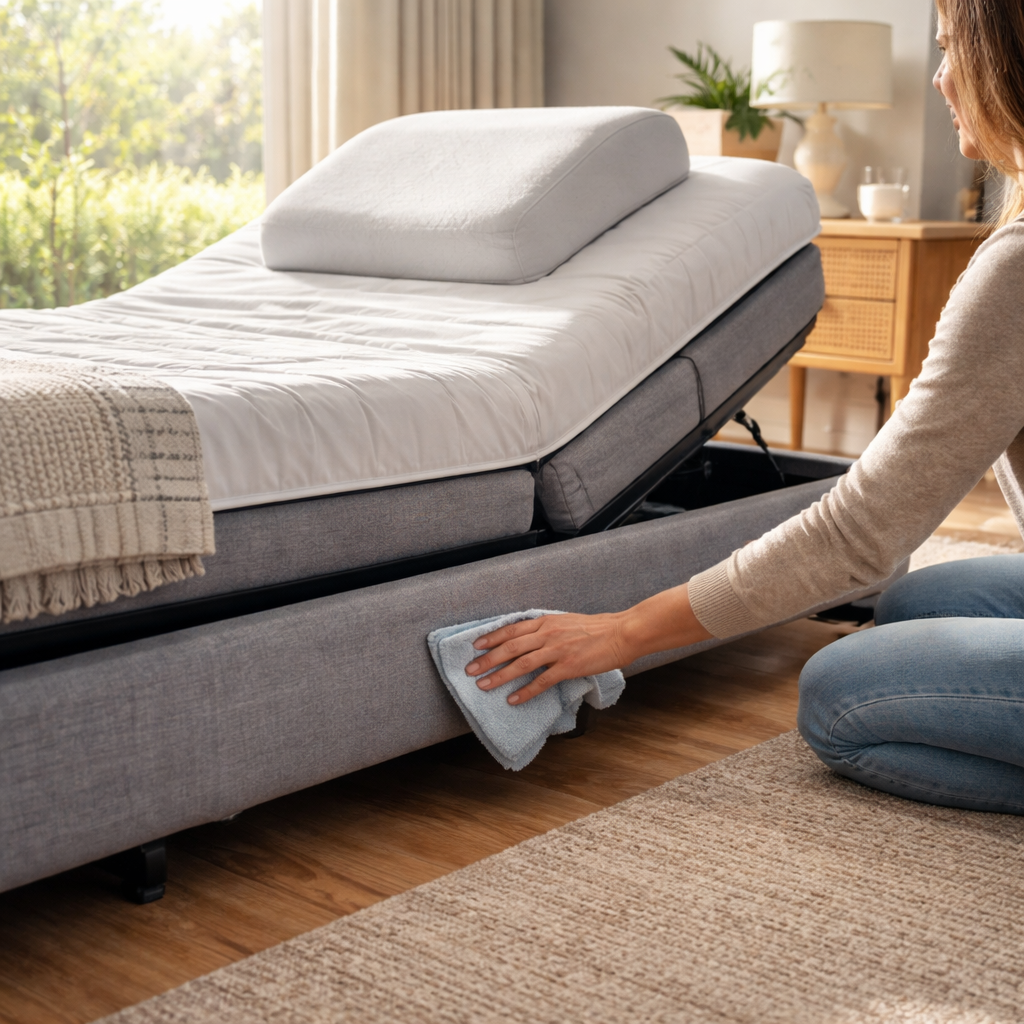
Wipe the base with a soft, damp cloth every month. Skip harsh chemicals – they can corrode the metal parts. A gentle vacuum over the frame removes dust that might settle into the motor housing.
For the mattress, a light vacuum on the surface removes crumbs and skin flakes that could affect airflow.
When to call for service
Most experts suggest a professional check‑up every 12‑18 months. A qualified technician can lubricate the motor, test the electronics, and replace worn gears before they quit.
If you notice the head‑up angle slipping after a few nights, or the lumbar lift feels sticky, schedule a service. It’s a small time investment for many more pain‑free mornings.
Need a quick reference? Here are the top maintenance steps in a checklist:
- Test motor sound and smoothness monthly.
- Rotate the mattress end‑to‑end every 3‑4 months.
- Use a breathable bamboo or Tencel mattress protector.
- Tighten all frame bolts and side‑rail supports.
- Stay within the manufacturer’s weight limit.
- Log wrist comfort scores each morning.
- Wipe the base with a damp cloth; vacuum the mattress.
- Schedule a professional service every 12‑18 months.
Following these habits keeps your adjustable bed for carpal tunnel australia working like a charm. Your wrist gets the steady support it needs, and you avoid surprise breakdowns that could set back your progress.
Want more detail on caring for your adjustable bed? Check out these adjustable bed maintenance tips. For a broader view on managing carpal tunnel symptoms, the team at effective carpal tunnel interventions outlines useful exercises and splint options that work hand‑in‑hand with your bed setup.
FAQ
How does an adjustable bed help carpal tunnel symptoms?
By letting you raise the head and keep the foot flat, an adjustable bed for carpal tunnel australia can keep your wrists in a neutral line while you sleep. The slight tilt opens the shoulders, so the arms don’t curl inward and compress the median nerve. You’ll notice less tingling in the morning if you combine the tilt with a supportive pillow.
What head‑up angle is safest for carpal tunnel relief?
Most of us find a 5‑10 degree raise works well. Start at 5 degrees and see how your wrist feels. If you still feel tension, add another five‑degree step. Anything above 15 degrees can push the shoulders forward and bend the wrist again, so stay within that sweet spot for consistent comfort.
Can I use a lumbar lift without worsening wrist pain?
Yes, a low lumbar lift can actually help. A 2‑3 cm raise opens the chest, letting the elbows stay straight at your side. That reduces the need to hunch forward, which often forces the wrist into a bend. Just make sure the foot section stays flat, and adjust in small increments until the wrist feels relaxed.
How often should I adjust the settings for best results?
We suggest a quick check each week. Log your wrist comfort on a 1‑10 scale, note the angles you used, and see if the score improves. If it plateaus, try nudging the head‑up angle by two degrees or tweaking the lumbar lift. Small, regular tweaks keep your body adapting without over‑doing it.
Are there specific mattresses or pillows that work best with an adjustable bed for carpal tunnel australia?
Medium‑firm foam or hybrid mattresses give the smooth surface needed for a straight wrist. Pair that with a low‑profile memory‑foam pillow that keeps the ear‑to‑shoulder line level. If you’re a side‑sleeper, a slightly higher pillow (about 4‑5 cm) works, but always test that your arm stays at your side, palm up, without bending.
What maintenance steps keep the bed supporting my wrists over time?
Keep the motor humming smoothly by testing it monthly and listening for odd noises. Rotate the mattress end‑to‑end every three to four months so the surface stays even. Tighten any loose bolts on the frame and side‑rail supports. Finally, track your wrist scores; if they dip, a quick inspection often reveals a loose screw or a mis‑aligned angle.
Conclusion
We’ve walked through how an adjustable bed for carpal tunnel australia can turn a restless night into a smoother start.
First, you know your sleep posture and you log the numbness score. Second, you pick a medium‑firm foam or hybrid mattress and a low‑profile pillow. Third, you set a gentle head‑up angle—usually between 8 and 12 degrees and add a small lumbar lift.
From there, the routine is simple: press your Carpal‑Comfort preset, let the bed settle, and check that your wrist lies flat, palm up, without a bend. If you still feel tight, nudge the head‑up by two degrees and note the change.
What about upkeep? A quick monthly motor check, rotating the mattress every three months, and tightening any loose bolts keep the setup steady. Keep a daily wrist log; a dip in the score often points to a loose screw or a shift in the angle.
In our experience, people who stick to these tiny tweaks notice less tingling after a week or two. It feels like a small habit that adds up to big comfort.
Ready to give your wrists the support they deserve? Grab a Sleep Sophie adjustable bed, follow the steps, and watch your mornings get a little brighter.